
Drop-In vs. Undermount Sink: A Full Guide
2025-12-30
Selecting the right sink for a commercial development is rarely about “looks” alone. In the world of high-volume project management, the choice between a drop-in and an undermount sink is a strategic decision that ripples through your supply chain, impacts your installation labor costs, and ultimately determines the long-term satisfaction of the property owner. Whether you are outfitting a 500-unit apartment complex or a boutique hotel, understanding the commercial nuances of these two styles is essential for protecting your margins and your reputation.
Core Concepts & Commercial Applications Analysis
When we talk about sinks in a professional context, we are discussing more than just basins. We are discussing installation efficiency and market positioning.
Drop-In Sinks: The Epitome of Efficiency & Flexibility
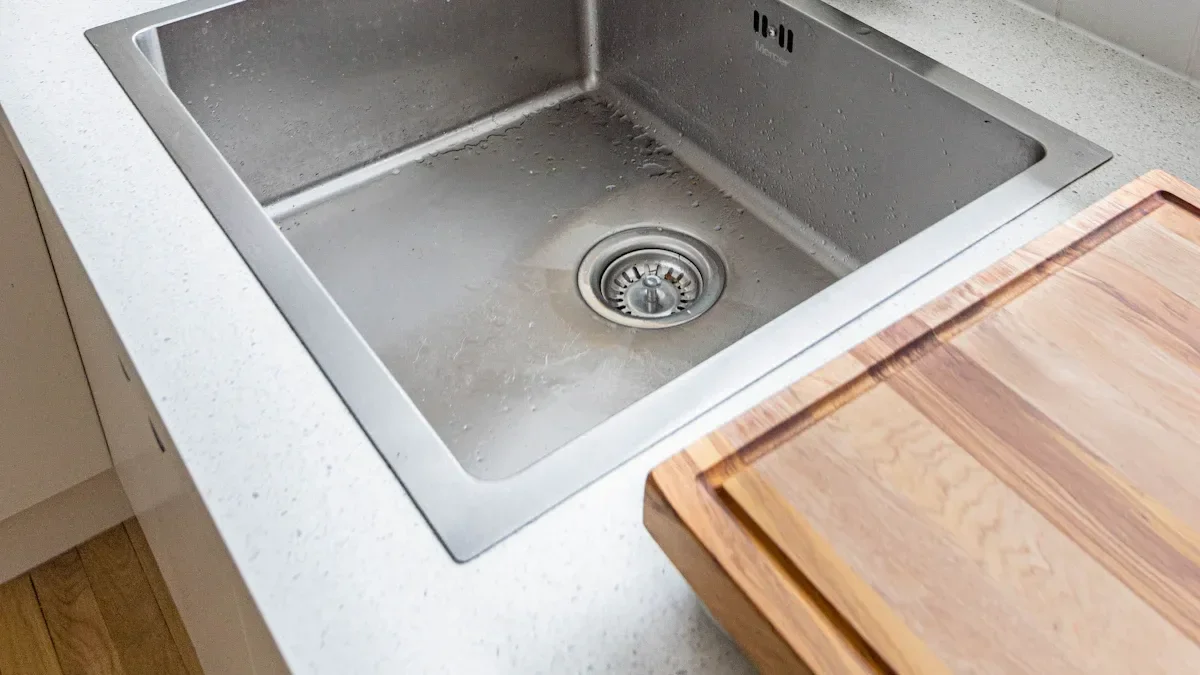
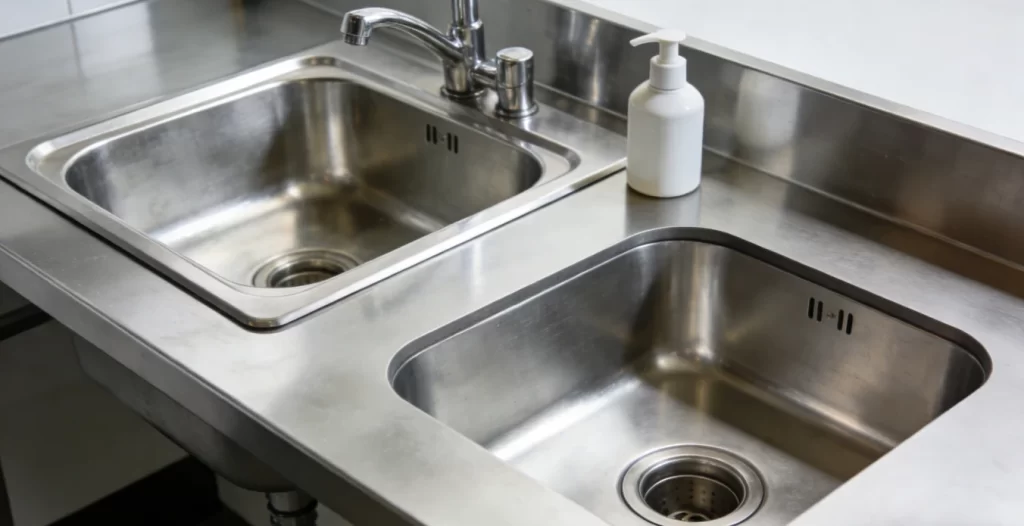
Often called “top-mount” sinks, the drop-in style features a visible rim that rests on the countertop. From a B2B perspective, this is the “safe” choice. Why? Because the rim covers the cutout. You don’t need a CNC-perfect edge on the granite or laminate.
- B2B Advantages: These are ideal for high-volume, standardized projects like budget hotels or public housing. They simplify inventory because they fit almost any countertop material. If a tenant damages a sink, a maintenance crew can swap it out in 30 minutes without touching the cabinetry.
- Key Limitations: The “lip” where the sink meets the counter can be a magnet for grime. In a premium environment, this rim can look dated or “cheap,” which might not align with a luxury brand’s image.
Undermount Sinks: The Standard for Premium Aesthetics
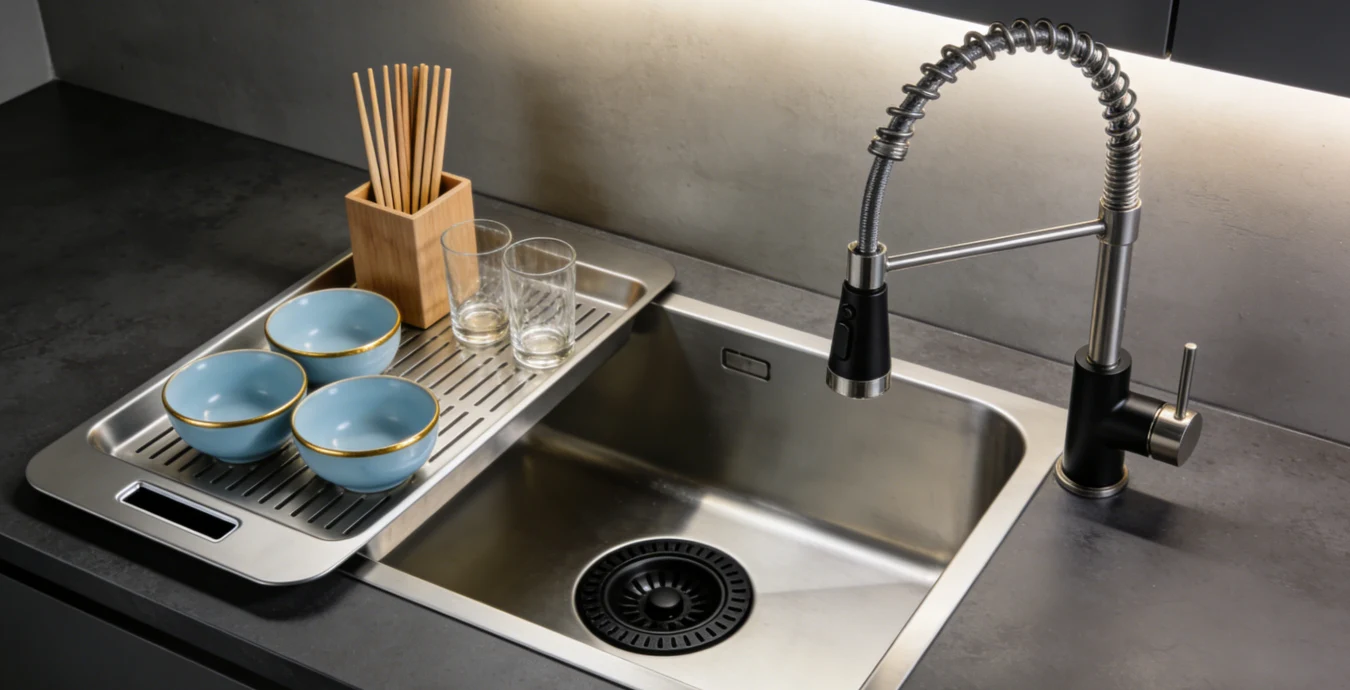
An undermount sink is mounted beneath the counter, creating a seamless transition. Today, this is the expected standard for luxury homes, 5-star hotels, and flagship retail spaces.
- B2B Advantages: It instantly elevates a project’s perceived value. For a developer, specifying an undermount kitchen sink can be the difference between a “standard” unit and a “luxury” unit, allowing for higher rental or sale prices.
- Key Hurdles: The “hidden” cost lies in the installation. You need a waterproof countertop (no laminate) and a fabricator who can polish the interior edge of the stone to perfection. It also requires specialized undermount sink brackets to ensure the sink doesn’t pull away from the stone under the weight of a full basin of water.
Key Differences: A Commercial Perspective
| Feature | Drop-In Sink | Undermount Sink |
|---|---|---|
| Initial Unit Cost | Generally Lower | Mid to High |
| Installation Labor | Low (Fast, simple) | High (Requires precision) |
| Countertop Requirement | Any (Laminate, Wood, Stone) | Solid Only (Quartz, Granite) |
| End-User Perception | Utilitarian / Functional | Modern / Premium |
| Maintenance | Rim re-caulking required | Easy wipe-down surfaces |
| Replacement Ease | Very High | Low (Difficult to remove) |
Procurement Framework & Technical Specs
As a buyer or project specifier, you aren’t just buying a product; you are managing risk. Here are the five factors that should drive your decision-making process.
1. Target End-Market
Who is the final user? If you are supplying a Quick Service Restaurant (QSR) chain, a commercial kitchen sink in a drop-in configuration is often preferred because it’s rugged and easily replaced. However, for a corporate executive suite or a high-end condo, an undermount vanity sink is non-negotiable.
2. Total Cost of Ownership (TCO)
Don’t get blinded by the unit price. A drop-in sink might save you $40 on the unit, but if the rim collects moisture and rots the underlying cabinetry in a rental unit over five years, your TCO skyrockets. Conversely, an undermount sink installation costs more upfront but reduces daily cleaning labor—a huge selling point for facility managers.
3. Supply Chain & Inventory Strategy
Standardization is the friend of the wholesaler. Drop-in sinks are easier to stock because their sizing is more forgiving. Undermount sinks require strict adherence to “radius” specifications—if the sink radius doesn’t match the countertop cutout exactly, the whole project stalls.
4. Installer Partner Capability
Does your downstream contractor have the equipment for mounting undermount sink units into natural stone? If you are working in a region where labor is less specialized, sticking to high-quality stainless steel drop-in sinks can prevent a lot of post-installation headaches and “leaky sink” callbacks.
5. Countertop Material Trends
The global market is moving toward Quartz and Solid Surface. These materials are practically made for undermount sinks. If your project uses these materials, an undermount design is usually the most logical engineering choice.
Technical Specifications: The Sourcing Checklist
When you are reviewing a quote from a manufacturer, look past the price and check these “Big Three” technical markers:
- Steel Grade (304 vs 316): For 90% of projects, 304 stainless steel is the gold standard—it resists rust and maintains a finish. If your project is a seaside resort or a medical lab, specify 316 stainless steel for its superior molybdenum content which fights chloride corrosion.
- The Gauge (Thickness): In a commercial setting, don’t go thinner than 18-gauge. If it’s a high-traffic utility sink or laundry sink, 16-gauge is better. Thicker steel means less noise, better dent resistance, and a more “solid” feel for the user.
- The Radius (The Corners): Modern designs favor “Zero Radius” (sharp 90-degree corners) or “Small Radius” (R10). While they look incredibly sleek, they are harder to clean. For high-turnover apartments, an R15 or R20 (rounded corner) is often more practical for long-term maintenance.
Material Science: Why Stainless Steel Dominates
While you might see fireclay or composite granite sinks in interior design magazines, they rarely make sense for bulk commercial procurement. Here is why stainless steel undermount sinks remain the industry benchmark.
The Engineering Edge of Xinhe
In high-volume manufacturing, consistency is king. Xinhe utilizes advanced fabrication that ensures every flange is perfectly flat. This might sound like a small detail, but in an undermount sink installation, a flange that is off by even 1mm can create a gap that harbors mold. By using high-grade stainless steel, these sinks offer an incredible strength-to-weight ratio, which lowers your shipping costs compared to heavy cast iron or clay alternatives.
The Problem with “Niche” Materials
- Fireclay: Beautiful, but heavy and prone to cracking if a heavy commercial pot is dropped. Replacement in an undermount setting is a nightmare.
- Composite Granite: Can look “plastic” over time and is susceptible to thermal shock (cracking when exposed to boiling water followed by ice).
- Stainless Steel: It’s recyclable, hygienic, and handles everything from boiling pasta water to harsh cleaning chemicals without flinching.
Lifecycle Cost & Design Integration
The ROI of a Seamless Design
In a modern minimalist kitchen, the sink is part of the “work triangle.” An undermount stainless steel kitchen sink allows the countertop to be the star. From a commercial design perspective, this creates a “cleaner” look that helps properties sell faster.
But it’s not just about looks. Consider the daily operational time. In a commercial breakroom or a restaurant, being able to wipe crumbs directly into the single bowl kitchen sink without hitting a metal rim saves seconds. Multiply those seconds by 365 days and dozens of staff members, and you have a significant gain in facility hygiene and efficiency.
Strategic Pairing
- Front-of-House: Use undermount sinks for the aesthetics.
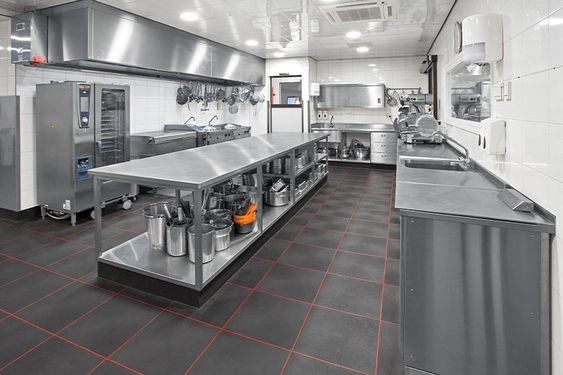
- Back-of-House (BOH): Use drop-in sinks or freestanding 3 compartment sinks. In the “dirty” areas of a kitchen, you want a sink that is easy to access, easy to scrub, and easy to replace if a heavy crate dings the edge.
Countertop Compatibility: Mitigating Project Risk
The most common failure in a sink project isn’t the sink itself—it’s the bond between the sink and the counter.
- Laminate & Wood: These materials have a particleboard or plywood core. If you try to undermount a sink here, water will eventually seep into the core, causing it to swell and rot. Always use a drop-in sink for these materials.
- Stone & Quartz: These are the natural partners for an undermount kitchen sink stainless setup. Because the material is waterproof all the way through, the exposed edge of the cutout is safe from water damage.
- Solid Surface: This is a “best of both worlds” material. It can be easily machined, and many manufacturers offer “integrated” sinks, though a stainless undermount sink is often preferred for its superior heat resistance.
Pro Sourcing Tip: When ordering for a large project, specify a “bundled solution.” Ensure your sink supplier provides the exact CAD templates to your countertop fabricator months in advance. This prevents the “it doesn’t fit” disaster on installation day.
Conclusion: Making the Final Call
The “best” sink doesn’t exist in a vacuum—it only exists in the context of your project’s goals.
- Choose a Drop-In Sink if: You are working on a tight budget, using laminate counters, or managing a high-turnover rental where easy maintenance is the top priority.
- Choose an Undermount Sink if: You are building for the luxury market, using stone countertops, and want to maximize the long-term “premium” feel of the space.
The Final Decision Checklist
- End-User: Is this for a high-end homeowner or a student housing unit?
- Countertop: Is it stone or laminate?
- Labor: Does my team have the skills to handle undermount sink installation?
- Budget: Have I factored in the cost of CNC stone cutting?
- Longevity: Will this sink still look good in 10 years? (Hint: 16-gauge 304 stainless usually will).
As a manufacturer of premium stainless steel sinks, Xinhe provides B2B partners with comprehensive solutions from standard to fully customized products. Whether you need a 3-compartment sink for a restaurant or a sleek undermount bathroom sink for a hotel project, our team ensures quality at the source. Visit our product pages for detailed specifications or contact our sales team today for bulk quotation and project support tailored to your target market.
FAQs
Q: How do we justify the extra cost of undermount sinks to a developer?
A: Focus on “Marketability” and “Hygiene.” An undermount sink is a visual cue for quality. It makes a kitchen look expensive, which justifies a higher price point for the property.
Q: Is a double bowl or single bowl better for commercial units?
A: The trend is shifting toward a large single bowl kitchen sink. It’s more versatile for washing large pots and takes up less “cabinet real estate,” which is vital in modern, smaller floor plans.
Q: What is the most common mistake in undermount procurement?
A: Forgetting the undermount sink brackets. Many installers try to use only silicone adhesive. Over time, the vibration of a garbage disposal or the weight of water will cause the sink to drop. Always insist on mechanical fasteners.
Q: What certifications should I look for?
A: Ensure the products are cUPC certified. This guarantees the sink meets North American plumbing standards for drainage and material quality, which is essential for passing building inspections.
NEXT:
Not NEXT