Standard restroom fixtures fail the moment a worshipper lifts one foot off the ground. Slippery floors, countertops at the wrong height, and drains that back up during peak prayer times turn a ritual obligation into a hazard. A purpose-built wudu foot washer removes each of these failure points, provided the specification accounts for user count, ... Read more
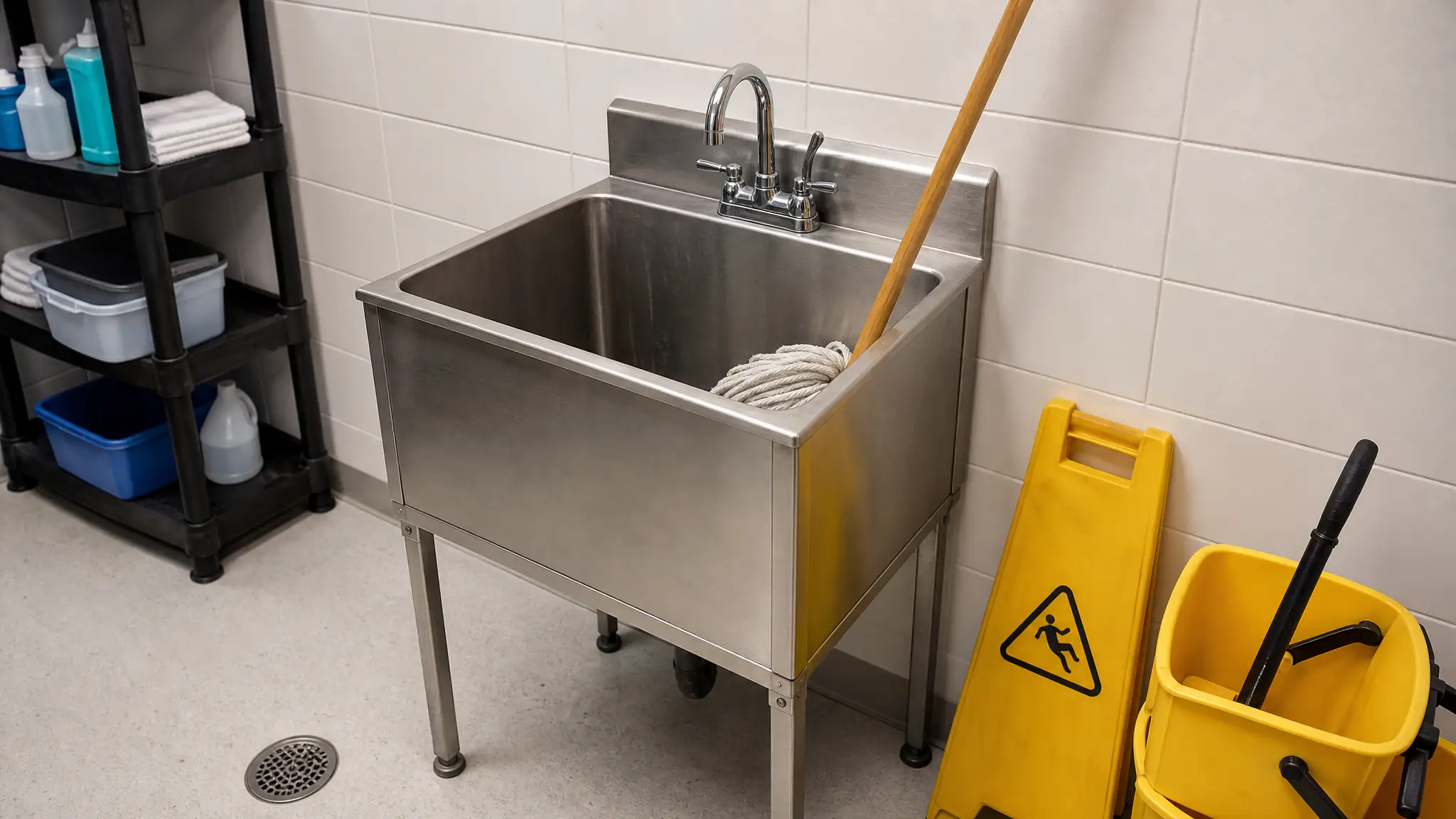
Health inspectors walk into commercial janitor closets early, and a missing or non-compliant fixture stalls a build-out, fails an inspection, or forces an expensive retrofit. Improper mop water disposal and missing backflow devices create direct cross-contamination risks to the municipal water supply. This guide covers the three code bodies that govern a stainless steel mop ... Read more
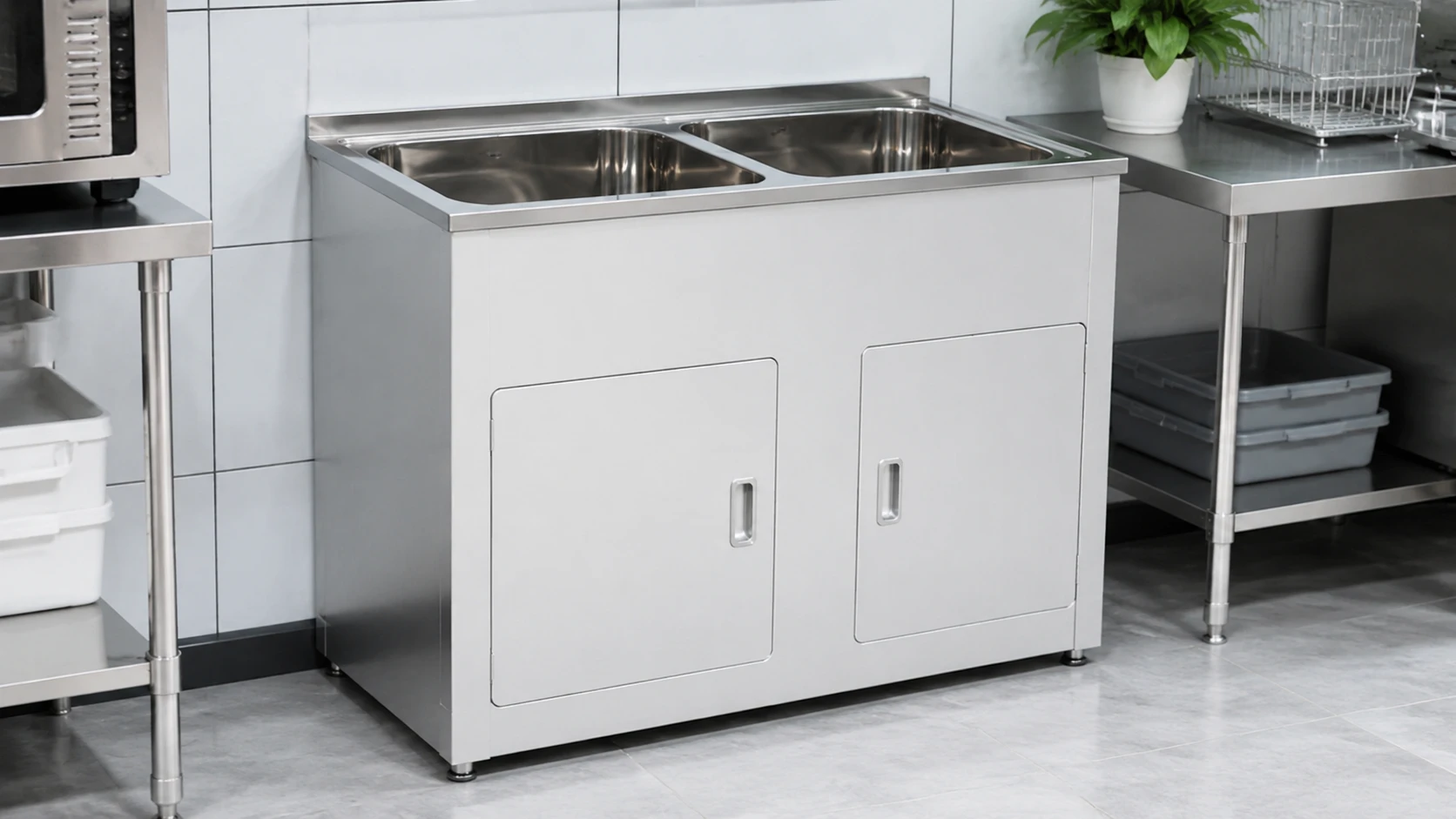
Commercial laundromats push utility sinks harder than any home or hotel laundry room. Customers pre-soak heavily soiled workwear, dump pocket debris into the drain, leave faucets running, and wedge oversized comforters into the basin. A stainless laundry sink built for a residential utility room usually fails within six months under that load. Three choices decide ... Read more
Walk into any commercial kitchen equipment showroom and you’ll find stainless steel work tables priced nearly the same until you check the gauge. One table reads 14 gauge. Another reads 18 gauge. The same footprint can carry a $200-plus price gap. Salespeople call both “commercial grade.” Both claims hold up, but the difference decides how ... Read more
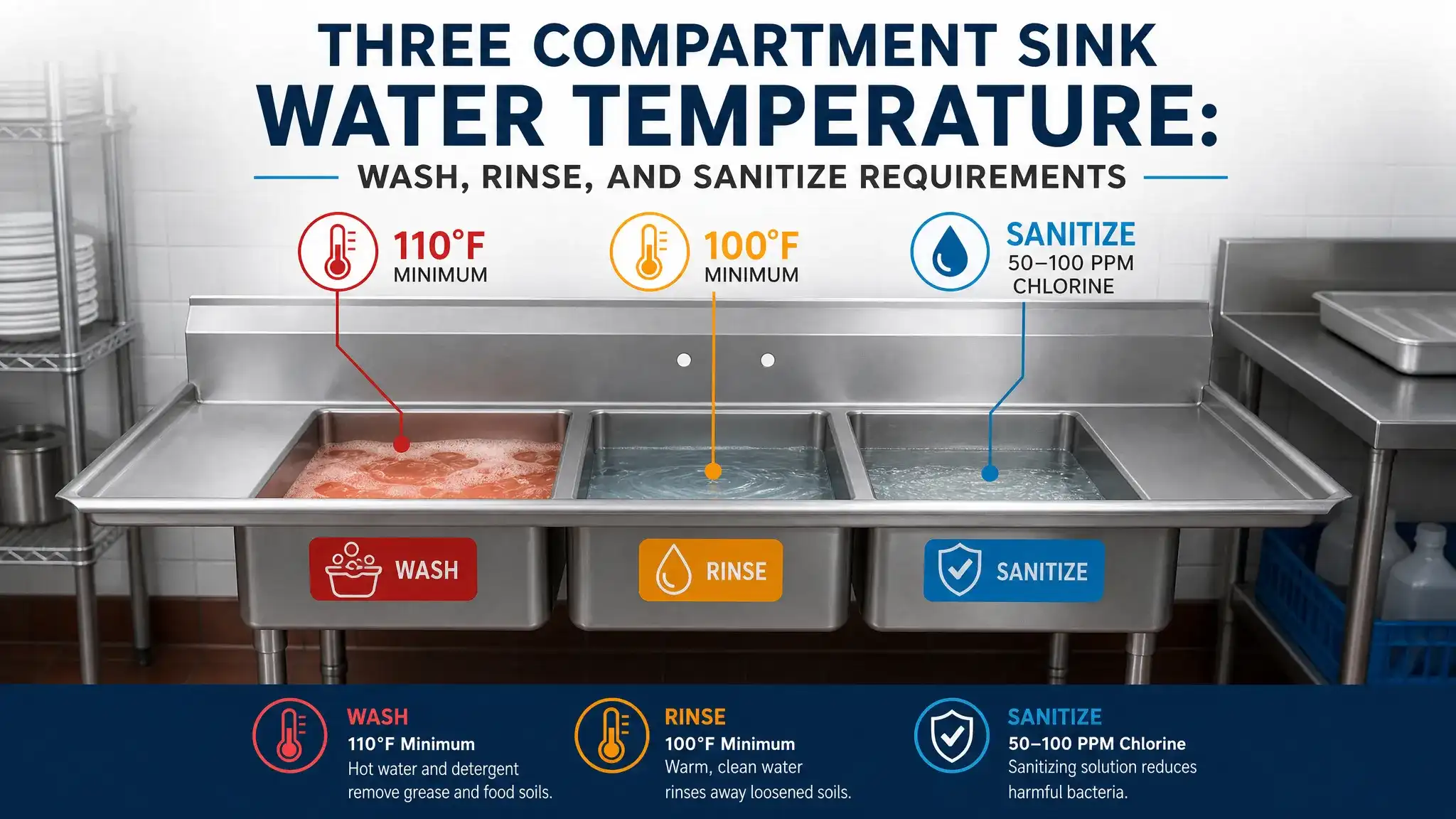
A health inspector pulls a probe thermometer at your three compartment sink to check one thing first: water temperature. Miss the mark in any of the three compartments and the whole warewashing cycle fails. That leaves your operation exposed to point deductions, fines, or a temporary shutdown. This guide details the exact wash, rinse, and ... Read more
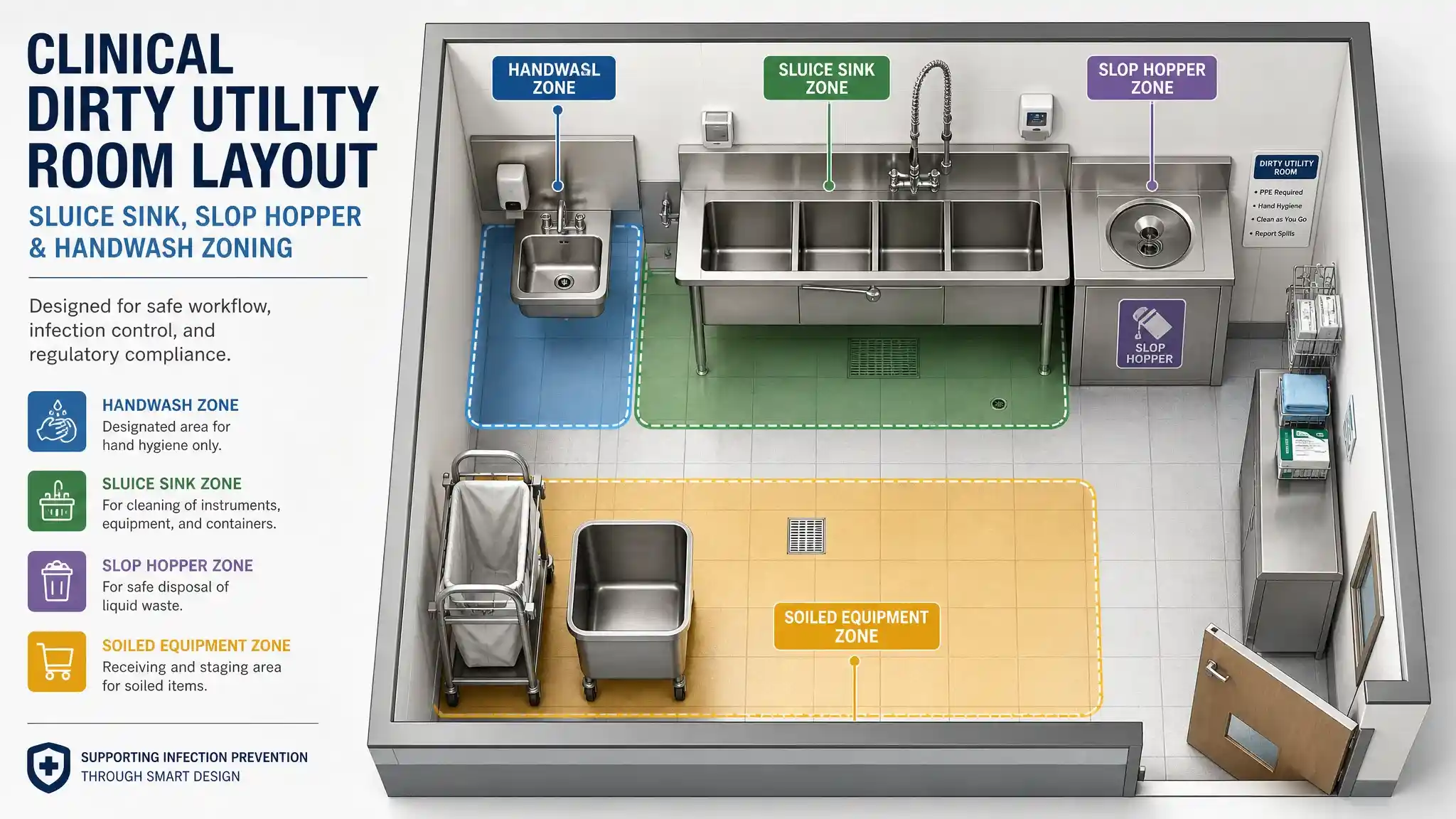
Most dirty utility room infection audits flag the same problem: soiled bedpans, cleaning buckets, and clinical waste bags moving through the same 8 m² space without a fixed, unidirectional flow. When a nurse carrying a loaded urine bottle squeezes past another staff member rinsing a mop, cross-contamination risks rise sharply. A well-planned layout segregates hazardous ... Read more
Phone
WhatsApp
Email