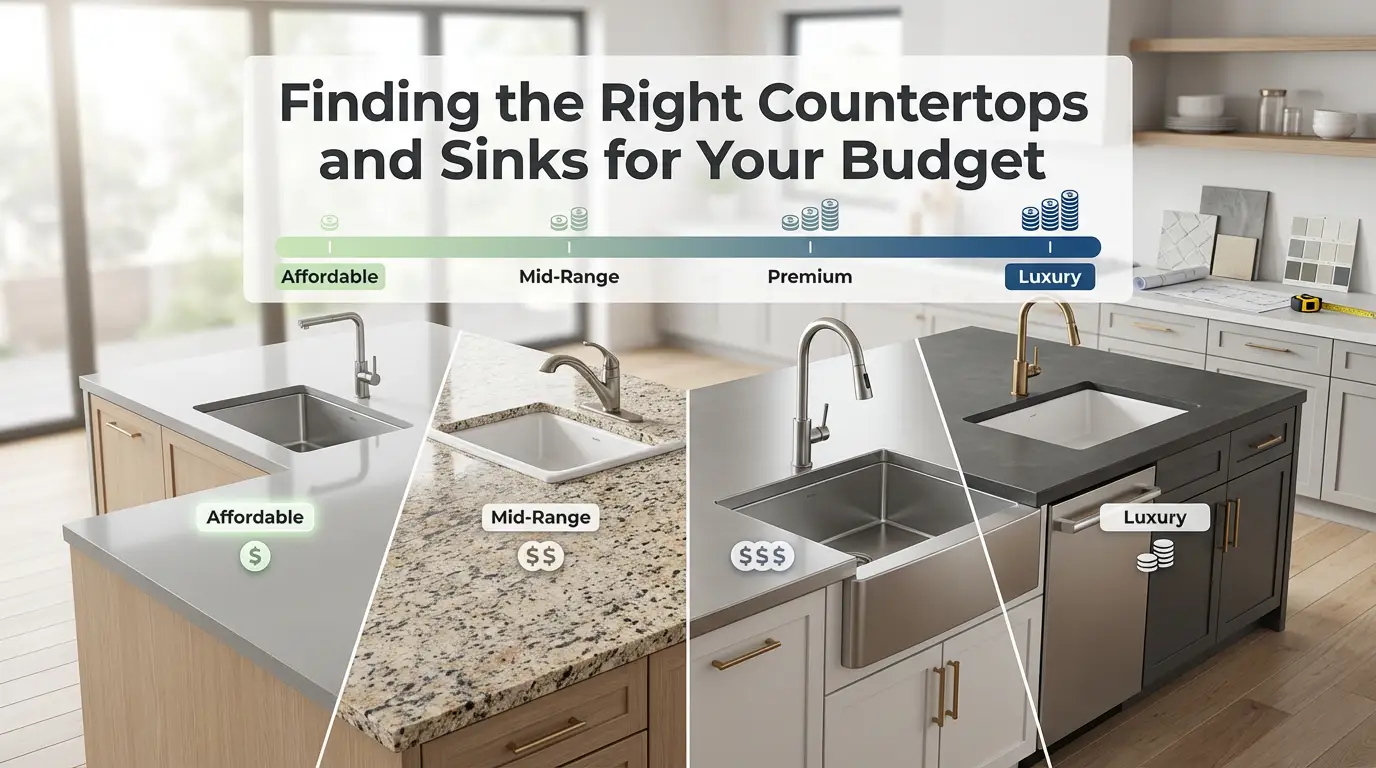


Finding the Right Countertops and Sinks for Your Budget
Finding the Right Countertops and Sinks for Your Budget
2025-12-10
Many B2B buyers often face challenges when selecting countertops and sinks for kitchens. Getting it wrong can lead to unexpected costs, failed health inspections, and workflow inefficiencies. Additionally, they focus only on the initial price tag, overlooking the total cost of ownership, compliance risks, and how the equipment will actually perform under daily pressure.
This guide provides a systematic framework for making informed decisions, highlighting stainless steel solutions that align with budget constraints while delivering durability and strict industry-standard compliance—the core value Xinhe offers professional buyers.
Strategic Sourcing Factors for Commercial Kitchens
For a commercial kitchen, your choice of surfaces and sinks impacts your budget, daily operations, and compliance. Look beyond just looks and upfront cost. Focus on these four key areas to ensure you get the best value and performance for your investment.
1. Total Cost of Ownership, Not Just Initial Price
Your budget should account for the full lifespan of the equipment, not just the purchase and installation price. This “Total Cost of Ownership” includes maintenance, repairs, potential downtime, and replacement costs. A cheaper material that requires constant sealing or is easily damaged will cost you more in the long run. Consider the following comparison for a typical commercial scenario over 5 years:
| Material | Initial Cost (per sq ft, Installed) | Annual Maintenance Estimate | Risk of Early Replacement | Total 5-Year Cost Outlook |
|---|---|---|---|---|
| Stainless Steel | 80−225 | Very Low | Very Low | Most Stable |
| Quartz | 70−150 | Low | Moderate (heat damage) | Moderate |
| Granite | 60−200 | High ( sealing, repairs) | Moderate (cracking, stains) | High |
| Laminate | 20−50 | Low-Medium | High (water damage, wear) | Unpredictable |
Chart: Comparing the minimum installed cost per square foot gives only part of the picture. The real financial impact is seen over time through maintenance and longevity.
2. Durability, Maintenance, and Longevity
In a busy kitchen, surfaces are hit, spilled on, and cleaned aggressively. Durability means resistance to impact, heat, chemicals, and bacteria. Maintenance isn’t just about wiping things down; it’s about the procedures and costs needed to keep surfaces safe and functional for years.
| Material | Key Durability Feature for Commercial Use | Commercial-Grade Maintenance Reality |
|---|---|---|
| Stainless Steel | Non-porous, hygienic, handles thermal shock. | Very easy to sanitize. Can be professionally refinished to remove deep scratches. |
| Quartz | Resists stains and scratches well. | Avoids high heat and strong alkalis. Damaged sections are hard to repair. |
| Granite | Very hard and heat resistant. | Must be sealed regularly. Stains and cracks are permanent if they occur. |
| Laminate | Inexpensive and many design options. | Cannot withstand heat or deep scratches. Damaged areas cannot be repaired, only replaced. |
3. Workflow and Functional Design Integration
In a professional kitchen, design is about efficiency, safety, and hygiene. Your layout and equipment choices must support a smooth workflow to maximize productivity. Consider the “work triangle” between storage, preparation, and cooking areas. Sink placement (prep sink, main wash, hand wash) should minimize unnecessary steps. Choose configurations that match your volume: a large single-bowl sink for pots, a three-compartment sink for washing/rinsing/sanitizing. Surfaces should have integrated backsplashes and coved corners to eliminate dirt traps and make cleaning faster.
Pro Tip: For high-traffic prep areas, prioritize function over form. A large, deep single-bowl sink or a double bowl with an offset drainboard often improves efficiency more than a standard double bowl. Always map your sink and countertop layout to match the actual flow of food and dishes in your specific operation.
4. Compliance and Safety Standards
Meeting health codes is not optional. Your countertops and sinks must be designed and built to pass strict inspections. Key standards like NSF/ANSI 51 are mandatory. This means:
- Materials: Must be non-toxic, non-absorbent, and corrosion-resistant. 304-grade stainless steel is the industry benchmark.
- Construction: Seams must be smoothly welded and finished. Undermount sinks require specific, sealed installation.
- Design: Surfaces must be sloped to drain, with coving at seams and walls to prevent bacterial harborage. Using NSF-certified products, like those from Xinhe, removes guesswork and ensures your kitchen is built to code from day one.
Countertop Materials for Kitchens
Stainless steel is the go-to choice for commercial kitchens for solid, practical reasons. Its surface is non-porous, which means bacteria and stains can’t soak in, and it can handle strong cleaners and high-temperature steam sanitizing. This makes passing health inspections straightforward. It’s tough against dents, heat, and water, built to last for decades in a busy kitchen. For a perfect fit, suppliers like Xinhe can create custom stainless steel counters to match your exact kitchen layout, including integrated sinks and drain boards, ensuring everything is durable and up to code.
A Quick Look at Other Surface Options
While stainless steel is the top choice for core work areas in commercial kitchens, other materials may be considered for specific, less demanding applications:
- Quartz Surfaces: Excellent for front-of-house counters or office areas due to their uniform appearance and stain resistance. Not suitable near high-heat sources.
- Granite: Sometimes used in decorative or residential-style areas within a larger facility. Requires significant ongoing maintenance (sealing) and is prone to staining and cracking, making it a risk for heavy food prep zones.
- Laminate: A low-cost option only suitable for non-food-contact areas like dry storage or administrative spaces. It cannot withstand the heat, moisture, or impact of a working kitchen.
Choosing the Right Sink for Commercial Workflow
The sink is a workhorse. Your choice should be driven by the tasks it will perform. For professional kitchens, stainless steel is the overwhelming choice for its durability, hygiene, and value. Focus on type, configuration, and installation method.
Stainless Steel Sinks (Single, Double, Compartment)
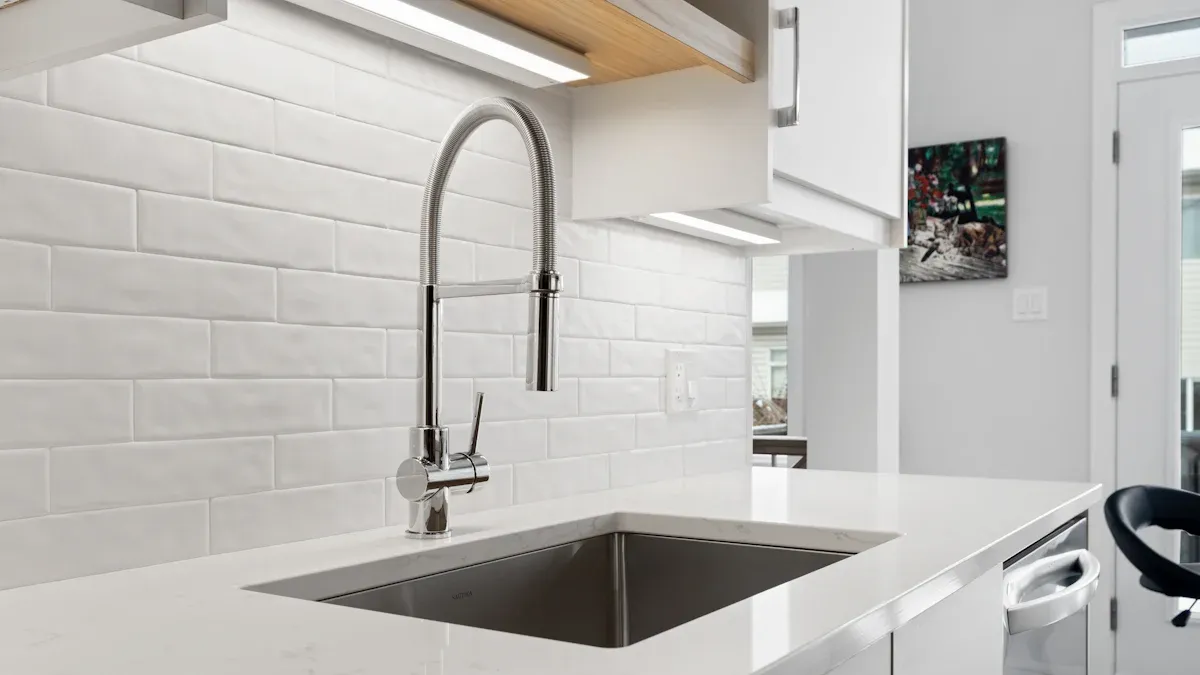
Choosing the right sink configuration directly impacts your kitchen’s speed and efficiency. Commercial stainless steel sinks (made from durable 304-grade steel) come in key types: a large single bowl is best for washing big pots; a double bowl lets you wash and rinse separately; and compartment sinks (like a triple basin for wash, rinse, sanitize) are often required by health codes. Picking the type that matches your main tasks keeps your workflow moving smoothly.
| Sink Type | Description |
|---|---|
| Hand Wash Sinks | Small sinks made for washing hands. |
| Food Preparation Sinks | Deep sinks for washing fruits and vegetables. |
| Dishwash Sinks | Big sinks for cleaning dishes, can be undermount or drop-in. |
| Multipurpose Versatile Sinks | Sinks with two or three parts for doing many tasks at once. |
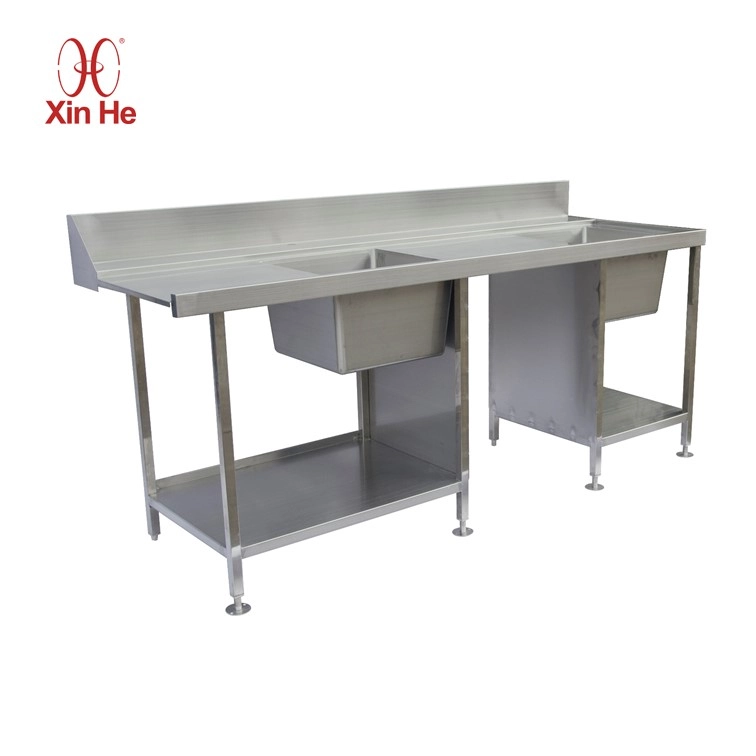
Compartment sinks help make kitchen work faster. Single sinks are good for simple jobs. Double sinks let you wash and rinse at the same time. Triple sinks are used for washing, rinsing, and sanitizing. This is important in restaurants and food factories.
Undermount, Drop-In, and Integrated Sinks
How your sink is installed affects your budget, how easy it is to clean, and its overall look. Drop-in sinks are the most affordable to install, but the raised lip can trap grime. Undermount sinks, installed under the counter, create a seamless look and allow you to wipe spills directly into the basin—making them the top choice for hygiene in professional kitchens. Integrated sinks are formed from the same piece as the counter for a ultra-smooth finish, but at a higher cost. For most commercial needs, undermount offers the best balance of cleanliness and value.
- Drop-in sinks: Simple to put in, cost less, and good for quick changes.
- Undermount sinks: Need careful fitting, look nice, and make cleaning easy.
- Integrated sinks: Make the counter and sink look like one, great for high-end kitchens.
Matching Sinks to Your Kitchen’s Specific Needs
Think about your kitchen type to choose the right sink setup:
- High-Volume Restaurant or Central Kitchen: Prioritize large, heavy-duty sinks. A triple-compartment sink (wash/rinse/sanitize) is often required by code. A large single-bowl prep sink is essential.
- Cafeteria or Catering Kitchen: Efficiency is key. Consider double-bowl sinks with a drainboard for continuous workflow. Undermount installation is recommended for easy cleaning.
- Bar or Coffee Shop: Focus on sinks for glass washing and barista stations. Smaller, deep sinks with pre-rinse sprays are useful. The goal is to integrate the sink seamlessly with your countertop workflow. Stainless steel allows for integrated drain boards and custom configurations to fit your exact space.
Making the Smart Financial Decision
Understanding Lifetime Costs
Let’s compare two common scenarios over a 10-year period for a medium-sized kitchen:
| Material | Initial Installed Cost | Estimated Annual Maintenance & Repair | Likely Replacement Need | Estimated 10-Year Total |
|---|---|---|---|---|
| Stainless Steel Worktable | $5,000 | $100 (cleaning supplies) | None (refinishing possible) | ~$6,000 |
| Laminate Countertop | $2,000 | $200 (minor repairs) | Yes, at Year 5-7 (~$2,500) | ~$6,500+ |
Chart: This comparison shows how a higher initial investment in durable, low-maintenance stainless steel can lead to lower total costs over time, avoiding unexpected replacement expenses and downtime.
Smart Budgeting Strategies for Commercial Projects
- Plan for the Total Cost: Budget for installation, any needed plumbing/electrical changes, and a 10-15% contingency for surprises.
- Standardize: Where possible, choose standard sink sizes and countertop modules. Custom shapes and sizes add significant cost.
- Prioritize Core Areas: Invest in high-performance stainless steel for heavy-use zones (cooking line, dish pit). Consider cost-effective alternatives only for very low-traffic or non-food areas.
- Consider Modular Units: Pre-fabricated stainless steel tables with integrated sinks can be more cost-effective and faster to install than custom-built counters.
- Choose a Partner, Not Just a Vendor: A supplier like Xinhe that understands commercial needs can help you avoid costly specification errors and recommend efficient, pre-compliant solutions.
B2B Buyer’s Checklist for Countertops and Sinks
Before you finalize a purchase, use this list:
- Compliance: Does the product have the correct NSF/ANSI or other local health code certifications? Can the supplier provide documentation?
- Material Specification: For stainless steel, is it 304-grade (18/8 or 18/10)? What is the gauge (thickness)? 16-gauge is standard for heavy use.
- Construction Quality: Are corners welded and polished smooth? Are seams minimal and properly sealed? Is the finish (e.g., #4 brushed) appropriate for easy cleaning?
- Supplier Capability: Can they provide custom fabrication? Do they offer installation support or detailed CAD drawings? What is the warranty?
- Integration: Will it fit with your existing layout and equipment? Have you confirmed all dimensions and utility connections?
Putting It All Together
Choosing countertops and sinks for a commercial kitchen comes down to three key ideas that save you money and trouble in the long run:
- Pay for the total cost, not just the price tag. Stainless steel might cost more upfront, but it needs almost no maintenance and lasts for decades. This often makes it cheaper overall than materials that need fixing or replacing sooner.
- Design for workflow, not just looks. Place sinks and arrange counters based on how your staff actually moves. This reduces wasted steps and keeps your kitchen running efficiently.
- Make compliance a requirement, not an afterthought. Choosing NSF-certified products from a supplier like Xinhe ensures your kitchen meets health codes from day one, avoiding costly re-dos.
Your Action Plan:
- Review Your Needs: Identify the busiest areas in your kitchen (cooking line, dishwash, prep stations).
- Use the Checklist: Before you buy, go through the B2B Buyer’s Checklist above to verify your supplier and product specs.
- Get Expert Input: For complex layouts or special equipment, talk to a Xinhe specialist. They can provide layout drawings, compliance advice, and custom solutions to ensure you get exactly what you need.
Measure your kitchen before you buy anything. Talk to experts for help. Xinhe’s team helps buyers find stainless steel that fits any job. You can ask for help or look at custom products now.
NEXT:
Not NEXT