
Is Your 3 Compartment Sink Actually Compliant
2025-12-03
Imagine walking into your bustling commercial kitchen on a typical day, only to have a surprise health inspection uncover a hidden issue with your trusty 3 compartment sink—the unsung hero of your warewashing routine. What if this everyday essential is quietly putting your operation at risk of costly violations? As a facility manager, you’ve got enough on your plate without worrying about fines or shutdowns. Let’s dive in and ensure your setup is solid.
3 Compartment Sink Compliance
Understanding the rules around your 3 compartment sink starts with knowing why they exist in the first place. It’s all about keeping things safe in the kitchen. The FDA Food Code sets the baseline, and most local health departments build on it to prevent things like bacteria spreading from dirty dishes to clean ones. Think of it as a safety net for your customers’ health—simple as that.
One big piece of this puzzle is NSF/ANSI 3 certification. This isn’t some fancy label; it’s a must-have in many places because it confirms your sink can handle the tough job of commercial use without breaking down or causing problems. It checks for things like safe materials that won’t leach harmful stuff into the water and a build that’s sturdy enough for daily abuse. Xinhe sinks, for example, are crafted to hit these marks, giving you that peace of mind from the get-go.
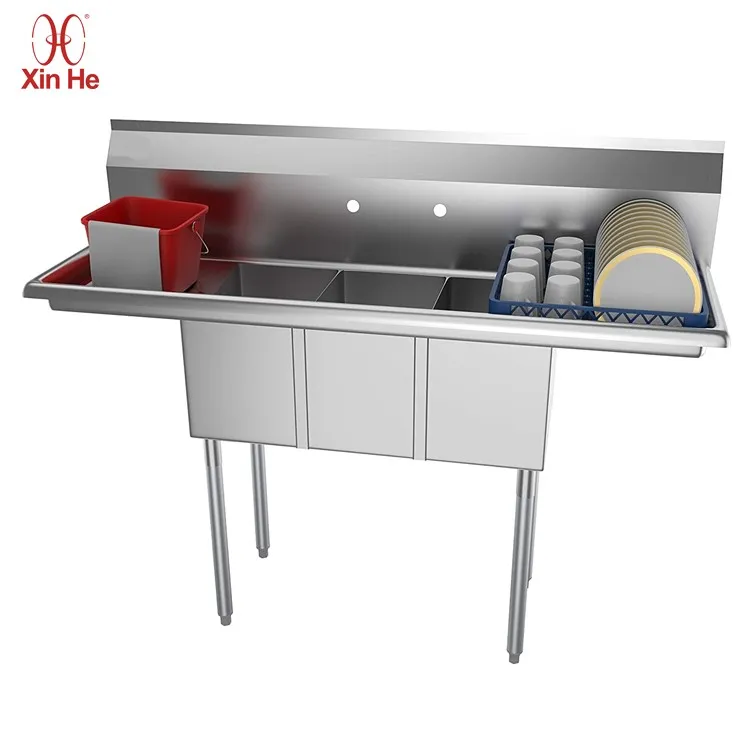
Now, let’s break down what a compliant setup looks like—it’s more than just three bowls side by side. Here’s a quick rundown:
- Equal-Sized Compartments: Each basin needs to be the same size to properly handle washing, rinsing, and sanitizing without shortcuts.
- Drainboards on Both Sides: These are key for air-drying dishes safely, avoiding puddles that breed germs.
- Pre-Rinse Sprayer: A handy tool to blast off food bits before they hit the sink, keeping things efficient.
- Clear Signage: Labels for each compartment—wash, rinse, sanitize—to guide your team and impress inspectors.
In larger setups, you might integrate a handwashing sink or even consider a four-compartment sink for extra flexibility. But sticking to these basics in your food service sink can make all the difference in passing inspections smoothly.
To make this even clearer, consider this table of common requirements across jurisdictions:
| Requirement | Description | Why It Matters |
|---|---|---|
| Basin Size | At least 10x14x10 inches each | Ensures enough space for submerging items fully |
| Material | 304 stainless steel minimum | Resists corrosion and easy to clean |
| Drainboard Length | 18-24 inches per side | Allows proper air-drying without stacking |
| Water Temperature Controls | Hot water supply to 110°F+ | Supports effective cleaning and sanitizing |
This setup isn’t just about ticking boxes; it’s about creating a workflow that keeps your kitchen humming safely.
Warewashing in 5 Steps
Getting the sequence right in your 3 compartment sink is like following a recipe—it ensures everything comes out clean and safe. Let’s walk through it together, step by step, so it’s easy to train your team.
- Scrape and Pre-Rinse: Start by scraping off big chunks of food into the trash. Then, use that pre-rinse faucet to rinse under running water. This keeps your wash water from getting gunky too fast, saving time and water in the long run.
- Wash in the First Compartment: Fill this basin with hot water—at least 110°F—and add detergent. Scrub away the grime. The heat helps loosen stuck-on stuff, making your job easier. In a busy restaurant sink, this step is where the heavy lifting happens.
- Rinse in the Second Compartment: Move items here for a thorough rinse in clean water. No soap residue left behind—that could mess with the sanitizer later. A good sprayer makes this quick and effective.
- Sanitize in the Third Compartment: This is the kill step for germs. You have options:
- Chemical Method: Mix sanitizer like chlorine to 50-100 ppm and let items soak for 30 seconds. Use test strips to check—it’s like a quick dipstick test for your car.
- Hot Water Method: Heat water to 171°F and immerse for 30 seconds. It’s straightforward but watch the energy use.
- Air-Dry on the Drainboard: No towels here—they can reintroduce bacteria. Let everything drip dry on the sanitized drainboard. It’s the natural way to finish strong.
By following these steps in your manual warewashing routine, you’re not just complying; you’re building habits that protect everyone. For visual learners, imagine a flowchart where each step leads seamlessly to the next, preventing backups in your commercial kitchen sink.
Expanding on sanitization, let’s look at a comparison table for the two methods:
| Method | Pros | Cons | Best For |
|---|---|---|---|
| Chemical | Energy-efficient, easy to monitor with strips | Needs precise mixing, chemical storage | High-volume ops like cafeterias |
| Hot Water | No chemicals involved, simple | Higher utility costs, risk of burns | Smaller setups with good water heaters |
This process adapts well to various environments, from a hotel kitchen sink to a school kitchen sink, ensuring consistency.
Design Details That Ensure Compliance
The way your 3 compartment sink is built can either help your team stay compliant or create headaches. Let’s explore how design choices play into this.
First off, materials are huge. 304 stainless steel stands out because it doesn’t rust easily, handles hot water without warping, and stays smooth for easy wiping down. Cheaper options might pit or crack over time, hiding bacteria in tiny crevices. Xinhe uses top-grade steel like this as standard, so your sink stays reliable year after year in a demanding food service environment.
Construction quality is another quiet hero. Look for seamless welds—no rough edges where dirt can hide. Coved corners with gentle curves make cleaning a breeze, unlike sharp angles that trap gunk. In Xinhe’s designs, these features are baked in, reducing the chance of biofilm buildup that could fail an inspection.
Then there are the smart features that support your staff:
- Heavy-Gauge Steel: Thicker metal holds heat better, helping maintain those crucial temperatures in the sanitizer sink.
- Integrated Drainboards: Plenty of space means no rushing the drying process, which is a common slip-up.
- Ergonomic Height: Adjustable legs can prevent back strain, keeping your team focused on procedures.
In a facility sink setup, these elements turn potential pitfalls into smooth operations. For instance, in a catering sink where space is tight, a well-designed model saves time and reduces errors.
To illustrate design impacts, here’s a table of common design flaws and fixes:
| Flaw | Impact | Fix with Quality Design |
|---|---|---|
| Thin Gauge Metal | Loses heat quickly | Use 16-gauge or thicker for retention |
| Sharp Corners | Hard to clean | Coved radii for smooth surfaces |
| Small Drainboards | Improper drying | Extend to 24+ inches for ample space |
| Poor Welds | Bacteria harbors | Seamless welding for hygiene |
Investing in these aspects means your 3 compartment sink becomes a partner in compliance, not a hurdle.
Costs of Sink Non-Compliance
Nobody wants to learn about compliance the hard way—through fines or closures. Here are some common mistakes and how to sidestep them.
- Skipping Pre-Rinse: This leads to dirty wash water fast, contaminating everything downstream. Always start clean.
- Wrong Sanitizer Mix: Too weak, and germs survive; too strong, and it’s unsafe. Test strips are your best friend—use them every shift.
- Ignoring Temperatures: Forgetting to check thermometers means ineffective cleaning. Calibrate weekly and log it.
- Towel Drying: It seems harmless but reintroduces contaminants. Stick to air-drying every time.
These slip-ups can cost thousands in penalties, not to mention lost business. In a utility sink or prep sink integration, the same rules apply—vigilance pays off.
Let’s quantify the risks with a simple table of potential consequences:
| Mistake | Potential Fine | Other Costs |
|---|---|---|
| Improper Sanitizing | $500-$2,000 | Health risks, recalls |
| No Drainboards | $300-$1,000 | Operational downtime |
| Missing Certification | $1,000+ | Full replacement needed |
| Temperature Lapses | $200-$800 | Failed inspections |
By addressing these in your daily routine, you turn risks into routines.
3-Compartment Sink: Training & Maintenance
Compliance isn’t a one-time thing; it’s a team effort. Start with training—make sessions hands-on so staff see why each step matters. Role-play inspections to build confidence.
Implement daily checklists:
- Check water temps at start of shift.
- Test sanitizer concentration mid-shift.
- Inspect sink for damage before closing.
Keep logs— they’re proof positive during audits. For maintenance, wipe down daily, descale weekly, and schedule deep cleans monthly. A damaged surface in your stainless steel sink? Fix it pronto to stay compliant.
In environments like a hospital kitchen sink or bakery sink, this culture ensures safety round the clock.
Wrapping Up
At the end of the day, a compliant 3 compartment sink blends solid procedures with thoughtful equipment. It’s an investment that cuts risks and boosts efficiency. Xinhe sinks, with their focus on durable materials and user-friendly designs, lay a strong foundation.
Ready to check your setup? Download our free ‘Commercial Sink Specification & Compliance Checklist’ for a quick audit. Reach out to Xinhe for tailored, NSF-certified options that fit your needs perfectly.