
Stainless Steel Farmhouse Sink Review: What You Need to Know
2025-12-30
A stainless steel farmhouse sink is often the single most strategic hardware choice you can make for a modern kitchen project, balancing industrial-grade durability with a “designer” aesthetic that consistently boosts property value.
The Business Case: Is It the Right Move
When you’re managing a large-scale residential development or a high-traffic commercial kitchen, you aren’t just buying a sink; you’re managing long-term risk and maintenance. The stainless steel farmhouse sink has become a staple in the B2B world because it offers a “sweet spot” of performance.
The Main Advantages:
- Extreme Longevity: Unlike porcelain or fireclay, stainless steel won’t chip or crack if a heavy pot is dropped.
- Lightweight Logistics: It is significantly lighter than cast iron, which slashes international shipping costs and makes undermount sink installation faster and safer for your crew.
- Modern Versatility: It fits almost any design language, from “industrial chic” to “modern farmhouse.”
The Minor Drawbacks:
- Scratch Visibility: Over time, fine scratches (a “patina”) will develop, though this can be mitigated with a single bowl kitchen sink protector grid.
- Water Spots: In areas with hard water, maintenance is required to keep the finish looking pristine.
For project managers and wholesalers, the focus is on the “Total Cost of Ownership.” A sink that is easy to ship, impossible to break during transit, and simple to install is a winner for the bottom line.
Why Choose a Stainless Steel Farmhouse Sink
Modern Appeal and Versatility
The “farmhouse” or apron-front style has moved beyond the rustic look. Today, it’s a mark of high-end design.
Design Trends in Contemporary Kitchens
Current trends favor the “Professional Kitchen” look. Homeowners and restaurant owners alike want spaces that look like they belong to a Michelin-star chef. The bold, exposed front of a stainless steel farmhouse sink provides that exact vibe. It breaks up the monotony of cabinetry and acts as a focal point.
Compatibility with Various Countertop Materials
One of the biggest headaches for contractors is ensuring the sink works with the stone. Whether you are using high-end quartz, granite, or even cost-effective laminate, a stainless steel undermount sink is forgiving. It creates a clean transition that architects love. If you are working with tight spaces, a farmhouse sink with drainboard can integrate prep space directly into the fixture, a high-value feature for urban apartment projects.
Durability and Easy Maintenance
In the commercial world, “durability” is synonymous with “profit.”
Resistance to Corrosion and Staining
High-quality sinks are built from T-304 grade steel. This isn’t just a marketing term; it refers to the 18/10 Chromium-Nickel content that creates a self-healing surface layer. For a commercial 3 compartment sink used in a restaurant, this resistance to acids and cleaning chemicals is the difference between a 2-year and a 20-year lifespan.
Cleaning Tips for Longevity
Maintenance shouldn’t be a chore. We always tell our partners that the best way to maintain a stainless steel undermount sink kitchen is the “dry-wipe” method. Use a mild detergent, rinse, and—most importantly—wipe it dry with a microfiber cloth. This prevents the mineral buildup that makes a sink look “dull” over time.
Key Features and Specifications: A Buyer’s Deep Dive
If you are sourcing for a project, the “label” matters less than the “spec.” Here is what you need to look for to ensure you aren’t buying a “budget” sink at a “premium” price.
Material, Gauge, and Finish
Types of Stainless Steel Used
- Grade 304: The industry standard. Perfect for 95% of applications.
- Grade 316: Necessary only for outdoor kitchens or coastal developments where salt air is a factor.
Gauge Thickness and Its Impact
In the world of sinks kitchen stainless, the lower the gauge, the thicker the steel.
- 16-Gauge (1.5mm): The “Luxury Standard.” It feels solid, sounds quiet, and resists dents from heavy commercial cookware.
- 18-Gauge (1.2mm): The “Project Standard.” Excellent for residential developments where you need quality without the premium price tag of 16-gauge.
- Avoid 20-gauge or 22-gauge for farmhouse styles; the apron front is too large and will feel “flimsy.”
Surface Finishes and Aesthetic Options
A “Brushed Satin” finish is the most practical because it hides the scratches that naturally occur in a hand wash sink or prep area. However, for “Boutique” projects, consider PVD finishes. This technology allows you to offer “Gunmetal Black” or “Champagne Gold” while maintaining the hardness of stainless steel.
Size, Depth, and Configuration
Standard vs. Custom Sizes
While 30-inch and 36-inch are standard, B2B buyers often need customization. If you are retrofitting an old hotel, you might need a non-standard width. This is where a manufacturer like Xinhe provides value by offering OEM/ODM services to fit the existing “rough-in.”
Single Bowl vs. Double Bowl Designs
- Single Bowl Kitchen Sink: The current market favorite. It allows for washing oversized commercial baking sheets that won’t fit in a divided sink.
- Double Bowl: Better for residential users who prefer to hand-wash and air-dry simultaneously.
Depth Considerations for Different Uses
A 10-inch depth is standard for a commercial stainless steel sink. It hides dirty dishes from view and prevents splashing. However, for an undermount vanity sink or undermount restroom sink, a shallower depth (6-8 inches) is often preferred for ergonomics and plumbing clearance.
Accessories and Customization
Integrated Accessories
The modern sink is now a “Workstation.” We are seeing a massive increase in orders for sinks with built-in ledges. By adding a sliding cutting board, a stainless steel colander, or a roll-up drying rack, you turn a simple kitchen sink stainless into a high-functioning prep station. This is a massive selling point for real estate agents.
Customization Capabilities for Large Projects
For hotel chains or large-scale developments, branding matters. Customizing the apron front with a specific texture (like a hammered finish) or a laser-engraved logo can set a property apart.
Daily Use and Performance: Beyond the Showroom
Noise and Comfort
The “tinny” sound of water hitting steel is a common complaint with cheap sinks. Professional-grade stainless steel farmhouse sinks solve this with “Sound Guard” technology.
Sound-Deadening Technology
High-end models use thick rubber dampening pads on all sides of the bowl. Furthermore, a non-toxic undercoating is sprayed on to prevent condensation. In a high-end condo, a quiet kitchen sink is a subtle but vital luxury.
Ergonomic Design for Frequent Use
The beauty of the “apron front” is that it sits closer to the user. You don’t have to lean over several inches of countertop. For someone working at a commercial kitchen sink all day, this reduces back strain significantly.
Real-World Functionality
Performance in High-Traffic Environments
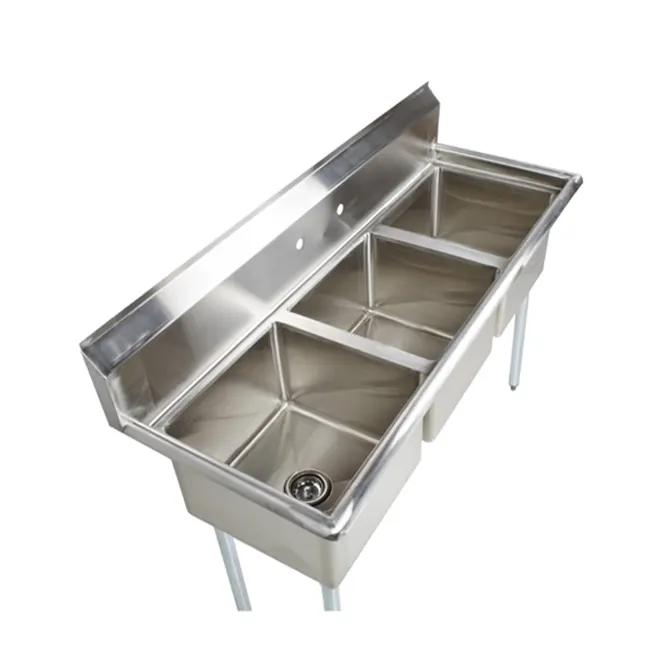
In a commercial setting—like a coffee shop or a small bistro—the sink takes a beating. A commercial 3 compartment sink is often required by health codes for “Wash, Rinse, Sanitize” workflows. Stainless steel is non-porous, meaning it doesn’t harbor bacteria, making it the most hygienic choice available.
User Feedback from Commercial and Residential Settings
Our data shows that users consistently rate the single bowl kitchen sink higher for “ease of use,” while project managers prefer the stainless steel undermount sink because it’s the easiest to replace or upgrade without tearing out the entire countertop.
Buying Guide and Product Comparison
Choosing between materials is the first hurdle in procurement.
Stainless Steel vs. Other Farmhouse Sink Materials
Fireclay and Cast Iron Comparison
While fireclay looks beautiful, its failure rate during international shipping is nearly 10-15%. For a B2B buyer, that is a logistical nightmare. In contrast, a stainless steel farmhouse sink is virtually indestructible during transit.
How to Choose the Right Model for Your Project
- Determine the Gauge: 16 for luxury, 18 for standard.
- Check the Radius: “Zero-radius” (90-degree corners) looks modern but is harder to clean. A “Small Radius” (R10 or R15) is the best of both worlds.
- Confirm Certifications: For North American projects, ensure cUPC compliance.
Installation and Technical Logistics
How to Install Sink (Farmhouse Style)
Unlike a standard bathroom sink, a farmhouse sink requires the cabinet to be “prepped” or “notched” so the apron can sit flush.
- Support System: Because a farmhouse sink holds a lot of water weight, we recommend a support frame or sink brackets rather than just clips and silicone.
- Sealing: Use a high-quality 100% silicone sealant to ensure the bond between the steel and the stone is watertight.
Technical Specifications for Procurement
When requesting a quote, be specific. Instead of “sink,” ask for: “33-inch 16-gauge 304 Stainless Steel Apron-Front Sink, R15 corners, Brushed Finish, with Sound-Dampening pads.” This specificity ensures you are comparing apples to apples when looking at different suppliers.
Common Concerns and Long-Term Care
Scratching, Dents, and Water Spots
Every B2B buyer asks: “Will it scratch?” The answer is yes. But unlike a scratch on a fireclay sink (which can lead to a crack), a scratch on stainless steel is purely cosmetic.
Prevention and Maintenance Tips
- Bottom Grids: This is the #1 way to prevent scratches. It keeps heavy pans off the floor of the sink.
- Avoid Steel Wool: Never use steel wool on a stainless steel undermount sink kitchen sink. It can leave behind tiny carbon steel particles that will rust, making it look like the sink itself is rusting.
Long-Term Value and Sustainability
Stainless steel is a circular material. Most sinks kitchen stainless are made from 60-70% recycled content and are 100% recyclable at the end of their life. For projects aiming for “Green Building” or LEED certification, this is a major advantage over composite or petroleum-based materials.
Conclusion
The stainless steel farmhouse sink remains the king of the kitchen because it refuses to compromise. It offers the aesthetic appeal that sells homes and the rugged durability that keeps commercial kitchens running. For the B2B buyer, it represents the lowest logistical risk and the highest user satisfaction.
Success in large-scale projects comes down to the reliability of your supply chain. Choosing a partner who understands the difference between a residential lavatory sink and a heavy-duty commercial 3 compartment sink is essential.
Why Partner with Xinhe?
At Xinhe, we don’t just manufacture products; we provide solutions for the global supply chain. With decades of experience in high-grade stainless steel fabrication, we understand that “quality” means a product that arrives on time, meets every technical spec, and exceeds end-user expectations.
Are you ready to streamline your next procurement cycle? From custom-dimension farmhouse sink with drainboard designs to high-volume commercial kitchen sinks, we have the capacity and the expertise to handle your project.
FAQs
1. What is the most durable gauge for a commercial stainless steel sink?
16-gauge is the ideal choice for commercial settings. It provides superior dent resistance and noise reduction compared to the thinner 18-gauge.
2. How does a stainless steel farmhouse sink compare to fireclay in terms of shipping?
Stainless steel is much lighter and far less fragile. You can expect nearly 0% breakage in transit, whereas fireclay often sees significant damage rates during international shipping.
3. Does Xinhe support custom OEM/ODM designs for large developments?
Yes. We specialize in custom sizes, unique apron-front textures, and specific bowl configurations to meet the architectural requirements of large-scale projects.
4. Are these sinks suitable for health-regulated environments?
Absolutely. Stainless steel is non-porous and easy to sanitize, which is why it’s the standard for commercial 3 compartment sinks and hand wash sinks in the foodservice industry.
5. What is the best way to prevent “rust spots” on a new sink?
Most “rust” is actually surface contamination from iron-rich water or steel wool. Regular cleaning with a dedicated stainless steel cleaner and avoiding harsh acids will keep the finish perfect.