
Undermount Kitchen Sink: Stainless Steel vs Granite vs Composite
2026-01-19
Choosing the right undermount kitchen sink for a commercial project is rarely about “just a sink.” For wholesalers, contractors, and hospitality developers, it is a strategic decision that impacts maintenance budgets, hygiene compliance, and the long-term ROI of a property. When planning professional layouts, many designers consult a drop-in vs undermount sink guide to confirm that the rimless design fits their specific sanitation goals and aesthetic requirements.
Why the Undermount Kitchen Sink is the Commercial Standard
In the world of professional kitchen design, the undermount kitchen sink has transitioned from a luxury trend to a functional necessity. Unlike drop-in models, these sinks are mounted beneath the countertop, creating a seamless flow that allows for effortless cleanup.
In high-traffic environments—whether it’s a luxury hotel suite, a busy office breakroom, or a specialized healthcare facility—the lack of a protruding rim means there is no place for grime, mold, or bacteria to hide. For a B2B buyer, this isn’t just an aesthetic choice; it’s a decision that reduces labor costs and extends the life of the kitchen cabinetry.
When we weigh the options—stainless steel sink vs. granite composite sink vs. solid surface sink—we aren’t just comparing colors. We are comparing material science, lifecycle costs, and supply chain reliability. Let’s dive deep into the pros and cons to see which material truly earns its place in your next large-scale specification.
1. Stainless Steel Sinks: The Industry Workhorse
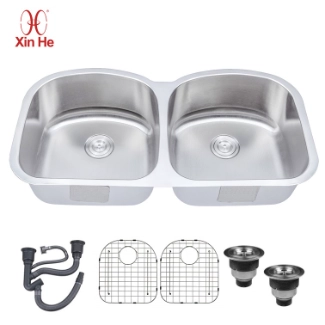
When people talk about the “gold standard” of the commercial undermount kitchen sink, they are almost always referring to stainless steel. But not all steel is created equal. For a project to succeed, you must look beyond the shine. For high-end residential or hospitality projects, a cUPC certified 304 stainless steel double bowl undermount kitchen sink provides the durability of 16-gauge steel with the luxury of integrated workstation accessories.
The Science of 304-Grade Steel
Most high-end commercial sinks, such as those manufactured by Xinhe, utilize Type 304 stainless steel. This alloy contains 18% chromium and 8% nickel (often referred to as 18/8). The chromium provides a hard, protective oxide layer that resists rust, while the nickel adds a deep, lustrous finish and improves impact resistance.
In an undermount kitchen sink stainless steel setup, the gauge (thickness) is the most critical metric. For B2B applications, we recommend nothing less than 16 to 18 gauge.
- 16-Gauge: Thicker and quieter, ideal for heavy-duty commercial use.
- 18-Gauge: The standard for high-end residential and light commercial projects.
Hygiene and NSF Compliance
In professional environments, hygiene isn’t a suggestion; it’s a legal requirement. A stainless steel undermount sink is non-porous. Bacteria, mold, and odors cannot penetrate the surface. This makes it the preferred material for hospitals and food service providers who must meet strict NSF/ANSI standards.
The Aesthetic Versatility of Finishes
One of the reasons designers love a commercial undermount sink in stainless steel is its neutrality. It complements any countertop material, from quartz to marble.
- Brushed Finish: The MVP of commercial spaces. It hides scratches and water spots, maintaining its look even after years of heavy scrubbing.
- Satin Finish: Offers a silky smooth texture that feels premium to the touch.
- PVD Nano-Coating: A modern innovation that allows stainless steel to take on colors like matte black or rose gold without losing its metallic durability.
2. Granite (Quartz) Composite Sinks: The Aesthetic Alternative
For developers working on “lifestyle” projects—such as boutique hotels or luxury multi-family housing—a granite composite undermount sink offers a different kind of appeal. These sinks are engineered from approximately 80% crushed quartz and 20% acrylic resin.
Pros of Composite for B2B
The primary draw here is the “stone look” without the “stone price.” Because these are molded, they can be produced in a variety of earthy tones—charcoal, beige, and slate. This allows the undermount kitchen sink to either blend into the counter or provide a striking contrast.
They are also incredibly quiet. The density of the quartz naturally dampens the sound of running water and clattering silverware, eliminating the need for the sound-deadening pads found on metal sinks.
The Commercial Reality: Durability Risks
While a quartz undermount kitchen sink is scratch-resistant, it is not invincible. In a high-traffic B2B setting, two issues often arise:
- Thermal Shock: If a pot filled with boiling water is dumped into a cold sink, the rapid temperature change can cause the resin to crack.
- Brittleness: Unlike steel, which dents under impact, granite composite can chip. If a heavy cast-iron pan is dropped, the damage is often permanent and cannot be buffed out.
For importers and wholesalers, this means higher potential for “shipping damage” and “installation breakage” compared to the nearly indestructible nature of steel.
3. Solid Surface Composite Sinks: The King of Integration
Commonly associated with brands like Corian, solid surface undermount sinks are made from acrylic or polyester resins mixed with bauxite ore. Their biggest selling point is “seamless integration.”
The Seamless Advantage
In many corporate offices or medical labs, the sink and the countertop are bonded together to create a single, continuous surface. This is the ultimate undermount vanity sink or kitchen solution for hygiene, as there is literally no seam between the bowl and the deck.
Maintenance and Longevity
The beauty of solid surface is that it is “renewable.” Small scratches or cigarette burns can be sanded out by a professional. However, for a utility sink or a high-volume kitchen, the heat resistance is significantly lower than both steel and granite. Placing a hot pan (over 325°F) directly in the sink can lead to permanent discoloration or deformation.
Comparative Analysis: The Performance Metric
| Feature | Stainless Steel (304 Grade) | Granite Composite | Solid Surface |
|---|---|---|---|
| Durability | Highest (Impact & Heat) | High (Scratch) / Low (Impact) | Medium (Heat Sensitive) |
| Hygiene | Exceptional (Non-porous) | Good (Needs cleaning) | Excellent (Seamless) |
| Weight | Lightweight (Easy Install) | Very Heavy (Needs Support) | Medium |
| Cost (TCO) | Lowest (Long lifespan) | Medium to High | High |
| Recyclability | 100% Recyclable | Non-Recyclable | Non-Recyclable |
Total Cost of Ownership (TCO)
For a procurement officer, the initial price tag is only part of the story. Ultimately, procurement teams must ask which commercial kitchen sink material lasts longest to prevent the hidden costs of early replacements. A stainless steel sink might have a lower entry price, but its true value lies in its 20-30 year lifespan. Granite and solid surface sinks often require replacement or specialized repair within 7-10 years in commercial settings, doubling the long-term expenditure.
Deep Dive into Installation: The Contractor’s Perspective
Specifying an undermount kitchen sink requires a deep understanding of the installation environment. It’s not just about the hole in the counter; it’s about the structural integrity of the entire cabinet.
Mounting Systems and Weight
A double bowl undermount sink in granite composite can weigh upwards of 40-50 lbs (20-25kg) before you even add water. This requires reinforced cabinetry and specialized undermount clips. In contrast, a stainless steel undermount kitchen sink is lightweight, allowing for faster installation and less strain on the stone or laminate countertops.
The “Reveal” Styles
When installing an undermount sink, contractors must choose the “reveal”:
- Positive Reveal: The countertop edge sits back, exposing a small portion of the sink rim. This is easiest to clean.
- Negative Reveal: The countertop overhangs the sink. This looks the sleekest but can be a breeding ground for mold if not caulked perfectly.
- Zero Reveal: The countertop edge is perfectly flush with the sink walls. This requires the highest precision in fabrication.
For large-scale projects, Xinhe provides precise CAD files and templates, ensuring that hundreds of units can be cut by CNC machines with zero margin for error.
Why Stainless Steel Wins the B2B Race
While we appreciate the beauty of composites, the data consistently points to stainless steel as the superior choice for professional projects.
1. Resilience in “Abuse” Environments
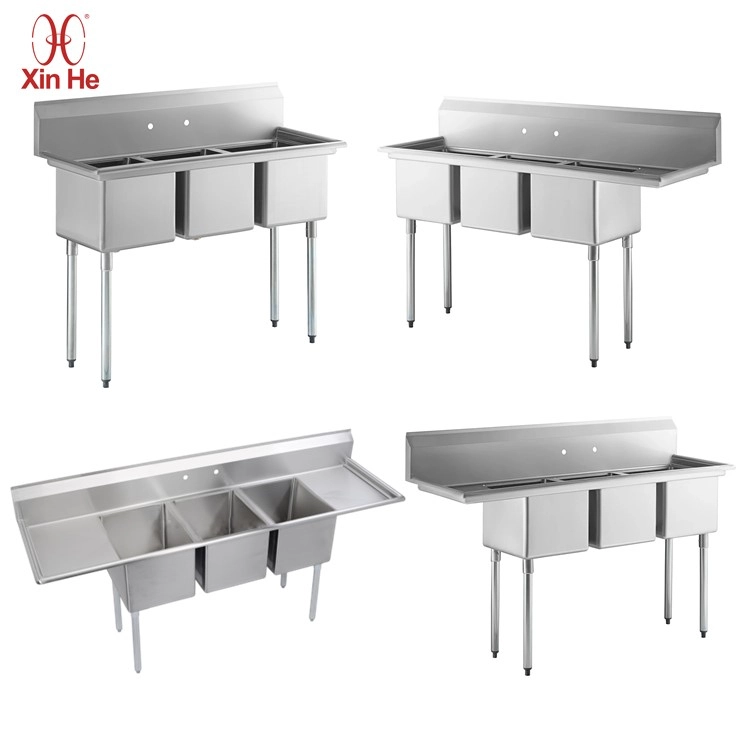
Think of a three compartment sink in a commercial kitchen or a laundry undermount sink in a hotel. These are “abuse” environments. Tools are dropped, harsh chemicals are used, and the water is always running. Stainless steel doesn’t crack, it doesn’t stain, and it doesn’t care about temperature swings.
2. Supply Chain Consistency
For an importer, consistency is everything. If you order 500 undermount kitchen sink stainless steel units, every single one will be identical in color and finish. With granite composite, slight variations in resin batches or quartz pigments can lead to “mismatched” units—a nightmare for multi-unit apartment developments.
3. Sustainability and LEED Credits
Modern commercial builds are obsessed with “Green” certifications. Stainless steel is a 100% recyclable material. Choosing a steel undermount kitchen sink contributes to a project’s LEED points, making it an easier sell to eco-conscious developers and government contractors.
Customization: The Edge for Wholesalers and Importers
The “one size fits all” approach doesn’t work in the B2B world. Sometimes, a project requires a small undermount kitchen sink for a bar area, or a three sink compartment setup for a laboratory.
Tailored Solutions
Working with a manufacturer like Xinhe allows for custom modifications that off-the-shelf retail sinks can’t offer:
- Custom Drain Placements: Moving the drain to the rear to maximize under-cabinet storage.
- Integrated Accessories: Built-in colanders, drying racks, and cutting boards that turn the sink into a workstation.
- Anti-Condensation Coating: Essential for sinks installed in humid climates or near refrigeration units to prevent cabinet rot.
Maintenance Protocols: Keeping the ROI High
To ensure an undermount kitchen sink lasts its intended 25-year lifespan, maintenance must be standardized.
- For Stainless Steel: A simple wipe-down with a microfiber cloth and occasional use of a stainless steel cleaner will keep the “passive layer” intact. Avoid steel wool, which can leave carbon steel particles that rust on the surface.
- For Granite Composite: These require a “sealant” refresh every few years to maintain stain resistance. They are prone to “limescale” buildup, which shows up as white hazy spots on darker sinks.
- For Solid Surface: Avoid harsh drain cleaners. If the surface becomes dull, it requires a professional buffing with a high-grit abrasive.
From an operational standpoint, the low-effort maintenance of a stainless steel undermount sink saves thousands of dollars in labor costs over the life of a commercial building.
Project Specifications: A Checklist for B2B Buyers
Before you place your next bulk order for an undermount kitchen sink, run through this technical checklist to ensure the product meets the project’s demands:
- Material Grade: Is it 304 or 316 (for coastal/marine environments)?
- Gauge Thickness: Is it 16-gauge (preferred) or 18-gauge?
- Sound Dampening: Does it have full-surface undercoating and extra-thick rubber pads?
- Radius Corners: Does it have “Zero-Radius” (modern/sharp) or “R10/R15” (easier to clean) corners?
- Certification: Does it carry cUPC, or NSF markings?
- Packaging: Is the bulk packaging “drop-test” certified for international shipping?
Conclusion: Making the Final Selection
In the debate of undermount kitchen sink: stainless steel vs granite vs composite, the winner depends on the project’s soul.
- If the project is a High-Traffic Commercial Space (Restaurant, Hospital, School), Stainless Steel is the only logical choice. Its durability, hygiene, and lifecycle cost are unmatched.
- If the project is a Luxury Residential Development where the “wow factor” of color is prioritized over heavy usage, Granite Composite is a strong contender.
- If the project is a Boutique Office or Laboratory requiring a seamless, integrated aesthetic, Solid Surface offers the best design flexibility.
As a leading manufacturer, Xinhe understands that B2B success is built on more than just a product; it’s built on technical support, on-time delivery, and material integrity. Whether you are looking for a standard undermount kitchen sink or a custom-engineered solution for a stadium or hotel chain, choosing the right material is the first step toward a successful build.
Ready to Specify Your Next Project?
Don’t leave your sink selection to chance. The right undermount kitchen sink can be the difference between a project that ages gracefully and one that requires constant repairs.
Would you like me to help you draft a technical specification sheet for your next tender, or perhaps you’d like a custom quote for a high-volume order?
Contact our engineering team today or visit our website to explore our latest collection of stainless steel sink solutions. Let’s build something durable together.
FAQs
1. Is an undermount kitchen sink harder to install than a drop-in?
Yes, it requires more precision. The countertop must be cut exactly to the sink’s dimensions, and the sink must be supported from below. However, for B2B projects, the “cleanability” benefits far outweigh the slightly higher installation cost.
2. Can I use a stainless steel sink for an outdoor kitchen project?
Absolutely, but we recommend upgrading to 316-grade stainless steel, especially if the project is near the ocean. It offers higher molybdenum content to resist salt-air corrosion.
3. Why is 16-gauge better than 18-gauge for a commercial undermount sink?
The lower the number, the thicker the steel. 16-gauge is roughly 1.5mm thick, making it significantly more resistant to denting and noise than 18-gauge (1.2mm).
4. Are composite sinks prone to staining?
They can be. While highly resistant, light-colored granite composite sinks can develop stains from coffee, wine, or tea if the spills are left for extended periods. Stainless steel, by contrast, is virtually immune to permanent staining.
NEXT:
Not NEXT