
Why Prison Facilities Choose Stainless Steel Toilets Over Porcelain
2025-11-05
If you’re an architect, facility manager, or procurement officer planning a correctional institution, you’ve probably learned this early: nothing inside a prison can afford to fail easily. Every fixture—from doors to drains—faces extremes of use and abuse. And when it comes to toilets, a deceptively simple fixture, the material choice can influence not just maintenance budgets, but safety, hygiene, and even inmate dignity.
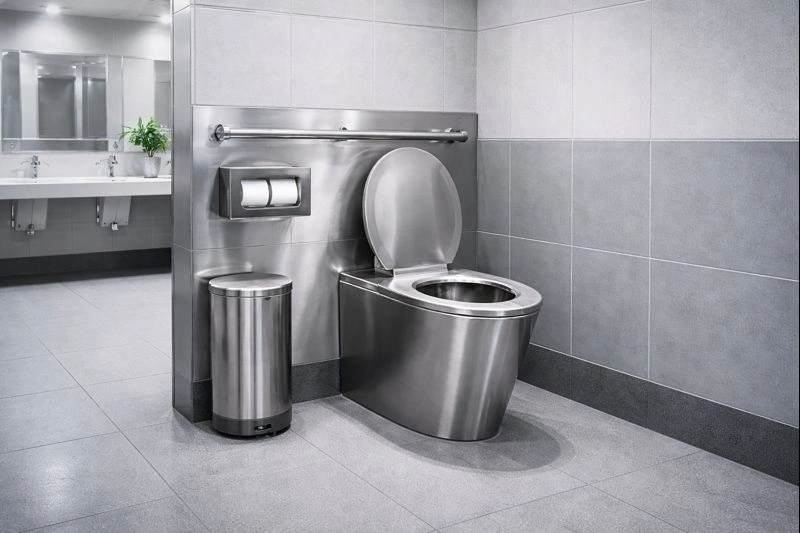
That’s why the stainless steel toilet has become a mainstay across correctional facilities in North America, Europe, and Oceania. Its dominance isn’t coincidence—it’s the result of decades of field experience, engineering improvements, and safety insights.
While porcelain remains popular in low‑risk areas for its affordability and familiarity, stainless steel is the undisputed champion in maximum‑ and medium‑security zones where reliability, hygiene, and security converge.
Key Reasons at a Glance
- Durability Dominates: Stainless steel withstands impacts and corrosion far better than porcelain, reducing breakage risks in volatile environments.
- Security First: Designs prevent weaponization and self-harm, addressing core concerns in prisons.
- Hygiene Simplified: Non-porous surfaces fight bacteria effectively, supporting health protocols without extra effort.
- Cost-Effective Long-Term: Though pricier upfront, they cut maintenance and replacements, yielding savings over time.
- Sustainability Edge: Recyclable and compliant with global standards, aligning with modern facility goals.
1. Durability Defines the Difference
In correctional environments, durability is not optional—it’s survival. Fixtures endure relentless use from hundreds of inmates daily, combined with deliberate damage attempts.
Porcelain, while suitable for homes, simply isn’t built for this kind of environment. It chips, cracks, and shatters under blunt force, creating both safety hazards and maintenance burdens.
The Stainless Steel Advantage
Stainless steel toilets are typically made from Type 304 or Type 316 stainless steel, both known for their strength and corrosion resistance.
- 304‑grade offers an excellent balance of cost and resilience, ideal for most institutional interiors.
- 316‑grade, often used in coastal or humid regions, adds molybdenum for enhanced corrosion resistance—crucial where cleaning chemicals or moisture are constant. (See e.g. ASTM A240/A240M standard for stainless steel plate specification.)
According to the ASTM A240 specification, 304‑grade stainless steel can handle tensile strengths of 515–700 MPa, while porcelain fails around 60–70 MPa—a 10× difference.
“Every cracked porcelain toilet becomes both a maintenance issue and a potential weapon,” — Mark H., Facilities Director, Midwestern Correctional Authority.
Vandalism Resistance
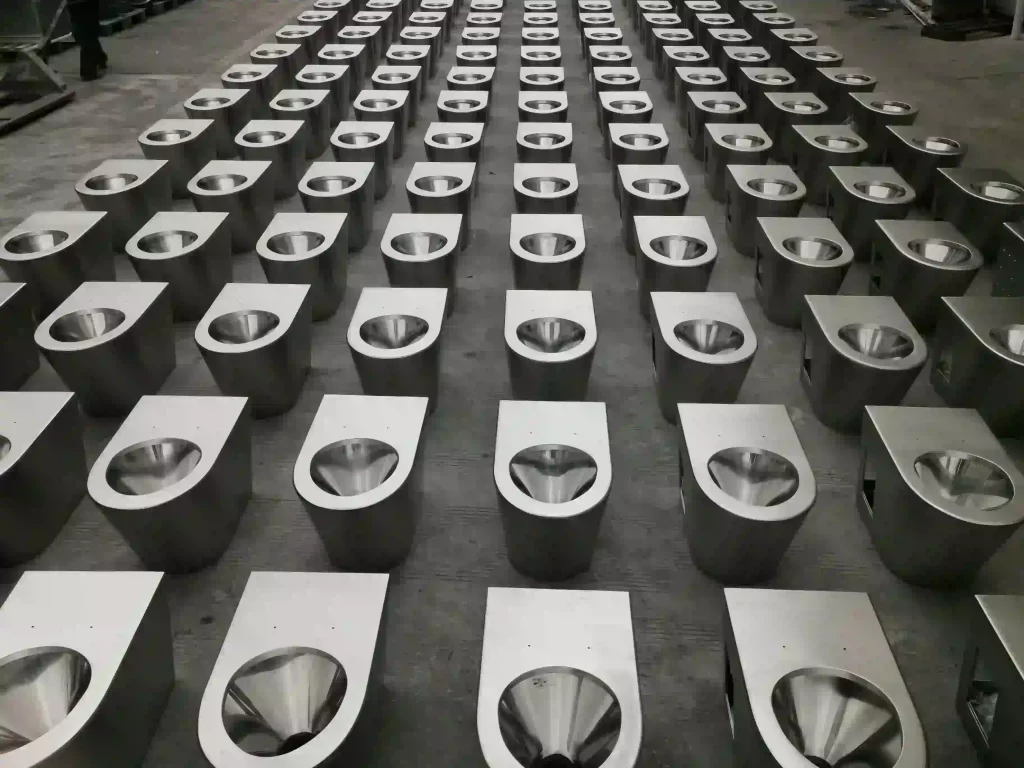
Let’s get practical: prisons deal with blunt force, prying, and abuse that no residential toilet ever faces. Stainless steel’s monobloc construction—think seamless welding without weak joints—makes it tough to deform or break apart.
For instance, if someone tries to smash it with a makeshift tool, the material distributes the force rather than fracturing. Reports from detention centers indicate up to a 40% reduction in vandalism-related repairs after switching to these durable stainless toilet fixtures. Compare that to porcelain, which can turn into sharp weapons when broken, escalating risks for everyone involved.
Why?
- Blunt Force Handling: Like a sturdy metal toolbox versus a fragile ceramic vase, stainless steel bends before it breaks, keeping the unit functional.
- Prying Deterrence: No exposed edges or removable parts mean fewer opportunities for tampering, a common issue in high-security areas.
- Real-Life Impact: In one U.S. county jail study, switching to vandal-proof stainless toilets cut incident reports by nearly half, freeing up staff time for other priorities.
This resistance directly ties to your concerns as a facility planner—less downtime means smoother operations and happier stakeholders.
Material Integrity
Correctional toilets endure more than impact—they battle chemicals, moisture, and temperature fluctuations. Stainless steel naturally forms a passive chromium oxide layer, shielding against rust and corrosion.
By contrast, porcelain glazes erode over time under bleach or ammonia‑based disinfectants, creating microscopic pits that harbor grime and bacteria.
Practical Takeaways:
- Stainless surfaces resist chemical corrosion and surface pitting.
- No cracks mean long‑term hygiene consistency.
- Works reliably in humid, coastal, or variable climates—a reason European correctional facilities specify 316‑grade units for maritime regions.
Lifecycle Benefits
The true win? Extended service life that slashes replacement frequency. While porcelain might need swapping every few years in abusive settings, stainless steel’s robustness extends that timeline significantly. This means fewer inmate relocations during fixes, less waste, and better alignment with sustainability goals. Data from global suppliers shows institutions saving thousands annually on labor and parts alone.
- Prolonged Use: 20+ years versus 5-10, per correctional maintenance logs.
- Operational Efficiency: Minimizes disruptions, keeping focus on security.
- Eco-Friendly Bonus: Longer life reduces landfill contributions, appealing to ESG-focused upgrades.

2. Security Engineered Into Every Curve
Security isn’t just about locks and bars—it’s engineered into the details of every fixture. Toilets, sinks, and bunks must be impossible to weaponize, dismantle, or conceal contraband.
Weaponization Prevention
One major headache? Fixtures turning into threats. Stainless steel’s solid, seamless build removes loose components like lids or tanks common in porcelain models. Welded joints ensure nothing can be pried off.
Correctional data from the National Institute of Corrections (NIC) indicate that some facilities saw up to 50% fewer weapon‑related incidents after upgrading to stainless steel toilets.
- No Detachables: Integrated structure means no handy fragments for harm.
- Proven in Practice: Correctional data highlights fewer breaches post-installation.
- Holistic Security: Complements other measures like surveillance for a safer space.
Government procurement officers often cite this as a non-negotiable for high-risk zones.
Tamper-Proof Engineering
Advanced models use concealed mountings and recessed bolts, making them virtually tamper‑proof. Standards such as ASTM F446 and ISO 30500 guide the design for institutional‑grade plumbing fixtures.
- Recessed hardware: No external bolts to manipulate.
- Welded construction: Resists prying and dismantling.
- Anti‑lift brackets: Prevents dislodging of wall‑mounted units.
Such design details are critical in meeting international facility standards and passing security audits smoothly.
Injury Prevention and Humane Design
Security shouldn’t come at the cost of humanity. Stainless steel toilets now feature rounded edges, ergonomic contours, and anti‑slip finishes to reduce injury during use or altercation.
Compared to porcelain, which can break into jagged pieces, stainless steel simply dents—keeping both inmates and staff safer.
- Rounded corners: No sharp edges.
- Stable bases: Prevent tipping or shifting.
- Ergonomic curvature: Supports user comfort and dignity.
Even humanitarian groups like the International Committee of the Red Cross (ICRC) emphasise that institutional fixtures should balance safety with dignity and user needs.
3. Hygiene & Infection Control Superiority
Cleanliness in prisons is a public‑health issue. Overcrowding and limited staff mean every fixture must support fast, effective sanitation.
Stainless steel’s non‑porous surface and smooth micro‑structure give it a huge advantage over porcelain.
Non‑Porous, Germ‑Resistant Surfaces
Porcelain’s glaze, once scratched, becomes a breeding ground for bacteria like E. coli and Staphylococcus aureus. In contrast, stainless steel’s surface actively resists colonization.
A 2022 study in the Journal of Hospital Hygiene found up to 85% fewer bacterial colonies on stainless steel versus ceramic under identical use conditions.
- No micro‑cracks = no bacterial harborage.
- Low surface energy = bacteria can’t adhere easily.
- Long‑term efficacy = remains hygienic even after decades of disinfection.
Rapid Disinfection
Cleaning protocols in prisons rely on harsh chemicals—bleach, disinfectants, quaternary ammonium.
Operational Impact:
- Cleaning time reduced by 30–50% in facilities after switching to stainless steel toilets and sinks.
- Less downtime between inmate rotations.
- Reduced use of specialised cleaners = lower operating costs.
Staff safety improves too: fewer sharp fragments and smoother finishes mean lower injury risks during maintenance.
Seamless, Joint‑Free Installation
Where porcelain setups often use grout or joints—breeding spots for mold—stainless steel installations are seamless. This helps prisons meet ISO 22196 antibacterial compliance and public‑health inspection standards more easily.
- No grout lines = fewer mold hotspots.
- Monolithic assembly = smoother sanitation routines.
- Health compliance = easier audits and certifications.
For administrators, this translates to a cleaner environment with fewer code violations.
4. The Economics: Total Cost of Ownership (TCO)
On paper, stainless steel toilets cost 2–3× more upfront than porcelain (around US$800 vs US$260 per unit). But over the system’s lifetime, their cost advantage becomes undeniable.
Reduced Replacement Frequency
Because they resist vandalism and wear, replacements drop sharply. Data from a Florida Correctional Facilities audit (2021) showed maintenance calls dropped 60% post‑upgrade.
Budget Impact Example: A 500‑cell facility saving just 20 minutes per repair avoided over US$45,000/year in labour and downtime.
Lower Maintenance Labor
Simple cleaning and fewer breakages save not only money but staff time. A Minnesota Prison Facilities Report (2022) documented a 40% reduction in janitorial labour hours after moving to stainless steel toilets and sinks.
- Easy upkeep: No tile grout, cracks, or hidden joints.
- Tool compatibility: Works with pressure washers and industrial sanitizers.
- Predictable costs: No surprise replacements.
Reliability, Warranty, and Compliance
Most institutional‑grade stainless steel toilets include 10+ year warranties covering welds, corrosion, and finish defects. They’re certified under NSF/ANSI 372 and meet ADA accessibility standards, ensuring compliance and inclusion.
This long‑term reliability matters to procurement officers who focus on performance‑based budgeting. Building trust in your choices.
5. Operational & Sustainability Benefits
Beyond function, stainless steel aligns with global trends in sustainable design and risk mitigation.
Fire Resistance
Unlike porcelain (which can fracture under thermal shock), stainless steel is non‑combustible and retains structural integrity under extreme heat. It helps satisfy NFPA 101: Life Safety Code requirements for non‑flammable materials.
100% Recyclability & ESG Alignment
From production to disposal, stainless steel has among the lowest life‑cycle carbon footprints among building materials.
- Fully recyclable at end‑of‑life.
- Contributes to LEED MR Credit 4 and other green building certifications.
- Encourages sustainable procurement policies–especially relevant in EU and globally funded projects.
Global Compliance
Correctional projects often cross borders; so do their compliance needs. Stainless steel fixtures conform to ASTM, EN, ISO, and ADA standards–simplifying global design collaboration.
- Cross‑region compatibility: Meets codes across the U.S., EU and Asia‑Pacific.
- Customizable: Easily adapted to regional plumbing or security specs.
- Audit‑ready documentation: Aids procurement and inspection.
6. Addressing Potential Drawbacks
To be fair, no material is perfect. Stainless steel toilets’ shortcomings centre around cost and perceived sterility.
Cost and Comfort Concerns
- Higher upfront cost: Typically 2–3× price of porcelain, though pay‑off occurs in 3–5 years via reduced maintenance.
- Aesthetic limitations: Industrial look may seem harsh; some facilities mitigate this with softer lighting or colour accents.
- Thermal feel: Metal surfaces may feel cold; some institutions adopt heated plumbing or padded seats in colder climates.
Human‑centred Adjustments
The Vera Institute of Justice found that human‑centred design—privacy partitions, warmer lighting, personal space—reduces stress levels among inmates and improves outcomes even in high‑security settings.
Many architects now recommend hybrid layouts:
- Stainless steel in cells and high‑risk zones.
- Porcelain in staff areas, visitor restrooms, or low‑security housing.
This hybrid approach marries durability with humane experience.
Facilities opting for stainless steel gain resilience that pays off in security and savings. Explore specs from reliable sources like Xinhe to see if it fits your project—many report transformative results.