
Custom Three Compartment Sink Fabrication
2026-01-06
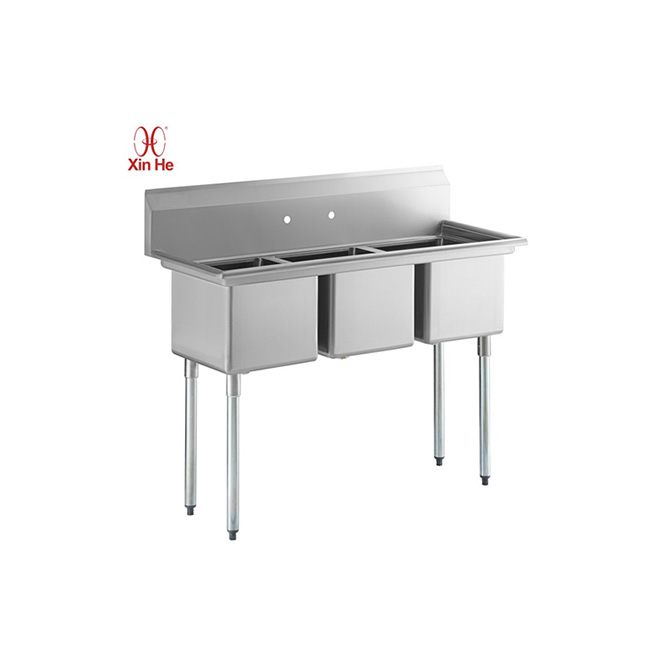
Kitchens in restaurants, labs, or factories often face a squeeze: standard sinks just don’t fit quirky spaces or handle unique tasks without hassle. This mismatch slows work, hikes costs, and risks failing health checks. A custom stainless steel three compartment commercial sink steps in as a smart fix, crafted to exact specs for seamless wash-rinse-sanitize flows, boosting efficiency and compliance with rules like NSF/ANSI.
Think of custom fabrication as building a sink that’s part of your team’s rhythm, using top-notch stainless steel for lasting value. Xinhe brings expertise in turning B2B needs into reliable, OEM-ready products. This guide covers the why, how-to-plan, materials, process, and partnership steps to help wholesalers, contractors, and importers make informed choices.
Part 1: The Compelling Case for Custom Fabrication Over Stock Sinks
Off-the-shelf sinks might tempt with low prices, but they often lead to hidden costs in mismatched setups. Custom options shine in B2B scenarios, where precision means better operations and fewer headaches down the line.
1.1 Perfect Fit for Unique and Awkward Spaces
Imagine a narrow galley kitchen or a corner spot jammed with pipes—stock sinks force awkward cuts or extra plumbing. A custom three compartment sink molds to your layout, like adjusting widths to 24 inches for tight spots or adding curves for L-shapes.
For wholesalers supplying diverse sites, this means products that drop in without drama, cutting installation time by up to 30%. Consider a hospital cafeteria: custom fits prevent water leaks and maintain sterile zones, avoiding costly downtime.
1.2 Workflow-Driven Design for Peak Efficiency
Daily routines vary— a busy diner needs quick rinses, while a bakery demands deep soaks for dough trays. Customizing compartment sizes, say 20×20 inches for wash and shallower for sanitize, aligns with your cycle.
Add features like side drainboards or built-in sprayers, and you shave seconds off each task, adding up to hours weekly. From a contractor’s view, this ups client satisfaction; importers see it as a edge in markets demanding speed, like fast-casual chains.
1.3 Built-in Compliance and Enhanced Hygiene
Failing inspections? Stock sinks with sharp edges trap grime, but custom ones feature smooth, rounded corners that wipe clean easily, hitting NSF/ANSI 2 and FDA marks.
In food service, this means fewer bacteria risks—think seamless bottoms that drain fully. Following standard 3-compartment sink rules ensures your staff maintains a hygienic environment, while traders benefit as compliant commercial sinks ease customs clearance.
1.4 Long-Term Value and Cost-Effectiveness
Upfront, custom might cost 20% more, but factor in durability. Stock units dent or rust in two years; custom, with reinforced legs, last five-plus.
ROI example: A cafe saves $500 yearly on repairs. For B2B, this translates to bulk orders with better margins—wholesalers can pitch “invest once, save ongoing.”
| Factor | Stock Sinks | Custom Sinks |
|---|---|---|
| Initial Cost | Low | Moderate |
| Lifespan | 2-3 years | 5-10 years |
| Maintenance | High (frequent fixes) | Low (built tough) |
| Efficiency Gains | Minimal | Up to 25% faster workflows |
| Compliance Risk | Higher | Lower, with certifications |
Part 2: Planning Your Project: A Step-by-Step Framework
Jumping in without a plan? That’s a recipe for delays. This framework gives B2B pros a clear path, from measurements to timelines.
2.1 The Master Measurement and Site Assessment Checklist
Accuracy first—wrong sizes mean returns. Here’s a practical list:
- Space dimensions: Measure length, width, height; note overhead cabinets.
- Utilities: Pinpoint water inlets, drains; check voltage for add-ons.
- Access paths: Door widths, turns—ensure the sink fits through.
- Load factors: Floor strength for filled weight (up to 200 lbs).
- Environment: Humidity, traffic—guides material picks.
Wholesalers: Use this to pre-qualify orders, reducing errors.
2.2 Defining Usage, Flow, and Regulatory Requirements
Key questions shape your three compartment sink for restaurants:
- What’s the main job? Dishwashing or veggie prep?
- Volume? 100 plates hourly needs bigger basins.
- Exposures? Harsh soaps suggest corrosion-proof steel.
- Must-haves? Local codes, like California’s water rules.
This ensures a NSF certified three compartment sink that fits regs, helping importers navigate international standards.
2.3 Establishing a Realistic Budget and Timeline
Costs break down like this:
| Cost Driver | Example | Range |
|---|---|---|
| Material | 304 stainless | $500-800 |
| Gauge/Size | 16-gauge, 60″ wide | +$200-400 |
| Accessories | Drainboards, faucets | +$100-300 |
| Customization | Welds, finishes | +$150-500 |
| Shipping | Overseas | $200-600 |
Total: $1,000-3,000 for basics. Timeline: 2 weeks design, 4-6 fabrication, 1-2 shipping. Contractors: Buffer 10% for tweaks.
Part 3: Materials and Design: Making Informed Choices
Materials aren’t just metal—they’re the backbone of performance. Let’s break it down simply.
3.1 Stainless Steel Grades Decoded: 304 vs. 316L
304 is your everyday hero: mostly chromium and nickel, it fights basic rust well, perfect for dry indoor spots like cafes.
316L ups the game with molybdenum, like a shield against salty splashes or cleaners—great for coastal kitchens or labs.
Compare:
| Grade | Composition | Best For | Drawback |
|---|---|---|---|
| 304 | 18% Cr, 8% Ni | General use | Weaker vs. chlorides |
| 316L | 16% Cr, 10% Ni, 2% Mo | Harsh environments | Higher cost (20-30%) |
For stainless steel three compartment sink buyers, weigh exposure: 304 saves cash, 316L cuts long-term fixes.
3.2 Understanding Gauge Thickness and Surface Finishes
Gauge is thickness—lower number, tougher sink. 16-gauge feels solid, resisting bangs from pots; 18-gauge is lighter but dents easier. When durability is the priority, choosing a 16-gauge stainless steel sink over 18-gauge provides the structural integrity needed for heavy-duty use.
Finishes: Brushed hides fingerprints, like a matte photo; mirror shines but shows smudges; textured grips wet items.
Pick for use: Busy spots? Brushed on a heavy duty three compartment sink for easy upkeep.
3.3 Structural Design and Functional Accessories
3.3.1 Compartment Dimensions, Depth, and Drainage Slope
Size matters: Standard 18x18x12 inches suits most, but deepen to 14 inches for big gear. Slope 1/8 inch per foot lets water flow out, no puddles.
This tweaks capacity— a three compartment sink dimensions setup for high volume holds 20% more, easing rushes.
3.3.2 Welding Integrity: The Importance of Continuous Welds
Spot welds crack; continuous TIG ones seal tight, like gluing without gaps. No spots for germs, easier scrubs.
In hygienic three compartment sink designs, this meets health codes, saving inspection woes.
3.3.3 Accessory Integration
Mix in:
- Faucet holes: Pre-drilled for quick setup.
- Soap holders: Keeps things tidy.
- Waste chutes: Speeds cleanup.
- Cutting boards: Built-in for prep.
For three compartment sink with drainboard, this turns a sink into a workstation, boosting productivity by 15%. Understanding the benefits of a kitchen sink with a drainboard can help you decide if integrated drying space is the right move for your workflow.
Expand on trends: In 2025, eco-features like water-saving slopes are hot for green certifications.
Case: A chain importer customized for Asian markets, adding deeper rinses for rice washing—sales jumped 25%.
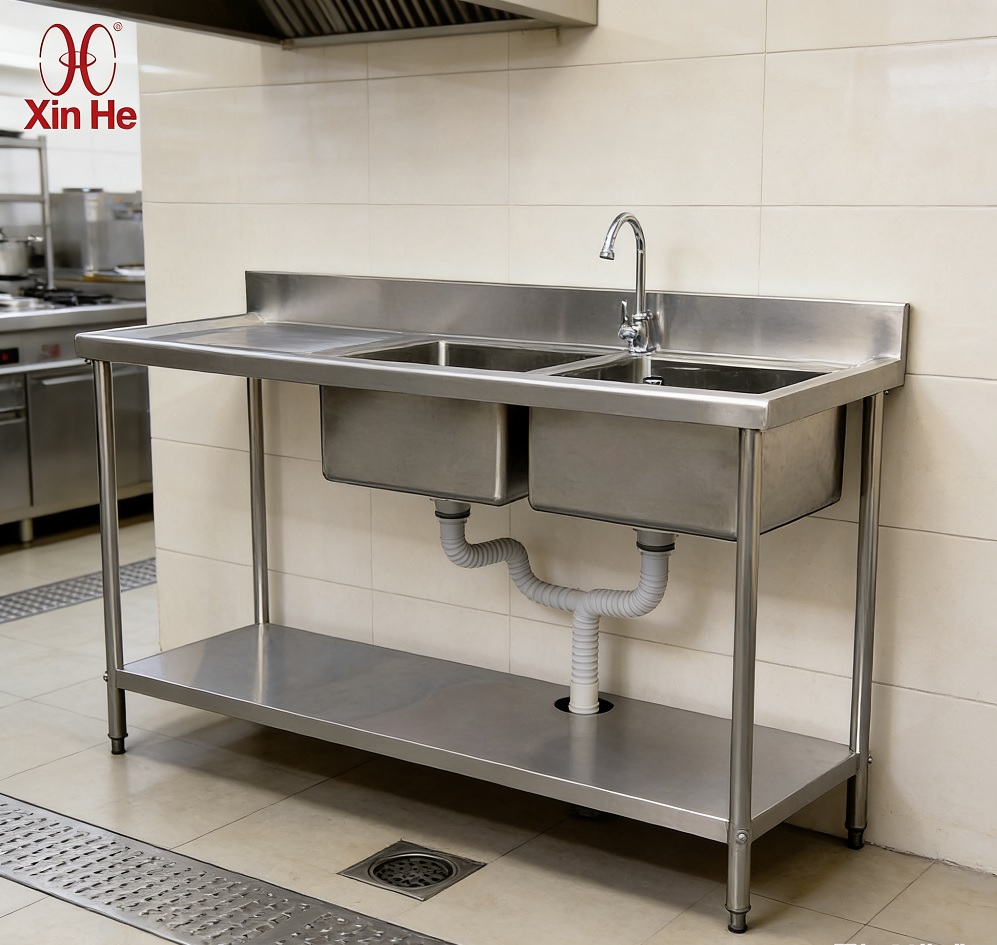
Part 4: Inside Xinhe’s Fabrication Process: How Quality is Engineered
Peek behind the curtain: Fabrication blends tech and craft for sinks that endure.
4.1 From Digital Blueprint to Precision Cutting
Start with CAD: Sketch in 3D, tweak virtually. Laser cuts sheets to 0.1mm accuracy, wasting less.
This nails complex custom fabricated sink shapes, like offset compartments for ergonomics.
4.2 Welding, Forming, and Surface Refinement
Forming bends metal gently; TIG welding fuses seamlessly. Polish smooths; passivation adds a rust-barrier layer.
Result? A durable three compartment sink that looks pro and lasts.
4.3 Multi-Stage Quality Assurance and Compliance
Checks everywhere:
- Dimensions: Laser scans for fit.
- Welds: X-ray tests strength.
- Finishes: Visual and touch inspections.
- Leaks: Pressure tests.
- Certs: Match NSF/ANSI docs.
For three compartment sink compliance, this ensures export-ready quality, vital for traders.
Deep dive: In high-stakes sectors like pharma, extra passivation steps prevent contamination— a must for B2B trust.
Part 5: Xinhe Consultation and Support Journey
Teaming up makes custom easy. Here’s the flow.
5.1 Phase 1: Deep Dive into Your Needs
Chat details: Space, use, budget. Clarify for a solid base.
This avoids missteps, like oversized three compartment sink for food service in small spots.
5.2 Phase 2: Collaborative Design and Solution Finalization
Drawings arrive; suggest tweaks, like 316L for coastal clients. Iterate till perfect.
B2B win: Custom OEM three compartment sink aligns with branding.
5.3 Phase 3: Transparent Quotation and Project Execution
Itemized quote: No surprises. Updates via email/photos through build and ship.
Typical three compartment sink lead time: 6-8 weeks, with rush options.
Expand: Post-sale support includes install guides, helping contractors seal deals.
Conclusion
A custom three compartment sink isn’t just plumbing—it’s a boost to hygiene, speed, and savings. Tailored fits solve real pains, from tight spaces to tough regs.
Xinhe delivers B2B-savvy, quality-focused solutions in stainless steel.
Contact a Xinhe expert for a free consultation and quote. Check our gallery for ideas on specs and designs.
FAQs
What are the main benefits of a custom three compartment sink for my business?
Better fit, flow, hygiene, and ROI through tailored efficiency.
How do I determine the right size and configuration for my facility?
Measure space, assess volume, use checklists for three compartment sink configuration.
What materials and finishes are available for customization?
304/316L, gauges 14-18, brushed/mirror for customization options.
How does Xinhe ensure compliance with industry standards?
Rigorous QC, from welds to tests, meeting NSF/ANSI.
What is the typical lead time for a custom order?
6-8 weeks, depending on complexity.
How can I start the consultation process with Xinhe?
Email or call for a needs chat.