
How to Arrange a 3 Compartments Sink for High-Volume Ops
2025-12-26
Imagine a busy kitchen during dinner service. Staff move quickly, orders keep coming, and dirty dishes pile up fast. Without the right setup, things can fall behind. A well-planned 3 compartments sink supports the full wash–rinse–sanitize process required by health codes. Kitchens that follow this method tend to face fewer issues during inspections, while keeping dishes cleaner and teams working more smoothly.

3 Compartments Sink Setup and Workflow
Standard Configuration and Station Layout
The right setup keeps everything organized and meets health codes. Each compartment has a clear job: washing, rinsing, or sanitizing.
Tip: Place drainboards on both sides of the sink. This gives workers space to stack dirty dishes before washing and clean dishes after sanitizing.
Below is a simple overview of how each compartment works, along with common temperature and size requirements used in commercial kitchens:
| Compartment | Purpose | Temperature Requirement | Dimensions |
|---|---|---|---|
| 1 | Wash | 110°F minimum | 18″ x 18″ to 24″ x 24″ |
| 2 | Rinse | Clean hot water (110°F+) | 18″ x 18″ to 24″ x 24″ |
| 3 | Sanitize | 171°F or chemical solution | 18″ x 18″ to 24″ x 24″ |
- Deep-drawn bowls and rounded corners make cleaning easier.
- Stainless steel legs with cross bracing add strength.
- Leave enough space between compartments for easy movement.
- Install a P-trap under each drain to stop odors and blockages.
A sloped drain base helps water flow out fast. This keeps the sink clean and ready for the next load. Many kitchens choose sinks with anti-splash designs to keep water off the floor.
Step-by-Step Washing, Rinsing, and Sanitizing
Every dish must go through the same steps in a 3 compartments sink. This process removes food, kills germs, and keeps dishes safe for use.
Here’s how the workflow goes:
- Remove food: Before washing, leftover food should be scraped into the trash.
- Scrub: In the first compartment, dishes are scrubbed in hot, soapy water (at least 110°F).
- Rinse: The second compartment holds clean, hot water. Staff rinse off all soap and food bits here.
- Sanitize: In the third compartment, dishes soak in either hot water (171°F or higher) or a chemical sanitizer. They must stay in the sanitizer for at least 30 seconds.
- Dry: Dishes air-dry on a clean rack or drainboard. Never use towels, as they can spread germs.
Note: When wash water starts to look cloudy, it’s time to change it. Fresh water and sanitizer solutions should also be replaced every 2–4 hours to maintain proper hygiene.
Health Code Compliance and Common Mistakes
Following the right steps with a 3 compartments sink keeps kitchens safe and avoids fines. Health inspectors look for proper use, water temperature, and clean water.
In real kitchens, a few common mistakes can lead to failed inspections if they’re not addressed early:
- Improper Use: Staff sometimes use the sink for things other than washing, rinsing, and sanitizing dishes. This can lead to violations.
- Temperature Noncompliance: Water that is too cool does not clean or sanitize well. Always check temperatures with a thermometer.
- Dirty Water: Not changing dirty water can spread germs. Replace water and sanitizer often.
Alert: Training and monitoring are key. Teach staff the right steps and keep a cleaning log.
When kitchens follow these steps, they lower the risk of food safety problems. Each compartment has a job. Washing removes grease and food. Rinsing clears away soap. Sanitizing kills germs. This system keeps dishes safe for everyone.
Optimizing Efficiency and Hygiene in High-Volume Operations

Workflow Design and Staff Roles
A clear workflow helps busy kitchens work well. Each person has a job at the 3 compartments sink. This keeps things clean and fast.
- Give one worker each compartment when it is busy.
- Clean the sink every day after each shift to stop buildup.
- Check water heat and sanitizer all day.
- Do not let food go down the drain. Use hot water to flush and stop clogs.
Tip: Switch workers between stations. This helps them stay awake and not get too tired.
Tools and Accessories for Speed
Good tools help staff clean dishes faster. They also keep the area neat.
- Drainboards give space for dishes to dry and help organize work.
- Pre-rinse sprayers wash off food before cleaning. This keeps the compartments cleaner.
- Soap dispensers built into the sink cut down on mess and make soap easy to get.
- Deep bowls and sloped drain designs help water drain faster and keep the work area dry.
These tools mean less mess. Staff can spend more time washing, rinsing, and sanitizing.
Troubleshooting and Quick Solutions
Problems can slow dishwashing when it gets busy. Fast fixes help staff solve problems and keep working.
| Common Issue | Quick Solution |
|---|---|
| Slow draining water | Look for food in the drain. Use a drain snake to clear it. |
| Leaky faucets | Put in new washers if they are old. |
| Cloudy or dirty water | Change the water right away to stay safe. |
Beyond quick fixes, daily habits also play a big role in preventing repeat issues.
- Only use the 3 compartments sink for washing dishes.
- Use a sprayer and a food scrap catcher to stop clogs.
- Check water heat with a thermometer to keep things safe.
Checking often and fixing problems fast keeps the kitchen running and helps staff do their jobs.
Choosing the Right 3 Compartments Sink for Your Business
Size, Material, and Features
Picking the right 3 compartments sink means knowing what your kitchen needs. The right size, material, and features help kitchens work well and follow health rules.
- Pick a sink made from 304 stainless steel. This kind of steel does not rust and can handle lots of use.
- Choose a lower gauge number, like 14 or 16. Thicker steel lasts longer in busy kitchens.
- Make sure each compartment is big enough for your largest pots and pans.
- Deep bowls, sloped drain bases, and built-in drainboards make cleaning and drying easier.
| Factor | Description |
|---|---|
| Material | 304 stainless steel is best for durability and rust resistance. |
| Compartment Size | Three compartments support washing, rinsing, and sanitizing. |
| Gauge of Steel | 14 or 16 gauge is ideal for high-volume kitchens. |
Product Key Features to Look For
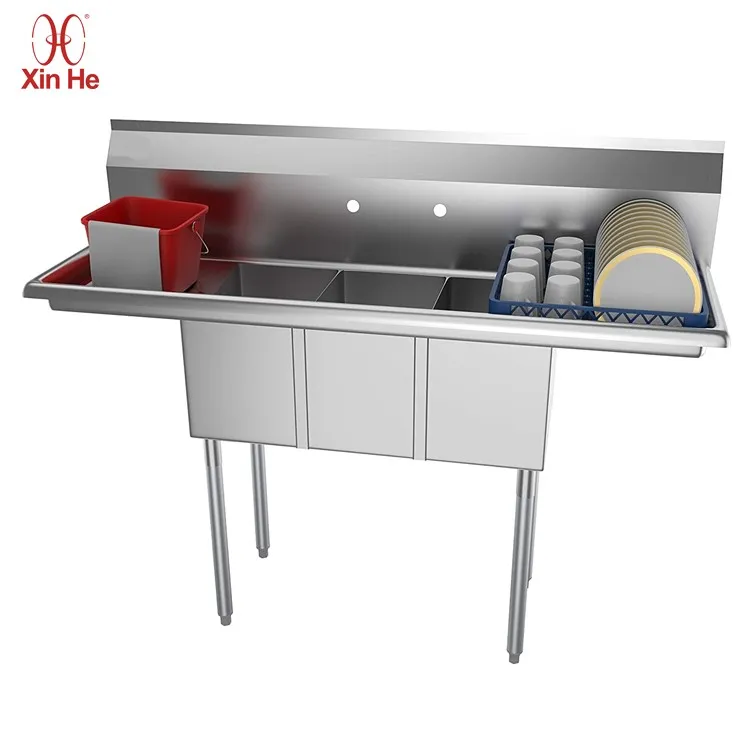
As one example, Xinhe offers 3 compartments sink options designed for busy commercial kitchens, with flexible sizing and feature choices. In addition, Xinhe has factory in Vietnam, so international buyers can pay less tax.
| Feature | Xinhe’s Sink |
|---|---|
| Sink Style | Triple Bowl |
| Material | 304/201/316 Stainless Steel |
| Thickness | 18 Gauge / 16 Gauge |
| Warranty | 5 years |
| After-sale Service | Online support, return, replacement |
Xinhe’s sinks look modern and come with a strong warranty. They are good for big projects.
Real-World Applications and Best Practices
Case Studies
The 3-compartment sink is the backbone of any commercial kitchen, essential for meeting health department “Wash, Rinse, Sanitize” regulations. Xinhe transforms this utility into a high-performance workstation, as demonstrated in our recent large-scale institutional projects.
1. Large-Scale Campus Dining: Throughput & Durability
High-volume university cafeterias require dishwashing stations that can handle thousands of items per shift without bottlenecking.
- The Problem: Standard off-the-shelf sinks often lack the bowl depth or drainage speed required for industrial-sized cookware, leading to water overflow and slower turnarounds.
- Xinhe Solution: For major education tenders, we engineered extra-deep 3-compartment sinks with custom-pitched drainboards. By using precision CNC folding, we ensured rapid drainage and zero standing water, allowing staff to move through the sanitization cycle 25% faster than with standard units.
2. Healthcare & Hospitality: Precision Sanitation
In hospitals and luxury hotel kitchens, the 3-compartment sink must prevent cross-contamination while fitting into non-standard architectural footprints.
- The Problem: Limited kitchen space often forces a compromise on sink size, making it difficult to fully submerge large trays for proper sanitization.
- Xinhe Solution: Xinhe utilized its 33,000 m² facility to manufacture bespoke 3-compartment units with integrated high-rise splash guards and custom dimensions. These were designed to fit exactly into designated alcoves, maximizing workspace while ensuring every bowl met the volume requirements for chemical sanitization.
Engineering Excellence for Heavy-Duty Use
| Feature | Impact on Operations |
|---|---|
| 304/316 Grade Steel | Exceptional resistance to corrosive sanitizing chemicals and heavy impact. |
| Ergonomic Design | Custom height and rounded “coved” corners for easier cleaning and staff comfort. |
| Advanced Welding | Seamless joints that prevent bacterial growth, essential for CE & ISO compliance. |
In global projects ranging from the Middle East to Australia, Xinhe’s 3-compartment sinks are chosen not just for their stainless steel quality, but for their ability to withstand the rigors of a 24-hour commercial cycle.
A good 3 compartments sink helps kitchens stay safe and work fast. Teams need to check things like size, drainage, and faucet type. They also must follow health codes.
When specific layouts or high-volume demands come into play, working with experienced manufacturers can help ensure the sink setup fits real operational needs and stands up to long-term use.
FAQ
What is the main purpose of a 3 compartments sink?
A 3 compartments sink helps staff wash, rinse, and sanitize dishes in separate steps. This setup keeps dishes clean and safe. Health codes require this process in most commercial kitchens.
How often should staff change the water in each compartment?
Staff should change wash, rinse, and sanitizer water every 2–4 hours or when the water looks dirty. Clean water helps prevent germs and keeps dishes safe.
Can a 3 compartments sink handle large pots and pans?
Yes, most 3 compartments sinks have deep bowls and wide compartments. Staff can wash big items like pots, pans, and trays with ease.
What sanitizer works best in the third compartment?
Staff can use chlorine, quaternary ammonium (quat), or iodine. Always check the sanitizer strength with test strips. Follow the instructions for safe use.
Does a 3 compartments sink need daily cleaning?
Yes. Staff should clean and sanitize the sink after each shift. This stops buildup and keeps the kitchen safe for everyone.
NEXT:
Not NEXT