
How to Reduce Costs on a Three Compartment Restaurant Sink
2026-01-09
Reducing the initial capital expenditure on a three compartment restaurant sink setup begins with moving beyond the sticker price and looking at the total cost of ownership. For project managers and procurement officers, the kitchen is a high-stakes environment where a single “budget” mistake can lead to a failed health inspection or an expensive emergency replacement.
The goal isn’t just to find a cheap basin; it is to find a high-performance sanitation hub that balances durability, local health code compliance, and operational efficiency. In this deep dive, we explore how to navigate the complex world of commercial plumbing fixtures to save your capital without sacrificing your kitchen’s workflow.
1. Analyzing the Financial Pillars of Dishwashing Station
When you invest in a professional cleaning setup, you are paying for more than just a piece of metal. Understanding the breakdown of costs allows you to identify where you can trim the fat and where you should absolutely never cut corners.
The Impact of Material Selection on ROI
Material costs are the primary driver of the initial investment. In the commercial sector, type 304 stainless steel is the gold standard for any heavy-duty three compartment restaurant sink. However, before finalizing your budget, it is essential to understand what are the main types of kitchen sinks available, as variations in mounting and bowl configurations can significantly impact your plumbing labor costs.
The “gauge” of the steel—its thickness—is where many buyers make their first critical error.
- 18-gauge kitchenware is the standard entry-level option. It is cost-effective but thinner.
- 16-gauge industrial basins offer significantly higher dent resistance and vibration dampening.
While a 16-gauge model costs roughly 20-30% more upfront, its lifespan in a high-volume commercial kitchen workflow can be double that of an 18-gauge unit. From a procurement standpoint, the 16-gauge option often represents the better long-term kitchen equipment ROI.
Labor and Specialized Fabrication
Labor costs in production aren’t just about assembly; they are about the quality of the welds and the finish. A high-quality three compartment restaurant sink features “coved corners”—rounded interior edges that are easier to clean. Achieving this requires specialized machinery and skilled labor.
Choosing a manufacturer with a streamlined stainless steel sink process allows you to benefit from economies of scale. When a supplier produces thousands of units using automated laser cutting and robotic welding, the labor cost per unit drops, allowing you to secure a premium scullery sink at a mid-market price point.
Logistics and the “Bulky Item” Premium
One of the most overlooked expenses in a kitchen upgrade is the shipping cost. Because these units are large, heavy, and cannot be broken down, they must ship via freight. To minimize these costs, look for regional distribution or custom compartment sink that optimizes shipping dimensions.
2. Comparing Price Tiers & Configuration Options
Budgeting requires a clear understanding of the market. Navigating the sea of options is easier when you know how to choose the right commercial kitchen sink based on your specific volume and local menu requirements.
| System Type | Entry-Level (18 Gauge) | Professional-Grade (16 Gauge) | High-Performance/Custom |
|---|---|---|---|
| Basic Basin Unit | $450 – $650 | $700 – $950 | $1,100+ |
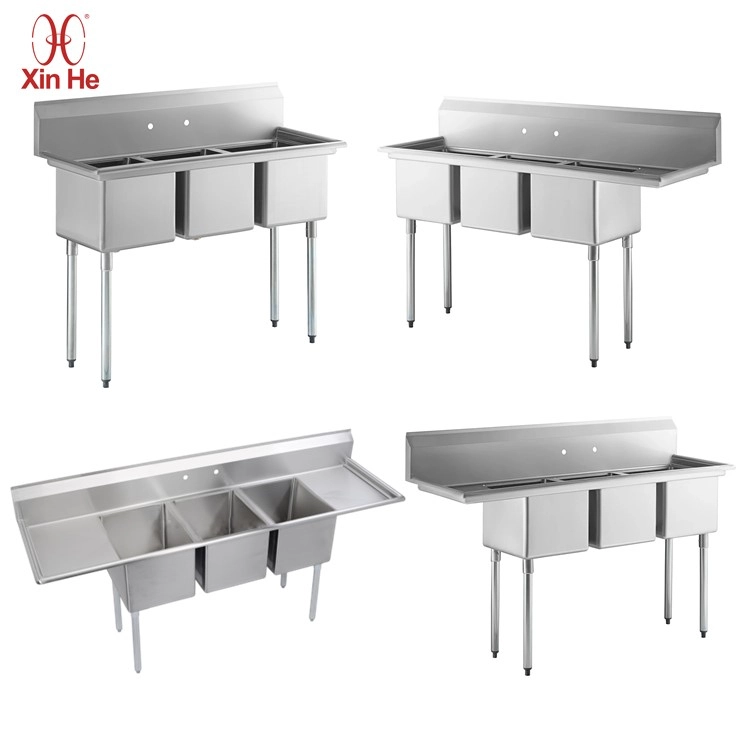
| Sink with Single Drainboard | $600 – $850 | $900 – $1,200 | $1,500+ |
| Full System (Dual Drainboards) | $850 – $1,100 | $1,300 – $1,800 | $2,200+ |
Why the “Dual Drainboard” Layout is a Financial Savior
It might seem like adding extra drainboards is an unnecessary expense. However, in a back-of-house operational layout, a sink with both left and right drainboards creates a “clean-dirty” separation that is vital for food safety.
- The Dirty Side: Acts as a staging area for soiled pans, preventing cross-contamination.
- The Clean Side: Provides a sanitary air-drying station.
By investing in an integrated drainboard system now, you avoid buying separate drying racks later, which saves both money and valuable floor space.
3. The Custom Fabrication Debate: Is it Worth It
For kitchens with unique footprints or high-throughput requirements, a standard “off-the-shelf” three compartment restaurant sink might not suffice. This is where customized solutions become necessary.
When Customization Saves Money
While the initial price tag of a custom unit is higher, the efficiency gains in dishwashing stations can be massive. If your kitchen has a pillar in the middle of the wash area or a non-standard wall angle, custom three compartment sink fabrication allows you to utilize every square inch of your floor plan, potentially saving you from a costly kitchen expansion or remodel.
- Optimized Bowl Depth: For industrial bakeries, deeper bowls (14″ or 16″) are necessary for cleaning large mixing vats.
- Specialized Faucet Placement: Custom drilling for pre-rinse spray units can reduce water splashing and decrease the time spent on manual scrubbing.
Choosing the Right Supplier for Custom Projects
When evaluating a supplier like Xinhe, look for their ability to handle OEM stainless steel kitchenware orders. A supplier that can customize the gauge, the bowl size, and the backsplash height while maintaining NSF certification for commercial sinks is a partner that helps you avoid future compliance fines.
4. Selecting the Right Gauge
The durability of your industrial utility sink is directly tied to the thickness of the steel. In the industry, we use “gauge” as the primary measurement.
16-Gauge vs. 18-Gauge: The Performance Gap
| Feature | 16-Gauge | 18-Gauge |
|---|---|---|
| Thickness | Approx. 0.0625 inches | Approx. 0.0500 inches |
| Sound Level | Quiet (Thicker metal absorbs vibration) | Louder (Higher “tinny” sound) |
| Dent Resistance | High (Can withstand heavy cast iron) | Moderate (Prone to “oil-canning”) |
| Best For | Heavy-duty pots and pans, 24/7 kitchens | Light cafes, sandwich shops, bars |
If you are a high-volume steakhouse using heavy cast-iron skillets, a 16-gauge three compartment restaurant sink is non-negotiable. The impact of dropping a 10lb pan into an 18-gauge basin will eventually lead to stress fractures in the welds, resulting in leaks that are expensive to repair.
5. Avoiding Common Procurement & Budgeting Errors
Many project managers fall into traps that seem like cost-saving measures but end up doubling the budget.
The “Used Equipment” Risk
Buying a second-hand unit from an auction can be tempting. However, you must consider the “Hidden Costs of Used Sinks”:
- Sanitation Issues: Old units may have deep scratches that harbor biofilm and bacteria.
- Code Violations: Older models might not have the backflow prevention devices or the specific bowl depths required by updated commercial kitchen health codes.
- Installation Headaches: A used sink with bent legs or warped drainboards will take a plumber twice as long to level and install.
Neglecting the “Air Gap” and Drainage Rules
A three compartment restaurant sink must be installed with an indirect waste line. If your plumber simply pipes the sink directly into the sewer, you will fail your inspection instantly. The cost of re-doing the plumbing is often three times the cost of doing it right the first time.
6. Maintenance Strategies to Extend Equipment Life
The best way to reduce costs is to ensure you never have to buy another sink. Stainless steel is “stain-less,” not “stain-never.”
- Daily Passivation Maintenance: Use a mild detergent and a soft cloth. Never use steel wool, as it leaves tiny carbon steel particles that will rust on the surface of your food-service equipment.
- Water Hardness Management: If your kitchen has hard water, lime scale will build up around the drains. This can lead to stainless steel crevice corrosion.
- Chemical Safety: Never store open containers of chlorine bleach under your sink. The fumes can actually corrode the underside of the stainless steel bowls, leading to pinhole leaks.
7. Compliance and Health Standards
Your dishwashing basin is the heart of your sanitation program. Health inspectors focus on three primary areas:
1. NSF/ANSI Standard 2
This is the benchmark for food-grade stainless steel equipment. It ensures that the sink is constructed in a way that is easily cleanable and made from non-toxic materials. Always verify your unit has the proper certification.
2. Temperature and Sanitization
The “Wash, Rinse, Sanitize” process requires specific water temperatures.
- Wash: Hot soapy water (at least 110°F).
- Rinse: Clean, clear water.
- Sanitize: Either chemical sanitizer or hot water (at least 171°F).
Investing in a three compartment restaurant sink with high-quality wall-mount commercial faucets that can handle high-temperature water without leaking is a vital part of your operational budget.
3. Sizing for Compliance
The “Large Item Rule”: Your sink bowls must be large enough to submerge at least 50% of your largest piece of equipment. If you use full-size sheet pans, your basin must have bowls that are at least 20″ x 20″.
8. Sourcing from Global Manufacturers
When looking for industrial-grade utility commercial sinks, companies like Xinhe focus on high-durability products that meet international standards.
Why B2B Buyers Choose Professional Fabricators
- Customizable Industrial Utility: You can specify the exact steel gauge and bowl dimensions to match your commercial kitchen layout optimization goals.
- OEM Availability: For restaurant chains, consistency is key. Getting a standardized three compartment restaurant sink design across multiple locations reduces maintenance complexity.
- Cost-Effectiveness: Direct-from-factory pricing removes the “middleman” markup, allowing you to reallocate those savings into other areas of your restaurant build-out.

9. Future-Proofing Your Purchase: Energy and Water Savings
Sustainability is not just a buzzword; it’s a cost-saving strategy. A modern scullery station setup can be enhanced with:
- Low-flow pre-rinse valves: These reduce water usage by up to 1.2 gallons per minute, which drastically lowers your monthly utility bills.
- Insulated Sink Bowls: Some premium sinks feature sound-deadening insulation that also helps maintain water temperature, reducing the energy needed to heat your “Wash” basin.
Conclusion
Saving money on a three compartment restaurant sink isn’t about buying the cheapest item on the list. It’s about a strategic procurement process that considers:
- Steel Durability: Choosing 16-gauge for high-traffic environments.
- Functional Layout: Utilizing integrated drainboards for a better workflow in commercial kitchens.
- Supplier Reliability: Partnering with experts like Xinhe to ensure NSF compliance and high-quality fabrication.
- Maintenance: Protecting your investment with proper cleaning protocols.
By following this guide, you ensure that your dishwashing station is a one-time investment that serves your restaurant for decades, rather than a recurring expense that haunts your bottom line.
FAQs
What is the best way to choose the right size for a three compartment restaurant sink?
Project managers should measure the kitchen space first. They need to check local health codes for minimum bowl sizes. Picking a sink that fits both the space and the rules helps avoid costly changes later.
Is it better to buy new or used sinks for a commercial kitchen?
New sinks usually last longer and come with warranties. They meet current health codes and fit your kitchen’s needs. Used sinks cost less up front but may not pass inspections or last as long. Many buyers choose new sinks for peace of mind and fewer repairs. Used sinks work for tight budgets, but always check for damage and certifications.
Can a three compartment sink be customized for unique kitchen layouts?
Yes, many suppliers offer custom sizes and features. Teams can request extra drainboards, deeper bowls, or special faucet holes. Custom sinks help kitchens work faster and fit tight spaces.
How can buyers save money when ordering multiple sinks?
Buyers can ask for bulk pricing from suppliers. Ordering several sinks at once often lowers the price per unit. Some suppliers also offer free shipping or discounts for large orders.
How much does it cost to build a commercial kitchen?
The cost to build a commercial kitchen varies by size and equipment. Installing a three compartment sink usually costs between $472 and $569. Total kitchen costs depend on appliances, layout, and local labor rates. Planning ahead and getting quotes from suppliers helps control spending.