Home > Blog > Public Products >
Veterinary Scrub Sink for Animal Clinics and Pet Hospitals
A veterinary scrub sink is not just another sink in the back of an animal clinic. In a surgery prep room, treatment area, or pet hospital hygiene zone, it affects how staff wash, move, clean, and control contamination throughout the day. The right sink gives surgeons and technicians enough room to scrub properly, keeps water where it belongs, and holds up against the disinfectants used in busy veterinary facilities.
For project buyers, the details matter. Basin depth, wall clearance, faucet type, backsplash height, drain position, and mounting style all influence how well the sink works once the clinic opens. A well-made stainless steel veterinary scrub sink with hands-free operation and an easy-to-clean splash back can reduce unnecessary hand contact and make daily cleaning simpler for veterinary teams.
This guide explains what animal hospitals, vet clinics, contractors, and equipment buyers should check before ordering a scrub sink for surgery prep, treatment support, or hygiene areas.
Why Veterinary Clinics Need a Dedicated Scrub Sink
A standard commercial hand basin may be fine for light handwashing, but it is usually not enough for a veterinary surgery prep area. Veterinary staff deal with fur, organic waste, blood, disinfectants, wet instruments, and fast room turnover. A shallow hand basin was not designed for that kind of use.
In a surgery prep area, surgeons need steady water flow and enough clearance to scrub hands, wrists, and forearms without touching handles or nearby surfaces. If the bowl is too shallow, water splashes out. If the faucet is too low, staff cannot scrub comfortably. If the handles must be touched by hand, the risk of recontamination increases before the procedure even begins.
A dedicated vet clinic scrub sink also helps with dirty work before sterilization. Technicians may need to rinse heavily soiled tools or remove debris before items move into the proper cleaning and sterilization process. A deeper basin helps contain splash and keeps contaminated water away from the floor, surrounding cabinets, and staff uniforms.
Material choice is another reason veterinary clinics use purpose-built sinks. Scrub areas are exposed to moisture, cleaning chemicals, iodine-based products, chlorinated disinfectants, and frequent wipe-downs. A sink that stains, rusts, chips, or has open seams will become harder to clean over time. When choosing an animal clinic scrub sink, buyers should look beyond the listed size and price. The sink has to fit the room, the plumbing, and the clinic’s actual infection-control routine.
What to Check in a Stainless Steel Veterinary Scrub Sink
A scrub sink looks simple at first, but small fabrication details can decide whether it is easy to use or frustrating every day. Contractors and clinic owners should review the structure before confirming an order.
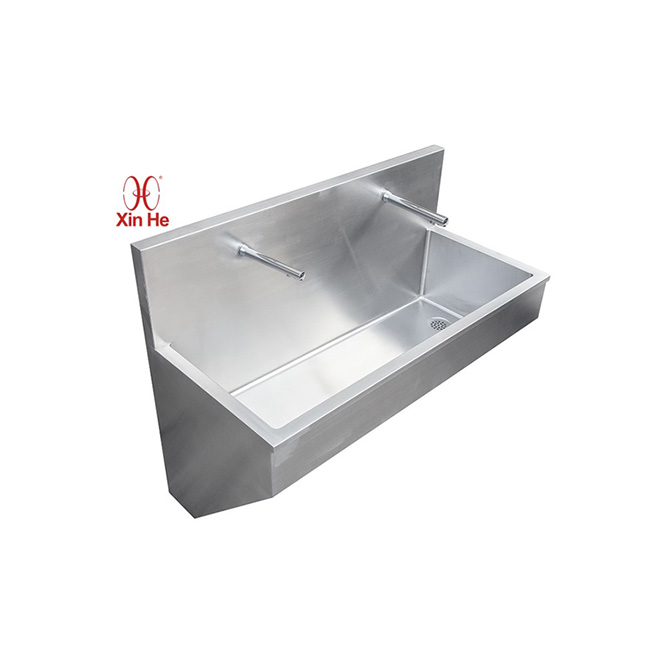
- Material grade: 304 stainless steel is widely used for veterinary and clinical wash areas because it resists corrosion and is easy to maintain. 316 stainless steel may be preferred where stronger chemicals, coastal air, or more demanding cleaning routines are involved.
- Basin design: A deep basin gives staff space to scrub without sending water over the front edge. Fully welded corners and rounded internal edges are easier to wipe down than sharp seams where grime can collect.
- Splash back: A tall, integrated backsplash protects the wall from repeated water spray and disinfectant residue. This matters especially in rooms where drywall, tile joints, or wall panels sit close to the wash area.
- Operation style: A hands-free scrub sink helps staff avoid touching faucet handles after washing. Common options include a foot pedal scrub sink, a knee operated scrub sink, or a sensor faucet.
- Drainage and side space: A scrub sink with drainboard gives staff a place to rest scrub brushes, small tools, or rinsed items without leaving water standing on a flat surface. Sloped drainboards are better than level shelves because they guide water back toward the basin.
Different clinics will value these features differently. A small general practice may need one compact wall-mounted unit. A surgical referral hospital may need deeper bowls, multiple stations, and drainboards on both sides. Buyers can review professional scrub sink designs to compare how clinical features are built into different stainless steel configurations.
Single, Double, or Custom Scrub Sinks: Which Fits
The best sink size depends on the room and the number of staff who need to scrub at the same time. A unit that is too small can slow down surgery preparation. A unit that is too large can waste valuable wall space in a compact treatment area.
| Configuration | Best suited for | Main benefit |
|---|---|---|
| Single station | Small animal clinics, independent practices, or individual treatment rooms | Saves wall space while still giving staff a proper dedicated wash point |
| Double station | Busy pet hospitals, surgery centers, or clinics with back-to-back procedures | Allows two staff members to scrub at once and reduces waiting during peak hours |
| Multi-station or custom | Teaching hospitals, laboratories, referral centers, or irregular room layouts | Makes better use of unusual wall lengths, alcoves, or high-volume surgical prep zones |
A single veterinary scrub sink often works well in smaller clinics where one surgeon or technician scrubs at a time. It is easier to fit near a surgery entrance and usually requires less wall space, less plumbing capacity, and a simpler installation plan.
Double units make more sense when several staff members prepare for surgery close together. In high-volume pet hospitals, two people waiting for one sink can interrupt the rhythm of the room. A double station keeps preparation moving without forcing staff to use unrelated sinks elsewhere in the facility.
Custom sinks are useful when the room has awkward dimensions or the workflow is already fixed. Buyers may need a specific basin width, a drain on the left instead of the center, a taller backsplash, or a certain faucet spacing. In these cases, a custom stainless steel scrub sink configuration can prevent installation compromises later. Before production, confirm the wall length, plumbing rough-ins, drain outlet, mounting height, faucet choice, and any side worktop requirements with the contractor.
Where to Install Sinks in an Animal Hospital
Sink placement should be decided before plumbing and wall finishes are finalized. Moving a sink later is expensive, and poor placement can create awkward traffic patterns in rooms that already need to stay clean and organized.
- The most common location is the surgery prep area. The sink should be close enough to the surgical suite that staff can wash and move directly to the operating area without touching door handles, cabinets, or unrelated surfaces. In many facilities, the scrub sink is placed just outside the operating room entrance. In others, it may be inside the controlled surgery zone, depending on the layout.
- A treatment room entrance is another practical location. When staff move in and out of examination or treatment spaces throughout the day, a sink near the threshold makes hand hygiene more convenient. Convenience matters. If the sink is too far away, staff may lose time walking across the room or rely on less suitable wash points.
- Sterilization and lab support areas may also need a deeper wash station. Heavily soiled instruments, trays, or small equipment often need an initial rinse before they enter the cleaning and autoclave process. In that setting, basin depth and splash control are more important than appearance.
In the veterinary surgery room workflow, a well-placed animal hospital scrub sink reduces unnecessary movement. Staff should not have to cross busy treatment paths with wet hands or carry dripping tools across the floor. Good placement keeps the room cleaner, safer, and easier to manage during a full day of appointments and procedures.
How the Sink Supports Daily Hygiene Work
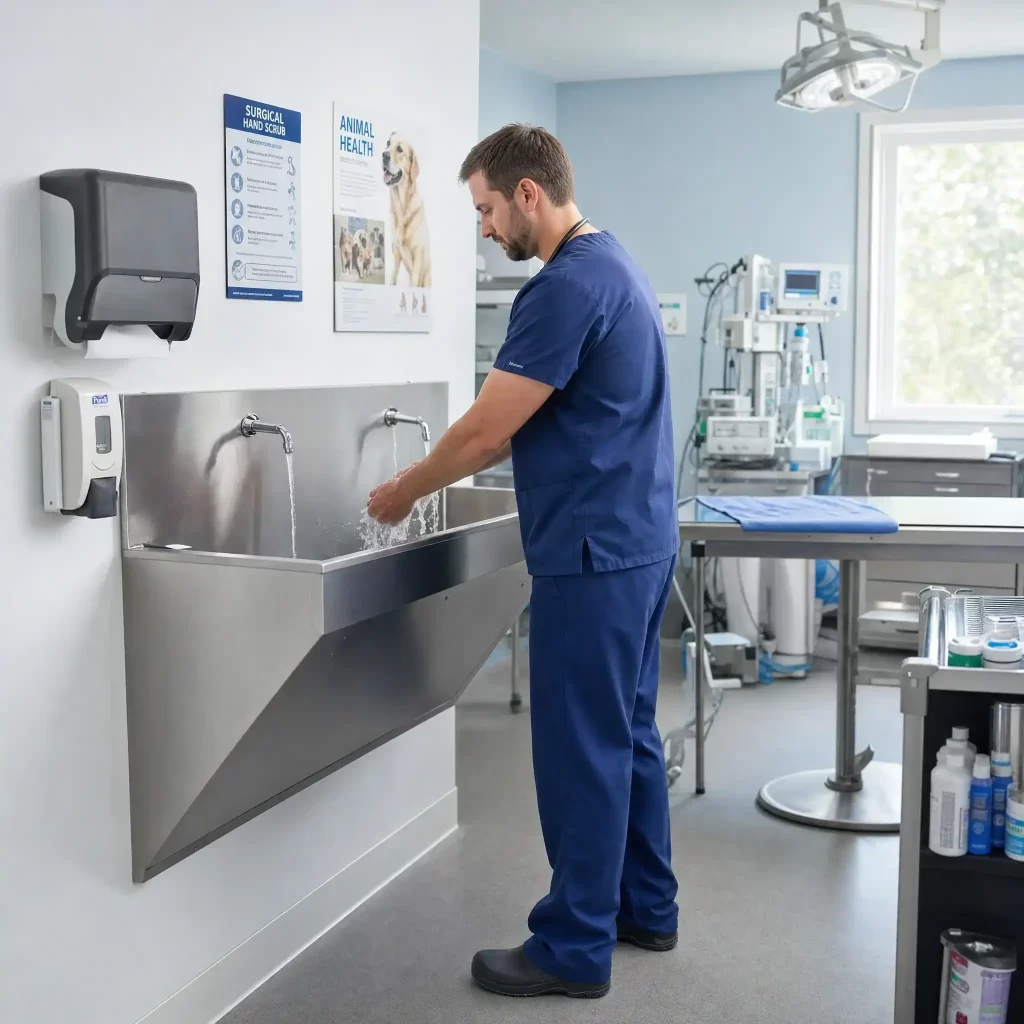
Veterinary clinics are messy by nature. Even a well-run hospital deals with hair, fluids, muddy paws, disinfectant residue, and equipment that needs fast cleaning between cases. A scrub sink should make that routine easier, not add another difficult surface to maintain.
A proper stainless steel veterinary scrub sink has a non-porous surface that can be wiped down quickly. Smooth welded seams are easier to clean than folded corners, visible gaps, or overlapping plates. This matters because bacteria, mold, dried soap, and organic debris tend to collect where water sits or where cleaning cloths cannot reach.
Splash control is just as practical. A deep bowl, sloped basin walls, and correctly positioned gooseneck faucet can reduce water bouncing back onto scrubs or nearby floors. In busy rooms, even a small amount of repeated splashing can create slippery spots and extra cleaning work.
Hands-free operation also helps keep washing consistent. Foot pedals, knee valves, and sensor faucets all reduce the need to touch hardware after scrubbing. Mechanical foot and knee systems are often chosen for heavy daily use because they are simple and durable. Sensor faucets give a fully touchless experience, but buyers should also think about power supply, maintenance, and how staff will adjust water flow.
The goal is not to make the sink look impressive in a catalog. The goal is to make it easy for staff to wash correctly, clean quickly, and keep moving without cutting corners.
What Buyers Should Ask Before Ordering
A clear specification checklist helps prevent mistakes during purchasing. This is especially true when a contractor, clinic owner, and equipment supplier are all involved in the same project.
- How many stations are needed? Confirm whether the clinic needs a single, double, or multi-station unit. Base the decision on peak surgery hours, not only average daily use.
- Which faucet operation fits the room? Decide whether the sink should use a knee-operated valve, foot pedal, or sensor faucet. The answer may depend on plumbing access, electrical availability, maintenance preferences, and staff habits.
- Is side workspace required? A drainboard or side worktop can be useful in prep and sterilization areas, but it also takes up space. Confirm what staff actually need to set down near the sink.
- Which stainless steel grade is suitable? Ask whether 304 stainless steel is enough or whether 316 stainless steel is a better match for the disinfectants and environment.
- How will the sink be installed? Confirm whether the unit will be wall-mounted, floor-standing, or supported by legs. The manufacturer should provide dimensions and drawings that the contractor can use for plumbing and installation.
- Where are the drain and water inlets located? Drain position, trap clearance, and water inlet locations should be checked before production. A mismatch can delay installation or require on-site modifications.
- What customization is possible? Buyers may need changes to basin size, backsplash height, faucet spacing, drainboard direction, or mounting style. These details should be confirmed before the order is approved.
A reliable supplier should be able to discuss material thickness, welding quality, drainage options, packaging, and production time clearly. Vague answers at this stage usually become problems during installation.
Choosing a Supplier for Veterinary Projects
For veterinary projects, the supplier matters as much as the sink design. A scrub sink is built into the room, connected to plumbing, and used many times a day. If the dimensions are wrong or the fabrication is weak, the problem is not easy to hide or fix later.
Buyers should look for a manufacturer that can provide stable stainless steel fabrication, clear drawings, and practical customization. The supplier should understand that veterinary sinks are used in wet, chemical-heavy, high-traffic spaces. Clean welds, accurate bends, proper packaging, and consistent finishing all matter.
For distributors and contractors, sourcing several stainless steel items from the same factory can also keep a project more consistent. Scrub sinks, prep tables, storage cabinets, and washing equipment often sit in the same clinical areas. Matching stainless steel finish and fabrication quality makes the room look more organized and can simplify long-term maintenance.
A capable manufacturer may also supply related equipment such as a stainless steel dog bath tub for veterinary facilities or custom commercial worktables. For larger animal hospitals, consolidating equipment sourcing can reduce communication issues and help keep material quality consistent across the facility.
FAQs
- What is a veterinary scrub sink used for?
A veterinary scrub sink is used in animal clinics, pet hospitals, and surgery prep areas for staff handwashing, pre-surgical scrubbing, and hygiene support. It gives veterinary teams a dedicated wash point designed for cleaner operation and better splash control than a standard hand basin.
- Is stainless steel suitable for veterinary scrub sinks?
Yes. Stainless steel is a strong choice because it is durable, corrosion-resistant, and easy to clean. 304 stainless steel is common for clinical environments, while 316 stainless steel may be chosen for more demanding chemical exposure or harsher conditions.
- Should a vet clinic choose a foot pedal, knee-operated, or sensor faucet?
All three options reduce direct hand contact. A foot pedal scrub sink and a knee operated scrub sink are simple, durable choices for frequent use. Sensor faucets provide touchless operation, but they may require power access and more maintenance planning. The best option depends on the clinic’s plumbing, budget, and staff preference.
- Do pet hospitals need single or double scrub sinks?
Smaller practices often use a single station to save space. Busy pet hospitals, referral centers, or facilities where several staff members prepare for surgery at the same time may benefit from double or multi-station sinks. Wall space, drain location, and water supply should be checked first.
- Can veterinary scrub sinks be customized?
Yes. Custom options may include basin size, backsplash height, side drainboards, faucet type, mounting style, drain position, and overall length. Custom fabrication is especially useful when the room layout is fixed or when a clinic needs the sink to match a specific workflow.
Conclusion
Choosing the right veterinary scrub sink is a key step in creating an efficient hygiene area for surgery preparation and daily staff use. Buyers should carefully compare stainless steel grade, basin size, faucet operation, and drainage requirements to match their specific facility layout.
Ready to specify the perfect wash station for your clinic? Contact Xinhe today to discuss custom configurations, material specifications, and bulk project quotes for your animal hospital or veterinary facility.