L Shaped Kitchen Table for Commercial Stainless Steel Kitchen Layouts
A well-planned l shaped kitchen table can turn unused corner space into a practical work area in a high-volume commercial kitchen. For restaurants, hotels, central catering facilities, and foodservice projects, this setup helps connect prep, washing, plating, and storage zones without wasting valuable floor space. Instead of treating it as a domestic furniture piece, project buyers should evaluate it as a heavy-duty commercial stainless steel work table that supports workflow continuity, hygiene codes, and custom layout requirements.
What Is an L Shaped Kitchen Table in a Commercial Kitchen
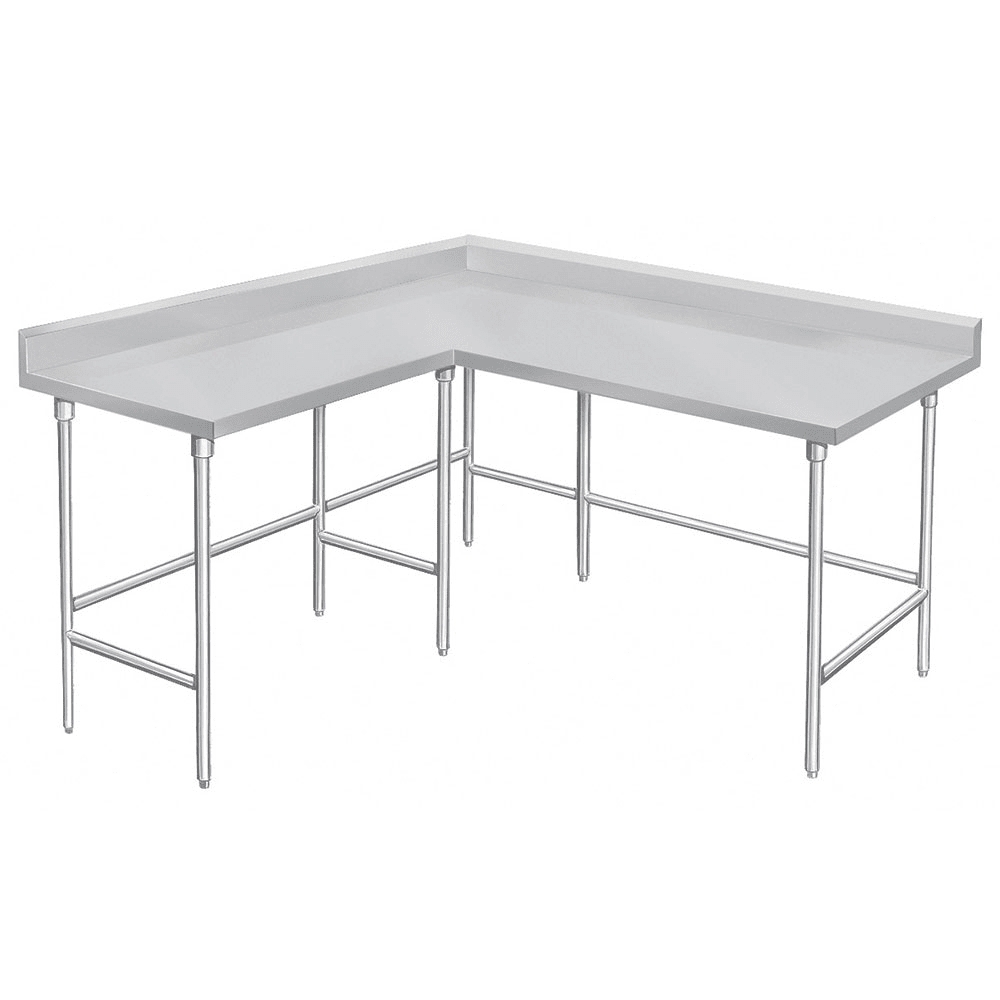
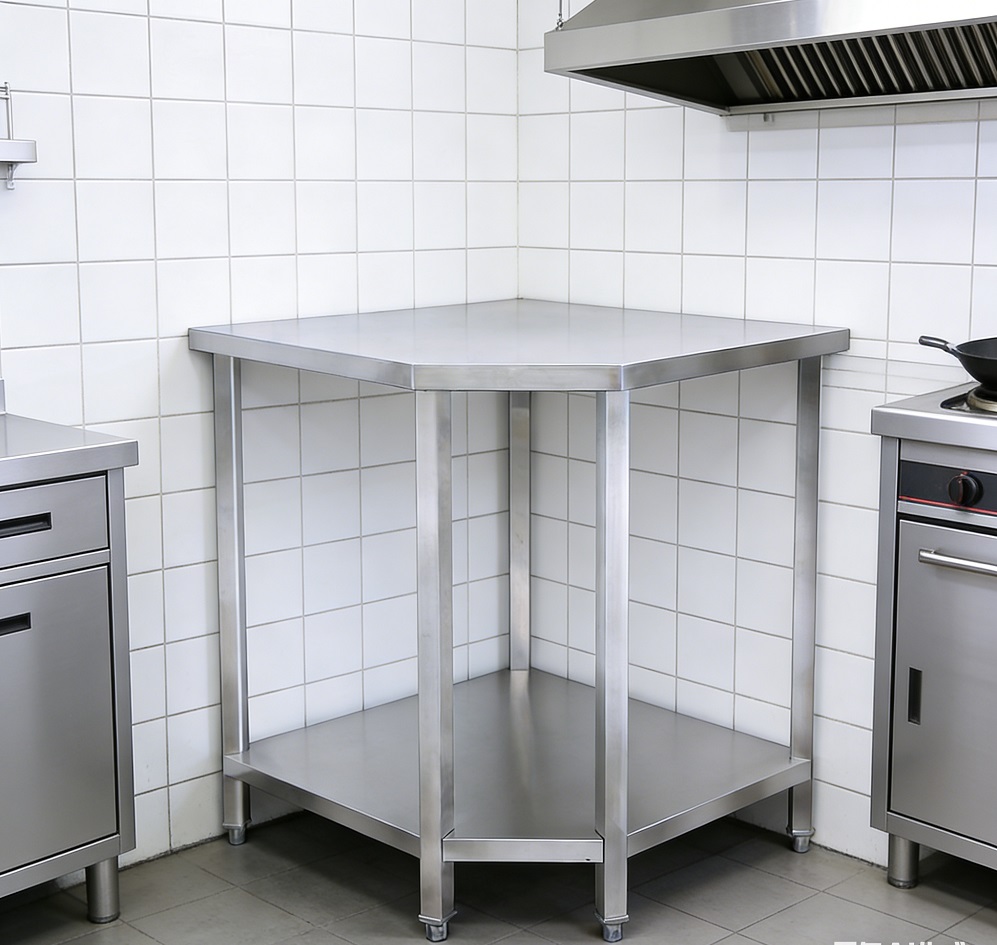
In a professional foodservice environment, this product functions primarily as an l shaped stainless steel table or a stainless steel corner work table. Its core purpose is not dining, but bridging two intersecting production lines.
This structural format allows staff to complete food prep, sorting, plating, or temporary storage on a continuous surface. For space-constrained restaurants, hotel kitchens, and central kitchens, this configuration eliminates dead corners, streamlines the overall kitchen workflow, and ensures a seamless physical connection between different operational zones.
Why Corner Space Matters in Commercial Kitchen Layouts
Many commercial kitchens lose valuable working space at corners, especially near walls, dishwashing areas, prep zones, or service lines. A properly designed l shaped kitchen table helps connect these areas and makes the corner fully usable.
Instead of leaving a problematic gap between two straight tables, a continuous corner prep table prevents moisture and debris accumulation. It transforms architectural limitations into an unbroken surface for efficient food handling, directly impacting the speed of service.
Key Benefits of a Stainless Steel L Shaped Table
Investing in a corner-specific layout yields measurable functional advantages for commercial operators:
- Better workflow between prep and service areas: Angled layouts connect raw ingredient stations directly to hot lines or plating zones, minimizing staff movement and cross-traffic.
- More usable surface without expanding the kitchen footprint: It maximizes operational capacity in limited spaces by utilizing 90-degree wall intersections that would otherwise remain empty.
- Easier cleaning and hygiene control: For high-volume kitchens, stainless steel is preferred because the table surface must handle repeated cleaning, moisture, food contact, and daily impact from tools or containers.
- Custom sizes for project layouts: Facilities often require a custom L shaped stainless steel table to match exact architectural blueprints, structural pillars, and drainage locations.
Where Can a Commercial L Shaped Kitchen Table Be Used
The application of a commercial l shaped kitchen table extends across various B2B foodservice sectors. Understanding the specific environment helps in determining the necessary load capacity and steel grade.
- Restaurant Kitchens: Serves as a critical bridge connecting the active prep line with the pass-through station.
- Hotel Kitchens: Provides expansive areas for banquet prep, tray assembly, and temporary storage of clean dishes.
- Central Kitchens: Supports bulk processing, sorting, and pre-packaging workflows.
- School and Institutional Kitchens: Delivers a heavy-duty surface capable of handling high-frequency meal preparation.
- Commercial Dishwashing Zones: Acts as a landing zone for soiled wares or a sorting area for clean, sanitized equipment.
How to Choose the Right L Shaped Stainless Steel Table
Sourcing commercial kitchen equipment requires analyzing specific architectural details. To select a viable unit, B2B buyers must review several critical factors:
1. Confirm the corner layout and working direction
Determine if the site requires a left-return, right-return, or an open-corner design to align perfectly with existing walls, equipment configurations, and doorways.
2. Choose the right stainless steel grade
Type 304 stainless steel is essential for wet environments, dishwashing zones, and areas requiring rigorous daily sanitation due to its superior corrosion resistance.
3. Decide whether a backsplash is needed
Specifying a stainless steel corner work table with backsplash (typically 4 to 6 inches high) protects facility walls from grease, liquids, and food splatter, significantly streamlining end-of-shift cleaning.
4. Plan undershelf or storage options
Depending on storage needs, integrating a solid undershelf, an open-slatted tier, or a stainless steel cabinet base keeps kitchen smallwares and heavy ingredient bins organized and off the floor.
5. Check load capacity and stability
A commercial stainless steel work table must support heavy commercial countertop equipment like slicers, mixers, or bulk ingredient containers without structural bowing.
Standard Table or Custom Stainless Steel Table: Which Is Better for Projects
A standard off-the-shelf unit may work for simple, open-space setups, but a complex project kitchen often needs a custom stainless steel table to match the exact corner size, workflow direction, wall clearance, and equipment layout.
For distributors, contractors, and commercial kitchen planners, utilizing a reliable custom stainless steel table supplier can drastically reduce on-site installation problems, avoid plumbing conflicts, and make the final kitchen layout significantly more efficient.
Common Mistakes When Buying an L Shaped Kitchen Table
Purchasing errors can disrupt project timelines and lead to health inspection failures. Avoid these common pitfalls:
- Ordering based solely on total length without confirming the specific left or right corner orientation.
- Ignoring the required clearance for walking channels, walk-in cooler doors, and nearby cooking lines.
- Selecting a tabletop depth that is impractical for the intended daily prep tasks.
- Failing to include a backsplash or an undershelf when wall protection or extra bulk storage is needed.
- Sourcing light-duty or domestic-grade tables that quickly warp, dent, or corrode under commercial foodservice demands.
How Xinhe Supports Commercial Stainless Steel Table Projects
We support global commercial kitchen projects with highly durable work tables, corner tables, sinks, cabinets, stainless steel trolley shelves, and related equipment. For project buyers, the true value lies not just in sourcing a single unit, but in matching the table precisely with the overall facility layout. This ensures seamless integration across prep areas, washing zones, and service lines.
Conclusion
Choosing the right l shaped kitchen table is not only about filling a corner. In a commercial kitchen, it directly affects workflow, hygiene, storage capacity, equipment connection, and long-term operating efficiency. A strategically designed l shaped stainless steel table helps restaurants, hotels, central kitchens, and foodservice projects make better use of limited space while keeping the work area strong, clean, and easy to maintain.
Looking for a custom l shaped kitchen table for a restaurant, hotel, central kitchen, or foodservice project? Contact Xinhe to discuss dimensions, backsplash options, undershelf design, and bulk project supply.