Commercial 3 Compartment Sink Size Guide for Kitchen Layout Planning
When planning a commercial kitchen, the size of a commercial 3 compartment sink affects much more than warewashing capacity. It also influences staff movement, surrounding equipment placement, landing space, and the overall efficiency of the dishwashing zone. A sink that fits on the floor plan is not always the sink that works best in daily operations. That is why kitchen sink layout planning should consider sink dimensions together with workflow, volume, and available work area—not as a separate decision.
Why Sink Size Matters in Layout
A very common mistake in a commercial sink layout is treating the washing station as just a standalone metal box. In reality, the size of your sink dictates how well your entire dish room functions. It acts as the anchor point for the cleaning process.
Impact on Workflow and Movement
If a 3 compartment commercial sink is too large for the room, it causes physical bottlenecks. Staff will bump into corners or struggle to walk past open dishwasher doors. On the other hand, if it is too small, dirty dishes pile up on carts, blocking aisles and slowing down the cooking staff. Proper sizing ensures a smooth, uninterrupted flow from the dining room to the clean dish racks.
Surrounding Equipment Arrangement
Your sink size directly affects where you can place other important items. A massive commercial kitchen 3 compartment sink might force you to move prep tables, trash bins, or shelving further away. Planning the size correctly keeps all related tools within easy reach. This reduces the steps workers must take, lowering daily fatigue and speeding up turnaround times.
Key Dimensions for Sink Selection
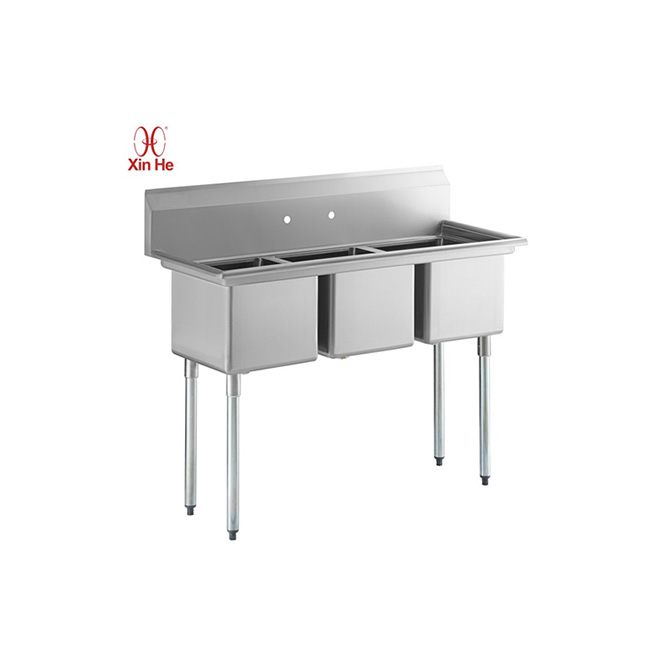
Selecting the right three compartment sink size requires looking beyond the overall length. You must break down the measurements into individual components to ensure they meet your daily operational needs.
Bowl Width and Depth
Bowl size dictates what items you can wash. A bowl that is 14 inches deep might be perfect for large stockpots but will cause back strain for staff washing flatware all day.
Here is a quick reference table for common restaurant sink dimensions:
| Bowl Size (L x W x D) | Typical Application | Impact on Kitchen Layout |
|---|---|---|
| 10″ x 14″ x 10″ | Glassware, small cafe utensils | Highly compact; fits undercounter or in narrow bar layouts. |
| 15″ x 15″ x 12″ | Standard plates, medium pots | Balances capacity with moderate space requirements. |
| 18″ x 18″ x 14″ | Full-size sheet pans, large pots | Requires a dedicated, spacious dishwashing zone. |
| 24″ x 24″ x 14″ | Heavy industrial, massive volume | Dominates the floor plan; needs wide aisles for loading. |
Overall Length and Space
The total length of a 3 compartment sink commercial unit can range from 36 inches to over 120 inches. This overall length includes the three bowls and any attached drainboards. When measuring your available kitchen space, always factor in the plumbing connections and wall clearances, as these will add an inch or two to the working footprint.
Matching Size to Kitchen Volume
The right sink for a sprawling hotel kitchen will overwhelm a small coffee shop. You must match the physical footprint of your commercial 3 compartment sinks to your expected output.
Small Cafes and Kiosks
Space is the most critical constraint here. These environments usually handle glassware, coffee mugs, and small plates. A compact 3 compartment commercial sink with 10-inch or 12-inch bowls is usually sufficient. In these layouts, the sink is often placed flush against a back wall or tucked under a serving counter to maximize front-of-house space.
Mid-Size Restaurants
Mid-size operations process a mix of standard plates and cooking vessels. An 18-inch bowl width is standard. When dealing with medium volume, you might wonder why do restaurants need a 3 compartment sink that takes up so much room. The answer lies in throughput. These kitchens need enough capacity to handle Friday night rushes without the sink backing up and stalling the cooking line.
High-Volume Kitchens
Hospitals, large cafeterias, and banquet halls deal with massive, heavy-duty pots and sheet pans. For these facilities, 24-inch bowls are necessary. Because the sink itself is massive, the layout must feature wide, open aisles. Staff must be able to pivot with heavy, wet pots without hitting walls or other equipment.
Drainboards and Surrounding Work Areas
A common error in layout planning is forgetting that the washing process starts before the sink and ends after it. The attached work surfaces are just as critical as the sink bowls.
The Necessity of Landing Space
You need space to set down dirty dishes (the soiled drainboard) and space to let clean dishes air dry (the clean drainboard). If your commercial sink 3 compartment setup lacks sufficient drainboard space, staff will stack wet items on nearby prep tables, creating chaos.
Integrating Pre-Rinse and Drying Zones
When designing your layout, consider the flow of the entire 3 compartment commercial kitchen sink station.
- Soiled Zone: Needs room for a scrape block or trash bin.
- Washing Zone: The three bowls.
- Clean Zone: Needs adequate drying racks or wall-mounted shelving above the drainboard.
Properly sizing these attached boards ensures that the sink station functions as a complete, self-contained system.
Common Space Planning Mistakes
Even experienced project managers can make errors when mapping out a dishwashing area. Avoid these frequent layout failures:
- Focusing only on the sink footprint: Buyers often measure the commercial kitchen sinks 3 compartment unit but forget to measure the space needed for the operator to stand and move.
- Ignoring operator movement: A layout might look clean on paper, but if an employee cannot comfortably turn 180 degrees while holding a wet sheet pan, the layout fails.
- Leaving no landing area: Forgetting to allocate space for soiled dish drop-offs leads to broken plates and cluttered aisles.
- Underestimating workflow congestion: Placing a large commercial stainless steel 3 compartment sink too close to the main cooking line causes cooks and dishwashers to constantly bump into each other.
To prevent these issues, always review the broader essentials of a commercial kitchen design and equipment layout before making a final purchase.
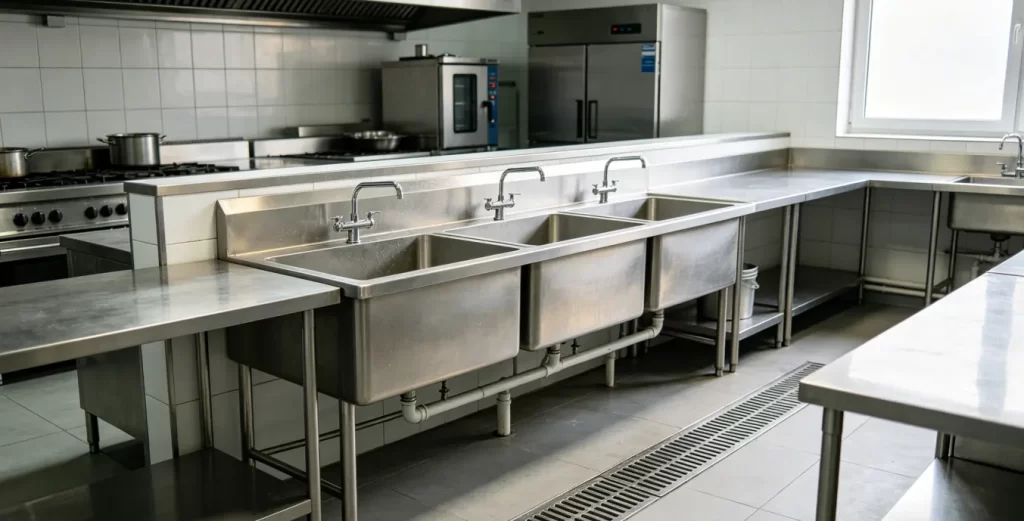
Dimension Planning Checklist
Before finalizing your procurement order for a commercial kitchen 3 compartment sink, run through this practical checklist:
- How much dish volume is expected? Match the bowl width to the largest items you will wash daily (e.g., standard plates vs. baking sheets).
- Is there enough side clearance? Ensure there is at least 30 to 36 inches of working aisle space in front of the sink.
- Will staff need extra landing space? Determine if attached drainboards are sufficient, or if you need adjacent stainless steel worktables.
- Are left and right drainboards required? Based on the room’s shape, decide if the workflow will move left-to-right or right-to-left.
- Does the sink fit the workflow? Verify that placing the sink in the designated spot will not interrupt the path between the dining room and the cooking line.
Selecting Sinks for Real Operations
Ultimately, a successful layout prioritizes function over form. Choosing a sink size that works in real kitchen operations means selecting a unit that enhances staff efficiency and withstands heavy daily use. A sink that fits perfectly on an architectural drawing is useless if it creates operational bottlenecks.
By carefully evaluating bowl dimensions, drainboard lengths, and operator movement, you can build a dishwashing zone that lowers labor costs and improves your overall return on investment (ROI). Partnering with a reliable manufacturer like Xinhe ensures you receive structurally sound, intelligently designed fixtures that meet the exact physical demands of your facility.
FAQ
Q: Does a bigger sink always mean better efficiency?
A: No. A sink that is too large can take up valuable prep space and actually slow down staff movement. The best size is one that matches your specific daily dish volume and physical room layout perfectly.
Q: Can I use stainless steel worktables instead of built-in drainboards?
A: Yes, if your floor plan allows it. Some kitchens pair a sink that has no drainboards with separate worktables. However, built-in drainboards are generally preferred because they slope directly into the bowls, keeping water contained and floors dry.
Q: How do I know if the sink bowls are deep enough?
A: Measure your tallest stock pot, largest baking sheet, or cutting board. The bowl depth should allow these specific items to be submerged easily without splashing water over the front edge onto the operator.
Q: What is the most common size for a standard restaurant?
A: A sink featuring three 16″ x 20″ x 12″ bowls with two 18-inch drainboards is highly common and fits most mid-sized restaurant layouts.
Optimize Your Kitchen Layout Today
Choosing the correct sink dimensions is the foundation of a highly efficient, profitable commercial kitchen. Do not let poor spatial planning slow down your operations. If you are a wholesaler, project contractor, or facility manager looking for durable, perfectly sized stainless steel solutions, contact Xinhe today.
Get expert commercial 3 compartment sink size recommendations, ask for layout suggestions, or request detailed configuration options tailored to your next commercial project.