Commercial Service Sink Size and Planning for Facility Efficiency
In commercial facilities, service sink size affects much more than appearance. The right dimensions can improve cleaning efficiency, reduce splash, support daily maintenance work, and make janitorial areas easier to manage. A sink that is too small may limit use, while one that is too large can waste space in already tight service rooms. For facility planning, choosing the right commercial service sink should be based on real tasks, available space, and long-term use frequency.
This guide breaks down how to select the right measurements for your facility, ensuring your maintenance teams have the tools they need without sacrificing valuable floor space.
Why Service Sink Size Matters in Facilities
Selecting a sink is not just about checking a box on a building plan. The physical size of the unit directly impacts daily operations. When facility planners ignore specific service sink size requirements, it often leads to operational bottlenecks.
Matching the Cleaning Load
Different buildings have different cleaning demands. A large hospital requires frequent emptying of heavy mop buckets and cleaning of large automated floor scrubbers. A small corporate office might only need a station for rinsing basic tools and filling hand-held spray bottles. If the sink is too small for the cleaning load, staff will struggle to fit their equipment inside the bowl, slowing down the entire maintenance routine.
Workflow and Traffic Flow
In facility planning, every square inch of a janitorial closet or maintenance room matters. A bulky sink in a narrow room disrupts the traffic flow, making it hard for staff to move carts in and out. Conversely, a unit that fits perfectly into the designated zone allows for smooth movement, better organization of nearby cleaning supplies, and safer handling of chemicals.
Splash Control and Floor Safety
Size is directly tied to splash control. If staff are forcing large buckets into a compact bowl, water and cleaning chemicals will inevitably spill over the edges. This creates slip hazards and increases the time spent cleaning the janitorial room itself. Getting the dimensions right keeps water where it belongs.
Common Service Sink Dimensions and Applications
While custom options exist, most commercial facilities rely on standard sizing categories. Understanding these common service sink dimensions helps planners allocate space accurately during the early stages of a project.
| Size Category | Typical Width (Inches) | Best For | Facility Application |
|---|---|---|---|
| Compact | 18″ – 22″ | Tight closets, basic hand-tool rinsing, small buckets. | Small retail, single-floor office buildings, cafes. |
| Medium | 24″ – 28″ | Standard mop buckets, general maintenance tools. | Schools, mid-sized commercial buildings, clinics. |
| Large | 30″ – 36″+ | Dual-bucket systems, large floor scrubber parts, heavy-duty washing. | Hotels, large hospitals, industrial manufacturing plants. |
Note: Width is only one factor. Depth and front-to-back measurements are equally critical for planning. For facilities requiring heavy-duty floor cleaning capabilities, planners often integrate both standard wall-mounted units and floor-level mop sinks into their layouts.
Bowl Depth: Efficiency and Splash Control
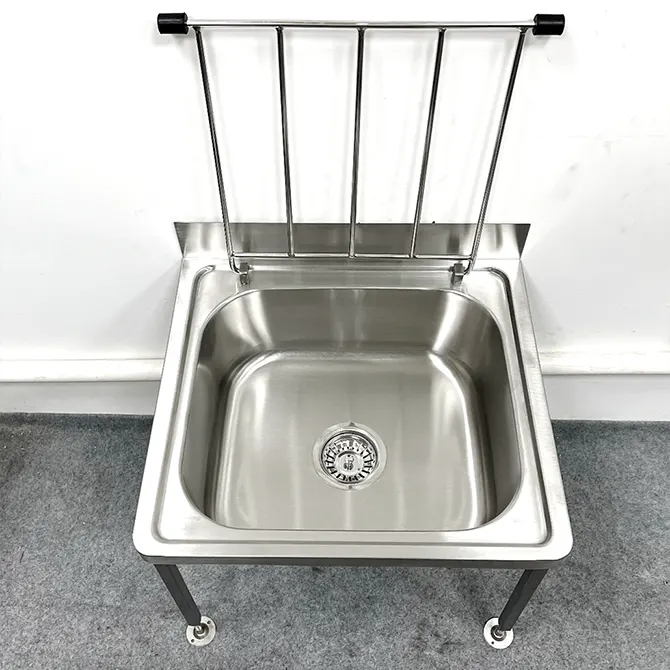
Width and length dictate how much space the unit takes up against the wall, but bowl depth dictates how the sink actually performs. Choosing a heavy-duty stainless steel service sink means paying close attention to how deep the basin drops.
The Problem with Shallow Bowls
A bowl that is too shallow (typically under 8 inches) offers poor splash protection. When a user turns on a high-pressure faucet to rinse a mop or fill a bucket, the water hits the bottom and immediately splashes back out. This not only wets the user’s uniform but also creates hazardous puddles on the floor, requiring extra cleanup and posing safety risks.
The Drawbacks of Overly Deep Bowls
While deep bowls contain water well, a bowl that is too deep (over 14 inches) can cause ergonomic issues. Staff must bend further to retrieve heavy buckets or scrub items at the bottom of the sink. Over time, this repetitive strain can lead to workplace injuries and decreased productivity.
Finding the Right Balance
For general commercial use, a depth of 10 to 12 inches is often the sweet spot. This depth is sufficient to contain aggressive splashes from industrial faucets while allowing staff to lift buckets out of the basin without excessive back strain.
Planning Installation Space Around the Sink
A janitorial sink does not exist in isolation. The physical sink is only one part of the functional workspace. Proper facility planning requires allocating clear space around the unit for safe and efficient use.
Wall Clearance and Backsplashes
Always account for wall clearance. The sink needs adequate space for a tall backsplash to protect drywall from water damage and chemical stains. If the sink is installed in a corner, you must account for side splashes on both adjacent walls to prevent long-term moisture buildup and mold.
User Standing Space
The area directly in front of the sink must be clear. Planners should leave a minimum of 30 to 36 inches of open standing space in front of the unit. This allows a worker to comfortably stand, bend, and lift heavy items without hitting shelving or doors behind them.
Drainage and Floor Protection
Water will occasionally reach the floor, regardless of sink size. Plan for proper floor sloping and a floor drain near the sink area. If you are unsure about the specific plumbing requirements and features that influence these layout choices, reviewing what a service sink is used for can help clarify the connection between sink functionality and room design.
Choosing the Right Size by Facility Type
There is no one-size-fits-all solution. The type of commercial building dictates the required capacity and the nature of the daily cleaning tasks.
Hotels and Hospitality
Hotels manage massive cleaning loads daily. Housekeeping carts are large, and staff need quick turnaround times. Maintenance rooms on each floor usually require medium-to-large sinks that can quickly accommodate bucket fills and the rinsing of multiple cleaning cloths. Durability is paramount, making stainless steel the standard choice.
Hospitals and Healthcare Facilities
In healthcare, cross-contamination prevention is the priority. These facilities often require wider sinks to accommodate the cleaning of large biohazard bins and sanitation equipment. Planners must also ensure the sink size allows for the installation of hands-free knee or foot pedal valves nearby.
Commercial Office Buildings
Modern office buildings often try to maximize rentable square footage, leaving very tight spaces for janitorial closets. Compact sinks are usually the best choice here. Because the cleaning load mainly consists of emptying small trash bins and light floor mopping, massive basin capacities are unnecessary.
Industrial and Maintenance Rooms
In factories and industrial settings, sinks handle grease, heavy soil, and large machine parts. Planners should specify large, deep bowls. Routine sink service and plumbing maintenance in these harsh environments are easier when the unit is large enough to allow easy access to drains and traps without cramped maneuvering.
Service Sink vs. Mop Sink vs. Utility Sink
Facility planners sometimes use these terms interchangeably, leading to sizing and installation errors on blueprints. Understanding the structural differences is key to getting the right fit.
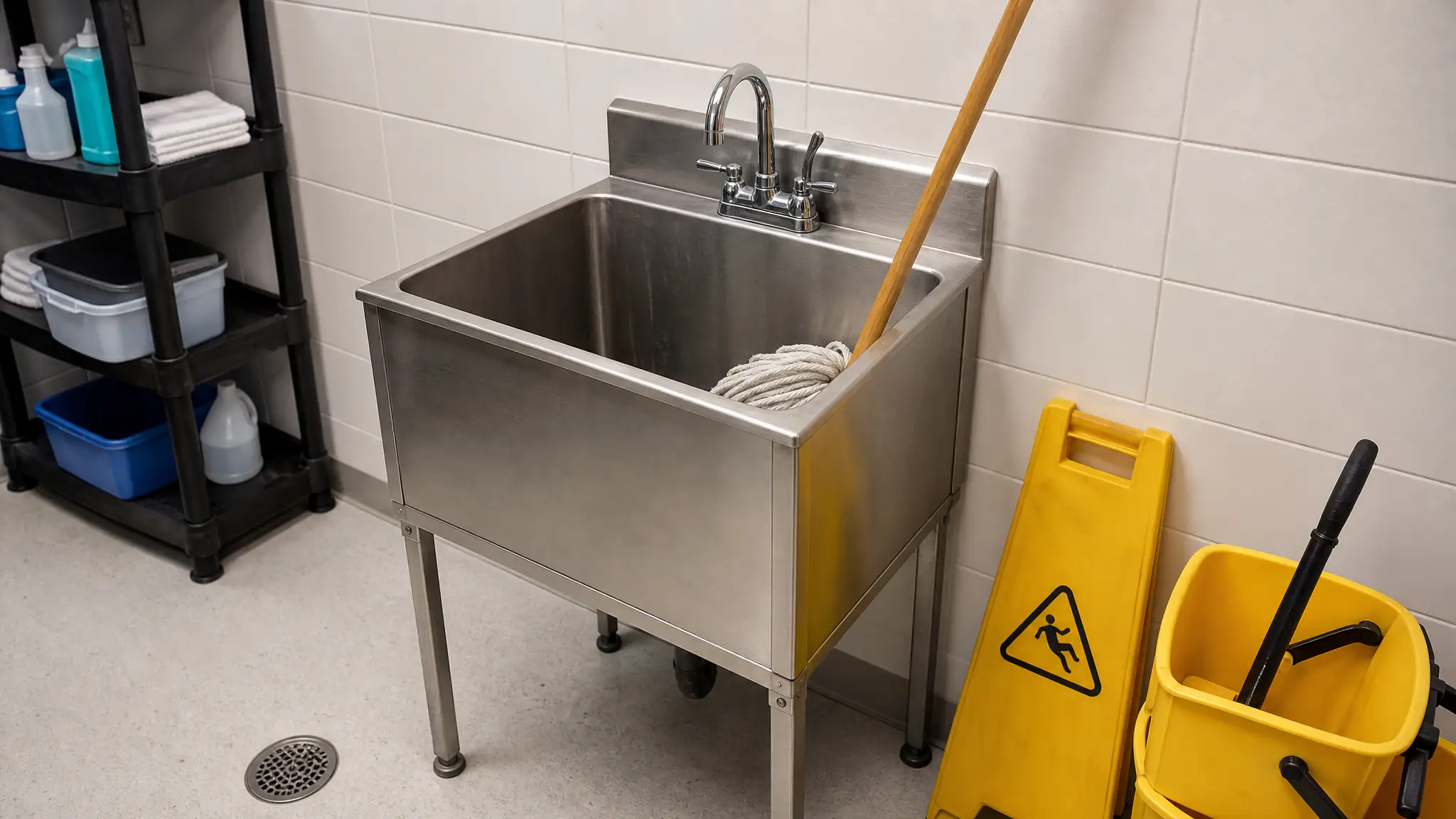
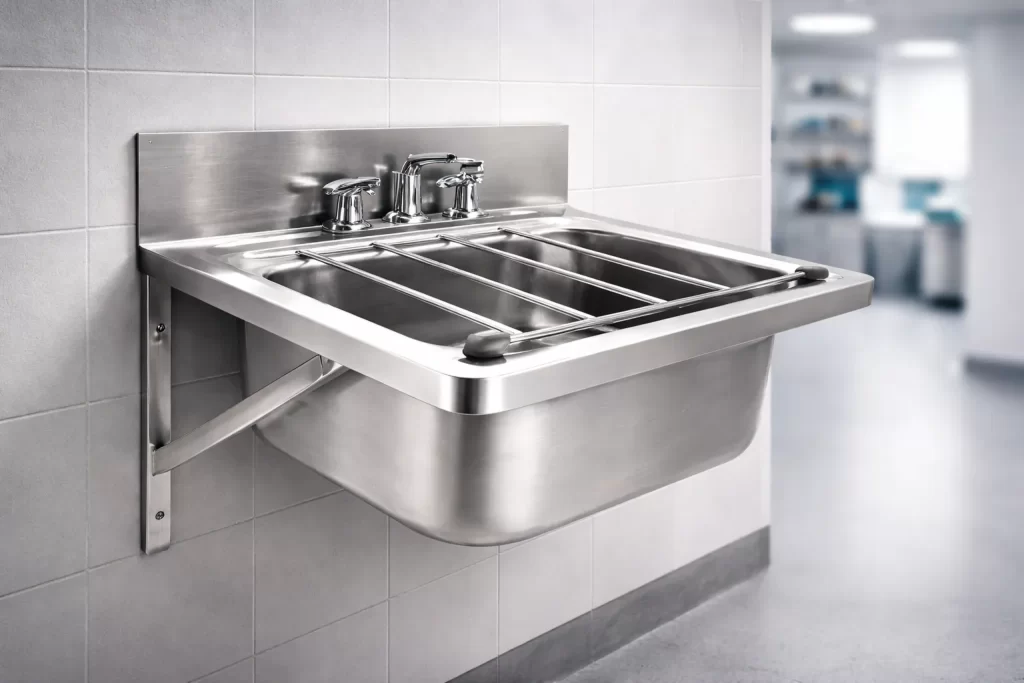
- Service Sink: Typically wall-mounted or freestanding on legs. It sits at waist height. It is designed for filling buckets, washing hands, and rinsing tools.
- Commercial Mop Sink: Floor-mounted. It sits directly on or flush with the floor. It is specifically designed so heavy, water-filled mop buckets can be rolled directly over the drain without lifting.
- Utility Sink: A broader term, often referring to lighter-duty, freestanding tubs used in residential or light-commercial laundry rooms. They lack the heavy-duty commercial gauge steel required for industrial cleaning.
If your primary goal is avoiding the physical lifting of heavy buckets, you might need to adjust your floor plan to accommodate a floor-level unit instead. You can explore a guide to commercial mop sink selection to see if that configuration better suits your specific maintenance room.
Pre-Installation Service Sink Size Checklist
Before finalizing your building plans or submitting a purchase order, use this quick checklist to verify your dimensions:
- What tasks will the sink handle? (e.g., Hand washing, bucket filling, equipment rinsing)
- How much floor space is available? (Measure the exact width of the designated wall area, factoring in nearby doors or panels).
- What cleaning tools will be used? (Measure the widest bucket or cart that needs to interact with the sink).
- Is splash control important? (If yes, specify a bowl depth of at least 10-12 inches and a tall backsplash).
- Do you need extra depth or wider bowl access? (Consider if two people will ever need to use the station simultaneously).
Making the Right Choice for Your Facility
Proper facility planning relies on specifying the correct equipment from the start. A well-sized service sink minimizes splash, prevents worker fatigue, and maximizes the use of tight janitorial spaces. By carefully analyzing your building’s cleaning load, workflow, and available footprint, you can select dimensions that deliver long-term operational efficiency and lower maintenance costs.
As a professional manufacturer of commercial stainless steel products, Xinhe understands that standard sizes don’t always fit every architectural layout. We provide durable, high-grade solutions tailored to the strict demands of modern facility planning.
- Get service sink size suggestions for your next commercial project.
- Request a service sink specification sheet to review precise dimensions and installation requirements.
- Ask which size fits your facility by contacting the engineering and sales team at Xinhe today for a tailored B2B consultation.