Hand Sink Placement Guide for Commercial Kitchen Compliance
When buyers pick out a commercial hand sink, they usually obsess over the material, the faucet style, or the bowl depth. But honestly? In a commercial kitchen, where you put the sink matters just as much as the hunk of metal itself.
We’ve seen incredibly well-made sinks cause endless compliance headaches simply because they were shoved in a corner, miles away from the actual prep work. Sink placement isn’t just an installation afterthought. It’s a make-or-break planning decision, especially when your staff’s efficiency and your next health inspection are on the line every single day.
Why Placement Matters Just as Much as the Sink
It’s easy to assume that buying a shiny, high-quality sink means you’re good to go. But health inspectors don’t just check a box because you own one. They look at whether your staff can actually use it without going out of their way.
Think about a Friday night dinner rush. A perfectly plumbed sink sitting at the end of a long, slippery storage hallway is completely useless. Poor placement adds friction. If washing their hands means a cook has to break their workflow or dodge three other people, they are going to skip it. Where you put the sink directly decides whether your team builds safe hygiene habits or ignores them when the tickets start piling up.
What Compliance Actually Expects
Local health codes change depending on your city, but the underlying logic is always the same. Inspectors want a setup designed for actual human behavior.
- One job only: A handwashing sink commercial kitchen setup has one purpose. You cannot use it to prep vegetables, wash pans, or dump mop water.
- Zero obstacles: The path to the sink needs to be entirely clear. We can’t count the number of times I’ve seen trash cans or step stools blocking a handwashing station.
- Right where the work happens: Planners need to think about proximity and line-of-sight. Guidelines often list specific footage requirements, but during an inspection, practical access is what counts. Always check your local codes, but design for how your kitchen actually moves.
Strategic Placement in Commercial Kitchens
Finding the right spot means mapping out how your team moves. Hint: The best location is almost never the first empty patch of drywall you find.
- Near food prep: Washing up needs to be dead simple before touching raw ingredients. If the hand sink for food prep area zones is on the opposite side of the room, cross-contamination is practically guaranteed. Put the sink right at the edge of the prep zone to keep things tight.
- Close to transition zones: Kitchens have messy transition points where cooks go from handling raw meat to plating hot food. Placing a commercial kitchen hand sink near these pivot points lets a chef wash up quickly without breaking their momentum.
- At the entrances: Sticking a sink right at the kitchen door is a great visual trigger. It sets a baseline rule: you wash up the second you walk in, before you touch anything.
- Keep it visible: A sink hidden behind a walk-in cooler door basically doesn’t exist. If the line cooks can see it from their stations, they’ll actually use it.
Common Mistakes That Will Cost You
Too many contractors just stick the sink wherever the plumbing is easiest. That’s a trap. It screws up daily operations and usually leads to failed health inspections.
| The Mistake | What it does to workflow | What it does to compliance |
|---|---|---|
| Too far from prep | Staff waste time walking back and forth. | Fails proximity rules; people just stop washing their hands. |
| Crossing dirty zones | Cooks walk through the dish pit to get clean. | Huge risk of dirtying hands again on the walk back. |
| Hiding it behind gear | The sink turns into a temporary storage shelf. | Fails basic visibility and access standards. |
| Sharing one sink | Creates a bottleneck; staff won’t wait in line to wash. | Fails the ratio of sinks to kitchen staff. |
How Layout Changes Behavior
Compliance isn’t about making an inspector happy; it’s about building a rhythm that keeps people from getting sick. Bad placement turns hygiene into an annoying chore.
When servers or cooks have to navigate around each other just to rinse off, hygiene drops. But when you get it right, the layout handles the infection control factors for hand sinks for you, stopping cross-contamination in its tracks. A setup that is technically in the building but totally inconvenient just won’t work.
Features That Give You More Flexibility
Where you put the sink should dictate what kind of sink you buy. Before you just grab whatever fits the stainless steel hand sink basics, think about the physical constraints of the room.
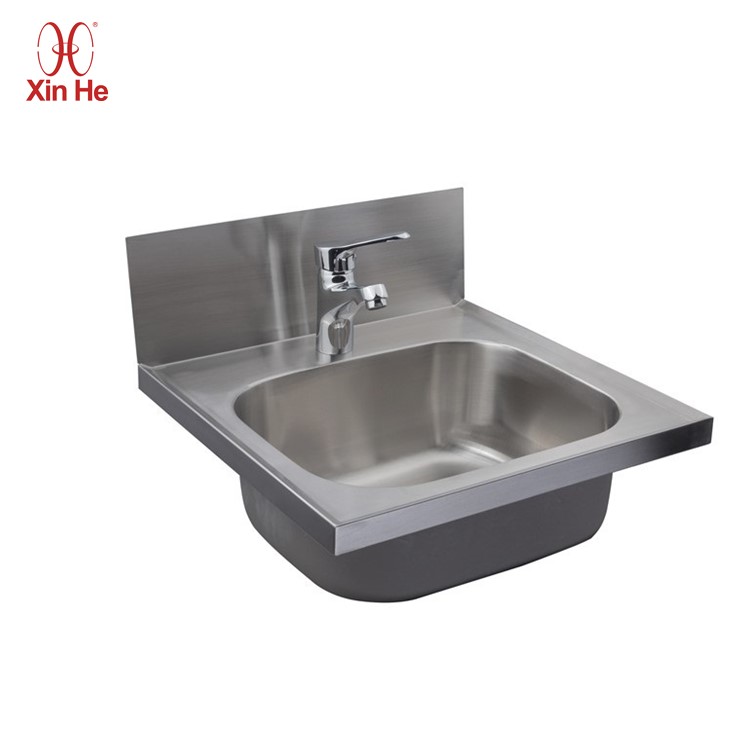
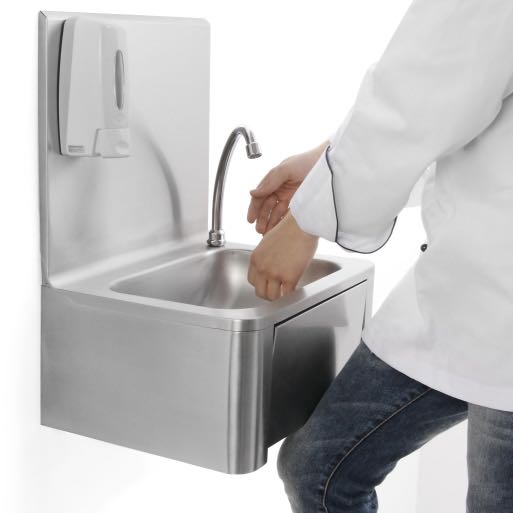
- Go vertical: In a cramped aisle, a wall mounted hand sink is a lifesaver. It keeps the floor footprint clear so you can actually mop underneath it without tripping.
- Splash guards: If space forces you to put a sink right next to a prep table, get one with left and right splash guards. Nobody wants dirty, soapy water splashing onto fresh lettuce.
- Hands-free: In the busiest zones, a knee-operated valve or a hands-free sensor is amazing. It stops you from getting the faucet handle dirty right after you washed up, which hits those strict restaurant hand sink requirements perfectly.
- Compact bowls: Get a bowl deep enough to scrub up to the elbows, but don’t waste precious aisle space on a massive basin if you don’t actually need it.
Before You Buy: A Quick Checklist
Ask yourself these questions before signing off on the blueprints:
- Can the staff reach it fast? Time is everything. If it takes a hike to get there, protocols will be ignored.
- Is it far enough from the dish pit? Mixing clean hands with dirty warewashing water is a massive red flag.
- Will a delivery block it? A path that looks clear at 8:00 AM might be buried behind a stack of boxes at noon. Look at the space dynamically.
- Can people use it without causing a traffic jam? Sinks in high-traffic bottlenecks cause collisions.
- Would a wall-mounted unit be better? Pedestal sinks are a pain to clean around.
- Should we go hands-free? Not having to touch the handles is a huge win for actual hygiene.
Standard Setups vs. Custom Solutions
If you’ve got a perfectly square, massive kitchen, a standard NSF-ready setup works fine. But let’s be real—most modern restaurant leases force you into weird, tight, asymmetrical floor plans.
Custom isn’t always better, but it’s sometimes necessary to protect a nearby ice machine or fit a weird corner. The goal is to fit the workflow, not to overcomplicate things. Work with a solid stainless steel commercial hand sink supplier so you get the exact dimensions you need without sacrificing durability.
The Bottom Line on Long-Term Compliance
We keep coming back to this: a compliant sink is about more than just buying the right hardware. Where you bolt it to the wall dictates whether your line stays fast and your food stays safe. Getting it right early saves you from having to rip out plumbing a year from now. That strategic alignment is what turns a basic plumbing fixture into an actual asset for your kitchen.
Equip your next commercial project with confidence:
- Request commercial hand sink specifications for your exact floor plan.
- Get placement-friendly recommendations tailored to your workflow.
- Ask about durable wall-mounted or knee-operated options.
- Contact Xinhe to request a solution designed for strict compliance layouts and bulk purchasing support.
FAQs
Where should a commercial hand sink be placed in a kitchen?
Keep it visible and right next to food prep areas, transition zones, or entrances. The fewer steps it takes to reach from the primary workstations, the better.
What makes a hand sink compliant in a commercial kitchen?
It has to be used only for washing hands (no food prep or dish dumping). It needs hot and cold water, soap, and paper towels. Most importantly, it can’t be positioned where it risks splashing dirty water onto nearby food surfaces. Always double-check your local health codes.
Is one hand sink enough for a commercial kitchen?
Almost never. Unless you’re running a tiny espresso stand, you need multiple sinks spread across different zones so cooks, preppers, and dishwashers aren’t crossing paths to wash up.
Should buyers choose a wall-mounted or knee-operated hand sink?
It depends on the space. Wall-mounted is great for saving room and easy floor mopping. Knee-operated is highly recommended for high-risk prep because you never have to touch a dirty faucet handle, which drastically cuts down on bacteria spread.