Commercial Mop Sinks Material Comparison for Long-Term Use
When facility managers and project contractors evaluate commercial mop sinks, they often focus on dimensions or drainage placement first. However, in high-traffic janitorial settings, the material is the single most important factor determining the return on investment. In environments where cleaning chemicals, heavy debris, and constant moisture are daily realities, the right material affects cleaning efficiency, hygiene standards, and the overall replacement cycle. Understanding the nuances of mop sinks commercial buyers face is not just about technical specs; it is a strategic decision to minimize long-term maintenance labor and facility downtime.
Why Material Choice Dictates Long-Term Value
In a residential setting, a utility sink might only face occasional use. In contrast, a commercial mop sink is a workhorse subjected to harsh detergents, abrasive tools, and the disposal of greywater containing grit and contaminants. If the material is poorly suited to these conditions, the facility will face several hidden costs:
- Pore Absorption: Lower-grade materials can be porous, trapping bacteria and odors that are impossible to eliminate.
- Surface Degradation: Constant exposure to chemical cleaners can cause pitting or cracking in certain composites.
- Aesthetic Aging: A sink that looks stained or worn after six months reflects poorly on the overall facility maintenance.
- Structural Failure: Impact from heavy buckets or floor scrubbers can lead to leaks in brittle materials.
Choosing the right material ensures that the unit remains a functional asset rather than a recurring maintenance headache.
Common Materials Used in Commercial Mop Sinks
The global market for commercial mop sinks offers a variety of materials, each tailored to different budget levels and performance requirements. Generally, these fall into three categories:
| Material Type | Common Application | Key Characteristic |
|---|---|---|
| Stainless Steel | Hospitals, Industrial, Commercial Kitchens | Superior hygiene and impact resistance |
| Molded Stone/Composites | Schools, Office Buildings | Sound-dampening and mid-range durability |
| Thermoplastic/Polymer | Residential garages, light-duty shops | Low initial cost, lightweight |
While plastic or polymer-based sinks are tempting for light-duty tasks, they rarely withstand the rigors of a professional janitorial room. Molded stone is a step up, but it remains susceptible to staining and deep scratches that can harbor pathogens over time.
How Stainless Steel Performs in Heavy-Use Utility Areas
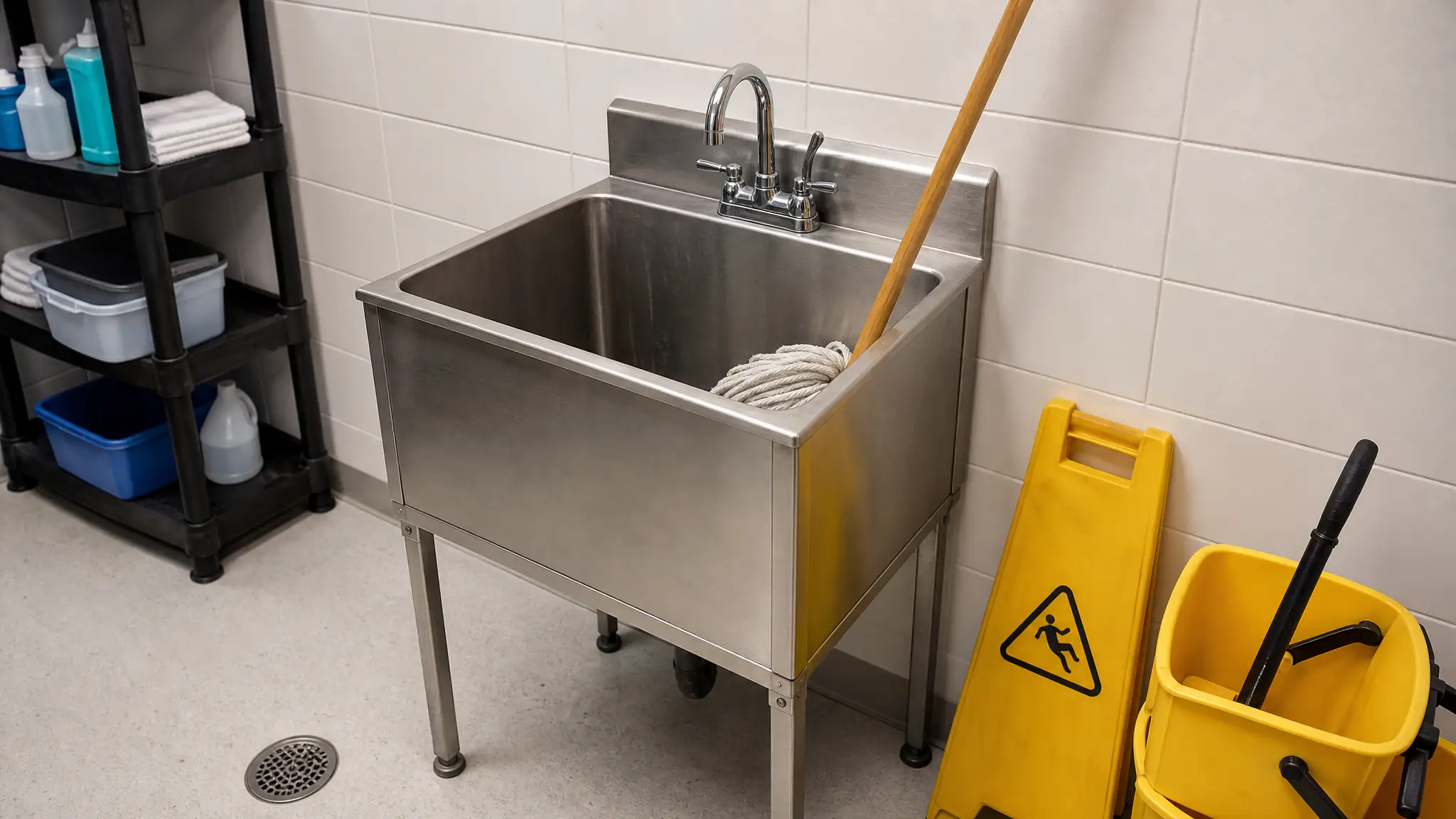
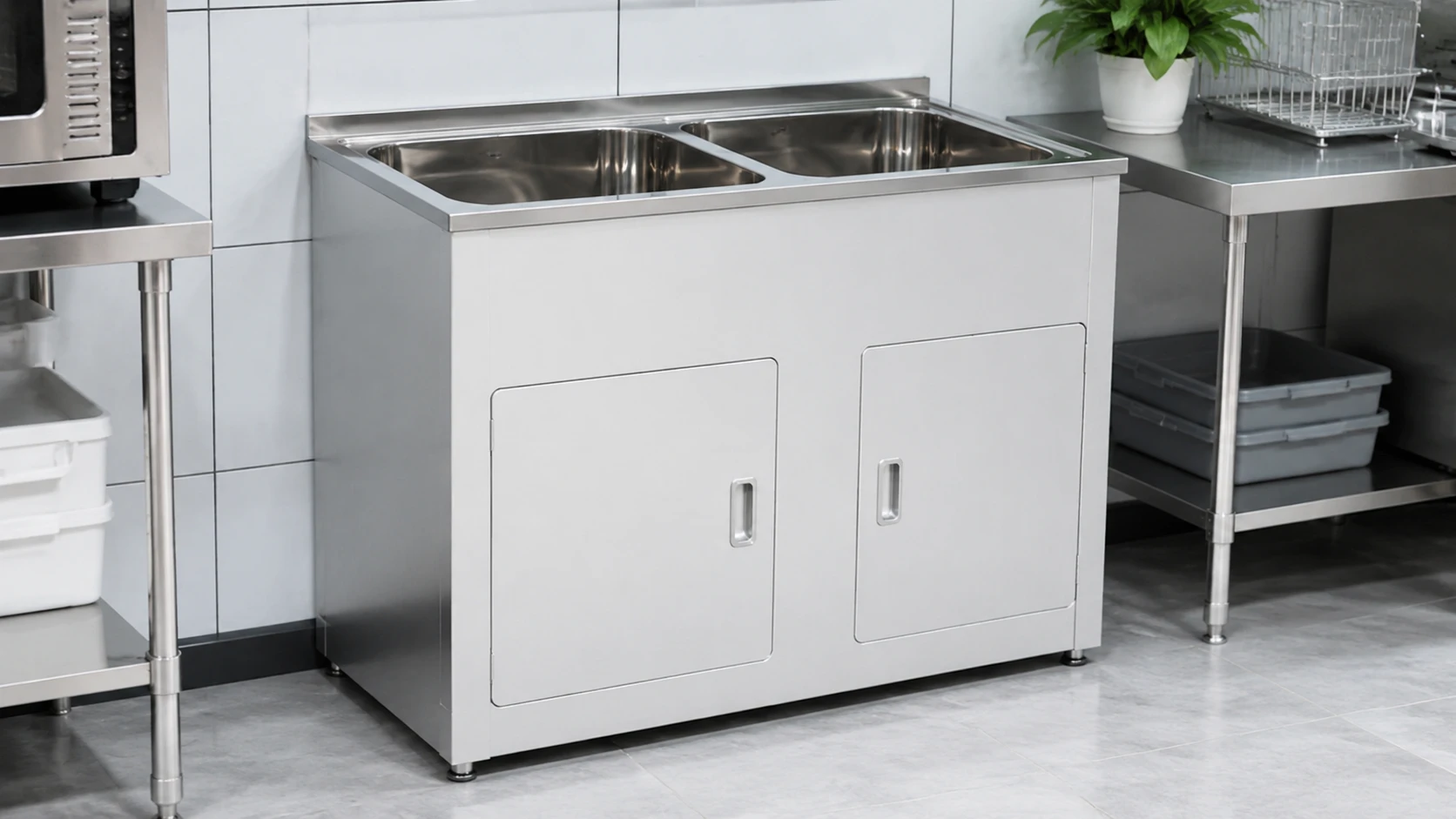
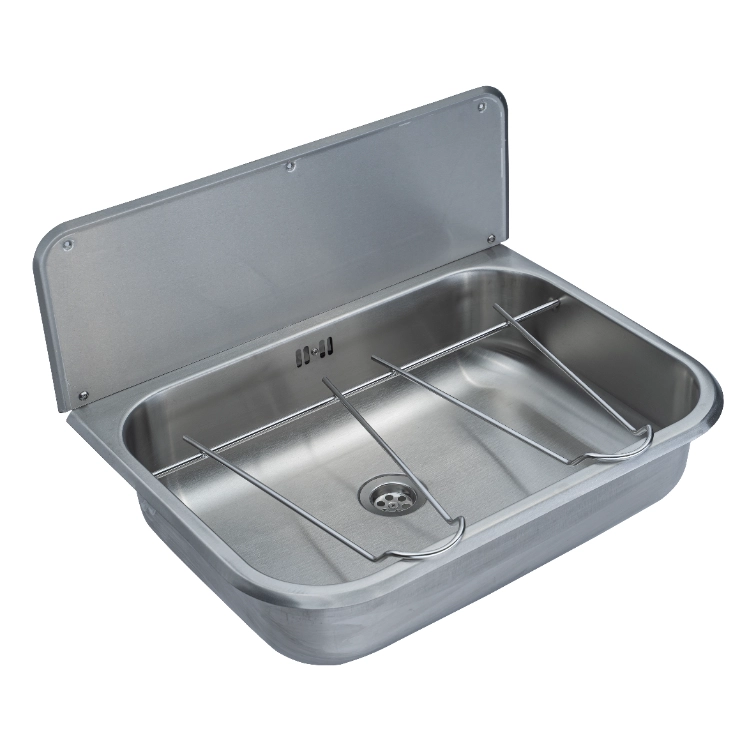
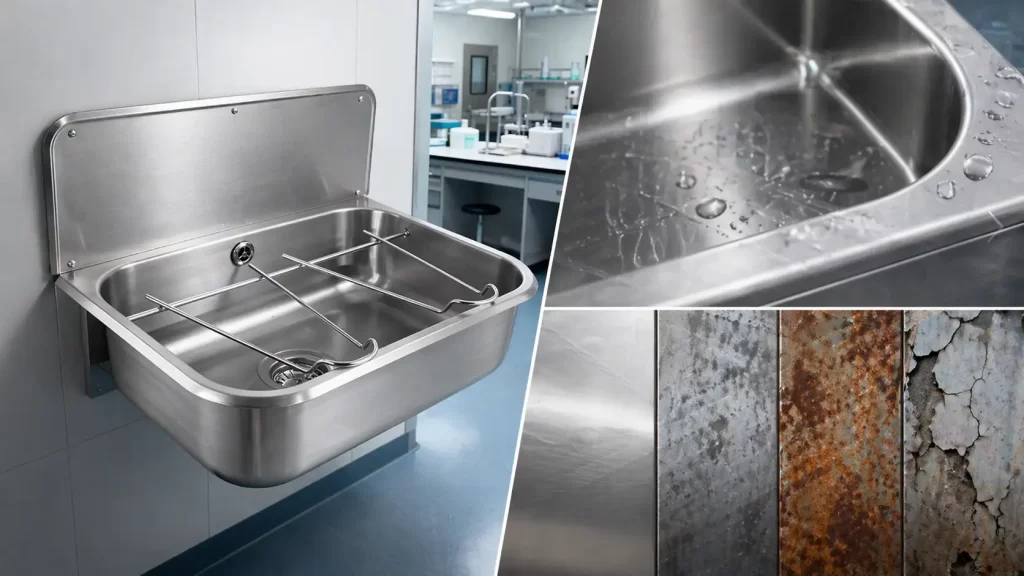
For most professional environments, a stainless steel mop sink is considered the gold standard. This is primarily due to the non-porous nature of the alloy. When dealing with the disposal of wastewater from commercial floor scrubbers, the surface must be able to withstand both physical impact and chemical exposure without degrading.
At Xinhe, we have observed that high-grade stainless steel (typically 304 grade) offers a unique balance of tensile strength and corrosion resistance. Unlike composite materials that can “fret” or wear down under abrasive cleaning, stainless steel maintains its surface integrity. This makes it particularly effective in healthcare facilities where sanitation is non-negotiable. Because the material does not absorb liquids, it is inherently resistant to the mold and mildew growth that often plagues traditional utility closets.
Long-Term Trade-Offs of Lower-Cost Materials
It is common for project buyers to consider lower-cost composites or plastic alternatives to meet tight initial budgets. While these may be sufficient for a low-frequency breakroom, they often present challenges in a true mop sinks commercial application:
- Staining: Porous materials absorb dyes from floor cleaners and dirt from mop heads, leading to permanent discoloration.
- Chemical Sensitivity: Certain polymers can become brittle when exposed to high-strength industrial degreasers or acidic cleaners.
- Refurbishment Difficulty: Once a composite sink is scratched or chipped, it cannot be easily repaired to its original state, often requiring a full replacement.
For more information on balancing these factors, you can view our essential guide to commercial mop sink selection to see how different grades impact performance.
Impact on Maintenance and Replacement Cycles
The “Total Cost of Ownership” (TCO) is a critical metric for B2B buyers. A sink that costs 30% less upfront but requires replacement in three years is significantly more expensive than a durable unit that lasts a decade.
Furthermore, maintenance labor is a hidden expense. A surface that is easy to wipe down—like the polished finish of a commercial utility sink—saves several minutes of labor every day. Over the course of a year, this efficiency gain across multiple janitorial stations can result in substantial labor savings for facility management teams.
Matching Mop Sink Material to Different Use Scenarios
Selecting the best material requires a clear understanding of the specific environment where the sink will be installed.
Janitorial Rooms in Commercial Buildings
These areas require a high-frequency disposal point. Because they are often small and poorly ventilated, a material that does not harbor odors is essential. High-grade metal surfaces are often the preferred choice here to ensure the room remains hygienic and professional.
Industrial Maintenance and Service Areas
In these zones, sinks often double as wash stations for heavy tools. Durability matters more than aesthetics. A heavy-use utility sink must be able to handle the weight of heavy mop buckets being lifted in and out without the risk of cracking the basin floor.
Food Service and Healthcare Environments
In kitchens and hospitals, the material must meet strict sanitary codes. Stainless steel is almost exclusively used in these sectors because it can be sterilized and does not react with food acids or medical-grade disinfectants. Understanding the mop sink applications and basics for these sensitive areas is vital for compliance.
Questions Buyers Should Ask Before Choosing a Material
To ensure the material matches the project’s needs, procurement officers should evaluate the following:
- What is the frequency of use? (Daily vs. hourly)
- What chemicals will be disposed of? (Standard detergents vs. industrial solvents)
- Is the sink in a public-facing or back-of-house area? (Aesthetics vs. pure utility)
- What is the expected lifespan of the facility? (Temporary lease vs. permanent ownership)
- Is floor-mounted or wall-mounted more appropriate for the material? (Weight considerations)
Answering these questions early in the procurement phase prevents the common mistake of over-prioritizing the initial purchase price over functional longevity.
Choosing the Right Material for Long-Term Value
Ultimately, the best material for a commercial mop sink is one that aligns with the facility’s operational demands. While composites have their place in light-duty environments, the rigorous demands of modern commercial and industrial cleaning usually favor the resilience of stainless steel. By choosing a material that resists corrosion, handles impact, and simplifies daily cleaning, facility managers can ensure their janitorial spaces remain efficient and hygienic for years to come.
As a dedicated manufacturer, Xinhe provides high-performance solutions that prioritize these long-term benefits. We focus on engineering products that withstand the harshest utility environments while maintaining a professional appearance.
Ready to specify the right material for your next project?
Request commercial mop sink specifications or contact the Xinhe team for a tailored recommendation based on your specific cleaning environment.