Stainless Work Table Load Capacity Guide for Buyers
When you’re comparing a stainless work table, it is easy to get caught up in dimensions, the shine of the metal, or how it looks in the room. But there is one factor that dictates how that table actually performs on Tuesday morning during a rush: load capacity. Whether you are prepping vegetables, supporting heavy machinery, or organizing project supplies, a table’s ability to hold weight safely changes everything from daily stability to long-term value. Smart buyers treat weight limits as a core requirement, not just an extra specification listed on a product spec sheet.
Why Load Capacity Matters More Than Expected
Many procurement processes start by checking surface sizes or looking for a stainless steel backsplash. Those details matter, but prioritizing them over structural strength is a recipe for a bad investment. At the end of the day, load capacity influences safety and stability far more than a polished finish ever will.
If a table can’t handle the weight you throw at it, you’ll notice immediately. It shakes, it bends, and it vibrates. In a high-volume kitchen, an unstable surface is a bottleneck. You can’t safely run a commercial slicer on a table that sways, and you definitely shouldn’t store heavy bulk ingredients on a bowing undershelf.
Choosing the right means looking at what’s happening underneath. The wrong choice leads to warped steel and premature replacement costs. Looking into professional stainless steel work table solutions early on ensures the goods actually matches the physical demands of your needs.
What Affects Table Structural Strength
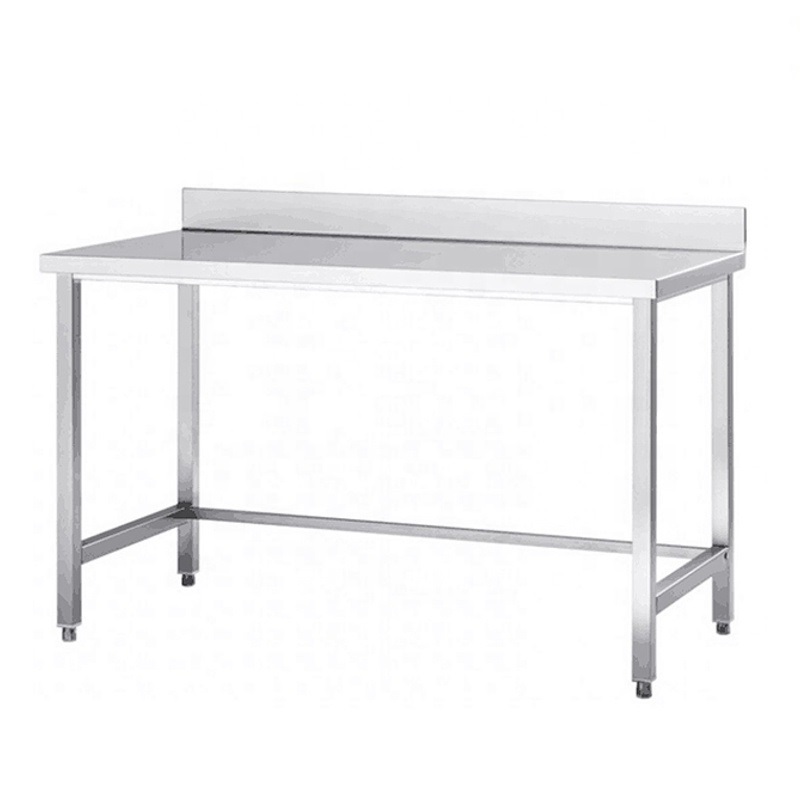
Load capacity isn’t just a random number a manufacturer picks. It is the result of specific engineering and material choices. A heavy duty stainless work table gets its strength from several interconnected parts. When you are vetting suppliers, keep an eye on these specific components:
| Structural Component | How It Influences Weight Handling | What This Means for Procurement |
|---|---|---|
| Tabletop Thickness (Gauge) | Lower gauge (thicker) steel resists denting and flexing under concentrated pressure. | Determines if people can handle heavy chopping or dense, heavy machinery. |
| Leg and Frame Structure | Thicker tubular legs and robust bracing prevent the unit from swaying side-to-side. | Ensures stability when staff are working fast or equipment is running. |
| Reinforcement Design | Welded hat channels under the top distribute weight across the whole frame. | Keeps the center of the table from sagging or “pooling” over time. |
| Undershelf Contribution | This acts as an anchor, stopping the legs from spreading outward. | Adds a secondary storage zone and improves total weight distribution. |
| Welding Quality | Fully welded seams handle stress better than basic bolt-together kits. | Reduces long-term fatigue, especially in high-vibration environments. |
Heavy-Duty vs Light-Duty Use
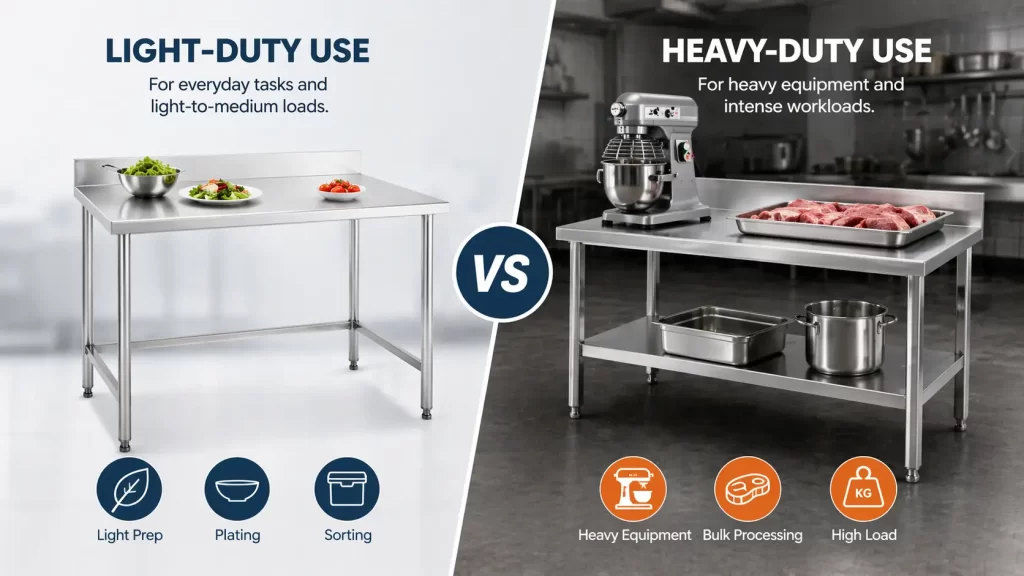
A common mistake is thinking you always need the strongest table available—or worse, that a “standard” table works for everything. Success in purchasing comes down to precise matching.
- Light-to-Medium Applications: If you’re just plating meals or sorting produce, you don’t need industrial-grade reinforcement. Standard units do the job perfectly well. Don’t waste your budget over-engineering a simple prep station.
- Heavy-Duty Applications: If the plan is to hold a planetary mixer or process bulk meat, you need a stainless work table load capacity built for intense stress. Cutting corners here leads to a sagging table and a safety hazard.
How Restaurant and Project Buyers Evaluate Differently
Both groups buy kitchen equipment, but their priorities usually sit on opposite sides of the coin.
Restaurant Buyers
Kitchen operators care about flow and ergonomics. They want to know if the table will rattle when they’re prepping or if the surface will warp after six months of constant use. For them, load capacity is about task efficiency.
Project and Wholesale Buyers
If you’re ordering 50 units for a hospital or a lab, you need predictable performance. When sourcing for wholesalers and contractors, you’re looking for reliability that meets safety codes across the board.
Real-World Load Expectations
To get the right spec, you have to look at how the table is actually used:
- Prep tables for restaurant kitchens: Here, weight is usually spread out. The surface needs to handle movement and impact without bouncing. A standard structure with a solid gauge top is usually plenty.
- Tables supporting heavier equipment: This is where things get tricky. A heavy slicer or beverage machine creates a “point load”—all the weight is in one spot. You need dedicated hat channels directly under that equipment to prevent the steel from dipping.
- Wholesale supply for contractors: Consistency is the goal. A contractor can’t risk a callback because a table buckled under utility tools in a support room.
Essential Load Capacity Checklist for Buyers
Before you sign off on an order from a stainless work table supplier, run through these questions. You might also want to review specific stainless work table applications to see where your project fits.
- What is the heaviest thing going on this table? (Prep, equipment, or storage?)
- Is the weight spread out or in one spot? (Concentrated loads need extra reinforcement.)
- Will there be vibration? (Moving parts test the welds and leg stability.)
- Are you using the undershelf for heavy items? (This adds to the total stress on the legs and casters.)
- Is a standard model enough, or do you need a reinforced “heavy duty” build?
When to Go Standard vs. Reinforced
Standard catalog models are great for most general prep work. They offer the best value and are usually ready to ship. However, if your facility uses massive countertop equipment, standard bracing might eventually bow. In those cases, a custom stainless work table or a reinforced design isn’t a luxury—it’s a requirement for safety.
Sometimes a custom size is needed just to fit a specific layout, but keep in mind that “custom” should solve a problem, not just add cost. If your project has a weird layout or requires massive tool storage, checking out reinforced workbench options will save you a headache later.
Selecting for Long-Term Performance
Choosing the right table is about more than just finding the right size. Load capacity is the foundation of how that table functions every day. A table matched to its real-world workload stays stable, lasts longer, and keeps your staff safe. Whether you’re a restaurant owner or a high-volume wholesaler, matching the engineering to your environment is the only way to get true long-term value.
As a specialized manufacturer, Xinhe provides engineered solutions for real commercial needs. Request stainless work table specifications today, or ask us about load capacity options for your specific application.
FAQ
1.How do buyers compare stainless work table load capacity?
Look past the marketing numbers. Check the gauge thickness, leg diameter, and whether there are welded hat channels under the top. Those are the physical parts that actually hold the weight.
2.What affects the load capacity of a stainless steel work table?
It comes down to steel thickness, frame design, weld quality, and how the undershelf secures the legs to prevent them from wobbling.
3.When should I choose a reinforced stainless work table?
Go reinforced if you’re supporting heavy, vibrating machinery (like mixers), doing high-impact prep, or using the table in an industrial setting.