Industrial Sink Selection: Technical Specs for Project Contractors
When you’re evaluating an industrial sink for a project, the decision needs to go deeper than just checking a price tag or a rough measurement. Details like bowl depth, actual usable space, steel grade, and the drainage layout determine how that sink will hold up once the job is handed over. A model that looks fine in a catalog can quickly become a headache during installation if the specs aren’t dialed in. Viewing these specifications as a core part of project planning—rather than just “fine print”—is the best way to avoid mid-project surprises.
Why Specifications Matter More Than You Think
Most procurement starts with a budget and a footprint. However, in the field, specs dictate whether a fixture is a utility or a liability. The design of an industrial sink influences everything from how fast a plumber can hook it up to how often the facility manager has to call for repairs.
I’ve seen plenty of contractors rely on outward appearances, only to realize too late that the support structure or mounting configuration doesn’t match the wall framing. Two sinks might both be labeled “commercial grade,” but their internal volumes and drainage capacities can lead to completely different results. Use specs as your primary decision tool to avoid costly on-site rework and ensure the unit actually fits the workflow.
Reviewing Size, Bowl Depth and Working Space
The footprint of an industrial sink is the first thing you’ll check against your drawings, but it’s only half the story. If the internal dimensions don’t match the daily tasks, the sink becomes a bottleneck.
- Overall size vs. layout fit: External dimensions ensure the unit clears walls and other equipment. But remember, a massive sink is a hindrance if it blocks traffic in a tight utility room.
- Bowl depth and task type: Deeper bowls are a lifesaver in service areas. They contain splashes and make it easier to rinse large items without soaking the floor. On the flip side, an overly deep bowl at a high-volume hand-washing station is an ergonomic nightmare for staff.
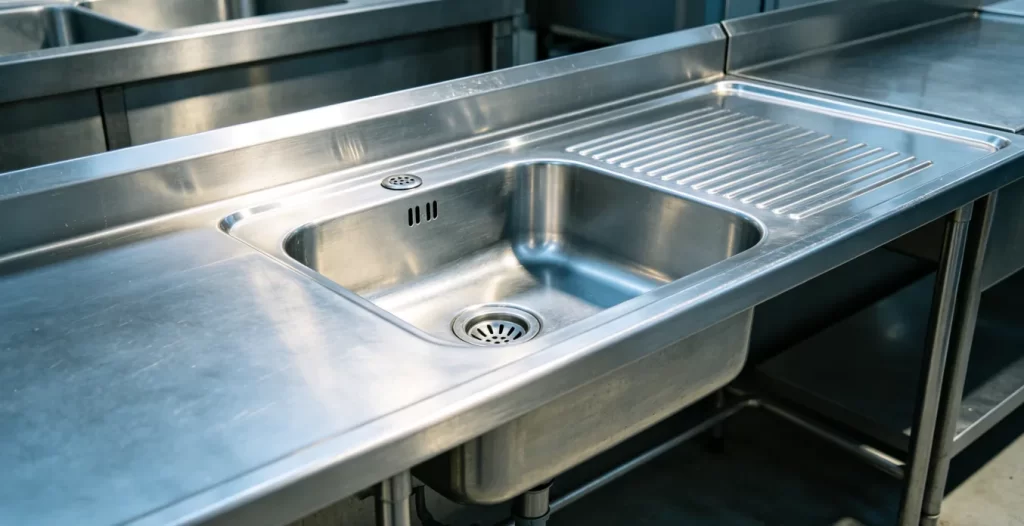
- Usable working space: Think about the “reach.” Does the job require a built-in drainboard for staging? Checking versatile commercial kitchen sink options helps you see how bowl placement affects the overall flow of the room.
Material Grade and Thickness: The Durability Factor
Don’t just look for “metal”—look for the right recipe. While a stainless steel industrial sink is the industry standard, the grade and gauge (thickness) determine its lifespan.
In wet or high-sanitation environments, 304-series stainless steel is usually the baseline for corrosion resistance. But the gauge is what handles the physical abuse. A lower gauge number means thicker steel. If you’re installing a heavy-duty industrial sink where workers might drop heavy tools or pots, you need that thicker gauge to prevent denting and warping.
Pro Tip: Material grade tells you if it will rust; gauge tells you if it will bend. For high-traffic areas, finding the commercial stainless sink best value means balancing these two factors against your specific facility demands.
Overlooked Details: Drainage, Backsplash and Structure
It’s often the “small” things that cause the biggest delays.
- Drainage efficiency: A center drain is standard, but a corner drain can be a game-changer if you need to maximize storage space underneath. If the drainage doesn’t align with the floor sink, you’re looking at standing water and potential health code violations.
- Splash control: An industrial sink with backsplash isn’t optional if you’re mounting against drywall or using power washers. It’s the only thing protecting the building’s infrastructure from rot.
- Support and rigidity: Check the legs. Welded stainless steel frames offer much better rigidity than bolted, “knock-down” kits. If the sink is going to be leaned on or heavily loaded, go with welded.
Checking Installation Fit Before Final Selection
Rework is expensive. Treat the installation fit as your final filter. Before you sign off on a submittal, run through this checklist:
| Feature | Why it matters for your project |
|---|---|
| Plumbing coordination | Drain height and supply lines must align perfectly to avoid pipe relocation. |
| Mounting style | Wall-mounted units need specific blocking; floor-supported units are safer for heavy-duty use. |
| Equipment clearance | Ensure there is room for grease traps, P-traps, and neighboring appliances. |
Ensuring a seamless transition from the sink edge to the wall is vital for hygiene. When you’re setting up specific zones, how to choose the right commercial kitchen sink provides a great baseline for plumbing and clearance alignment.
Matching Specs to the Actual Scenario
A one-size-fits-all approach is a recipe for a compromised facility.
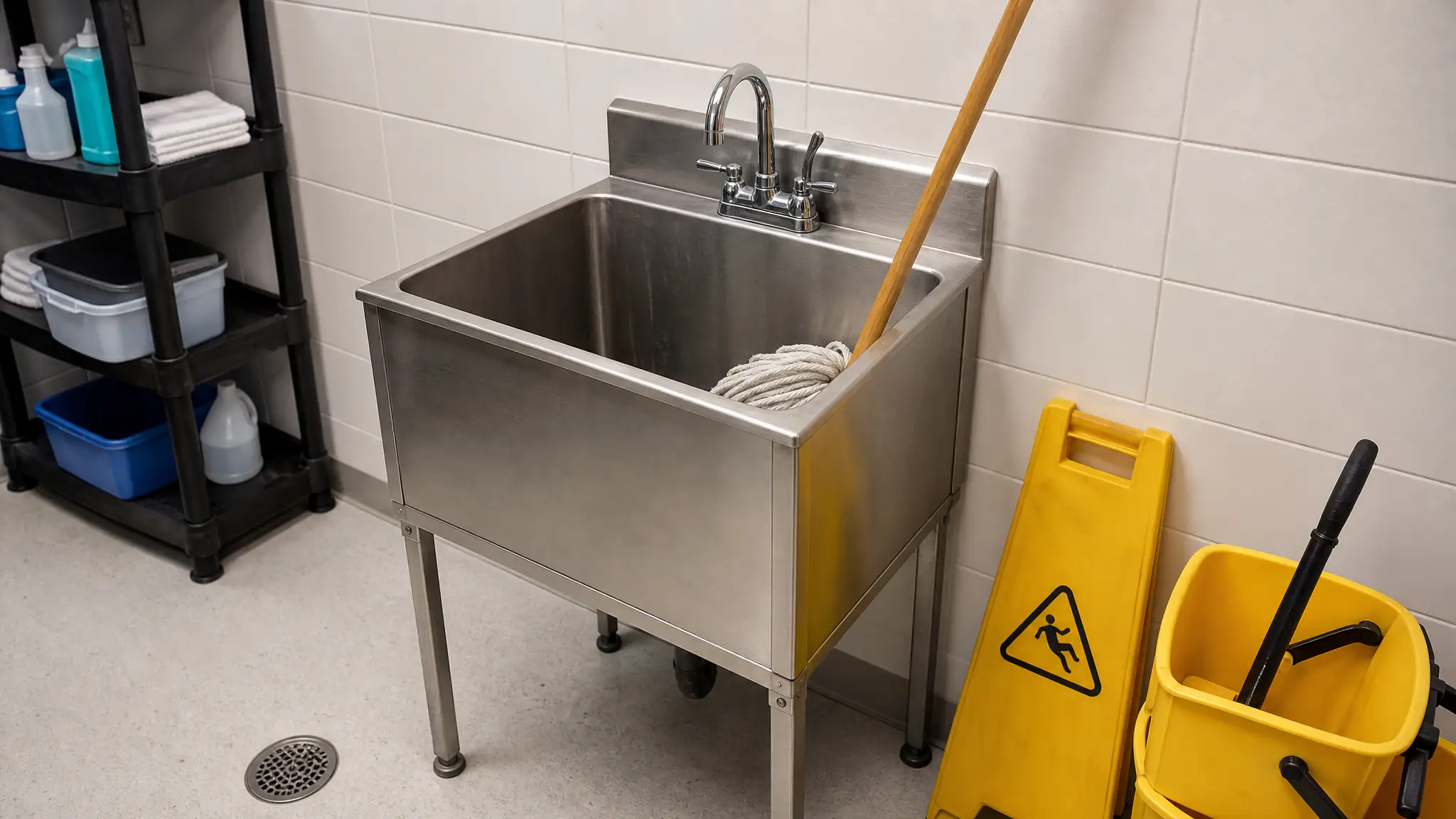
- Utility & Janitorial: Prioritize bowl depth and splash protection. An industrial mop sink needs to handle chemical dumping without ruining the floor.
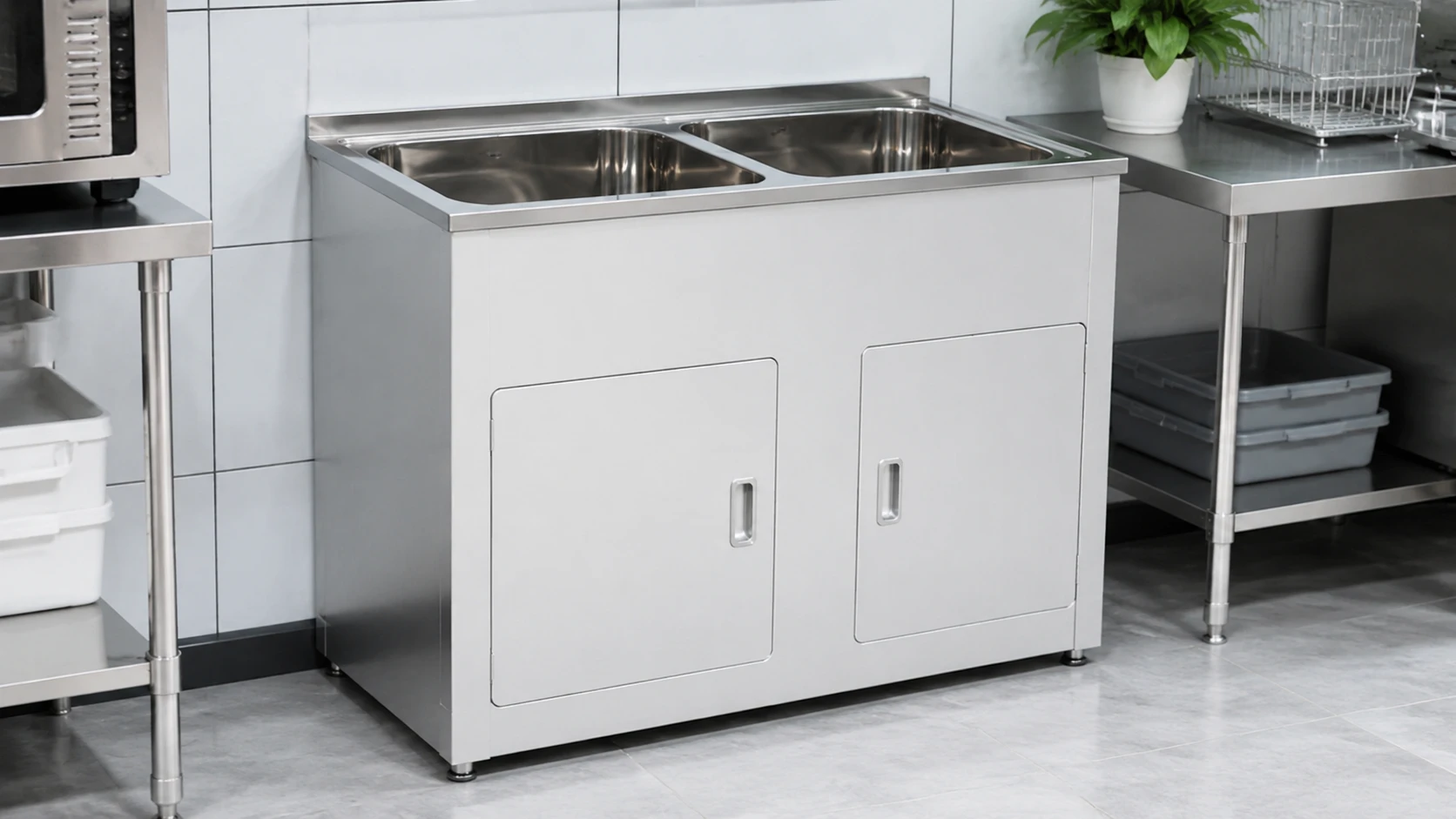
- Foodservice: Focus on hygiene. Look for NSF commercial sink requirements, coved (rounded) corners for easy cleaning, and fast drainage.
- Industrial Maintenance: Here, the support structure is king. You need thick-gauge, welded construction that can handle heavy parts and rough handling.
- Tight Retrofits: If you’re working in a cramped, older building, you might need a custom industrial sink manufacturer to tweak the dimensions so you don’t violate local codes.
6 Questions to Ask Your Supplier
Treat your supplier as a technical partner. If you’re talking to a factory like Xinhe, use this list:
- What is the usable bowl space? (Not just the outside dimensions).
- What is the specific gauge and grade? (Confirm it matches the site’s environmental impact).
- How is it reinforced? (Is it welded or bolted?).
- Where is the drain located? (Check this against your rough-ins).
- What is the “duty rating”? (Is it built for light or heavy use?).
- Do you have CAD or BIM files? (Essential for your engineers to drop into their models).
For more help on picking the right partner, checking how to source a commercial industrial sink can help you vet vendors more effectively.
Final Thoughts: Reducing Project Friction
Choosing the right sink is about alignment. The “best” sink isn’t the one with the most features; it’s the one that fits the plumbing, the space, and the budget without requiring a work-around. By paying closer attention to bowl depth, material thickness, and structural details now, you save yourself—and the client—from headaches later.
FAQ
What specifications matter most when choosing an industrial sink?
For contractors, the most critical specifications are overall dimensions versus usable bowl space, material grade and gauge (thickness), drainage layout, and the support structure. These elements directly dictate whether the sink will physically fit the installation space and survive the facility’s daily demands.
How do contractors compare bowl depth and sink size for a project?
Contractors should evaluate the specific tasks the sink will support. External size determines layout fit, but bowl depth must match the workflow. Deep bowls are needed for splash control in utility areas, while shallower, wider bowls may be better for fast-paced preparation zones to prevent operator ergonomic strain.
When should an industrial sink be customized for installation fit?
Customization is necessary when standard catalog dimensions interfere with existing plumbing rough-ins, structural columns, or non-standard equipment clearances. Working with an OEM manufacturer to adjust drain placement, add custom drainboards, or modify leg bracing can prevent expensive on-site structural modifications.