How to Evaluate a Prison Toilet Supplier for Government Projects
For government and correctional projects, choosing a prison toilet supplier is not just a purchasing step—it directly affects safety, durability, installation efficiency, and long-term maintenance costs. Unlike standard restroom fixtures, prison toilets must meet stricter requirements for vandal resistance, structural strength, and project coordination. That is why buyers should evaluate more than price alone. A qualified supplier should be able to support specifications, customization, lead time, and real correctional-use needs from the start.
Securing the right manufacturing partner ensures that the facility operates smoothly for decades, minimizing risks and protecting the project budget. This guide outlines the essential criteria procurement teams, contractors, and facility managers must evaluate when selecting a supplier for institutional plumbing fixtures.
Why Supplier Selection Matters More Than Unit Price in Correctional Projects
In commercial procurement, it is tempting to let the lowest initial quote drive the purchasing decision. However, in the context of government and detention facilities, prioritizing unit price over supplier capability is a high-risk strategy. The true cost of a correctional fixture extends far beyond its factory invoice.
The Hidden Costs of Inadequate Fixtures
When a facility installs subpar equipment, the financial repercussions compound quickly. Institutional environments subject plumbing fixtures to extreme, daily abuse. If a prison toilet manufacturer cuts corners on material thickness or welding quality, the unit will fail prematurely. Replacing a damaged toilet in a high-security environment is not a simple plumbing job; it requires coordinating security personnel, relocating inmates, and navigating complex facility protocols. The labor costs and operational disruptions associated with a single failure often exceed the initial savings of a cheap product.
Mitigating Project Delays and Compliance Risks
Government contracts operate on strict timelines and rigorous compliance standards. A supplier who lacks project management experience can cause cascading delays. If products arrive late, or if they fail to match the approved engineering drawings, the entire construction schedule is compromised. Contractors face heavy penalties for delayed handovers. Therefore, evaluating a prison toilet supplier means evaluating their reliability as a supply chain partner.
Furthermore, correctional facilities are heavily regulated environments. Products must often meet specific structural and safety codes. A supplier must demonstrate an understanding of these requirements to prevent compliance failures during facility inspections.
Total Cost of Ownership (TCO) in Facility Management
Experienced procurement teams focus on the Total Cost of Ownership (TCO). This metric includes the purchase price, installation costs, maintenance expenses, and expected lifespan of the product. A premium fixture from a reliable source drastically reduces maintenance overhead. By shifting the focus from the unit price to the long-term ROI (Return on Investment), buyers can make decisions that benefit the facility’s operational budget for decades.
Check Whether the Supplier Understands Correctional Application Requirements
Not all stainless steel fabricators are equipped to produce institutional plumbing fixtures. A capable correctional toilet supplier must possess a deep, practical understanding of the unique challenges present in detention environments.
Anti-Vandal and Tamper-Resistant Engineering
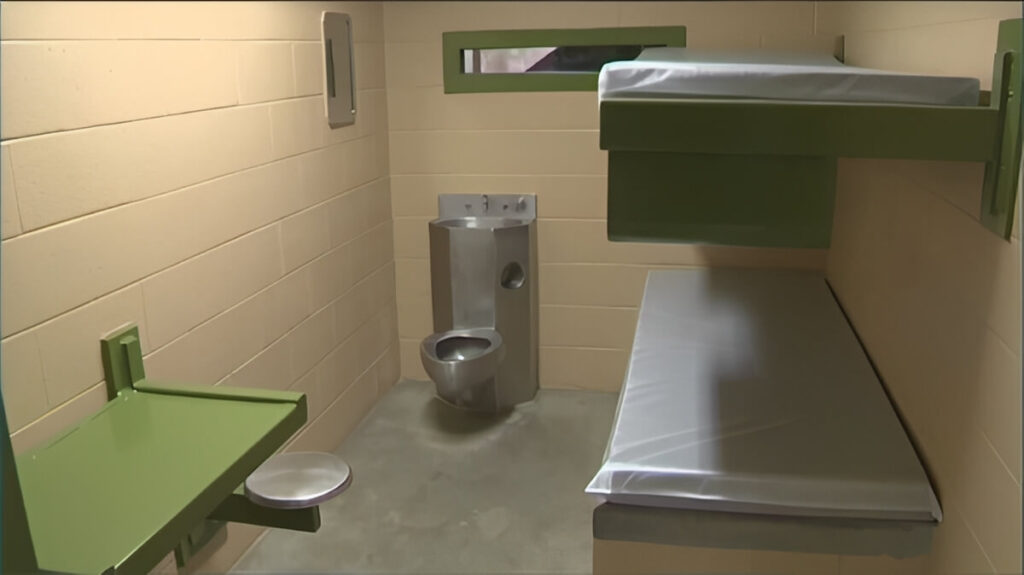
Standard commercial toilets are easily dismantled or damaged. In a detention setting, any removable part can be weaponized or used to conceal contraband. Evaluate whether the supplier incorporates tamper-resistant designs. This includes concealed piping, flush valves hidden behind secure access panels, and the use of specialized security screws that cannot be removed with standard tools. The overall design must resist intentional destruction, blunting impacts and preventing inmates from breaking off sharp pieces.
Ligature-Resistant and Safety Considerations
Inmate safety is a primary liability for government facilities. Fixtures must be designed to minimize points where cords or fabrics could be attached. Smooth, sloped surfaces, rounded corners, and integrated push-button flush mechanisms are essential features. You can learn more about the engineering behind these features and how a prison toilet manufacturer boosts safety in demanding institutional environments. The supplier should proactively discuss these safety elements during the consultation phase.
Space Constraints and Environmental Durability
Cell blocks are notoriously compact. Fixtures must maximize functionality within a minimal footprint without sacrificing accessibility. Furthermore, these products are subjected to harsh, industrial-grade chemical cleaners daily. The supplier must understand that the product will face relentless wear and tear, requiring a design that prioritizes easy sanitation, prevents bacterial buildup, and withstands corrosive cleaning agents.
Review Material Grade, Fabrication Quality and Structural Strength
The physical integrity of the product is the foundation of its performance. When auditing a stainless steel prison toilet supplier, procurement officers must rigorously examine the raw materials and the manufacturing techniques employed on the factory floor.
The Importance of Stainless Steel Grades
The industry standards for high-security environments are 304 and 316 grade stainless steel.
- 304 Stainless Steel: This is the most common and highly effective alloy for institutional use, offering excellent corrosion resistance and durability. It is the baseline requirement for any legitimate institutional fixture.
- 316 Stainless Steel: For environments exposed to extreme moisture, coastal air, or exceptionally harsh chemicals, 316 stainless steel provides an added layer of corrosion resistance due to the inclusion of molybdenum.
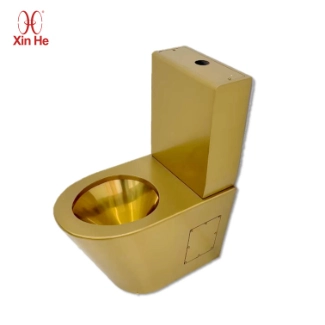
A reliable supplier will transparently state their material grades and provide material certification reports upon request. You can review standard specifications for a commercial 304 stainless steel toilet to understand the baseline expectations for material quality.
Gauge Thickness and Structural Integrity
Stainless steel thickness is measured in gauges—the lower the gauge number, the thicker the steel. For detention applications, 14-gauge (approx. 2.0mm) or 16-gauge (approx. 1.5mm) steel is typically required for the main body, while high-impact areas might utilize even thicker plates. Thinner metals will dent, deform, or puncture under heavy impact, leading to immediate security risks and costly replacements.
Fabrication Quality: Welding and Finishing
Even the highest quality steel will fail if the fabrication is poor. Examine the supplier’s welding processes.
- Seamless Welding: All seams should be continuously welded, ground smooth, and polished. Spot welding is unacceptable in this application, as it creates weak points and leaves crevices where bacteria can thrive or contraband can be hidden.
- Edge Treatment: All exposed edges must be hemmed or radiused (rounded) to eliminate sharp surfaces, protecting both inmates and facility staff from injury.
| Evaluation Metric | Standard Commercial Supplier | Qualified Correctional Supplier |
|---|---|---|
| Material | 201 or thin 304 Stainless Steel | Heavy-duty 304 or 316 Stainless Steel |
| Construction | Spot welded, exposed seams | Seamlessly welded, ground smooth |
| Hardware | Standard bolts and screws | Tamper-resistant security screws |
| Focus | Aesthetics and low manufacturing cost | Vandal resistance and structural longevity |
Evaluate Customization and Specification Support
Government projects rarely follow a one-size-fits-all approach. Building codes, facility layouts, and specific security levels vary dramatically from one project to the next. A competent prison toilet supplier must operate as a technical partner, offering robust customization and engineering support.
Engineering Drawings and Technical Documentation
Before any manufacturing begins, the supplier must provide detailed CAD drawings, submittal sheets, and technical specifications. These documents are vital for architects, engineers, and project managers to verify that the fixtures will integrate seamlessly with the building’s infrastructure. If a supplier is slow to produce accurate drawings or provides generic, unalterable spec sheets, it is a significant red flag indicating a lack of in-house engineering capability.
Adaptability in Configuration and Sizing
Can the supplier modify their standard designs to fit your project? You may need rear-mount (chase) installations for maximum security, or wall-mount configurations for easier floor cleaning. Additionally, modern cell designs often require integrated solutions to save space and reduce plumbing complexity. A capable jail toilet supplier will have the expertise to produce complex, multi-functional units, such as a consolidated prison toilet sink combo, customized to your exact dimensional requirements.
Integration with Existing Plumbing and Valves
Retrofit projects present unique challenges. The supplier must be able to adjust rough-in dimensions to match existing plumbing lines, preventing the need for expensive structural modifications to the concrete floors or walls. They should also be flexible in accommodating various electronic or mechanical flush valve systems specified by the facility.
Compare Production Capacity, Lead Time and Export Support
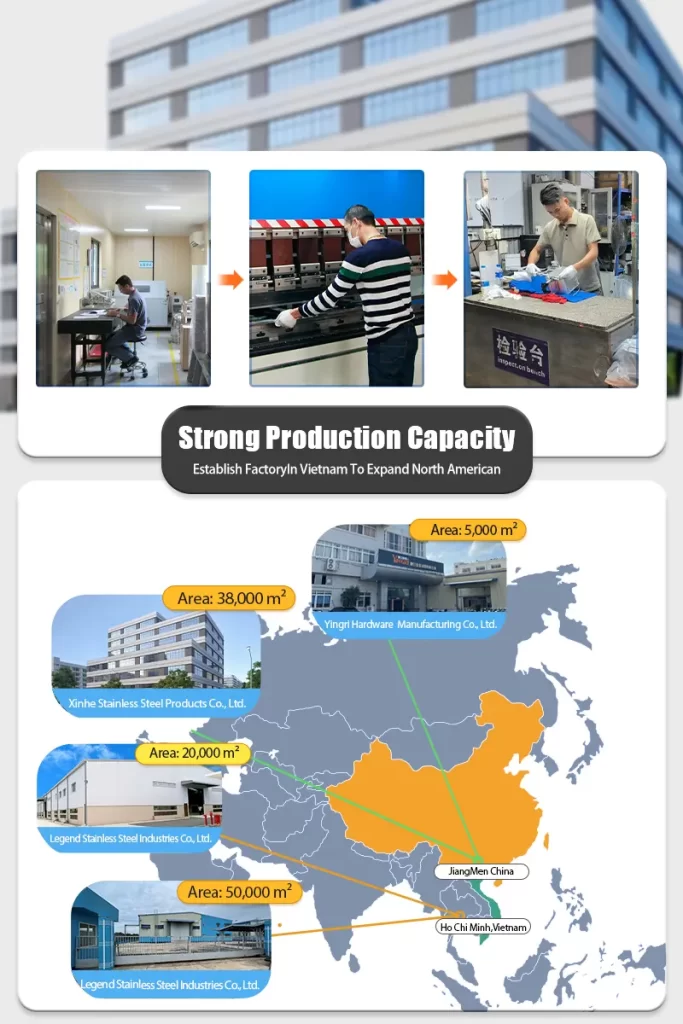
Even the best product is useless if it cannot be delivered on time and in the required quantities. Procurement teams must thoroughly vet the operational capabilities of a prison toilet supplier to ensure they can handle the scale and logistical complexities of government contracts.
Assessing True Production Capacity
Does the supplier actually manufacture the goods, or are they a trading company outsourcing the work? Dealing directly with a manufacturer ensures better quality control, faster communication, and more competitive pricing. Ask about their factory size, monthly output capacity, and the machinery they utilize (such as laser cutting and automated welding equipment). A supplier with robust, in-house production lines can comfortably manage bulk orders of hundreds of units without compromising consistency.
Lead Time Reliability and Sample Provision
Government project schedules are rigid. Request clear, realistic lead times for both sample production and mass manufacturing.
- Sample Phase: The supplier should be willing and able to produce a custom sample for your approval before bulk production begins. This allows your engineering team to verify dimensions, material quality, and finish.
- Bulk Production: Once the sample is approved, the supplier must commit to a strict delivery schedule. Delays in the plumbing phase can halt subsequent construction steps, causing severe project bottlenecks.
Export Expertise and Global Logistics
For international buyers, the supplier’s export experience is just as critical as their manufacturing skill. The supplier should be well-versed in proper export packaging. Heavy stainless steel fixtures must be secured in reinforced, fumigated wooden crates to prevent warping or damage during transit. Furthermore, an experienced exporter will smoothly handle customs documentation, shipping logistics, and compliance with international trade regulations, ensuring a frictionless delivery to the project site.
Questions Procurement Teams Should Ask Before Placing an Order
To systematize the evaluation process, procurement managers should require potential suppliers to answer a specific set of operational questions. This checklist quickly separates professional manufacturers from inexperienced vendors.
- What specific stainless steel grade and gauge do you use for the main body and structural supports?(Ensures baseline material quality and impact resistance.)
- Can you provide detailed CAD drawings and technical specification sheets for approval prior to production?(Verifies engineering capability and prevents installation mismatches.)
- What are your quality control procedures for continuous welding and edge finishing?(Ensures the product will not have weak points or sharp, dangerous edges.)
- Do you have documented experience supplying fixtures for large-scale public security or correctional projects?(Confirms they understand the high-stakes nature of institutional procurement.)
- What is your standard lead time for a bulk order of 100+ units, and how do you handle sample approvals?(Tests their true production capacity and project management reliability.)
- Are your standard designs equipped with tamper-resistant hardware and anti-ligature features?(Checks their fundamental understanding of inmate safety requirements.)
- Can you customize rough-in dimensions to accommodate our facility’s specific plumbing layout?(Determines their flexibility for retrofit or custom-designed projects.)
By asking these targeted questions, buyers can objectively compare different vendors and select a prison toilet supplier that offers transparency, capability, and long-term value.
Choosing the Right Supplier
Procuring fixtures for government and correctional facilities is a high-stakes responsibility. The consequences of choosing the wrong partner extend far beyond a slight budget overrun; they manifest as security vulnerabilities, endless maintenance cycles, and severe project delays. By prioritizing a supplier’s understanding of correctional requirements, their material fabrication standards, their engineering flexibility, and their production capacity, buyers can mitigate these risks effectively.
Ultimately, the goal is to partner with a prison toilet supplier that acts as an extension of your project team—one that anticipates challenges, provides technical solutions, and delivers flawlessly. For government projects, the value of a reliable supplier lies in a lower Total Cost of Ownership, stable project coordination, and the peace of mind that comes from installing proven, durable fixtures.
Ready to secure high-quality fixtures for your next institutional project? Request Xinhe prison toilet specifications for your project layout.