Home > Blog > Home Kitchen Products >
Stainless Laundry Sink for Commercial Laundromats: Sizing, Depth & Drainage
Commercial laundromats push utility sinks harder than any home or hotel laundry room. Customers pre-soak heavily soiled workwear, dump pocket debris into the drain, leave faucets running, and wedge oversized comforters into the basin. A stainless laundry sink built for a residential utility room usually fails within six months under that load.
Three choices decide whether your stainless laundry sink holds up: basin depth, drain capacity, and steel grade. Each section gives you the specifications to check before you sign a purchase order.
Why Residential Sinks Fail in Laundromats
Most failures trace back to a single mistake: buying a residential-grade unit for a commercial-frequency environment.
A home laundry sink typically uses 20-gauge steel at about 180 mm (7 inches) of bowl depth, with a 40 mm (1.5-inch) waste connection. Those numbers work at home. In a retail laundromat running 80 to 120 customer cycles a day, the thin steel flexes and oil-cans under load, the shallow basin splashes water across the floor, and the 40 mm drain clogs on the first week of lint.
Floor puddles create slip-and-fall liability. Drain clogs generate service calls. A dented basin traps cleaning chemicals and bacteria in the deformed low spots.
A commercial stainless laundry sink fixes all three failure points at once.
Basin Sizing: What the Numbers Mean
How Deep Should a Laundry Sink Be?
For commercial laundromats, 250 mm (10 inches) is the minimum viable depth. At that depth, water stays in the basin during aggressive pre-soaking. A 300 mm (12-inch) basin removes splashback entirely during bucket filling, though it needs a lower waste outlet to keep the correct trap-arm fall of 6 to 20 mm per 300 mm of horizontal run.
| Basin Depth | Practical Use | Laundromat Verdict |
|---|---|---|
| 180–200 mm (7–8″) | Light rinsing, delicates | Not suitable, frequent floor splashing |
| 250 mm (10″) | Pre-soaking, bucket filling | Commercial minimum standard |
| 300 mm+ (12″+) | Heavy soaking, industrial items | Recommended for high-traffic sites |
Bowl Width and Double-Basin Layouts
A single basin 510 mm wide handles most pre-treatment tasks. A double-basin layout splits soaking and rinsing into separate bowls, which helps when several customers share one utility station.
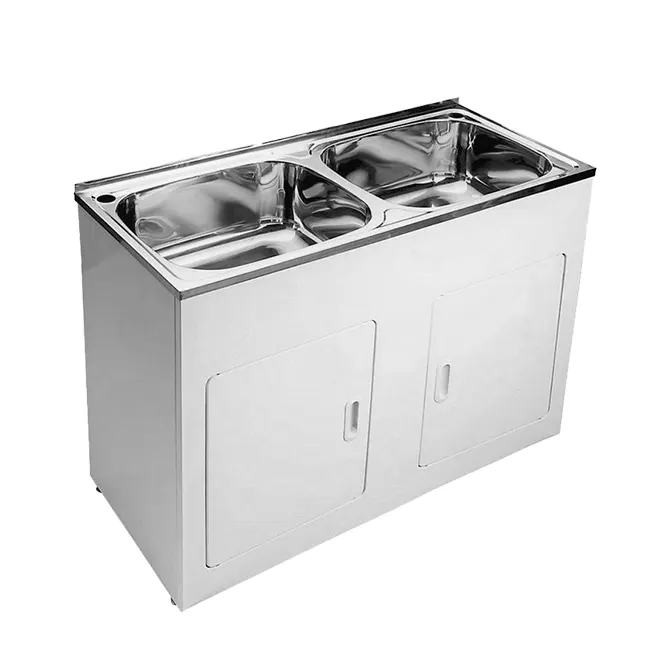
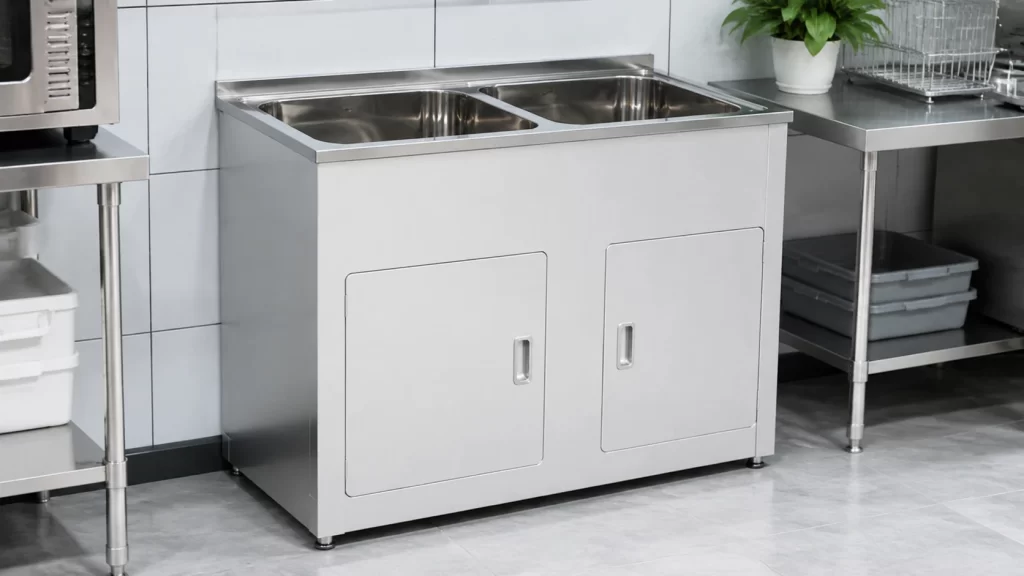
The 90L CLA28×2 commercial double laundry sink cabinet solves this directly. This stainless laundry sink cabinet holds two 450 × 400 × 250 mm basins inside a 1,200 mm wide cabinet, for a combined 90 L capacity. The cabinet base stores cleaning chemicals off the floor and keeps the utility zone organized without extra shelving.
Drainage Engineering for High-Volume Use
What Size Drain Does a Laundry Sink Need?
The drain opening and the waste pipe are two different specifications. Get either one wrong and even the fastest-draining basin still backs up.
Drain opening (strainer basket seat): Use 89 mm (3.5 inches). This is the commercial standard and accepts most commercial strainer baskets. It clears lint, hair, and incidental debris without weekly plumber visits.
Waste pipe diameter:
- 40 mm (1.5″): residential standard, clogs easily in commercial use. Avoid.
- 50 mm (2″): commercial baseline, handles a standard single-sink discharge. Minimum required.
- 75 mm (3″): recommended when two or more utility sinks share a common waste stack.
Basin Bottom Geometry
Flat-bottomed basins hold standing water unless installed perfectly level. Few sinks stay level after years of floor settling. Specify basins with a creased X-pattern or envelope-fold pressed into the floor. Those channels move water to the strainer even when the unit sits 2 to 3 mm out of level.
Rounded internal corners (R10 to R15 mm radius) stop the soap scum and debris that collect in sharp 90-degree seams. Staff wipe the basin clean in one pass instead of scrubbing seam lines with a brush.
Material Selection: 304 vs 316 Stainless Steel
Chemical Resistance in Daily Laundromat Conditions
Laundromats run chlorine bleach, enzyme pre-treatment sprays, and alkaline detergents, often on the same surface in one shift. Each one attacks steel alloys differently.
Type 304 stainless steel (18% chromium, 8% nickel) covers most laundromat environments. It withstands diluted bleach, standard detergents, and routine cleaning chemicals without surface degradation. For most operators, 304 is the practical choice.
Type 316 stainless steel adds 2 to 3% molybdenum to the alloy. The molybdenum prevents pitting corrosion in high-chloride environments, which matters if you run concentrated bleach or your facility sits in a coastal, humid climate.
Type 201 stainless steel costs less up front but carries lower nickel content. Surface rust spots appear within months of commercial bleach exposure. Avoid it for any sink that touches cleaning chemicals.
Steel Gauge and Heavy-Duty Durability
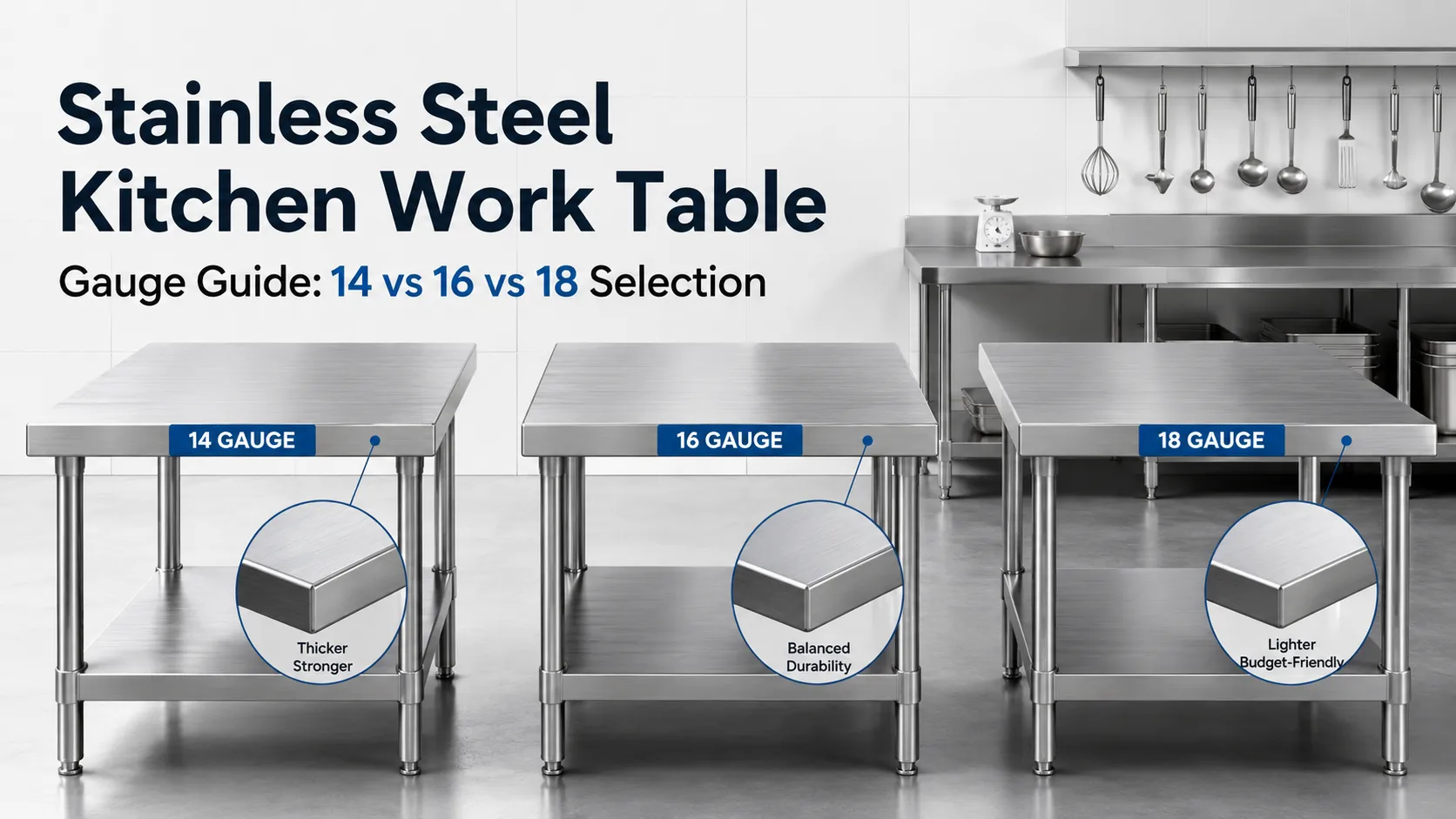
| Steel Gauge | Thickness | Commercial Laundromat Suitability |
|---|---|---|
| 20–22 gauge | 0.8–0.9 mm | Not suitable, flexes under load, prone to denting |
| 18 gauge | 1.2 mm | Light-duty only, acceptable for staff hand-wash stations |
| 16 gauge | 1.5 mm | Commercial standard for utility sinks |
| 14 gauge | 2.0 mm | Heavy-duty, justified for high-impact zones |
Sixteen-gauge 304 stainless steel is the correct specification for most commercial stainless laundry sink fixtures. For shared public-access fixtures, 14-gauge reduces visible denting from dropped items.
Overflow and Flood Prevention
Self-service spaces need fixtures that tolerate user error. Customers block strainers, leave taps open, and walk away. Design for that reality.
Integrated overflow channel: Choose sinks with a rear-wall overflow port tied to the waste line. When the main strainer blocks, the overflow routes water into the drain instead of onto the floor. Not every commercial utility sink includes this, so confirm it on the specification sheet before ordering.
Backsplash height: A 150 mm (6-inch) backsplash stops water from reaching the wall behind the sink during heavy splashing. In wet-wall installations (tile or stainless panels), raise it to 250 mm to protect the wall substrate.
Faucet placement: Wall-mounted faucets keep the rear deck clear of standing water and reduce penetrations in the basin rim. Deck-mounted faucets need sealed escutcheon plates. Water that seeps around an unsealed deck fitting reaches the cabinet interior and accelerates corrosion of the as-built structure.
Maintenance for Facility Operations
Stainless steel stays in good condition with little labor, provided staff follow the right procedure. The passive chromium oxide layer that protects the surface regenerates on its own. Abrasive cleaning strips it away and stops that regeneration.
Daily:
- Clear the strainer basket of lint, hair, and debris
- Rinse the basin with clean water to remove chemical residue
- Wipe dry with a microfiber cloth
Weekly:
- Clean with a non-abrasive cream cleaner (Bar Keepers Friend or equivalent), rubbing along the brushed metal grain, not in circles
- Inspect the drain connection under the cabinet for drips or loose joints
Never:
- Use steel wool or wire brushes on the basin surface, as they leave carbon iron particles that rust
- Leave bleach-soaked rags sitting in the basin overnight
- Scrub with abrasive pads in circular motions
Hotel linen rooms and maintenance crews that service several sinks across a property should review the sourcing framework for high-frequency laundry utility areas. The supplier qualification steps and bulk ordering checklist apply to laundromat procurement as well.
FAQs
How deep should a laundry sink be for a commercial laundromat?
Specify at least 250 mm (10 inches) of internal depth. This prevents splashback when customers pre-soak large or heavily soiled items. For high-traffic sites that regularly handle bulky comforters or mop heads, 300 mm gives the cleanest operation.
What size drain does a commercial laundry sink need?
The drain opening at the basin floor should be 89 mm (3.5 inches). The waste pipe to the building drain should be 50 mm (2 inches) at minimum for a single-sink connection, and 75 mm (3 inches) when two or more sinks share a waste stack. Residential 40 mm drains restrict flow and clog under commercial volume.
Is 304 stainless steel good enough for bleach exposure in a laundromat?
Yes, for standard diluted bleach cleaning routines. If you run concentrated chlorine solutions or operate in a coastal high-humidity environment, move up to 316 stainless steel. The molybdenum in 316 specifically addresses chloride pitting, the failure mode bleach triggers in lower-grade alloys.
How do you choose between a single and double basin for a laundromat utility sink?
A double basin lets customers separate soaking from rinsing at one station, which cuts wait time and cross-contamination between tasks. For floor plans that fit a 1,200 mm wide cabinet, a double-basin unit makes sense. For narrow utility alcoves under 800 mm wide, a single deep basin is the practical option.
Closing
Three numbers decide whether a stainless laundry sink does its job: 250 mm minimum depth, 50 mm minimum drain pipe, and 16-gauge 304 stainless steel. Backsplash height, overflow protection, and coved corners cover the rest. They cut maintenance calls and liability exposure.
Pair those specs with realistic drain engineering from the start, and you avoid the remediation costs that under-specced sinks create in high-traffic public spaces.
For basin dimension planning across multi-unit or multi-site projects, the project fit dimension guide shows how floor plan constraints affect sink selection for volume orders.