Should Commercial Kitchens Use Stainless Kitchen Cupboards or Open Shelving
For most commercial kitchens, the answer is not one or the other. Stainless kitchen cupboards and open shelving solve different problems, and a well-planned kitchen usually needs both.
Closed cupboards are useful when items need to stay protected, hidden, or separated from food preparation areas. Open shelves work better when staff need to grab tools, pans, containers, or dry ingredients quickly during service. In a real kitchen, speed matters. So does hygiene. So does keeping the space from turning into a mess by lunchtime.
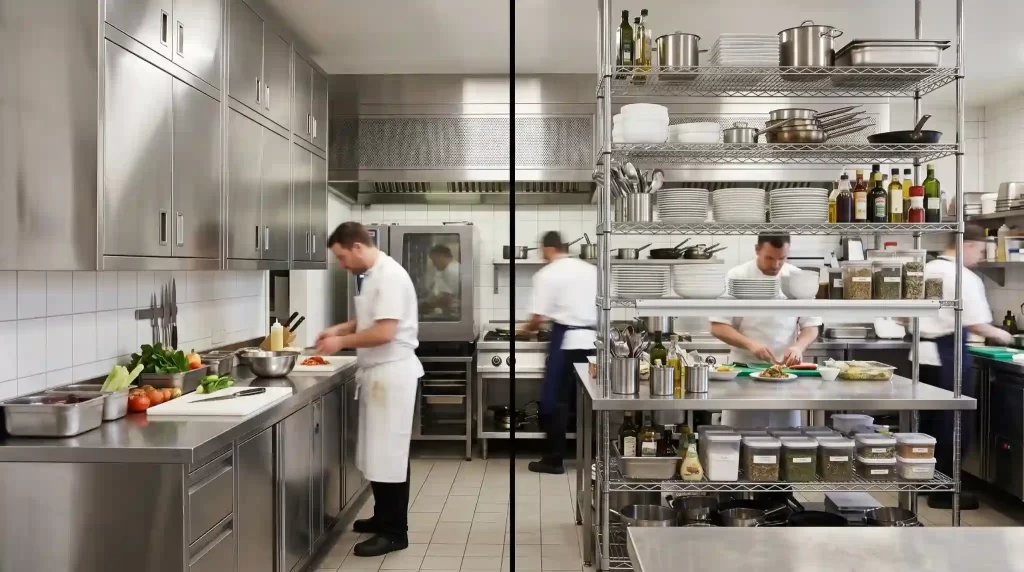
That is why restaurants, hotels, canteens, schools, hospitals, and central kitchens often use a mixed stainless steel kitchen storage system. Stainless kitchen cupboards, wall shelves, stainless steel trolley units, mobile racks, and a stainless steel work table with top shelf can all fit into the same layout, as long as each one is placed where it actually helps the workflow.
The Role of Stainless Kitchen Cupboards
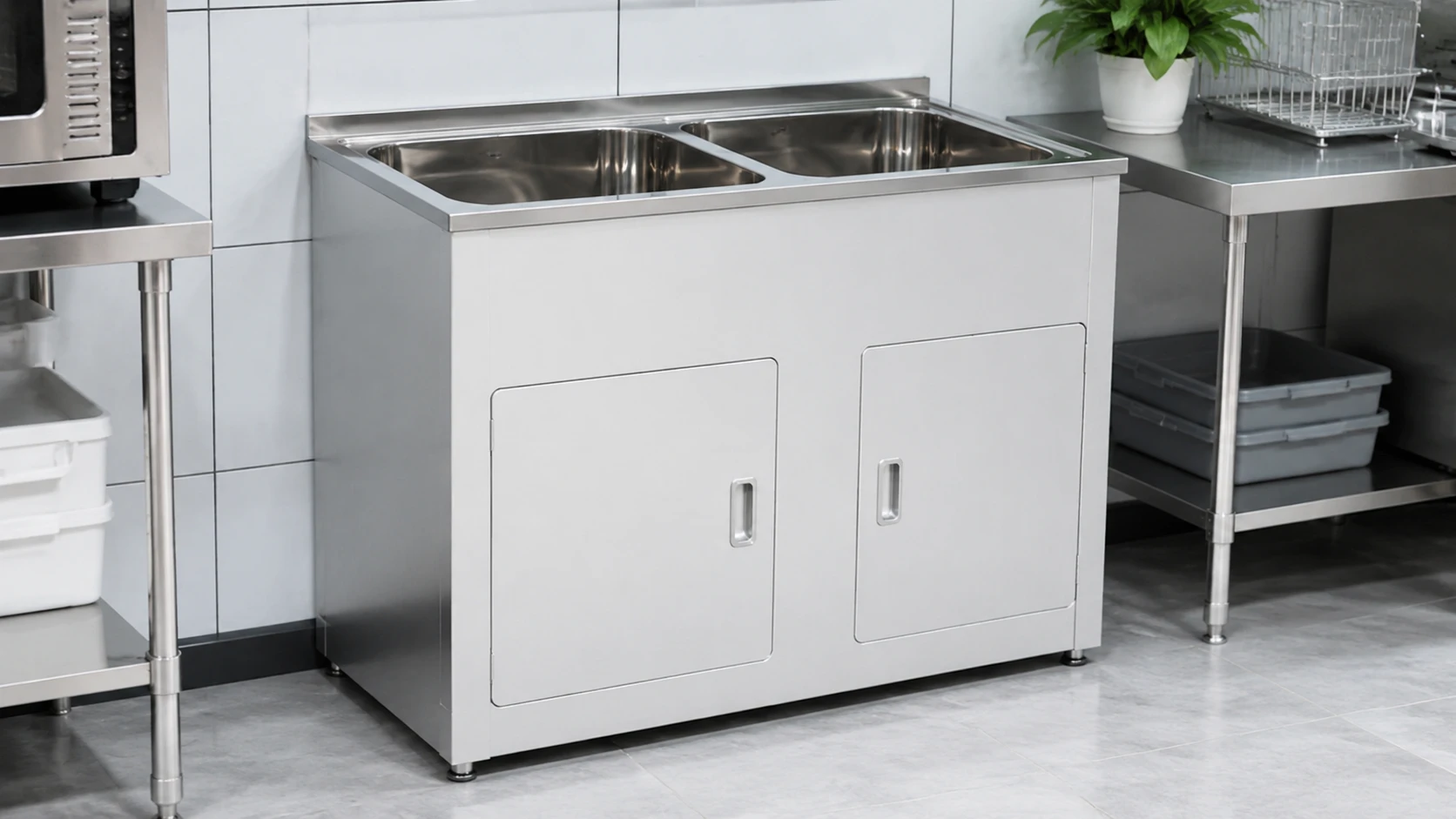
Stainless kitchen cupboards are best used for enclosed storage. They keep supplies out of sight and away from splashes, dust, and airborne grease. In a commercial kitchen, that matters more than it may seem at first. A prep room with every spare utensil, chemical bottle, cloth, and backup container sitting on open shelves can start to look untidy very quickly.
Commercial kitchen cupboards made from stainless steel are also easier to clean than wooden or painted storage units. They handle moisture better, and they are less likely to absorb odors or stains. For foodservice buyers, this makes them a safer choice in humid prep rooms, washing areas, waste zones, and high-use back-of-house spaces.
Stainless kitchen cupboards are especially useful for items that should not be left exposed, such as packaged supplies, spare utensils, cleaning tools, maintenance accessories, pest-control items, or waste handling equipment. In customer-facing kitchens or hotel service areas, closed doors also give the space a calmer and cleaner look.
Where Cupboards Make the Most Sense
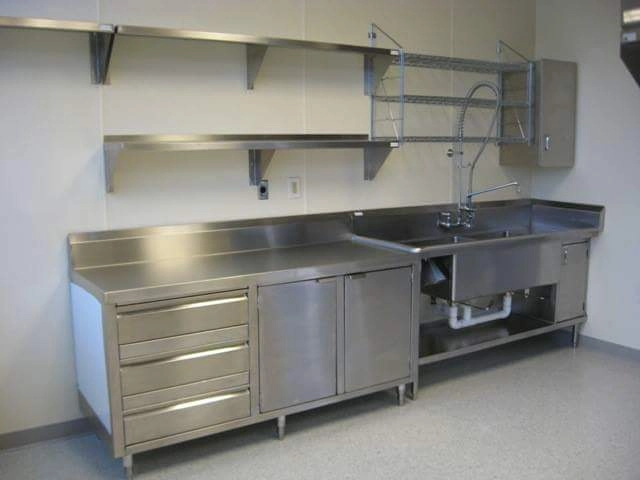
- Protection: Closed storage helps shield backup tools, packaged goods, and cleaning items from splashes and kitchen residue.
- Cleaner appearance: Stainless kitchen cupboards reduce visible clutter in prep rooms, service corridors, and open kitchen areas.
- Controlled storage: Enclosed compartments help managers separate chemicals, disposables, spare parts, or waste-related accessories from food-contact tools.
- Waste handling: For kitchens that want to keep bins out of sight, a stainless steel cabinet with built-in trash bin can work better than leaving a bin exposed near the prep line.
When Open Shelving Works Better
Open shelving is the better choice when access speed matters more than concealment. During a busy lunch rush or hotel breakfast service, staff do not want to keep opening doors to find trays, sauce bottles, pans, mixing bowls, towels, or ingredient containers.
Stainless steel shelving keeps these items visible. Staff can see what is available, what is running low, and what needs to be cleaned or refilled. That simple visibility can save time, especially in high-volume kitchens where several people use the same station.
Wall-mounted stainless steel shelves are also useful when floor space is tight. They add storage above sinks, prep tables, packing stations, or dishwashing areas without blocking movement. This is one reason small restaurant kitchens, ghost kitchens, catering units, and narrow service corridors often depend on wall shelves.
Open shelving does need discipline, though. If there is no storage rule, shelves become cluttered fast. The best results come when each shelf has a clear job: dry goods on one level, containers on another, pans in one section, cleaning cloths somewhere else.
Where Open Shelves Fit Well
- Fast access: Good for pans, containers, trays, towels, condiments, and daily-use tools.
- Stock visibility: Staff can check quantities at a glance without opening a cabinet.
- Air drying: Washed containers and tools dry more easily on open racks.
- Flexible layouts: For kitchens that need both fixed and mobile storage, Xinhe’s stainless steel trolley and shelf solutions include utility carts, wall shelves, and mobile shelving options for foodservice spaces.
Cupboards vs. Open Shelving by Kitchen Zone
A commercial kitchen rarely needs only one type of storage. The better question is where each storage type should go. The table below gives a practical way to think about it before purchasing commercial kitchen cupboards, shelves, or mobile units.
| Kitchen zone | Better option | Why it fits |
|---|---|---|
| Dry storage area | Open shelving | Staff can check stock quickly and restock without opening doors. |
| Prep station | Open shelving + work table | Tools and ingredients stay close to the work surface. |
| Cleaning supply area | Stainless kitchen cupboards | Chemicals and maintenance items stay enclosed and separated. |
| Waste handling area | Stainless steel cabinet | Bins and waste tools stay hidden and easier to manage. |
| Service corridor | Wall-mounted shelves | Saves floor space and keeps common items within reach. |
| Hotel or institutional kitchen | Mixed system | Larger kitchens need both open access and enclosed control. |
| Small restaurant kitchen | Shelves + mobile trolley | Makes better use of vertical space and improves movement. |
| Open kitchen | Stainless kitchen cupboards | Closed storage gives customer-facing areas a cleaner look. |
Adding a Stainless Steel Trolley to the Workflow
A stainless steel trolley is not a replacement for cupboards or fixed shelving. It solves a different problem: moving things.
In many kitchens, staff carry heavy trays, tableware, packaged ingredients, cookware, or cleaning items between storage, prep, washing, and service areas. Doing that by hand wastes time and creates more chances for spills or injuries. A stainless steel trolley with wheels gives the team a simple way to move items in batches instead of making repeated trips.
This is especially useful in hotels, hospital cafeterias, school kitchens, catering kitchens, and central kitchens. These facilities often deal with larger quantities, longer walking distances, and multiple working zones. A trolley and shelf setup can help connect those zones without adding permanent fixtures everywhere.
Buyers comparing utility carts should look at load capacity, wheel quality, handle design, shelf spacing, and whether the trolley can pass through narrow kitchen aisles or elevators. For projects that move heavy trays or bulk supplies every day, commercial kitchen shelving and utility carts are often just as important as fixed commercial kitchen cupboards.
Where a Work Table with Top Shelf Fits
A stainless steel work table with top shelf is useful when the kitchen needs both prep space and storage in the same footprint. Instead of storing bottles, containers, small equipment, or utensils on a wall shelf across the room, staff can keep them directly above the work surface.
This setup works well in prep lines, bakery rooms, beverage stations, packing areas, and small commercial kitchens. It helps staff keep the tabletop clear while keeping frequently used items close enough to reach without stepping away from the station.
For compact kitchens, a commercial work table with top shelf can be more practical than buying a separate table and wall shelf. It saves wall space, reduces movement, and makes the station easier to organize. In prep zones where every inch matters, a commercial prep table with upper shelf can give the kitchen both a working surface and vertical storage without making the room feel tighter.
How to Choose Between Cupboards, Shelves, Trolleys, And Work Tables
Before placing an order, buyers should look at how staff actually move through the kitchen. The best stainless steel kitchen storage layout comes from the workflow, not from choosing the product that looks best in a catalog.
Use these questions before deciding:
- Are staff reaching for these items every few minutes? Use open shelving, a wall shelf, or a stainless steel work table with top shelf.
- Do the items need to stay hidden, protected, or separated from food-contact areas? Choose stainless kitchen cupboards, enclosed stainless steel cabinets, or a commercial stainless steel cabinet.
- Does the kitchen move goods between different rooms or stations? Add a stainless steel trolley or heavy-duty utility cart.
- Is floor space limited? Use wall-mounted shelves, vertical racks, or a commercial work table with top shelf to make better use of height.
- Is the area visible to customers or inspectors? Closed cupboards, cleaner cabinet designs, and a waste disposal cabinet usually make the area easier to manage.
- Is this a hotel, school, hospital, chain restaurant, or central kitchen project? A mixed stainless steel storage system is usually more realistic than relying on one product type.
Combining Storage Types in One Kitchen
Many commercial kitchens work best with a combination of stainless kitchen cupboards, open shelving, stainless steel trolley units, and work tables with upper shelves. Each product handles a different part of the day-to-day operation.
Stainless kitchen cupboards are better for enclosed storage, cleaning supplies, spare items, and controlled zones. Open shelves are better for fast-moving tools, trays, dry goods, and containers. A stainless steel trolley helps move items between areas without slowing staff down. A stainless steel work table with top shelf gives a compact station both prep space and storage.
This mixed approach is common in large restaurants, hotel kitchens, catering facilities, staff canteens, hospitals, and central kitchens. It is also useful for small restaurants where space is limited. The difference is scale: a large facility may need several cupboards, mobile racks, and wall shelves, while a small kitchen may only need one cupboard, one wall shelf, and one trolley placed in the right spots.
The main point is simple. Storage should support the way the kitchen works. If a cupboard slows down a station that needs speed, it is in the wrong place. If an open shelf exposes items that should be protected, that is the wrong choice too.
FAQ
Are stainless kitchen cupboards better than open shelves?
Stainless kitchen cupboards are better for protected, enclosed, and visually cleaner storage. Open shelves are better for items that staff use often and need to reach quickly. Most commercial kitchens use both.
What is the best storage option for a small commercial kitchen?
Small commercial kitchens usually benefit from wall-mounted stainless steel shelves, compact work tables with top shelves, and a stainless steel trolley. These options save floor space, use vertical space, and make movement easier in tight areas.
Are stainless steel cabinets suitable for restaurant waste areas?
Yes. Stainless steel cabinets can help hide bins, store waste handling tools, and keep the area cleaner. A garbage can cabinet or waste disposal cabinet is especially useful when the kitchen wants a more controlled waste station.
When should a kitchen use stainless steel trolleys?
A kitchen should use stainless steel trolleys when staff frequently move ingredients, trays, tableware, cookware, or cleaning tools between different zones. They are common in hotels, canteens, hospitals, catering kitchens, and central kitchens.
Is a work table with top shelf better than a separate shelf?
A work table with top shelf is better when the kitchen needs prep space and storage in one station. A separate wall shelf is better when the kitchen already has enough work surfaces but needs more storage above an existing area.
Can stainless steel kitchen storage be customized?
Yes. Commercial kitchen storage can often be customized by size, shelf tiers, cabinet door type, wheel design, handle style, and installation method. This matters for hotels, chain restaurants, schools, hospitals, and large central kitchen projects where standard sizes may not fit the layout.
Conclusion
Choosing between stainless kitchen cupboards and open shelving is really a workflow decision. Cupboards are better for enclosed, protected, and cleaner-looking storage. Open shelves are better for speed, visibility, and fast stock checks. Stainless steel trolley units improve movement between stations, while a stainless steel work table with top shelf creates a compact prep area with storage directly above the work surface.
For restaurants, hotels, schools, hospitals, canteens, catering businesses, and central kitchens, the most practical answer is usually a mixed stainless steel kitchen storage layout. Send your kitchen layout or product list to Xinhe for custom stainless steel storage recommendations, including cupboards, shelves, trolleys, and work tables matched to your foodservice project.