How Long Does a Stainless Steel Table with Wheels Last
A stainless steel table with wheels is a foundational piece of equipment across hospital prep rooms, busy commercial kitchens, and industrial laboratories. It is valued for its mobility, hygienic properties, and rugged durability. Whether serving as a heavy-duty kitchen prep station or a laboratory bench exposed to daily chemical spills, this type of specialized utility furniture is built to handle intense environments.
On average, a high-quality mobile stainless steel table lasts between 10 to 20 years. However, selecting the right grade of steel, opting for heavy-duty casters, and performing basic preventative maintenance can easily push that lifespan past 25 years.

Key factors influencing durability
A table’s longevity is determined by its construction quality and its operating environment. Understanding these variables ensures you make an investment that aligns with your operational needs.
| Factor | Key Details | Impact on Lifespan |
|---|---|---|
| Material Quality | Type 304 offers excellent rust resistance for standard food service and medical settings. Type 316 contains molybdenum, making it ideal for resisting harsh chemical exposure in industrial labs. | High-quality steel prevents early oxidation. Cheap, low-grade alternatives can start showing rust spots within 2 to 3 years. |
| Design & Construction | Look for seamless heliarc welding rather than cheap spot welds. Heavy-duty legs and robust caster channels prevent warping. | Inferior welding points break under stress, and low-quality wheels cause the entire frame to wobble and degrade quickly. |
| Operating Environment | Commercial kitchens expose tables to constant moisture, salt, and food acids. Labs introduce corrosive agents. Office or residential spaces experience minimal wear. | High-stress environments naturally accelerate wear, whereas climate-controlled, dry environments extend the table’s life significantly. |
| Maintenance Habits | Regular surface cleaning with non-abrasive tools and routine inspection of the rolling hardware. | Neglecting spills or scrubbing surfaces with steel wool destroys the protective chromium oxide layer, inviting rust. |
Realistic lifespan expectations
While the baseline is 10 to 20 years, actual performance varies based on the daily demands placed on the equipment:
- Commercial kitchens and food processing: Typically see a lifespan of 10 to 15 years. The daily combination of humidity, food acids (like vinegar and citrus juice), and aggressive sanitation routines eventually degrades standard surfaces.
- Laboratories and chemical plants: When constructed from 316 stainless steel, these tables frequently last 20 to 25 years. The enhanced alloy composition stands up to harsh compounds, provided spills are wiped up promptly.
- Residential, retail, or office settings: With light use and a controlled climate, a premium mobile table can easily last 25 to 30 years, essentially operating as a permanent asset.
Maintenance Note: Poor upkeep or using harsh, bleach-laden cleaners can cause even premium industrial-grade steel to fail or rust within 5 to 8 years.
Practical steps to maximize your table’s life
Extending the service life of a mobile worktable does not require a complex protocol—just consistency in basic maintenance routines.
1. Implement proper cleaning protocols
Wipe down the stainless steel surfaces weekly using warm water and mild dish soap, moving your cloth in the direction of the metal’s grain finish. Always avoid abrasive scrubbing pads like steel wool, which leave carbon tracks behind that trigger rust. For stubborn kitchen grease or industrial residues, use a specialized stainless steel cleaner spray that protects the alloy without leaving a corrosive residue.
2. Service the rolling hardware
Test the wheel locks and rolling smooth motion at least once a month. If a caster begins to squeak or bind up, apply a few drops of silicone lubricant to the bearing assembly. Upgrading to heavy-duty polyurethane or industrial rubber wheels protects your floors and handles heavy loads without flat-spotting.
3. Inspect structural integrity
Every quarter, check the underside support channels, leg gussets, and connection bolts. Tightening any hardware that has vibrated loose from constant rolling prevents structural shifting and keeps the tabletop completely level.
4. Shield against environmental extremes
Avoid parking mobile tables directly adjacent to intense heat sources, such as commercial ranges or open flame broilers. Repeated exposure to extreme heat cycles can warp the metal and make the structure brittle over time.
Knowing when to replace your table
Eventually, even the most durable utility furniture reaches the end of its operational lifecycle. Replacing a compromised unit preserves workplace safety and strict sanitation standards:
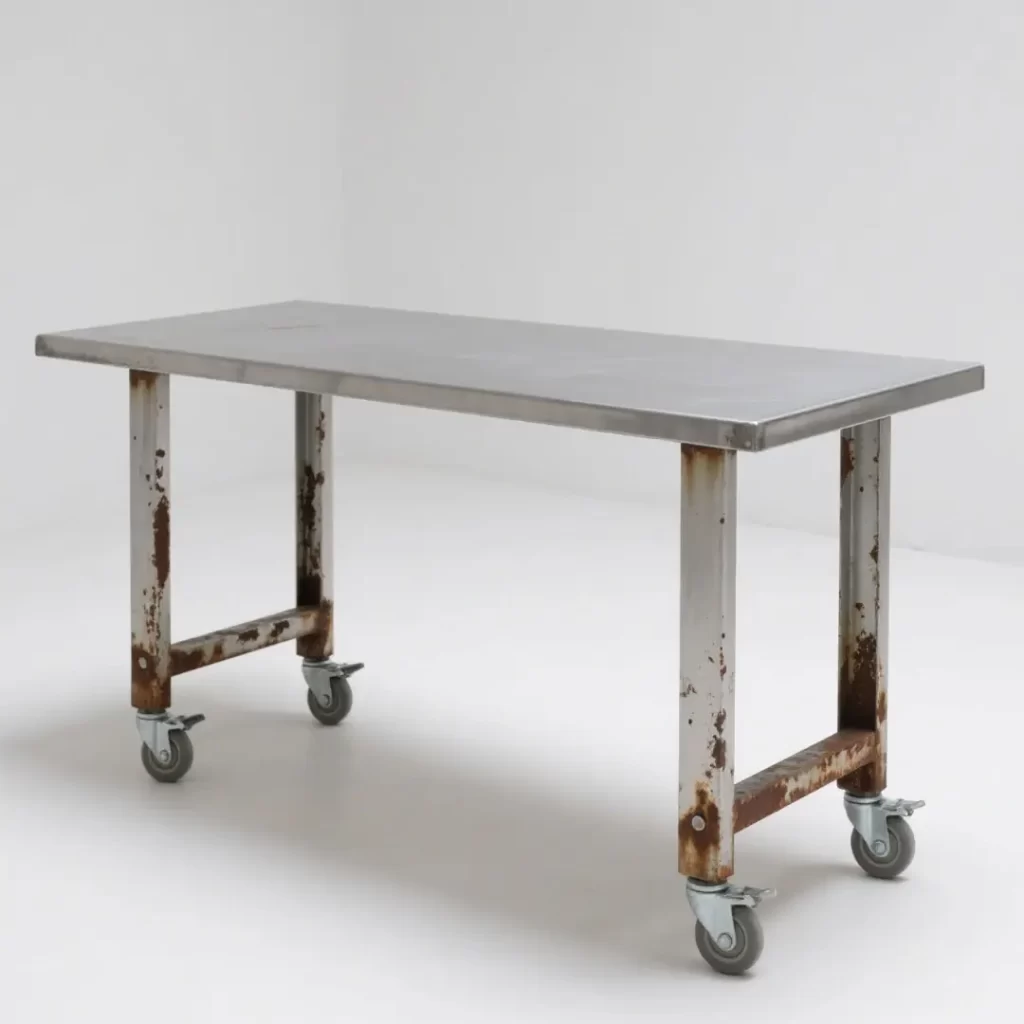
- Deep pitting and advanced corrosion: While minor surface discoloration can be polished out, deep physical pitting means the metal’s structural integrity has failed.
- Compromised structural frames: If the tabletop sags, the legs wobble significantly, or major structural welds crack, the table becomes a safety hazard for heavy machinery or hot liquids.
- Costly component failures: If replacing the casters and repairing warped support structures approaches half the cost of a brand-new unit, a total replacement is the more economical decision.
Final thoughts
A high-quality stainless steel table with wheels provides long-term utility across demanding industries. By matching the correct alloy grade to your environment—utilizing Type 304 for standard tasks and Type 316 for chemical resilience—and sticking to a straightforward maintenance routine, you can maximize your equipment investment for decades to come.