Which Material Works Best for a Utility Sink
Choosing a utility sink for a commercial kitchen, factory, or hospital goes beyond appearance or price. The material determines longevity, cleanliness, and total cost of ownership. This guide compares stainless steel, cast iron, plastic, and other options to show why stainless steel often leads for commercial and laundry applications, covering durability, hygiene, maintenance, and installation.
Key Criteria for Choosing Sink Materials
Selecting a sink for commercial use requires evaluating more than cost or aesthetics. The fixture must withstand rough use, stay clean, reduce long-term expenses, and fit the available space. Whether you are a contractor, facility manager, or buyer, the critical factors are durability, hygiene, maintenance, and installation.
Durability
Sinks in busy kitchens or factories face heavy pots, tools, and chemicals on a daily basis. A stainless steel model with 304-grade steel (18% chromium, 8% nickel) lasts 15 to 20 years, even in high-traffic environments. Plastic versions warp under heavy loads, and cast iron chips easily, making both less reliable for demanding settings.
Hygiene
Food service and healthcare require non-negotiable hygiene standards. A commercial sink must meet NSF or FDA requirements. Stainless steel’s smooth, non-porous surface resists bacteria and cleans quickly, ideal for handwash or laundry applications. Scratches on plastic trap germs, and cracks in ceramic create bacterial hiding spots. Stainless options keep facilities compliant and audit-ready.
Maintenance
A stainless model needs only a quick wipe with soap, saving 30 to 50% on maintenance costs compared to cast iron or copper, which require special care. For budget-conscious operations, this low-maintenance approach is straightforward and cost-effective.
Installation
Heavy cast iron and ceramic sinks need extra structural support, increasing setup costs. Stainless steel is lighter, with wall-mount and freestanding options that fit tight corners or custom layouts. It integrates easily with modern equipment, saving contractors time on installation.
These four factors point toward the best material choice. The next section compares options directly.
Comparing Common Sink Materials
Stainless steel, cast iron with enamel, plastic, porcelain, and copper each have strengths and weaknesses. For commercial or laundry settings, some clearly outperform others.
Stainless Steel
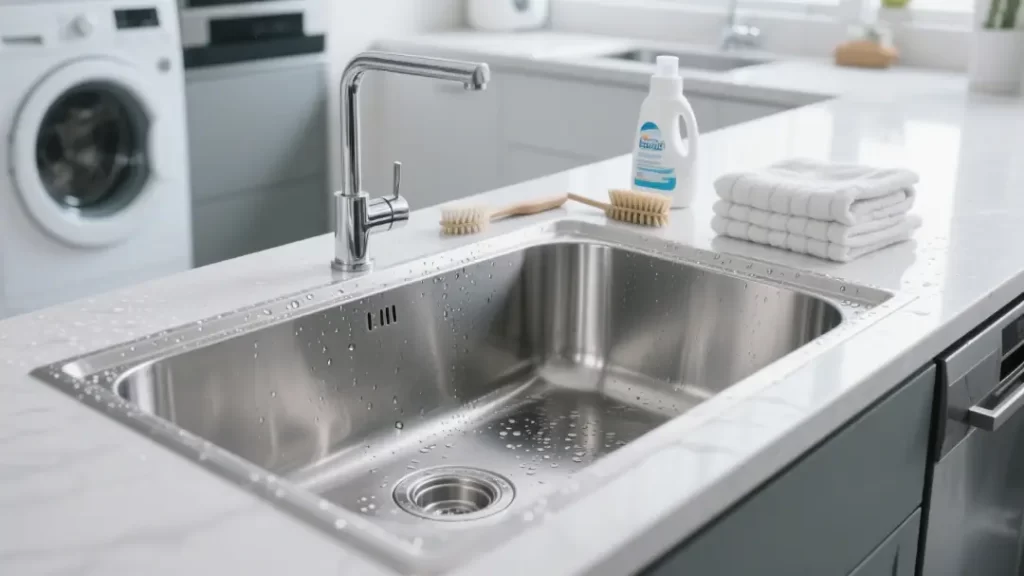
Made with 304 (18% chromium, 8% nickel) or 316 steel (extra corrosion resistance), stainless steel lasts 15 to 20 years under heavy use. Its smooth surface cleans easily and meets NSF standards for commercial kitchens and mop sinks. Available in 14 to 18 gauge options (thicker is sturdier) with wall-mount or freestanding configurations. Note that 316 costs 20 to 30% more, and thinner gauges may dent. A 304, 16-gauge model balances cost and durability effectively.
Best for: Kitchens, hospitals, factories needing commercial or deep sinks.
Cast Iron with Enamel
Cast iron sinks with enamel coating are solid with a classic appearance, suitable for scrubbing heavy gear. The smooth coating cleans adequately but chips under impact, leading to rust or stains. They are heavy, requiring extra support for installation, and do not tolerate harsh cleaners well. Suitable for low-traffic laundry rooms but not ideal for busy commercial settings.
Best for: Quiet laundry rooms or utility spaces.
Polypropylene/Plastic
Plastic sinks are inexpensive, lightweight, and resist chemicals, making them suitable for outdoor or temporary setups like construction sites. However, they scratch, warp, and stain easily, which compromises hygiene. Not a good fit for kitchens or hospitals where durability and cleanliness matter.
Best for: Garages or outdoor applications.
Porcelain
Ceramic sinks have a glossy finish and resist chemicals, appropriate for laundry rooms or decorative spaces. They crack under heavy impact, trapping germs, and are difficult to install due to weight. For commercial environments where hygiene and durability are critical, they carry significant risk.
Best for: Low-use, decorative settings.
Copper
Copper has natural antimicrobial properties and an attractive appearance but requires constant polishing and carries a high price tag. Too maintenance-intensive for commercial or laundry applications, better suited for upscale settings with light use.
Best for: High-end restaurants needing a statement piece.
Material Comparison Table
| Material | Durability | Hygiene | Maintenance | Installation | Cost | Best Use Case |
|---|---|---|---|---|---|---|
| Stainless Steel | Excellent | Excellent | Low | Easy | Moderate | Kitchens, hospitals, factories |
| Cast Iron/Enamel | Good | Moderate | Moderate | Complex | Moderate | Low-traffic laundry rooms |
| Polypropylene | Poor | Poor | Moderate | Easy | Low | Outdoor or temporary use |
| Porcelain | Moderate | Moderate | High | Complex | Moderate | Decorative spaces |
| Copper | Good | Good | High | Complex | High | High-end settings |
Stainless steel leads for commercial and utility room applications.
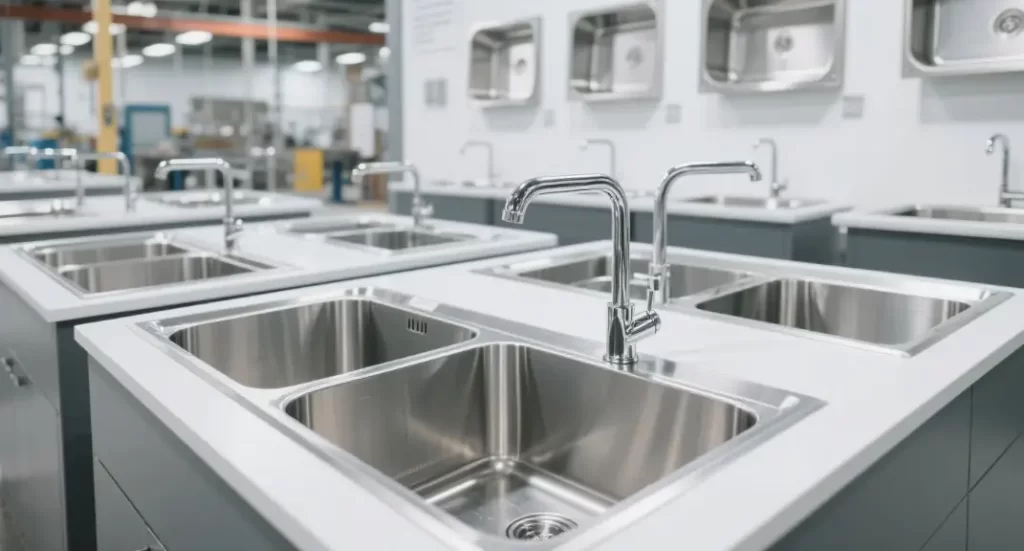
Why Stainless Steel is the Best Choice for B2B Settings
Stainless steel is the top choice for B2B settings such as restaurants, factories, and hospitals, meeting requirements for hygiene, cost efficiency, and flexibility.
Meeting Industry Standards
Hygiene is critical in food service and healthcare. A commercial sink must meet NSF or FDA standards. Stainless steel’s non-porous surface stops bacteria and handles tough cleaners, making it suitable for commercial kitchens and hand washing stations. A 304 stainless model passes health inspections reliably, unlike plastic versions that accumulate scratches or ceramic options that crack and harbor germs. One restaurant reported zero hygiene violations using a stainless model paired with a faucet with sprayer for quick cleaning.
Long-Term Cost Efficiency
Stainless steel costs more upfront but saves money over time. It lasts 15 to 20 years with minimal upkeep, cutting maintenance costs by 30 to 50% compared to cast iron or copper, which need frequent care. For budget-conscious managers, a 16-gauge 304 commercial model delivers reliable long-term performance without constant repairs.
Customization and Flexibility
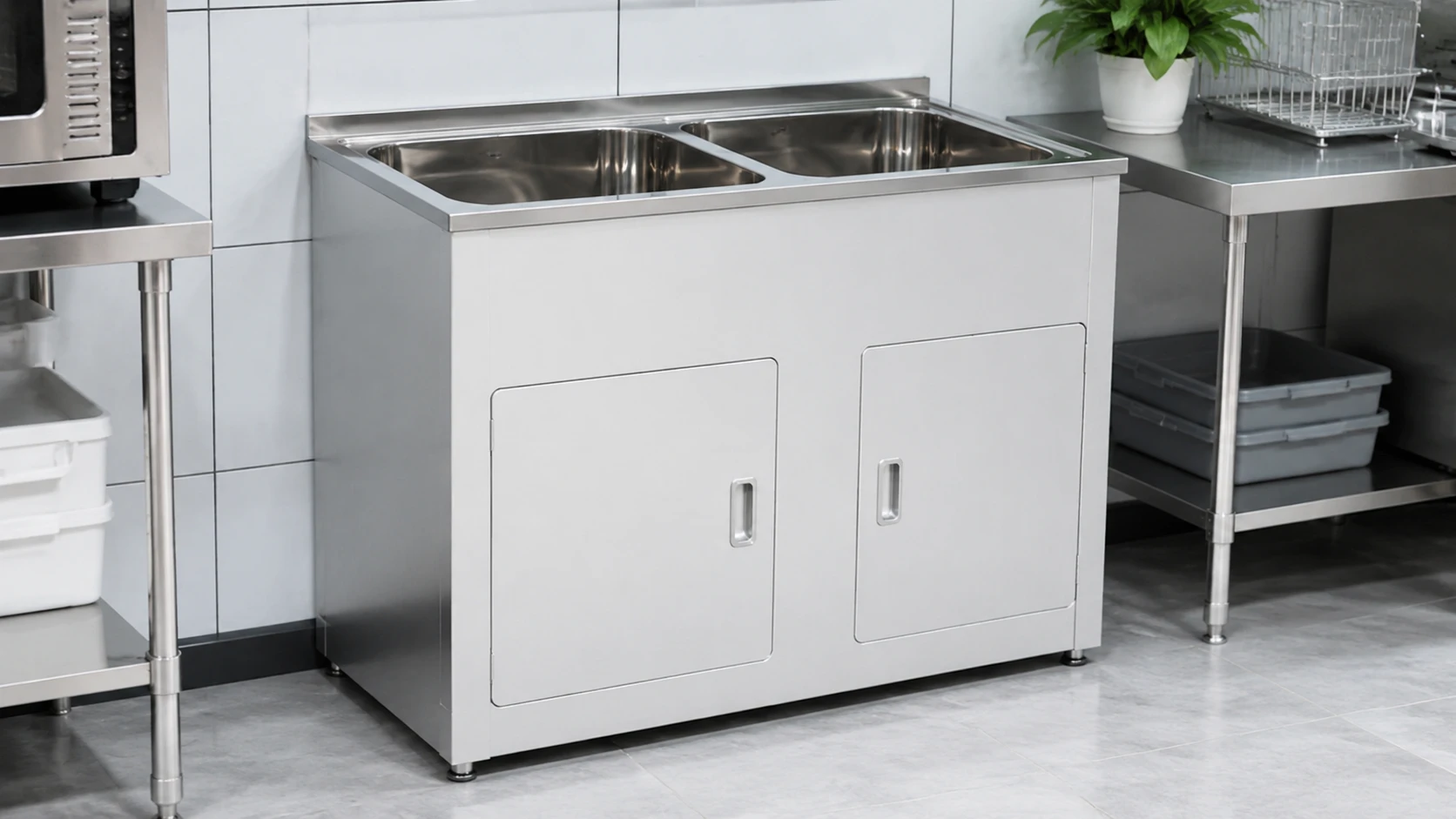
Every project has unique requirements. Stainless steel offers 14 to 18 gauge options (14 is tougher, 18 is lighter) and mounting configurations including wall-mount and freestanding. Custom features such as drainboards or cabinets with countertops add storage and workspace. Stainless steel is lighter than cast iron, making installation easier and saving time on commercial setups.
Xinhe’s Expertise
Xinhe crafts 304 stainless steel sinks with seamless welding to prevent leaks and germ buildup. NSF-certified commercial models come with tools like online sink selectors and expert support. Whether the project requires a wall-hung sink for a hospital, a large model for a factory, or a sink with cabinet and countertop for a laundry room, Xinhe provides B2B solutions tailored to each project.
Real-World Applications of Stainless Steel Sinks
Commercial Kitchens
A hotel’s commercial kitchen sink handles greasy pots and pans during rush hour. A 16-gauge 304 stainless model withstands the workload, meets NSF standards, and cleans fast with a faucet with hose connection. One kitchen saved 20% on cleaning time compared to a ceramic sink that kept chipping.
Factories
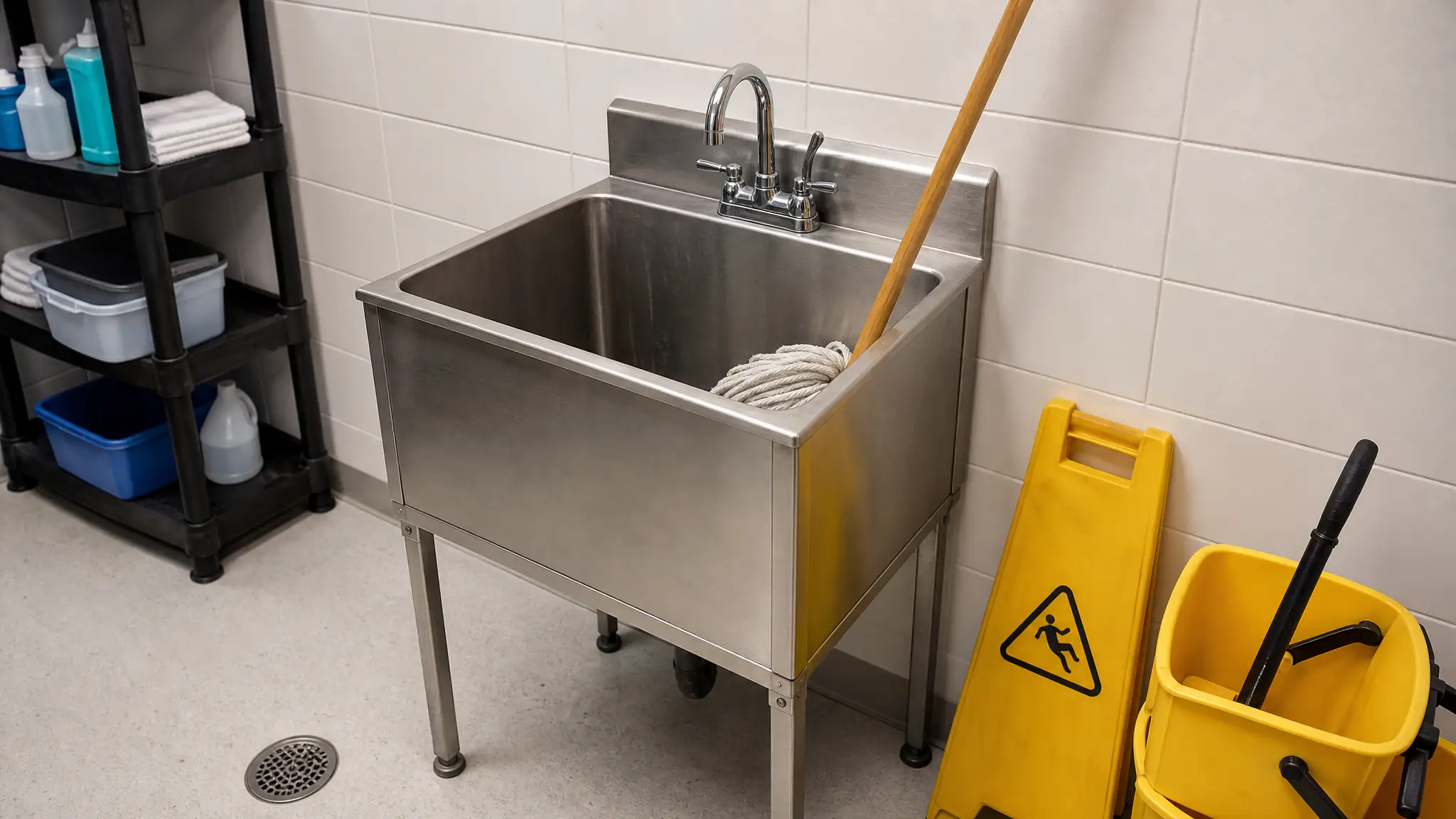
Factories need large sinks for cleaning tools or soaking mops. A freestanding stainless model resists harsh cleaners and fits tight spaces, saving one plant 10 hours a week in maintenance compared to a plastic sink that warped under heavy use. A drainboard added extra workspace for efficiency.
Healthcare
Hospitals demand sterile handwash stations for tools or linens. A wall-mounted stainless model ensures a clean setup, helping a medical center pass audits with no violations, unlike a ceramic sink that cracked and caused hygiene issues. The drain system kept operations running smoothly.
How to Choose the Right Utility Sink
Assess Your Use Case
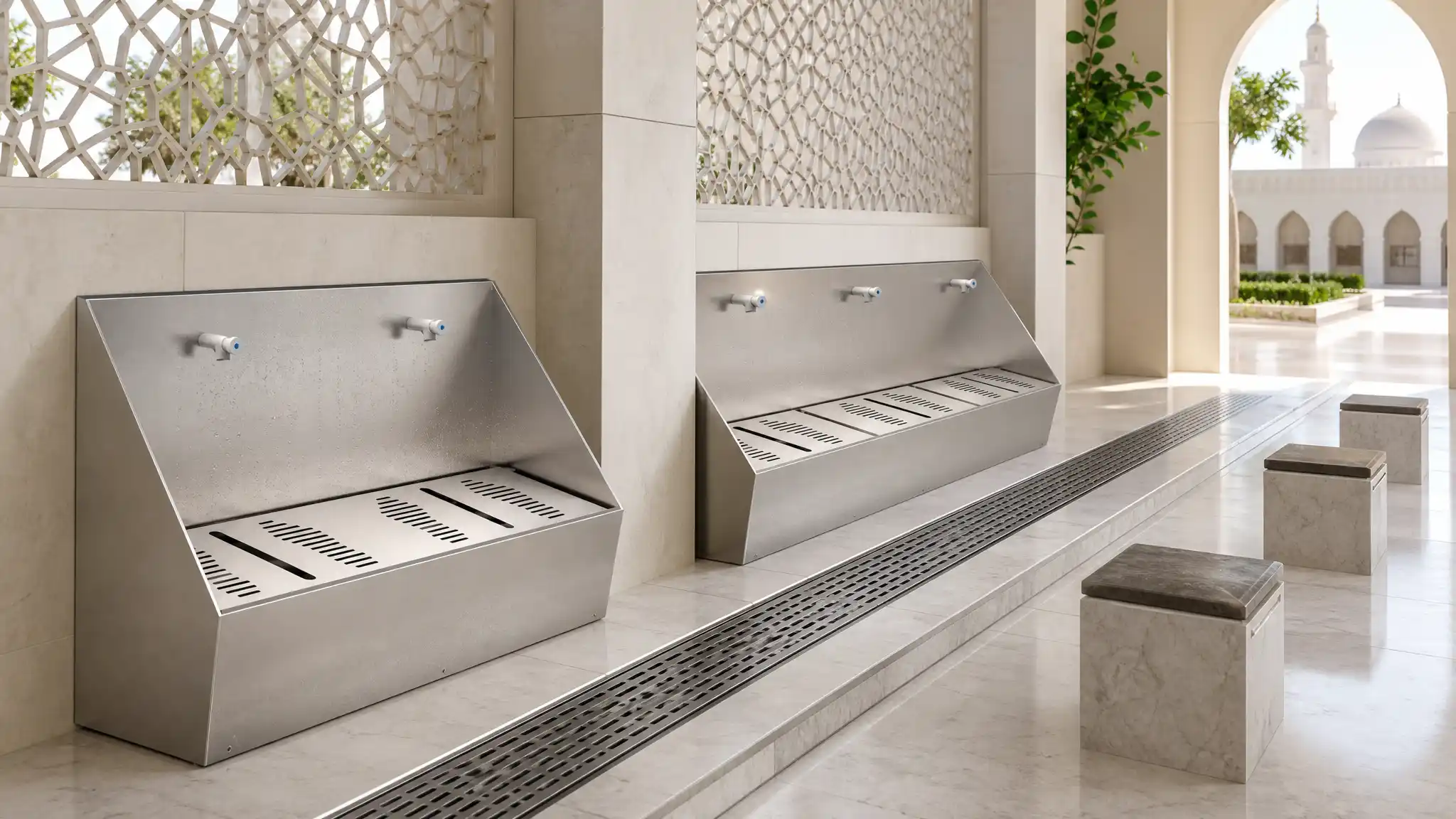
Kitchens require deep sinks for large pots, factories need large models for tools, and hospitals prioritize hygiene with hand washing stations. A stainless model fits most applications, with wall-mount options for tight spaces or freestanding versions for larger areas. Features such as cabinets or drainboards add storage or workspace.
Balance Budget and ROI
Stainless steel costs more upfront but lasts 15 to 20 years with low maintenance. Plastic versions are inexpensive but fail quickly, increasing long-term costs. A 304 commercial model with a faucet and sprayer offers strong value for B2B applications.
Work with a Trusted Supplier
Xinhe provides NSF-certified stainless steel sinks with custom options including cabinets with countertops, drainboards, and faucet with hose connection. Expert support ensures each commercial model fits the project’s requirements.
FAQs
Why is stainless steel the best for commercial sinks? It lasts 15 to 20 years, meets NSF standards, and cleans easily, making it ideal for commercial kitchens or mop sinks in busy settings.
What is the difference between 304 and 316? 304 is cost-effective for most B2B applications; 316 has extra corrosion resistance but costs 20 to 30% more, better for harsh environments.
How do I clean a stainless steel utility sink? Use soap and a soft cloth; avoid bleach to keep the sink looking good and functional.
How does Xinhe help with utility sinks? Xinhe offers NSF-certified stainless steel models with custom options like countertops, drainboards, and faucet with hose connection, plus expert support for your project.
Conclusion
For B2B settings, stainless steel is the best utility sink material, delivering durability, hygiene, and low maintenance. Xinhe’s stainless steel sinks offer NSF-certified quality with custom options like wall-mount configurations, deep basins, or drainboards for kitchens, factories, or hospitals. Visit xstainless.com to explore commercial sinks or request a quote for solutions.