Home > Blog > Home Kitchen Products >
Can a Laundry Sink with a Cabinet Be Used as a Kitchen Sink
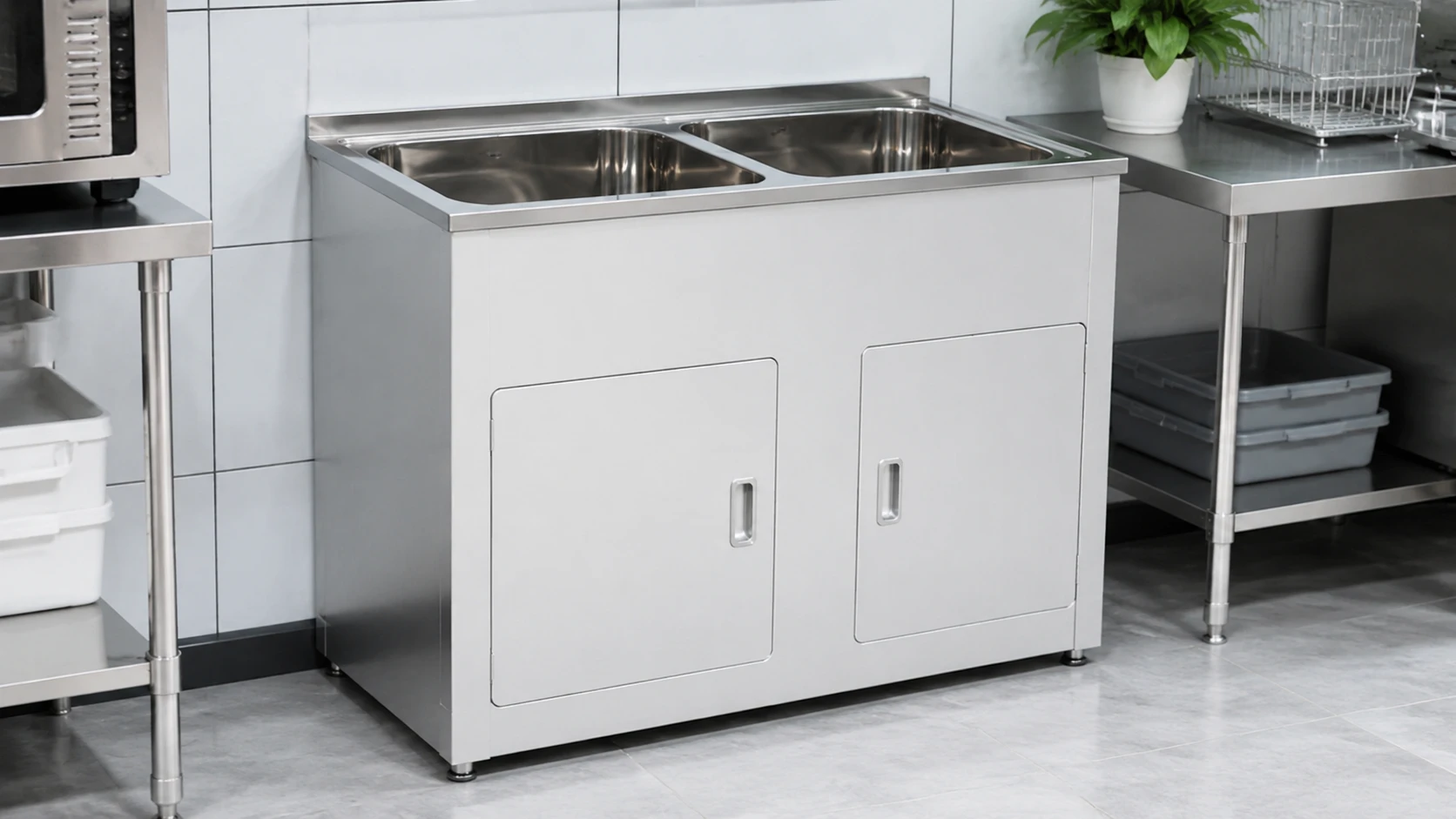
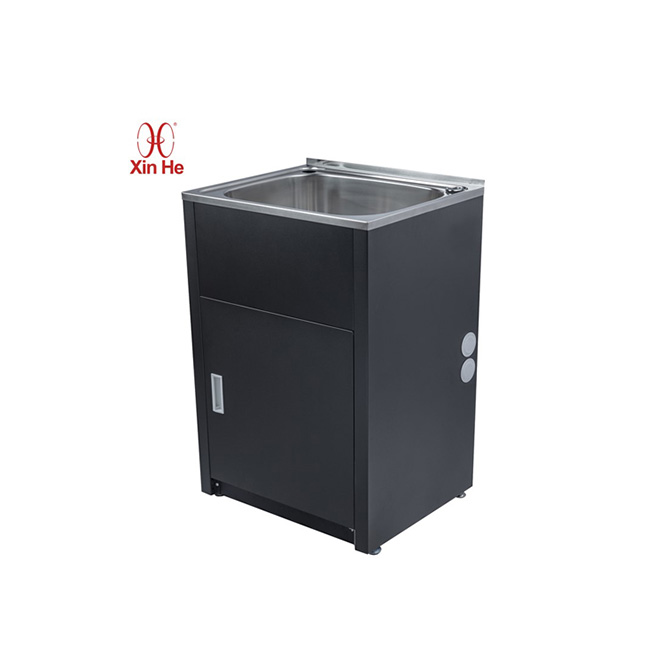
A laundry sink with a cabinet can absolutely work as a kitchen sink. Built from heavy-duty stainless steel, these deep basins handle large piles of dishes and food prep with ease. The integrated cabinet provides clean storage, saves floor space, and remains highly cost-effective. With a few minor adjustments, it fits perfectly into any kitchen layout.
Why Stainless Steel Utility Sinks Perform Well in Kitchens
Utility sinks are engineered for heavy moisture and harsh detergents, making them an excellent fit for kitchen environments.
Durability, Rust Protection, And Maintenance
Commercial-grade steel provides long-term resistance to wear and tear. According to data from the American Iron and Steel Institute (AISI), standard 304 stainless steel contains 18% chromium and 8% nickel. This specific alloy combination forms an invisible oxide layer that actively blocks corrosion.
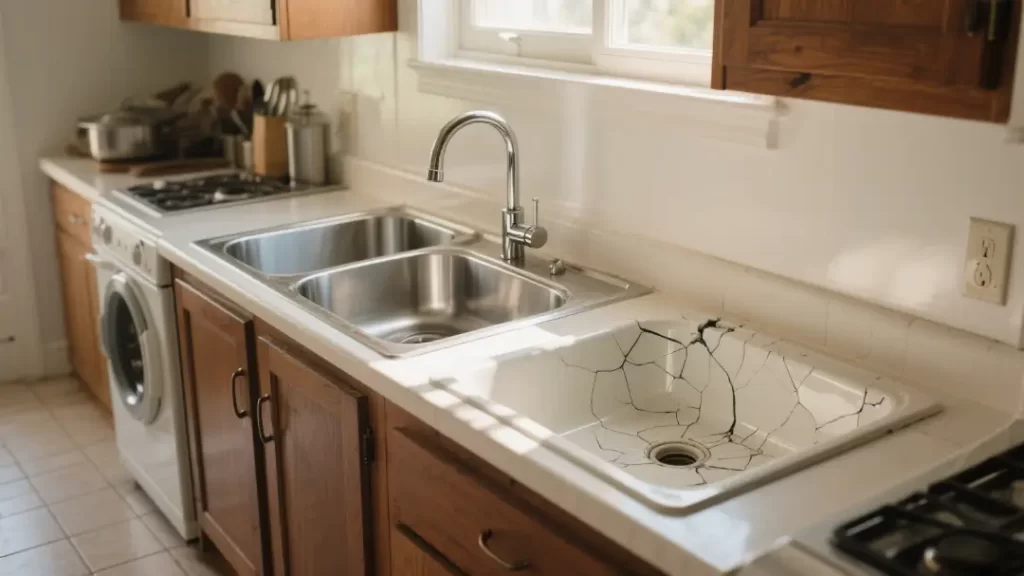
Homeowners frequently ask: is 304 stainless steel truly rust-proof in high-humidity environments? The short answer is yes, provided it is genuine, certified 304 grade like the materials we use on our production lines. This grade offers decades of rust-free use, easily outlasting traditional ceramic or iron basins. Furthermore, 304 steel withstands temperatures up to 800°C. You can pour boiling water or place hot pans directly into the basin without risking thermal shock, warping, or surface cracks.
High Capacity for Bulky Cookware
The deep-basin design offers a massive advantage over standard residential fixtures. When mapping out a new kitchen layout, homeowners often weigh the trade-offs of a deep single bowl kitchen sink vs. double bowl configuration. A laundry unit provides the ultimate single-bowl benefit, allowing you to submerge large stockpots, cast-iron skillets, and baking sheets that normally sit awkwardly at an angle.
The added depth acts as a natural splash guard, keeping water off your surrounding countertops and kitchen floors. For commercial and residential projects requiring optimized food prep zones, our factory builds custom OEM 304 topmount single bowl kitchen sinks equipped with integrated double drainboards. This configuration balances industrial volume with clean workspace utility.
Material Benefits for Daily Kitchen Operations
Kitchen tasks involve high heat, heavy grease, and constant exposure to food acids. Our commercial catering clients report that our stainless steel units withstand daily boiling water tests without the dulling or micro-cracking seen in composite stone surfaces.
| Kitchen challenge | Stainless steel performance | Alternative materials |
|---|---|---|
| Thermal stress | Melting point is 1,400°C; entirely unaffected by boiling water. | Plastics warp or melt; ceramics risk cracking from thermal shock. |
| Grease cleanup | Non-porous fine-brushed finish keeps oil on the surface for a 30-second wipe-down. | Porous composites absorb oils, requiring aggressive scrubbing. |
| Bacterial growth | Pore-free surface leaves nowhere for microbes to hide, cutting bacterial growth significantly. | Grout lines and plastic scratches harbor long-term bacterial colonies. |
Practical Advantages and Real-World Value
- Enclosed storage space: Combining a deep basin with a modular cabinet conceals drainage pipes and water hookups while keeping dish soap, trash bins, and cleaning supplies organized. Because kitchen under-sink environments face high daily traffic, our factory builds these cabinets with reinforced hardware and water-resistant protective coatings to prevent wood swelling.
- Long-term cost efficiency: Utility fixtures provide exceptional financial value over time. When evaluating how long a stainless steel sink lasts compared to other materials, stainless options win by a wide margin. With simple routine cleaning, these steel assemblies easily offer over 20 years of active service.
An independent property developer based in Australia shared their experience: “We installed a single heavy-duty stainless unit to cover both culinary prep and utility washing. It cut down our plumbing installation costs significantly while freeing up valuable square footage in a compact open-plan layout.”
FAQ
Is it safe to wash dishes and prepare food in a laundry sink?
Yes. High-grade stainless steel is completely inert and certified for direct food contact. It is the exact same material relied upon by commercial restaurants, meat processing plants, and medical facilities. It will not leach chemicals into your water or absorb food odors. The resilient nature of the steel also provides a slight give compared to stone, meaning delicate glassware is less likely to shatter if dropped during washing.
How do you adapt utility drainage for standard kitchen plumbing?
Adapting a laundry basin’s plumbing to comply with kitchen wastewater demands is simple. You can manage the conversion with four straightforward steps:
- Integrate a garbage disposal: Kitchen sinks handle solid food debris that can clog standard laundry lines. Connect a disposal unit directly to the standard drain opening to process organic waste cleanly.
- Adjust the pipe configuration: If the original plumbing alignment differs from your kitchen wall outlets, use adjustable PVC expansion joints or a sanitary tee to merge the drainage paths.
- Install a dedicated P-trap: Kitchen waste develops odors quickly. Adding a deep P-trap underneath the basin forms a permanent liquid seal, keeping sewer gases from rising into the room.
- Perform regular maintenance: Keep the lines clear of cooking grease by pouring a cup of baking soda followed by white vinegar down the drain once a month. Allow it to sit for 15 minutes before executing a hot water flush.