Stainless Steel Urinal Trough vs Waterless Urinal: A Facility Water-Savings Comparison
Specifying the wrong urinal system for a stadium or transit hub hits more than your water bill. The initial unit price rarely reflects the true cost. A venue hosting 3,000 concurrent users can face $4,000+ in annual cartridge replacements, blocked drain lines, and odor complaints that damage the guest experience. So choose stainless steel urinal trough or waterless urinal?
This guide compares both systems across five key dimensions: water consumption, maintenance burden, vandal resistance, odor control, and 5-year lifecycle cost. It provides procurement managers and operations directors with the concrete data needed to make a sound, long-term specification.
How Each System Works
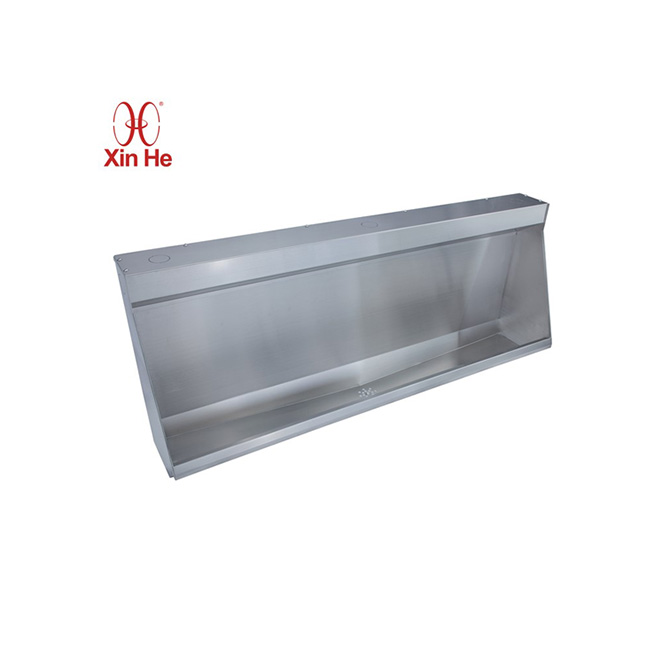
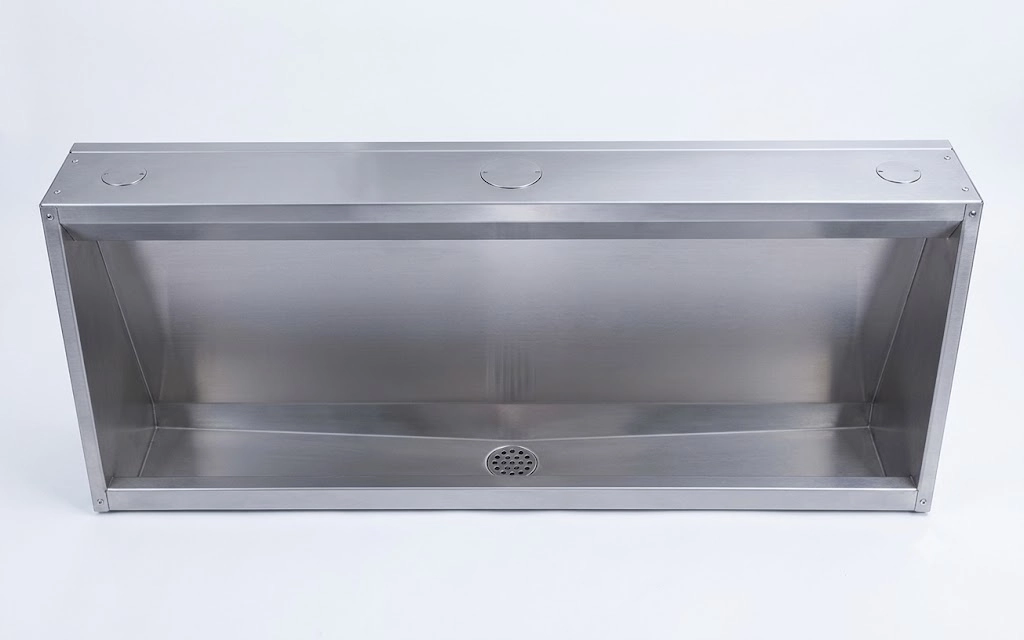
A stainless steel urinal trough is a multi-user channel fixture fabricated from heavy-gauge 304 or 316 stainless steel. A sloped, seamless trough collects waste from multiple users simultaneously and directs it to a single central drain. The system manages flushing at the system level rather than per user, either through a timed flush controller that activates every few minutes during operating hours or through an occupancy sensor that triggers a rinse cycle only when the restroom is in use. One flush serves the entire channel, so the water-per-user figure drops compared to individual fixtures.
Waterless urinals are individual wall-mounted fixtures, porcelain or engineered plastic, that operate with no water supply connection. They rely on a replaceable cartridge or elastomeric valve at the drain outlet. The cartridge holds a lightweight hydrophobic sealant liquid that floats above collected urine, blocking sewer gases from rising into the room. Urine passes through the sealant layer, drains into the waste pipe, and the sealant closes over the outlet again.
The two systems serve different design philosophies. The stainless steel urinal trough prioritizes throughput, durability, and low maintenance complexity. Waterless units prioritize the elimination of water use at the fixture, assuming a skilled maintenance team manages the chemical and mechanical upkeep.
Water Consumption: The Real Numbers
The zero-water claim attached to waterless urinals is accurate at the fixture level. A full accounting looks different once you factor in what happens downstream.
A standard single-bowl urinal consumes between 0.5 and 1.0 gallons per flush (gpf). A stainless steel urinal trough serving 8 to 12 users per flush cycle distributes that water use, bringing the effective per-user consumption to 0.3 to 0.8 gpf. In a facility running 500 user-visits per day across 10 trough positions, the total consumption sits between 55,000 and 146,000 gallons annually.
Waterless urinals use 0 gallons at the fixture. Concentrated urine without water dilution causes rapid uric acid and struvite scale buildup inside the horizontal waste pipes. Most waterless urinal manufacturers specify a mandatory weekly line flush of 10 to 15 gallons per unit to prevent blockages. Across 10 fixtures over a full year, that ancillary flushing adds up to 52,000 to 78,000 gallons, matching the trough’s direct consumption.
| Metric | Stainless Steel Trough | Waterless Urinal |
|---|---|---|
| Water per use (avg.) | 0.3–0.8 gpf | 0 gpf (direct) |
| Annual use, 500 visits/day (10 units) | ~55,000–146,000 gal | 0 gal (direct) |
| Required weekly drain-line flushing | None | 10–15 gal/unit/week |
| Annual ancillary flush water (10 units) | $0 | ~52,000–78,000 gal |
| Annual consumable cost (cartridges/sealant) | $0 | $1,500–$4,000+ |
| Drain blockage risk | Very low | Moderate to high |
The net water savings of waterless systems is real but smaller than the fixture-level figures suggest in older buildings with long horizontal drain runs.
Maintenance Burden: What Your Cleaning Team Actually Does
Maintenance complexity is where the operational gap between these two systems becomes apparent, and where facilities underestimate the waterless option.
Stainless steel urinal trough maintenance fits into standard janitorial routines without special training or tools:
- Spray the channel surface with a non-abrasive commercial cleaner
- Wipe down with a cloth or mop head
- Check the auto-flush controller timer settings monthly
- Inspect the drain strainer and clear any debris
That’s the full list. The automated flush system handles the rest. 304 stainless steel is non-porous, so bacteria don’t embed in the surface the way they do in grouted porcelain joints. There are no cartridges to track, no sealant levels to monitor, and no specialized chemicals required.
Waterless urinal maintenance requires a structured, documented schedule that most general janitorial staff are not trained for:
- Daily: Wipe the bowl with a damp cloth only. No water flooding, no disinfectant sprays that contain citric acid or strong alkaline compounds, which degrade the sealant barrier
- Weekly: Pour manufacturer-specified activator solution down each drain to maintain sealant integrity; flush lines with hot water
- Every 1,500–7,000 uses: Remove and replace the cartridge or elastomeric valve (frequency varies by model and traffic volume)
- Quarterly: Pour drain cleaning solution formulated for waterless systems; document cartridge replacement dates per fixture
In a busy transit hub or sports venue where cleaning is contracted out to rotating crews, maintaining this protocol is difficult. A single missed cartridge replacement or a cleaner who used a standard bleach-based product can trigger odor complaints within 48 hours.
Vandal Resistance and Structural Durability
Public-facing facilities need fixtures that survive deliberate abuse.
Most individual waterless urinals are vitreous china or ABS plastic. China cracks under sharp impact. Plastic housings can be pried off walls, and the cartridge inside is removable or destructible by hand. In unsupervised restrooms (parks, beaches, schools, event venues), a single act of vandalism can put a fixture out of service until a replacement cartridge arrives and a trained technician installs it.
A stainless steel urinal trough offers a different resistance profile. Welded heavy-gauge steel will not crack from impact. The flush supply line sits concealed within the wall. There are no exposed cartridges, no sealant bottles visible for tampering, and no plastic components at user height. When a trough takes a hit, it dents rather than shatters, and the fixture remains functional.
The same durability matters in high-security restroom environments, a point covered in depth when comparing fixtures designed for correctional and secure facility installations. Graffiti removal is simpler on stainless steel: solvent-based removers work on polished metal without damaging the surface, whereas abrasive cleaning of porcelain scratches the glaze and creates microscopic bacterial harbors.
Odor Control: Performance Under Real Conditions
Waterless urinals win odor comparisons in controlled tests. Controlled tests don’t replicate what happens during halftime at a sold-out stadium.
How the cartridge system holds up: When maintained and operating within its rated capacity, the sealant barrier in a waterless urinal is effective. Sewer gases stay below the liquid seal. The bowl surface, with no water splashback, stays clean. Under these conditions, odor scores are good.
Where it breaks down: The sealant barrier is volume-sensitive. A concentrated event crowd pushing hundreds of visits per hour through a waterless fixture can exhaust the sealant faster than scheduled replenishment can keep up. Once the barrier liquid is depleted, the fixture is no longer waterless in the functional sense. It’s an open pipe. The uric acid built up in the trap housing and waste lines releases ammonia gas into the room. Fixing this mid-event is not practical.
How a stainless steel urinal trough manages odor: Trough systems use regular water flow as the odor-control mechanism. Automated flushes dilute and carry waste out of the system before urea breaks down into ammonia. The drain lines stay clear and wet. No concentrated residue pools in a closed trap housing. In high-volume operation, this approach is more robust because it doesn’t depend on a consumable that can be depleted or damaged.
For facilities with daily usage above 200 visits per unit, trough systems deliver more consistent odor outcomes. Lower-traffic environments (an office building floor, a boutique hotel wing) are a different calculation.
Lifecycle Cost Analysis: 5-Year TCO
Upfront purchase price is the least useful comparison metric for long-life restroom fixtures. The 5-year TCO tells a more accurate story.
For procurement teams comparing unit prices, heavy-duty stainless steel urinal trough systems built for commercial volume tend to carry a higher per-unit price than individual waterless fixtures. A single 8-foot trough replaces four to six individual urinals, requires one water supply line, one drain connection, and one flush controller. Installation and rough-in plumbing costs are lower per user served.
Waterless units are cheaper per fixture and require no water rough-in, but they add installation complexity through multiple individual drain connections and may require drain line modifications to manage the concentrated waste flow.
| Cost Category (10-unit equivalent installation) | Stainless Steel Trough | Waterless Urinal |
|---|---|---|
| Purchase price (est.) | $3,500–$6,000 | $2,000–$4,500 |
| Installation (plumbing labor) | Low (1 supply + 1 drain) | Moderate (10 separate drains) |
| Annual water cost | ~$300–$800 | $0 (direct) |
| Annual consumables (cartridges, sealant) | $0 | $1,500–$3,500 |
| Annual maintenance labor | Low, standard janitorial | Moderate to High, specialized protocol |
| Drain repair / descaling (est. over 5 yrs) | Minimal | $500–$2,000+ |
| 5-Year Estimated TCO | $5,500–$11,000 | $10,000–$22,500+ |
The stainless steel urinal trough system’s 5-year TCO advantage grows as traffic volume increases. At 200+ uses per unit per day, the consumable and maintenance labor costs for waterless fixtures climb.
Which Facilities Should Choose Which Option
Not every venue has the same operational profile. Each system fits specific facility types.
A stainless steel urinal trough is the right fit for:
- Sports stadiums, arenas, and concert venues with high peak-hour demand
- Transit hubs: airports, rail stations, bus terminals
- Amusement parks, outdoor event facilities, and festival restrooms
- Schools, correctional facilities, and military installations where vandal resistance is required
- Any venue where cleaning is handled by rotating or non-specialized janitorial crews
High-traffic venues planning a full-service restroom installation pair a stainless steel urinal trough with coordinating stainless hand wash stations. It simplifies procurement, standardizes maintenance protocols, and presents a consistent aesthetic.
Waterless urinals are better suited to:
- Low-traffic office and commercial buildings (under 50 uses per unit per day)
- Facilities with dedicated, trained maintenance staff on a fixed contract
- LEED-certified building projects where zero-water fixtures earn credit under WE (Water Efficiency) categories
- Jurisdictions with severe water restrictions where zero-fixture-use is mandated by code
Buying Checklist: 10 Questions Before You Specify
- Daily usage above 200 per unit? → Trough urinal for consistent odor and maintenance control
- Janitorial team uses standard commercial cleaners? → Avoid waterless; alkaline and citric cleaners degrade cartridges
- Restroom is in an unsupervised or public-access area? → Stainless steel; no cartridges to vandalize or steal
- Existing waste pipes are copper or cast iron? → Avoid waterless; concentrated urine accelerates pipe corrosion
- 5-year TCO is the budget metric (not just upfront cost)? → Trough systems win above 100 uses/unit/day
- Rotating or contract cleaning crews? → Trough systems require no specialized training
- Project requires LEED Water Efficiency credits? → Evaluate waterless units but factor in drain-line flush water
- Facility is in a vandal-prone location? → A stainless steel urinal trough is the defensible option
- Budget covers both fixture and long-term consumables? → Run a 5-year cost model before committing to waterless
- Individual fixture footprint is required (not a channel)? → Explore floor-standing stainless urinal configurations certified for public use
Conclusion
For the majority of high-traffic public venues, a stainless steel urinal trough delivers better operational value over time. The water savings from waterless units are real but smaller than advertised once ancillary line flushing is counted. The consumable and maintenance costs of waterless systems grow with usage volume, while the trough’s operational profile stays flat.
If your facility runs more than 200 visits per unit per day, has a non-specialized cleaning crew, or operates in a vandal-risk environment, the stainless steel urinal trough is the more defensible specification on cost and operations.
Request specifications and a custom quote for your facility’s trough urinal configuration →