Picking the Right Commercial Stainless Steel Table: A Practical Project Checklist
For most project teams, picking out a commercial stainless table is about a lot more than just measuring a gap in the kitchen and checking the price tag. In a high-traffic environment, that table is your workspace’s backbone. It has to survive the daily grind, fit the flow of the room, and not fall apart after six months of heavy use. That’s why smart buyers look past the shiny surface. A solid commercial stainless table procurement strategy needs to account for metal grades, weight limits, and how easy the thing is to keep clean.
Getting Real About Value vs. Price
It’s tempting to grab the cheapest option to keep the budget in the green, but a table that looks fine on a spec sheet might not survive a week in a real facility. If the legs are flimsy or the top bows under pressure, you haven’t saved money—you’ve just bought a future repair bill.
We’ve seen plenty of teams regret going the budget route when they end up with unstable prep surfaces or equipment that vibrates right off the edge. You want to buy for the long haul. A reliable table supports the crew; a bad one just gets in the way of the daily workflow.
Metal Grades and Thickness: Where Durability Starts
The “stainless” label can be a bit of a trap. Not all steel is created equal, and if you pick the wrong one, you’ll be looking at rust spots sooner than you think. When you’re comparing stainless table quality, these are the two things that actually matter.
Which Steel Grade Do You Actually Need
- 304 Series: This is the gold standard. If you’re in food prep, medical labs, or anywhere that gets hosed down with chemicals, use 304. It handles moisture and cleaning agents without complaining.
- 430 Series: This is the “budget” steel. It’s fine for dry storage or sorting mail, but if it stays wet, it will eventually rust.
Understanding the Gauge (Thickness)
The lower the gauge number, the thicker the steel. It sounds backward, but it’s a rule you need to know.
- 18 Gauge (~1.2mm): Light duty. Think sandwich prep or sorting tasks.
- 16 Gauge (~1.5mm): The standard. Good for general kitchen work and most appliances.
- 14 Gauge (~2.0mm): The heavy hitter. Use this for butchery or if you’re bolting heavy machinery to the top.
Stability: What’s Happening Under the Table
A thick top doesn’t mean much if the legs are shaky. If you’re planning to put heavy mixers or stacks of plates on these, structural stability isn’t just a “nice to have.”
Check the Reinforcement
Look under the table. You want to see “hat channels”—those metal bars welded to the underside. They stop the top from “oil-canning” (popping up and down) or bowing in the middle.
The Legs and Feet
The joints where the legs meet the table (the gussets) should be rock solid. Also, make sure it has adjustable bullet feet. Most commercial floors are nowhere near level, and you don’t want your team chasing a rolling onion across a tilted table.
Choosing the Right Setup for the Job
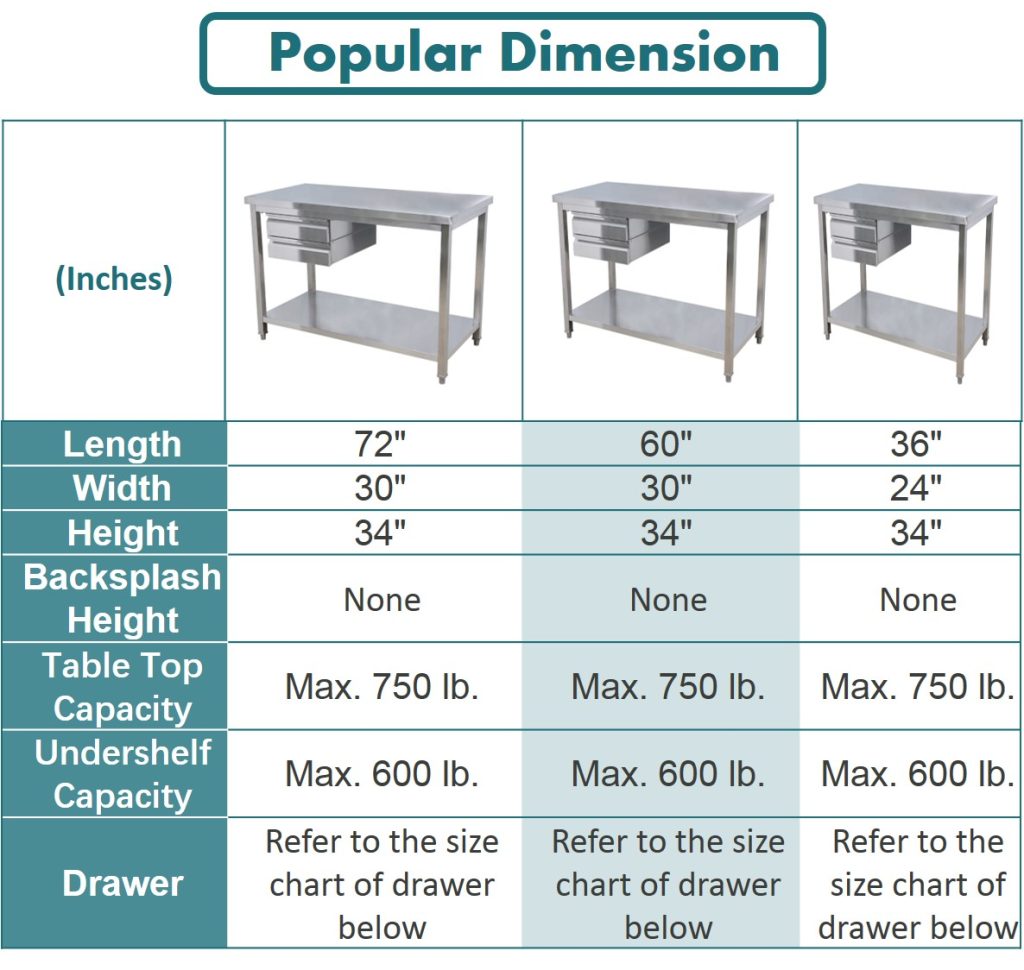
Don’t just buy a standard box. Think about what the person standing there is actually doing. Matching stainless steel work table applications to the task saves a lot of frustration later.
- Flat Top vs. Backsplash: If the table is in the middle of the room, go flat. If it’s against a wall, get a backsplash. It keeps flour, water, and debris from disappearing into the “dead zone” behind the equipment.
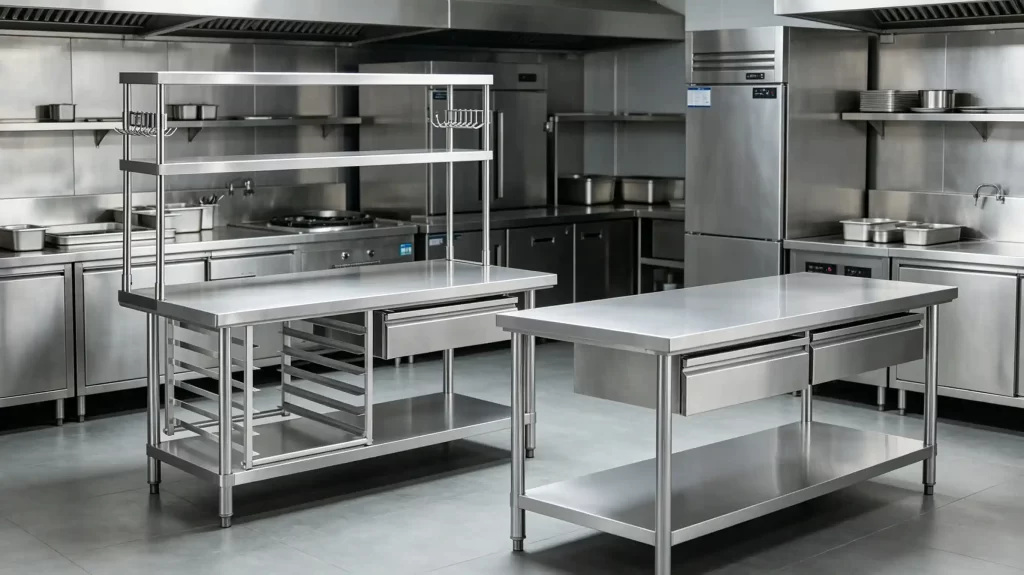
- Storage Logic: Do you need an undershelf for pots? Or would a workbench with drawers be better for keeping small tools organized? Clear surfaces usually lead to faster work.
Fitting Into the Workflow
A table that’s six inches too deep can turn a busy hallway into a bottleneck. It’s not just about fitting the floor plan; it’s about fitting the people.
Space and Synergy
Make sure there’s enough aisle space for two people to pass each other. Also, check the height. If the table is sitting next to a range or a sink, having them at the same height makes sliding heavy pans much easier and safer. Looking at commercial stainless table options early in the design phase prevents these “oops” moments.
The Finish: Edges and Hygiene
In a commercial kitchen, cleaning isn’t a suggestion—it’s a requirement.
- The Edges: Look for “bullnose” or rolled edges. Sharp corners are just waiting to catch a sleeve or a forearm.
- The Welds: If the welds are rough or pitted, bacteria will move in. You want smooth, polished joints that wipe clean in one pass.
- Surface Grain: A #4 polish is the standard for stainless steel work tables. It’s great at hiding the scratches that are inevitable in a busy shop.
The Supplier Talk: What to Ask Before Buying
When you’re sourcing bulk stainless tables for a big project, don’t be afraid to grill the supplier. You need to know exactly what’s arriving on the truck.
- Is this 304 or 430? Don’t let them just say “stainless.” Get the number.
- What’s the actual gauge of the top? 16-gauge is usually the sweet spot for price and strength.
- What’s the weight capacity? If you’re putting a 200lb mixer on it, you need to know it won’t buckle.
- Can you do custom sizes? Sometimes an off-the-shelf size just wastes space.
- Are there technical drawings? Your plumbers and electricians will need these to see where the legs land.
The Bottom Line
Picking a commercial stainless table is about creating a workspace that actually works. The “best” table is the one that stays level, doesn’t rust, and doesn’t get in the way. When you focus on the build quality and the supplier’s track record, you’re setting the whole project up for success.
Ready to spec out your facility?
- Request commercial stainless table specifications
- Ask for table size recommendations for your project layout
- Get project-ready stainless table options for bulk sourcing
Contact Xinhe today. We’ll help you figure out the technical details so your procurement is based on something more solid than just a low price.
FAQs
What is the most important factor when buying a commercial stainless table?
While dimensions are critical for fit, the most important functional factor is the material grade and gauge. A high-quality 304-series table with an adequate thickness (like 16 or 14 gauge) ensures the unit will not rust, warp, or fail under heavy commercial use.
How do project teams compare stainless table quality?
Project buyers should look beyond the surface shine. Compare the under-bracing (are there sturdy hat channels?), the weld smoothness (are joints seamless?), and the leg supports (are there solid gussets and adjustable feet?). These structural hidden details differentiate a heavy-duty table from a light-duty one.
Can a stainless steel work table be customized for project layouts?
Yes. Reputable manufacturers can alter lengths, depths, and heights to fit specific architectural constraints. They can also integrate custom sink bowls, specific backsplash profiles, or specialized storage configurations to perfectly match the operational workflow of the facility.