Home > Blog > Public Products >
Stainless Steel Pedestal Sink for Commercial Restrooms and Public Wash Areas
Maintaining hygiene and operational efficiency in high-traffic environments requires fixtures built for durability and straightforward maintenance. A stainless steel pedestal sink is often used in commercial restrooms, public wash areas, hospitals, laboratories, schools, and food-processing facilities where standard residential basins fail to hold up. For facility buyers and project contractors, the main concern is not just aesthetics; it is whether the sink can withstand heavy daily use, provide easy plumbing access, support touchless operations, and lower long-term maintenance costs.
Why Stainless Steel in Commercial Spaces
Commercial washrooms face constant traffic and demanding conditions. Standard ceramic sinks often chip, crack, or harbor bacteria under heavy impact and frequent use. In contrast, a stainless steel pedestal sink delivers unmatched reliability for project applications.
- Impact Resistance: Stainless steel easily handles the bumps, knocks, and heavy usage common in public spaces.
- Corrosion Protection: It withstands harsh cleaning chemicals and industrial disinfectants without degrading.
- Sanitary Surface: The non-porous nature of the material leaves no room for bacteria to hide, making a commercial restroom sink far easier to sanitize on a tight schedule.
Integrating a robust stainless steel hand wash basin ensures facilities avoid the frequent replacement cycles associated with fragile, residential-grade models.
Where the Sink Fits Best
Different projects require specific sanitary solutions. Here is how a stainless steel pedestal sink adapts to various demanding environments without compromising on functionality:
Hospitals and Clinics
In hygiene-critical environments, controlling cross-contamination is paramount. A medical hand washing sink made of premium stainless steel supports rigorous disinfection routines and allows for seamless integration with hands-free operation to protect both staff and patients.
Laboratories
Chemical resistance and quick cleanup are essential in research facilities. A laboratory hand wash sink provides a durable wash station that resists chemical splashes and heavy daily wear.
Food Processing Plants
Strict sanitation protocols demand a dedicated food processing hand wash sink. Workers require a reliable hygiene hand wash station to maintain clean hands before entering production lines, ensuring strict compliance with food safety regulations.
Schools and Public Restrooms
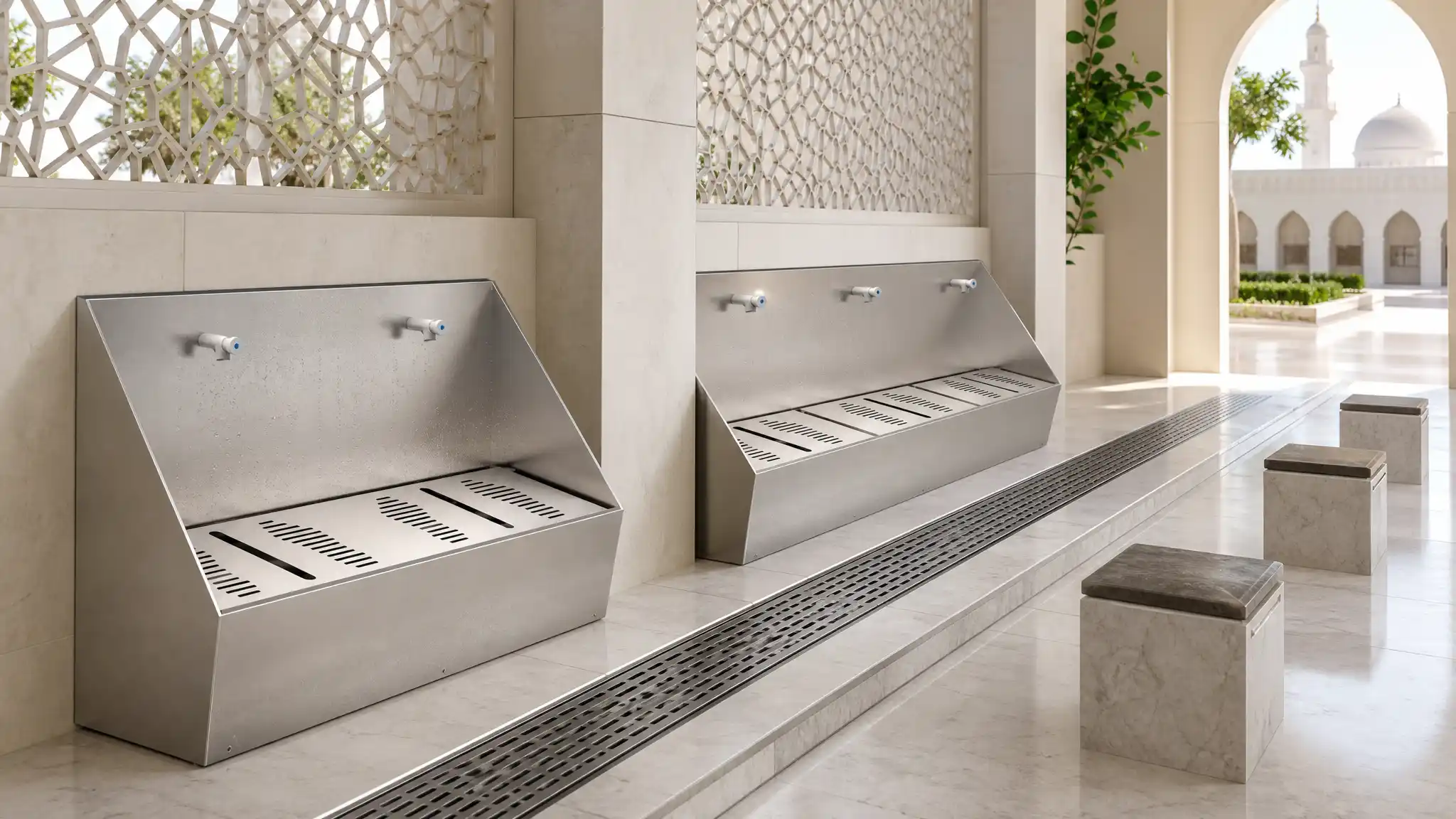
High traffic and the risk of vandalism make durability a top priority. A sturdy hand washing sink for public areas withstands physical abuse while remaining easy for janitorial staff to clean. A public restroom sink must balance a clean, modern aesthetic with industrial-grade strength.
Key Features to Check Before Ordering
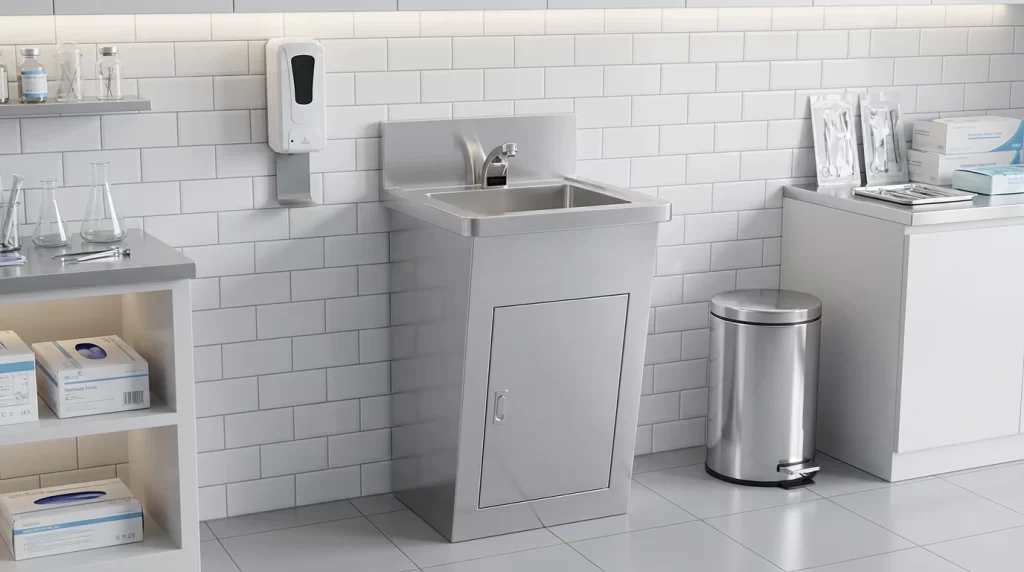
Evaluating the technical specifications of a commercial hand wash sink ensures it meets long-term project demands. For projects requiring a reliable setup with enclosed plumbing and touch-free operation, Xinhe’s freestanding stainless steel hand wash sink serves as an excellent benchmark for understanding dimensions, material quality, and customization options.
When evaluating a sink, carefully review the following components:
- Material Grade: 304 stainless steel handles the vast majority of commercial applications perfectly. For highly corrosive environments (like coastal facilities or specific labs), upgrading to 316 stainless steel is recommended.
- Sensor Configuration: Ensure the faucet type aligns with your facility’s power infrastructure.
- Access Panels: A true commercial pedestal design must offer an access door for plumbing and valve maintenance.
Sensor Faucet vs. Manual: Public Wash Area Choices
Choosing the right faucet configuration impacts both hygiene levels and project budgets. A touchless hand wash sink equipped with a sensor faucet sink is the standard for hospitals, labs, and food preparation zones. It eliminates the need to touch handles after washing, drastically reducing cross-contamination.
Conversely, manual faucets may suffice in lower-risk, budget-sensitive areas. However, for most high-traffic public facilities, the investment in a sensor-operated stainless steel pedestal sink quickly pays off through reduced water waste and enhanced public health safety.
Why Cabinet Access Matters for Maintenance
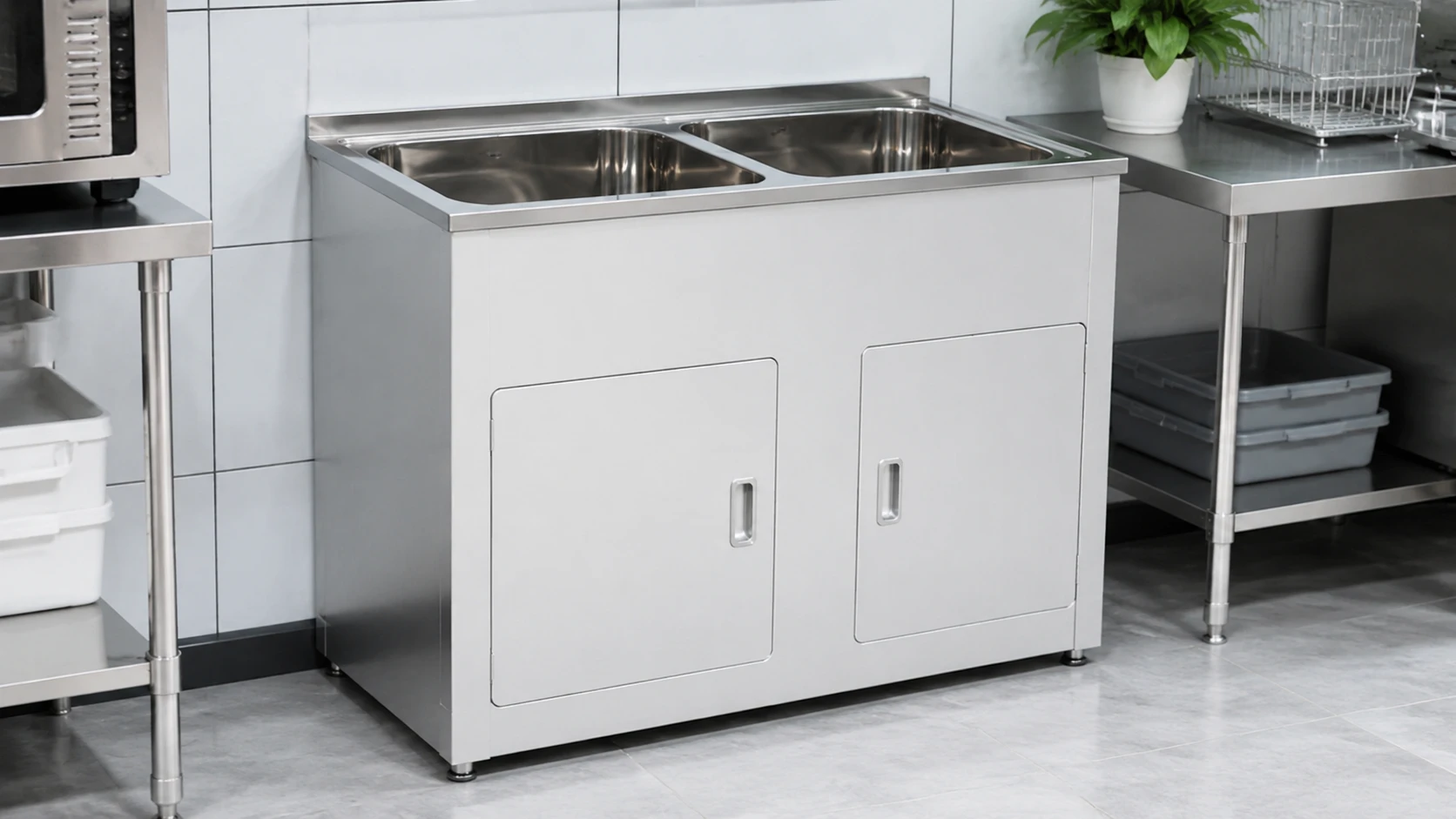
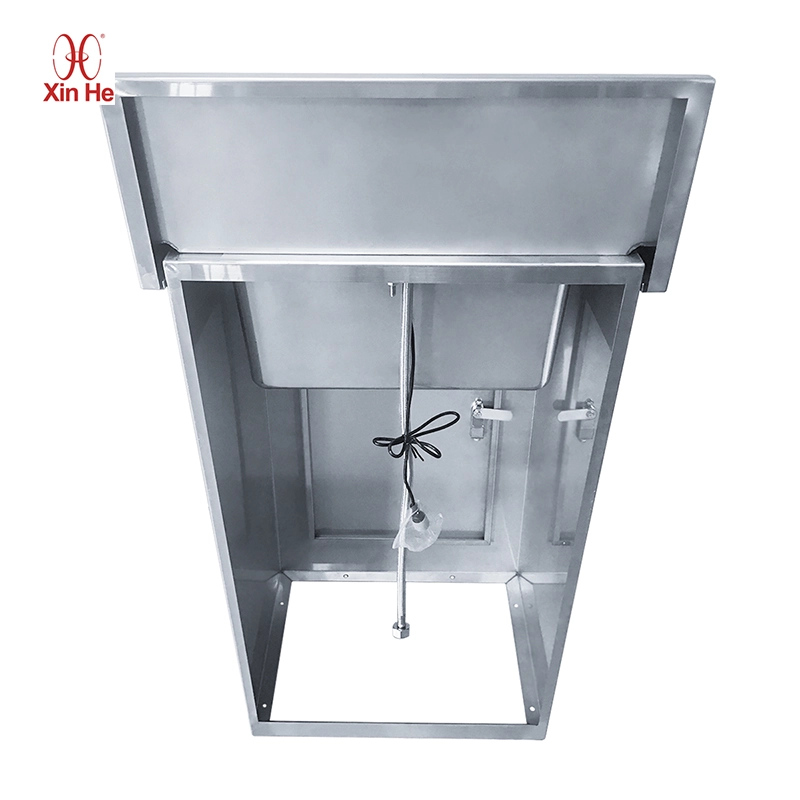
A major advantage of a well-designed pedestal model is the enclosed lower section. A pedestal sink with cabinet access hides unsightly P-traps, supply lines, and mixing valves from public view, deterring tampering.
More importantly, an openable access door makes routine maintenance fast and efficient. Facilities management can easily inspect pipes, adjust water pressure, or replace sensor batteries without dismantling the entire unit. Utilizing a commercial wash basin with cabinet structure keeps the washroom looking neat while prioritizing functional serviceability for maintenance crews.
Choosing the Right Size and Configuration
Project requirements vary wildly, meaning a one-size-fits-all approach rarely works. Tailoring dimensions to the specific site prevents costly installation bottlenecks.
| Specification Element | Standard Project Consideration | Customization Options |
|---|---|---|
| Overall Dimensions | 950 x 500 x 450 mm is typical for standard adult use. | Adjustable height configurations for pediatric or ADA accessibility needs. |
| Basin Depth | Shallow basins for quick hand washes; deeper basins for medical or industrial use. | Custom stamping or welding to achieve specific water volume requirements. |
| Backsplash | Protects the surrounding wall from continuous water damage. | Extended heights or integrated side splashes for corner installations. |
| Mounting Style | Floor-standing for maximum weight distribution and stability. | Wall brackets integrated into the pedestal for extra security against tipping. |
When sourcing a stainless steel sink for public facilities, always confirm the site’s plumbing rough-ins and spatial limitations before locking in the final dimensions with a commercial wash basin supplier.
Common Mistakes When Buying
Procurement errors can lead to installation delays and budget overruns. Avoid these common pitfalls when sourcing for commercial projects:
- Ignoring the Steel Grade: Using lower-grade steel in high-moisture or chemical environments inevitably leads to rust.
- Forgetting Faucet Power Requirements: Ordering a sensor unit without verifying if the installation site has nearby electrical outlets, or relying solely on batteries in ultra-high-traffic zones.
- Overlooking Maintenance Access: Selecting fully sealed pedestals that force maintenance crews to unmount the entire stainless steel pedestal sink just to fix a minor pipe leak.
- Misjudging Traffic: Installing a light-duty residential sink instead of a heavy-duty stainless steel wash basin for hospital or transit hub applications.
What to Ask a Supplier Before Ordering
- Do you offer both 304 and 316 stainless steel material options?
- Can the overall dimensions, basin depth, and cabinet doors be customized to fit our exact floor plan?
- Are technical CAD drawings or 3D models available for our architectural planning team?
- What are the realistic lead times for bulk project orders versus small, customized batches?
Conclusion
For commercial restrooms and public wash areas, a stainless steel pedestal sink should be selected based on strict hygiene needs, expected foot traffic, maintenance access, faucet configuration, and long-term durability. Hospitals, laboratories, schools, airports, food-processing areas, and public buildings often need more than a standard wash basin; they require a commercial-grade fixture that can support daily heavy use, simplify cleaning routines, and meet project-specific installation requirements.