Jail Toilet Installation Starts With Space Planning
In any secure facility project, installing a jail toilet is far more than just bolting a fixture to a floor. The actual success of the unit depends on a complex puzzle of floor space, wall integrity, plumbing architecture, and long-term maintenance access. A unit might look perfect on a spec sheet, but if it doesn’t align with the physical reality of the cell, it won’t support safety or operational efficiency.
Smart planning starts long before a product is even selected. Mapping out the environment first ensures that the fixture fits the room’s unique constraints, rather than forcing the room to adapt to the fixture.
Why Space Planning Must Come Before Product Selection
Secure environments don’t offer the same flexibility as a standard office or home. These buildings are made of reinforced materials that make on-site adjustments nearly impossible. Choosing a stainless steel jail toilet based on aesthetics or price before checking the structural limits is a recipe for disaster.
If the layout isn’t efficient, it creates a domino effect: plumbing doesn’t line up, maintenance becomes a nightmare, and security vulnerabilities emerge. Getting the dimensions right early on avoids the need for expensive wall modifications or the relocation of heavy-duty piping.
Essential Dimensions to Verify
Checking dimensions isn’t just about the size of the box; it’s about how that box interacts with the people and systems around it. Project managers should focus on these five categories:
- Footprint and overall size: This determines how much living space remains in the cell. A unit that protrudes too far can block doors or create “pinch points” where someone might get hurt.
- Wall and side clearance: You need enough room to ensure the unit can be cleaned and inspected. Tight gaps that a hand can’t reach are breeding grounds for hygiene issues and contraband.
- User movement area: The space in front of and beside the bowl must be clear. In small cells, ignoring this leads to safety bottlenecks.
- Plumbing connection points: These internal measurements must match the “rough-in” plumbing exactly. In a concrete wall, being off by two inches is a massive problem.
- Technician’s reach: Someone eventually has to fix the valves. If there isn’t enough space for a human to use tools behind or beside the unit, a simple repair could require a full cell shutdown.
How Wall Conditions and Plumbing Dictate Your Choice
You can’t pick a fixture without knowing what’s behind the wall. Infrastructure essentially “chooses” the mounting style for you. Most high-security areas use concealed plumbing, where pipes are tucked behind a secure chase to prevent tampering. This requires thick, load-bearing walls. Exposed plumbing is usually a last resort for retrofits where you can’t go through the wall.
| Project type | Wall considerations | Plumbing considerations | Impact on selection |
|---|---|---|---|
| New construction | Walls are designed for specific chase depths. | Rough-ins are plotted to match the specs exactly. | Highest flexibility; allows for space-saving combo units. |
| Retrofit / Replacement | Existing concrete or block walls limit mounting. | Drains and supply lines are fixed and can’t be moved. | Selection is restricted to fixtures that match old rough-ins. |
To get a better grasp of the structural side, prison toilet construction basics can clarify how wall strength supports these heavy installations.
Prioritizing Safety and Movement
A jail toilet layout isn’t just about plumbing; it’s about how the cell functions under pressure.
- Visibility: Fixtures must be placed so they don’t create blind spots. Staff need to be able to see the entire room from the observation window.
- Sanitation: High-traffic facilities require frequent wash-downs. If the base of the fixture is too close to a corner, it becomes impossible to keep the area sterile.
- Flow: Awkward placement forces inmates into unnatural movement paths, which can lead to accidental injuries or tension in tight quarters.
Individual Units vs. Combination Systems
The available footprint usually makes the decision between standalone and integrated units.
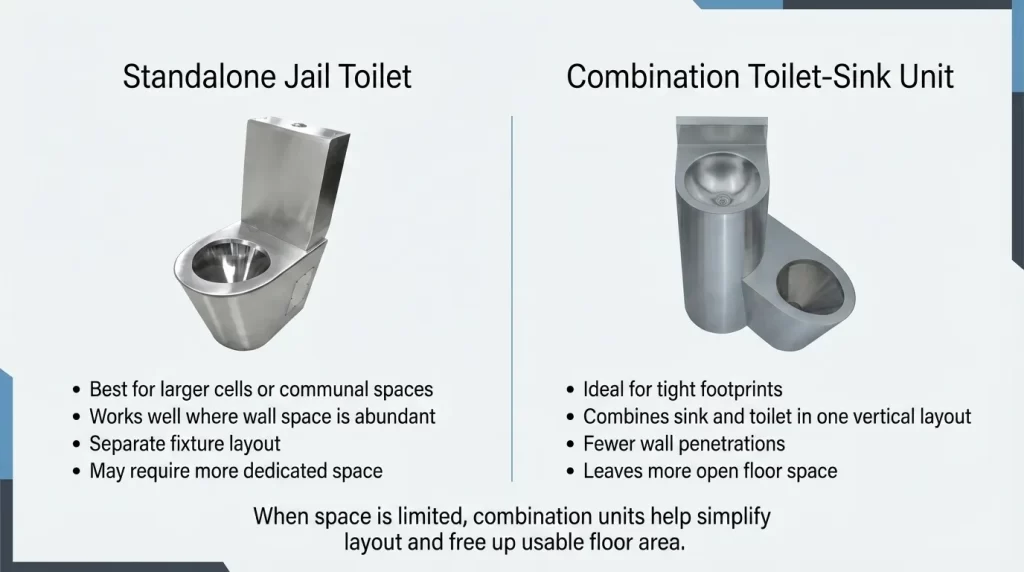
- Standalone units: Best for larger communal spaces or cells where wall space is abundant.
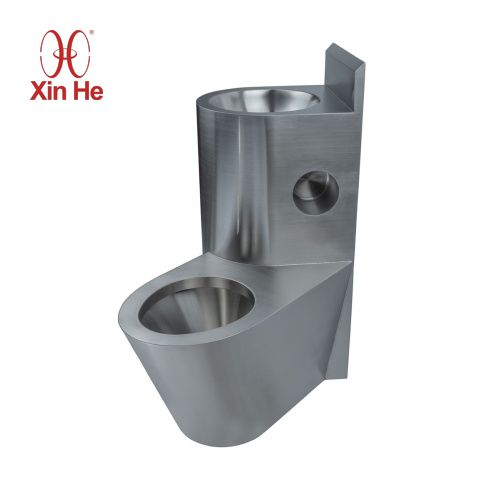
- Combination layouts: If you are tight on space, a prison toilet sink combo is the gold standard. These consolidate the sink and toilet into one vertical footprint, meaning fewer holes in the wall and more open floor space.
Common Installation Pitfalls to Avoid
- Picking the product too early: Never approve a spec before you’ve mapped the wall depth.
- Eye-balling the plumbing: The site will not adjust to the fixture. The fixture must match the site.
- Ignoring the maintenance crew: If a technician can’t reach the valves, your maintenance budget will skyrocket.
- Using “residential” logic: Secure spaces require anti-ligature designs and vandal-resistant planning that standard bathrooms don’t need.
Thinking About the Long Game
Installation planning is about more than just the first day of use; it’s about the next twenty years. When you coordinate the space, the plumbing, and the maintenance access early, you ensure the facility runs smoothly without constant, expensive interruptions.
For expert help ensuring your project is on the right track, rely on Xinhe’s history of durable manufacturing. You can request jail toilet dimensions or contact Xinhe for full layout support today.
FAQ
What is the first thing to check before installation?
Check your rough-in plumbing locations and wall strength. If those two things don’t match your fixture, the project stalls.
Why is the plumbing chase so important?
In secure areas, pipes have to be hidden to prevent vandalism. The chase is the “work zone” for repairs; if it’s too small, maintenance becomes impossible.
Are combo units actually better?
In small cells, yes. They save space and simplify the plumbing into a single area, which is usually cheaper and easier to manage.