Home > Blog > Home Kitchen Products >
How to Choose the Right Small Laundry Sink for a Laundry Room
A small laundry sink does more than fill an empty corner. It gives the laundry room a place for hand-washing clothes, rinsing muddy shoes, soaking stained fabric, cleaning tools, or dealing with small household messes that do not belong in the kitchen sink.
The hard part is choosing one that actually fits the room. A sink can look right online and still feel wrong once it is installed. It may take up too much counter space, sit too shallow for bulky laundry, or need plumbing work that was not planned for. The best choice usually comes down to five things: size, material, basin layout, installation style, and budget.
Size and Space
Laundry rooms are rarely generous. A washer, dryer, cabinet, laundry basket, and detergent shelf can already make the room feel full. That is why size should be settled before looking at finishes or faucet styles.
Measure the Room First
Start with the actual room, not the product photo. Measure the width of the available wall or corner, the depth from the wall to the front edge of the planned sink area, and the height from the floor to the countertop if a counter is already installed.
Also check nearby outlets, water lines, drain position, cabinet doors, and the washer door swing. These small details decide whether a small laundry sink feels convenient or constantly gets in the way.
A little clearance matters. Leaving about 6 inches around the sink area, where possible, makes cleaning easier and gives enough room for repairs or future replacement. If the sink sits too close to the washing machine, it may block access to hoses. If it sits too tight against a wall, wiping around the edges becomes annoying.
Pick a Size That Matches the Job
Depth is just as important as width. A shallow sink may work for quick hand-washing, but it can splash when rinsing shoes, buckets, or bedding. A deep laundry sink is more useful for soaking clothes or washing larger items. In a narrow laundry room, a compact but deep basin often works better than a wide, shallow one.
| Sink size | Best use | What works well | What to watch |
|---|---|---|---|
| 24 × 16 × 8 in | Small rooms, light hand-washing | Saves space and installs easily | Limited room for bulky items |
| 32 × 20 × 10 in | Average laundry rooms | Good daily-use size | Needs more counter or wall space |
| 40 × 24 × 12 in | Large rooms, heavy washing | Handles bedding, buckets, and big loads | Takes up more room and costs more |
For apartments, condos, or narrow utility areas, a 24-inch sink can be enough. For family homes where laundry piles up fast, a 32-inch model is usually more comfortable. Large basins make sense only when the room can handle them without crowding the washer and storage area.
Material
The material affects how the sink looks, how long it lasts, and how much cleaning it needs. The common choices are stainless steel, ceramic, and composite material.
A stainless steel laundry sink is the practical option for most homes. This material handles moisture well, resists rust, and wipes clean without much effort. It also fits modern laundry rooms where appliances, metal fixtures, or gray cabinets are already in use. Light scratches can show at first, but they usually blend into the surface over time. For busy laundry rooms, that tradeoff is often acceptable.
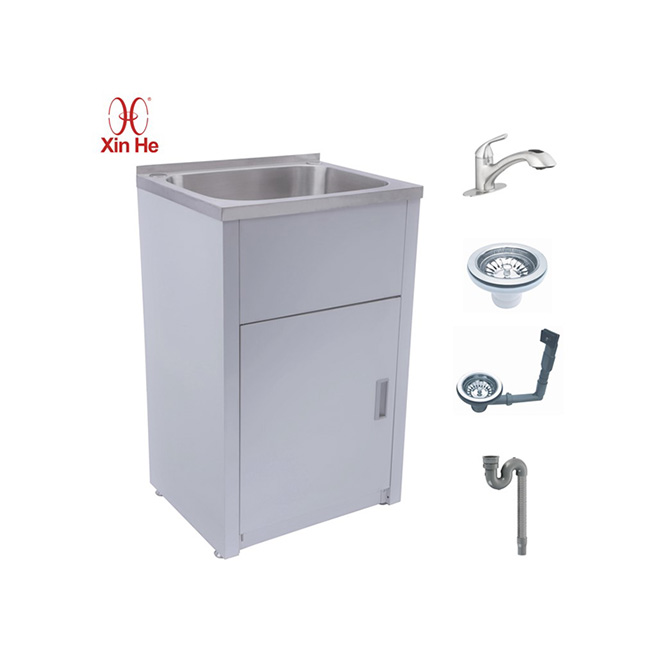
Ceramic has a cleaner, more finished look. This option suits laundry rooms that are designed to match the rest of the home, especially where the sink is installed into a countertop or laundry room sink cabinet. The glazed surface is easy to clean and does not stain easily under normal use. Weight is the main concern. Ceramic sinks are heavy, so the cabinet or countertop needs to support them properly. They can also chip if heavy tools, buckets, or metal items are dropped into the basin.
Composite sinks are usually made from resin, stone powder, quartz blends, or similar materials. They are lighter than ceramic and come in more colors and finishes. Many are stain-resistant and easier to match with cabinets. They are a good choice for buyers who want a clean look without the cost or weight of ceramic. Still, lower-grade composite material may fade, scratch, or dull faster than stainless steel.
| Material | Durability | Cleaning | Look | Best fit |
|---|---|---|---|---|
| Stainless steel | Very high | Easy | Clean and modern | Daily laundry, utility use |
| Ceramic | Good | Easy | Polished and classic | Finished laundry rooms |
| Composite | Good | Easy | More color options | Compact rooms, lighter setups |
For heavy use, stainless steel is usually the safest bet. When designing a more decorative laundry room, ceramic can look better. Composite options are worth comparing for a smaller budget or lightweight installation, especially when the sink is not used for rough cleaning jobs.
Basin Style, Drainage, and Aaucet
A small laundry sink should make washing easier, not just occupy space. The basin layout, drain position, and faucet type make a real difference in daily use.
Single Basin or Double Basin
A single basin is the simplest choice. It takes up less room, costs less, and is easier to clean. This layout works well for hand-washing small garments, rinsing mops, cleaning pet bowls, or soaking a few items at a time. For tight laundry rooms, a single-basin small utility sink is often the most practical layout.
A double basin gives more separation. One side can hold soapy water while the other is used for rinsing. This is useful for families, rental properties, salons, workshops, or homes where the laundry sink is used for more than clothing. The catch is space. A double basin needs a wider countertop or floor area, and each basin may be smaller than expected.
Drainage and Aaucet Details
Drainage should not be an afterthought. Laundry sinks deal with lint, hair, dirt, detergent residue, and sometimes grit from shoes or cleaning tools. A removable strainer or filter helps catch debris before it reaches the drain. A centered or well-sloped drain also keeps water from sitting in the bottom of the basin.
The faucet matters too. A fixed faucet works for basic use, but a pull-out or swivel faucet makes rinsing larger items much easier. For deep basins, a taller faucet gives more clearance. If the sink is being installed where no faucet is currently available, check whether the model includes a faucet hole, a built-in faucet option, or enough deck space for the fixture.
| Feature | Best use | Advantage | Possible drawback |
|---|---|---|---|
| Single basin | Small laundry rooms | Saves space and cleans quickly | Less flexible for soaking and rinsing |
| Double basin | Frequent washing | Separates dirty water and rinse water | Needs more room |
| Removable drain filter | Lint, hair, debris | Helps reduce clogs | Needs regular cleaning |
| Pull-out faucet | Bulky items | Easier rinsing | Adds cost |
For light use, a single basin with a basic faucet is enough. For heavier use, a deep laundry sink with a removable drain filter and pull-out faucet will save time and prevent small frustrations from turning into daily annoyances.
Installation Options
Installation changes both the look and the cost. The main choices are countertop, under-counter, and freestanding sinks.
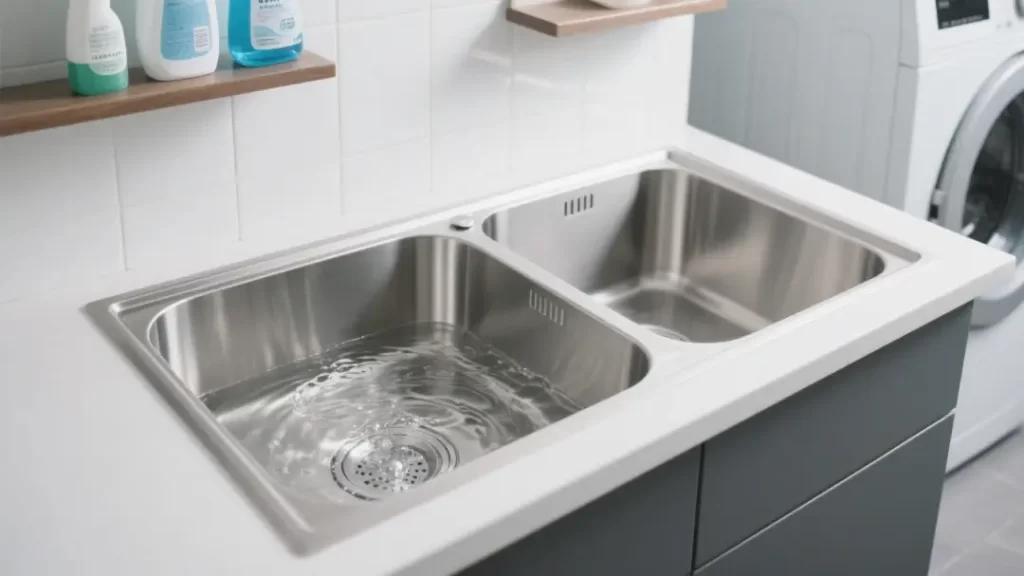
Countertop installation works well when the laundry room already has a counter or a planned laundry room sink cabinet. The sink sits on top of the surface, so setup is usually easier than an under-counter model. Replacement is also simpler. The drawback is cleaning around the rim, where dust, detergent powder, and water can collect.
Under-counter sinks sit below the countertop for a cleaner line. This style looks neat and makes it easier to wipe water and lint from the counter into the basin. It also gives the room a more built-in feel. Installation needs more accuracy, though. The countertop cutout must be right, and the counter material must support the sink safely.
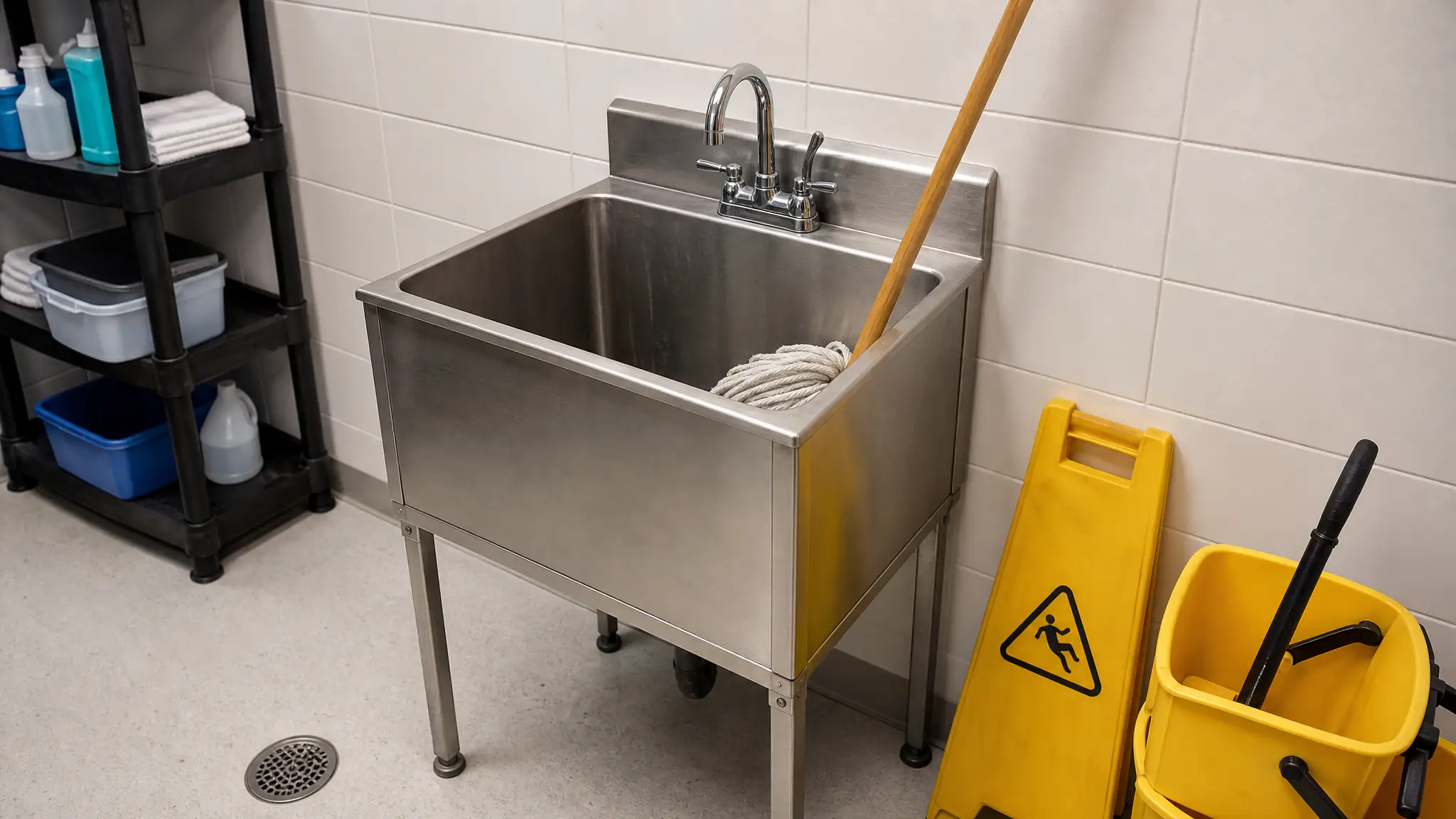
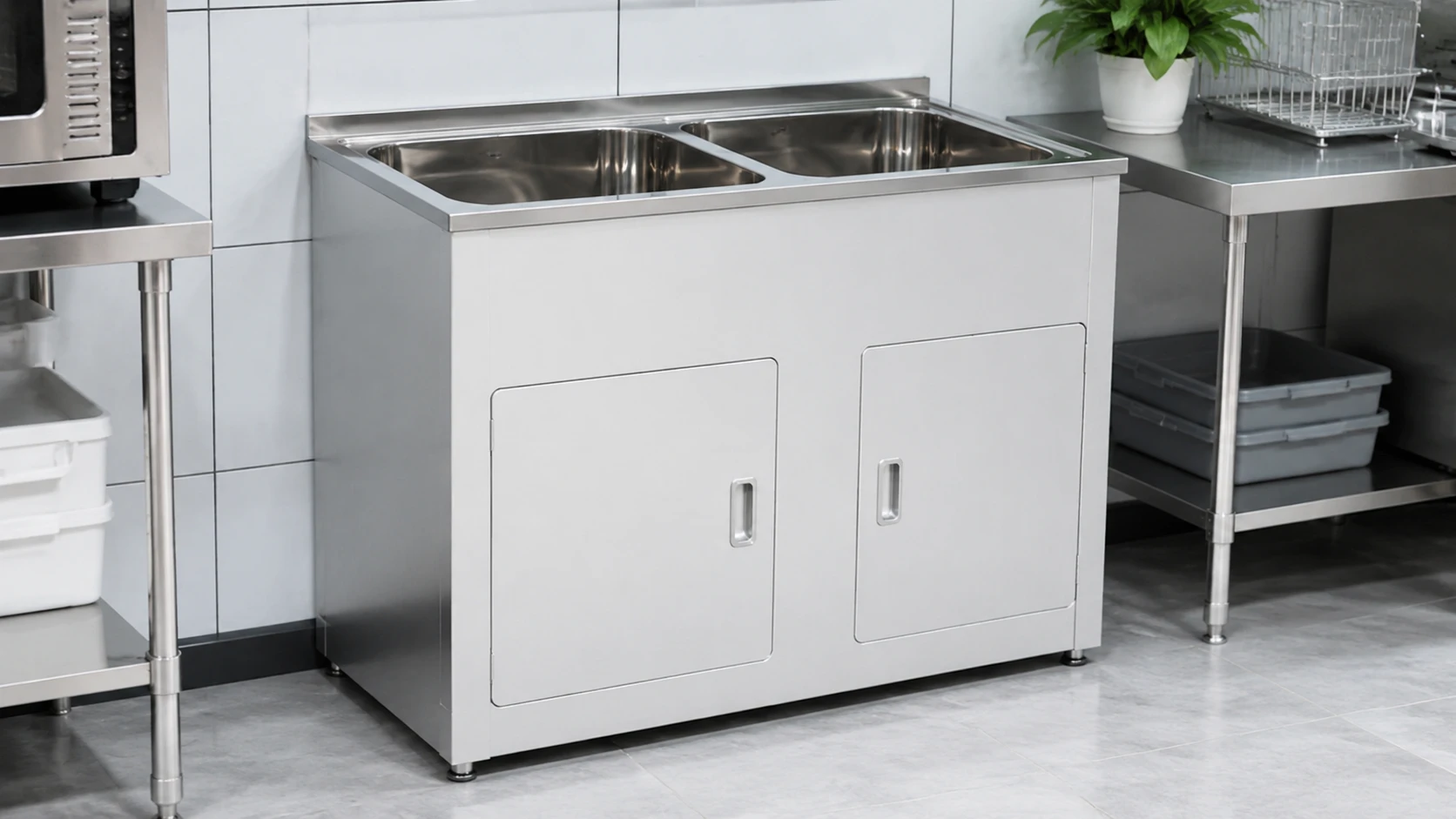
Freestanding sinks have their own legs or base. They are common in utility rooms, garages, basements, and larger laundry spaces. They do not need a full countertop and can be placed where the plumbing allows. The tradeoff is that visible pipes, floor leveling, and drain alignment may take extra work. Some freestanding sinks look plain, while others come with cabinets or enclosed bases for a cleaner finish.
| Installation type | Best use | Advantage | Possible drawback |
|---|---|---|---|
| Countertop | Rooms with existing counters | Easier setup and replacement | Rim needs cleaning |
| Under-counter | Finished laundry rooms | Clean look and more usable counter space | Requires precise cutting |
| Freestanding | Basements, garages, large rooms | Flexible placement | Plumbing may be more involved |
For a small room with cabinets, countertop installation is often the easiest route. Under-counter installation looks better if you are aiming for a more polished renovation. In a basement or garage laundry area, freestanding models are usually more forgiving.
Budget
A small laundry sink can be affordable, but the total cost depends on more than the basin itself. Material, faucet, drain parts, cabinet, labor, and plumbing changes can all affect the final price.
Where the Money Usually Goes
Stainless steel is usually in the middle of the price range. It offers strong value because it lasts well and does not need delicate care. Ceramic costs more in many cases, especially when paired with a solid countertop or custom cabinet. Composite sinks are often cheaper, although higher-end composite models can still be expensive.
Features also change the price. A single-basin sink with a simple drain and standard faucet keeps costs down. A double basin, pull-out faucet, sound-dampening pad, drain basket, or thicker stainless steel gauge will increase the price, but those upgrades may be worth it for daily use.
Installation can be the hidden cost. A countertop sink is usually the cheapest to install if the counter and plumbing are ready. An under-counter sink may need professional cutting and mounting. A freestanding sink may seem simple, but new water lines or drain adjustments can add cost quickly.
Budget Choices by Use Case
| Budget level | Good choice | Why it makes sense |
|---|---|---|
| Low | Stainless steel single basin, countertop setup | Practical, affordable, easy to replace |
| Medium | Stainless steel double basin with drain filter or better faucet | More useful for regular laundry |
| High | Ceramic or premium stainless steel with full features | Better finish, stronger function, cleaner look |
A tight budget should go toward the basics first: solid material, the right size, and a drain that works well. Extra features are useful only if the sink is already comfortable to use. A cheap sink that is too shallow or poorly placed will feel expensive after installation.
Choosing What Fits Your Laundry Room
The right small laundry sink is the one that matches the room and the way the space is used. A narrow laundry room may need a compact single basin. A family laundry area may need a deeper sink and a better faucet. A finished utility room may look better with an under-counter ceramic or stainless steel sink set into a cabinet.
Before buying, check the size, basin depth, faucet clearance, drain location, and installation requirements. The final choice should feel simple: enough basin space, easy cleaning, reliable material, and no wasted room.
A well-chosen sink will not make the laundry room bigger, but it can make the space work harder. That is usually the point.