Home > Blog > Home Kitchen Products >
How to Specify a Laundry Sink with Cabinet for Facility Projects
- Define the use case and user needs
- Confirm sink size based on tasks and layout
- Decide the cabinet configuration
- Specify material and construction details
- Check plumbing and installation conditions
- Choose between standard and custom options
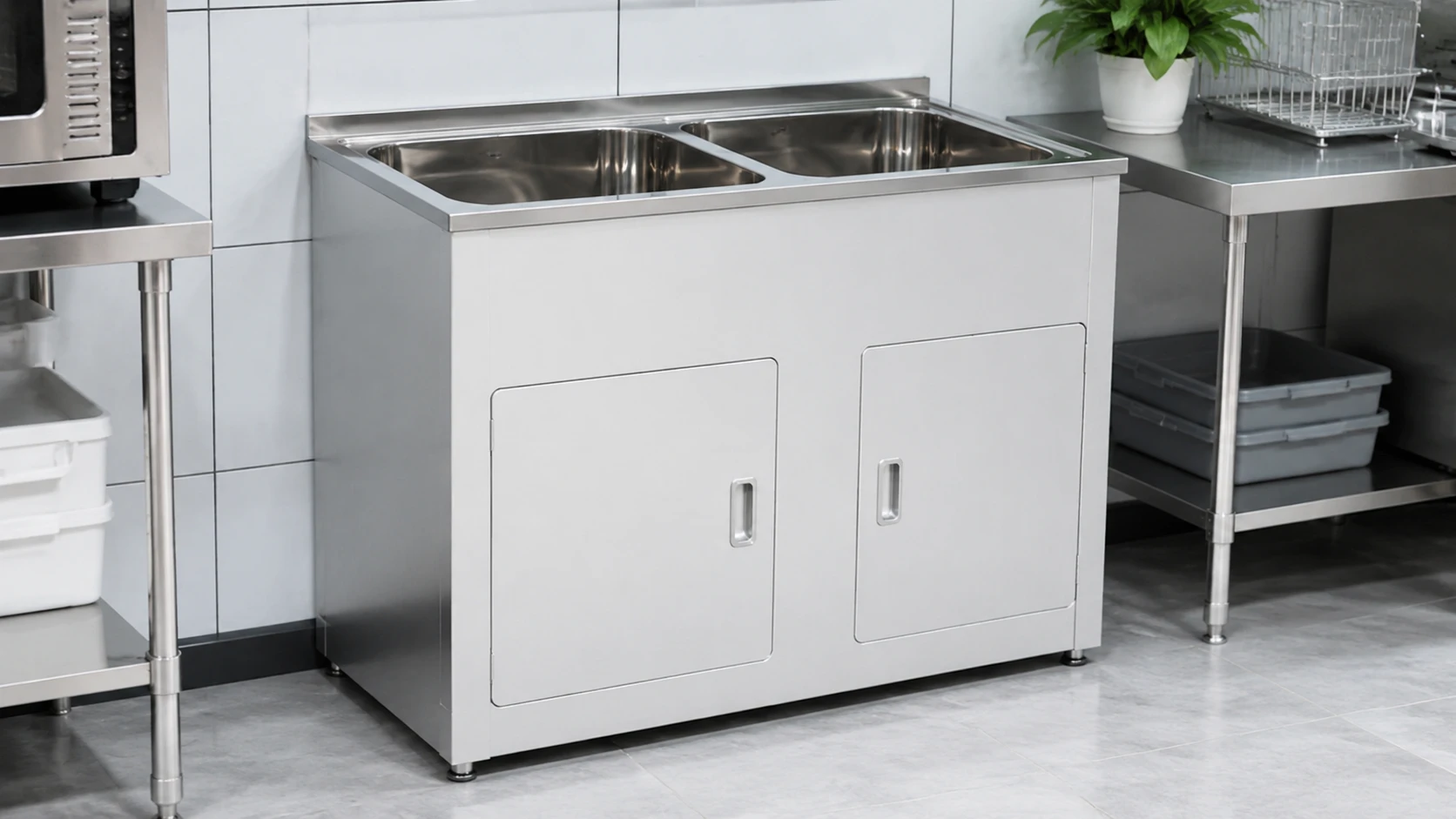
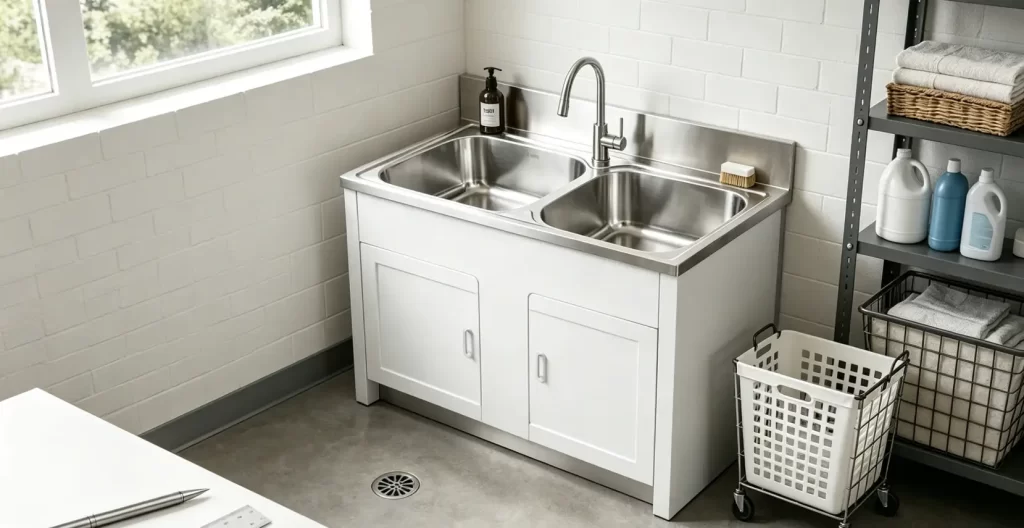
When project buyers specify a laundry room sink with cabinet, the decision should go well beyond appearance or basic storage. In facility projects, this type of unit combines sink dimensions, cabinet structure, plumbing coordination, installation conditions, and daily usability in one specification. If those details are not defined early, problems often show up later through layout conflicts, poor maintenance access, awkward cabinet use, or inconsistent installation results across multiple units. That is why a well-prepared specification is not just a purchasing detail. It is part of project planning.
Why Standard Units Fall Short
Many buyers start with a simple assumption: if the sink looks practical and the cabinet provides storage, the unit should be suitable for the job. In project environments, that approach is often too narrow. A laundry room sink with cabinet is not only a bowl with a base underneath. It is a combined fixture that affects workflow, movement space, plumbing access, cleaning routines, and the long-term usability of the room.
In residential developments, staff housing, dormitory projects, and utility support areas, the same product can perform very differently depending on how the room is laid out and how the space is used. A unit that seems acceptable in a catalog may still create avoidable problems once installation conditions are checked on site. That is why project buyers usually get better results when they specify performance-related details from the start rather than relying on a generic model description. The most practical way to do that is to define the use case first, then confirm sink size, cabinet requirements, material details, installation conditions, and finally whether a standard or custom configuration is the better fit.
Start With the Use Case
The first step in specifying the unit is to define how and where it will actually be used. This matters because the right specification for an apartment utility room may not work for a maintenance area, and a unit intended for occasional rinsing may be completely wrong for repeated daily use.
A few questions shape the specification early:
- Where will the unit be installed?
- How frequently will it be used?
- Who will use it?
- What tasks will it need to handle?
- Is lower storage genuinely useful in this setting?
- Will the same specification be repeated across many rooms?
These questions may seem straightforward, but they influence nearly every decision that follows. Apartment projects often prioritize compact fit and a cleaner overall look. In staff housing, durability and ease of cleaning may matter more than enclosed storage. Service rooms, by contrast, may benefit more from accessible plumbing and open space below the sink than from a fully enclosed cabinet.
If the use scenario is not defined first, buyers often end up selecting by appearance, nominal size, or unit price alone. That usually leads to a weaker specification and more compromises later in procurement or installation. Once the use case is clear, the next step is to confirm sink size based on task needs and room limitations.
How Sink Size Affects Use
Once the use case is defined, the next step is to confirm sink dimensions that match both daily tasks and layout constraints. A sink that fits the drawing does not always work well in daily use. Bowl width, length, and depth directly influence what users can wash, how easily water can be contained, and whether the sink feels practical once the room is operational. At this stage, buyers should focus on usable sink size rather than catalog dimensions alone, because a unit that fits the plan may still feel restrictive in real operation.
Bowl Width and Length
A narrow bowl may save space on paper, but it can quickly become restrictive in use. If users need to rinse cleaning tools, wash larger items, or manage repeated utility tasks, limited bowl dimensions reduce convenience and can make the unit feel undersized. On the other hand, a larger bowl is not automatically the better choice. In compact utility rooms, increasing sink size too far can reduce movement space and create conflicts with adjacent fixtures or cabinets.
Depth and Splash Control
Depth also deserves careful attention. A deeper bowl can improve splash control and make certain washing tasks easier, especially in shared or higher-use rooms. But depth has to be balanced with accessibility, cabinet structure, and overall installation height. If the bowl is deep but the surrounding layout is tight, everyday use may feel less comfortable than expected.
For buyers comparing laundry sink usability features, the key issue is not whether the sink is simply “large” or “small.” It is whether the bowl dimensions match actual tasks while still fitting the room properly.
Cabinet Design Matters
After the sink size is confirmed, buyers should define what the cabinet needs to do in practical project use. One of the most common mistakes in this category is treating the cabinet as a secondary feature. In project supply, cabinet design is part of the functional specification. It affects storage value, plumbing coordination, maintenance access, moisture management, and the long-term practicality of the installation. Once sink dimensions are confirmed, the next step is to decide what the cabinet needs to do in practical use, rather than treating storage as a default add-on.
A closed cabinet may create a cleaner visual result and help conceal pipes and stored items. That can be useful in apartment projects or utility rooms where a more finished appearance is preferred. But enclosed storage is not always the easiest solution in spaces exposed to moisture, cleaning chemicals, or frequent service work. If ventilation and internal clearance are not considered, the cabinet can become less practical over time.
Key Cabinet Details
Buyers should usually clarify the following points before finalizing the unit:
- Open or enclosed lower storage
- Door style and door swing clearance
- Internal space around plumbing components
- Base construction and floor contact
- Access for cleaning and future repairs
- Moisture exposure conditions in the room
Cabinet depth is especially important in narrower rooms. It may seem minor, but it can directly affect usable floor space, how easily doors open, and whether plumbing fits without forcing awkward internal cutouts. In projects where layout consistency matters across multiple units, cabinet proportions also influence the overall fit-out quality.
Where buyers need a broader view of utility room sink planning, the most useful approach is to assess the cabinet and sink as one integrated unit rather than two separate features.
Specify Material Details
With size and cabinet function defined, the next step is to lock in material and construction details. In B2B procurement, saying “stainless steel” is rarely enough. Material and construction details should be included clearly in the specification, especially when buyers want consistency across bulk orders or need the unit to perform reliably in demanding environments.
The sink bowl material should be defined by grade, not only by general category. Surface finish should also be stated if appearance, cleanability, or scratch visibility matters to the project. Thickness, edge finishing, and corner treatment can all influence durability, user safety, and the perceived quality of the delivered product.
The same principle applies to the cabinet. Buyers sometimes focus on the bowl but leave the cabinet construction too vague. That creates risk because two units described in similar sales language may still differ substantially in rigidity, finishing quality, access design, and long-term resistance to moisture or corrosion.
Key Construction Points
A stronger specification often includes:
- Stainless steel grade
- Material thickness range
- Surface finish
- Welded or assembled construction
- Edge and corner treatment
- Drainage outlet configuration
- Faucet hole layout
- Cabinet structure and internal clearance
If these details are not confirmed, the delivered product may still meet a broad description while falling short of project expectations. Buyers reviewing laundry sink cabinet buying factors often find that construction clarity matters as much as visible design.
Common Installation Oversights
After the product itself is defined, installation and plumbing conditions should be checked before the specification is finalized. Many procurement problems do not come from poor manufacturing. They come from incomplete installation planning at the specification stage. This is especially true for a laundry room sink with cabinet, because the footprint includes more than the bowl itself.
Overall width and depth need to be checked against the room, of course, but buyers should also confirm the relationship between the cabinet and the plumbing positions. If drain location, water supply alignment, or wall outlet placement is ignored, even a well-made unit can become difficult to install properly.
Check These Early
- Overall footprint, not just sink bowl size
- Plumbing entry and drain position
- Faucet hole number and placement
- Wall clearance and door opening space
- Access for trap connection and service work
- Height coordination with surrounding elements
A standard unit may look sufficient in a catalog, but still create fitting problems once actual plumbing locations are checked. Likewise, enclosed cabinet storage may improve appearance while making maintenance access more difficult if service openings are not considered in advance.
This is one reason experienced buyers treat installation data as part of the product specification rather than a separate site issue. If plumbing access is not considered early, cabinet usability may be reduced from day one.
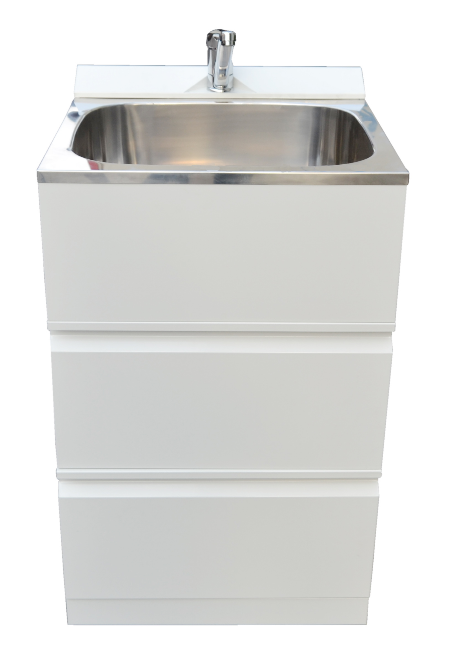
Standard vs Custom
Once the main specification points are clear, buyers can decide whether a standard unit is suitable or a custom configuration is the better fit. Standard configurations often work well in repeatable layouts. If room sizes are consistent, plumbing locations are predictable, and the same unit will be installed across multiple spaces, a standard model can simplify procurement, shorten decision cycles, and make installation easier to manage.
That said, standard does not always mean suitable. In many projects, custom specification becomes the better option not because it is more impressive, but because it reduces mismatch.
When Standard Works
- Room dimensions are consistent
- Plumbing points follow a repeatable layout
- Storage needs are basic
- Installation conditions are straightforward
- Procurement speed is a priority
When Custom Makes Sense
- Room width is limited
- Cabinet depth must align with adjacent built-ins
- Plumbing positions are unusual
- Storage requirements vary by project
- A consistent appearance is needed across a development
- Standard dimensions would create wasted space or service difficulty
Custom does not automatically create a better result. It creates a better result when the layout, plumbing, or usage conditions require a closer fit. For buyers sourcing from an experienced laundry room sink with cabinet manufacturer, the practical question is whether standard sizing already solves the problem or whether a project-specific cabinet configuration will reduce compromises later.
Final Specification Check
- Confirm the use scenario and user frequency
- Verify sink width, length, and depth
- Define cabinet storage and plumbing clearance
- Specify material grade and construction details
- Check faucet, drain, and installation conditions
- Decide whether standard or custom is the better fit
Better Specs, Better Outcomes
For project buyers, the real value of a well-specified laundry sink cabinet is not limited to the product itself. It affects sourcing accuracy, installation consistency, maintenance practicality, and user satisfaction over time. Manufacturers with strong stainless steel fabrication experience, including suppliers such as Xinhe, are most useful when they can support clear specifications that match real project conditions.
FAQ
1: What should be included in a laundry room sink with cabinet specification?
A complete specification should cover six core areas: use case, sink dimensions, cabinet configuration, material and construction details, plumbing and installation conditions, and the choice between standard and custom sizing.
2: When should project buyers choose a custom laundry room sink with cabinet?
Custom is usually the better choice when room size is limited, plumbing locations are unusual, cabinet depth must match other built-ins, or the project needs a consistent fit across multiple layouts.
3: How do sink and cabinet dimensions affect project installation?
Dimensions affect more than fit. They influence movement space, door clearance, plumbing access, maintenance convenience, and how well the unit works within the overall utility room layout.