Home > Blog > Home Kitchen Products >
Stainless Laundry Sink Buyer’s Guide: 5 Labor-Saving Features
In the world of facility management and industrial procurement, the difference between a profitable operation and a budget-draining one often lies in the details of your equipment. For those managing commercial laundries, hotels, hospitals, or multi-family housing, the stainless laundry sink is not just a plumbing fixture—it is a critical workstation.
While many procurement officers focus on the initial purchase price, seasoned professionals understand the concept of Total Cost of Ownership (TCO). In a commercial setting, labor accounts for up to 60-70% of total operating expenses. Many facility managers often ask, “is stainless steel good for a laundry sink” when considering long-term durability; the answer lies in its ability to resist corrosion while streamlining maintenance. A poorly designed sink increases the time spent on manual scrubbing, slows down drainage, and leads to worker fatigue, which ultimately erodes your bottom line.
1. Deep Single Bowl and High-Volume Design: Maximizing Batch Processing
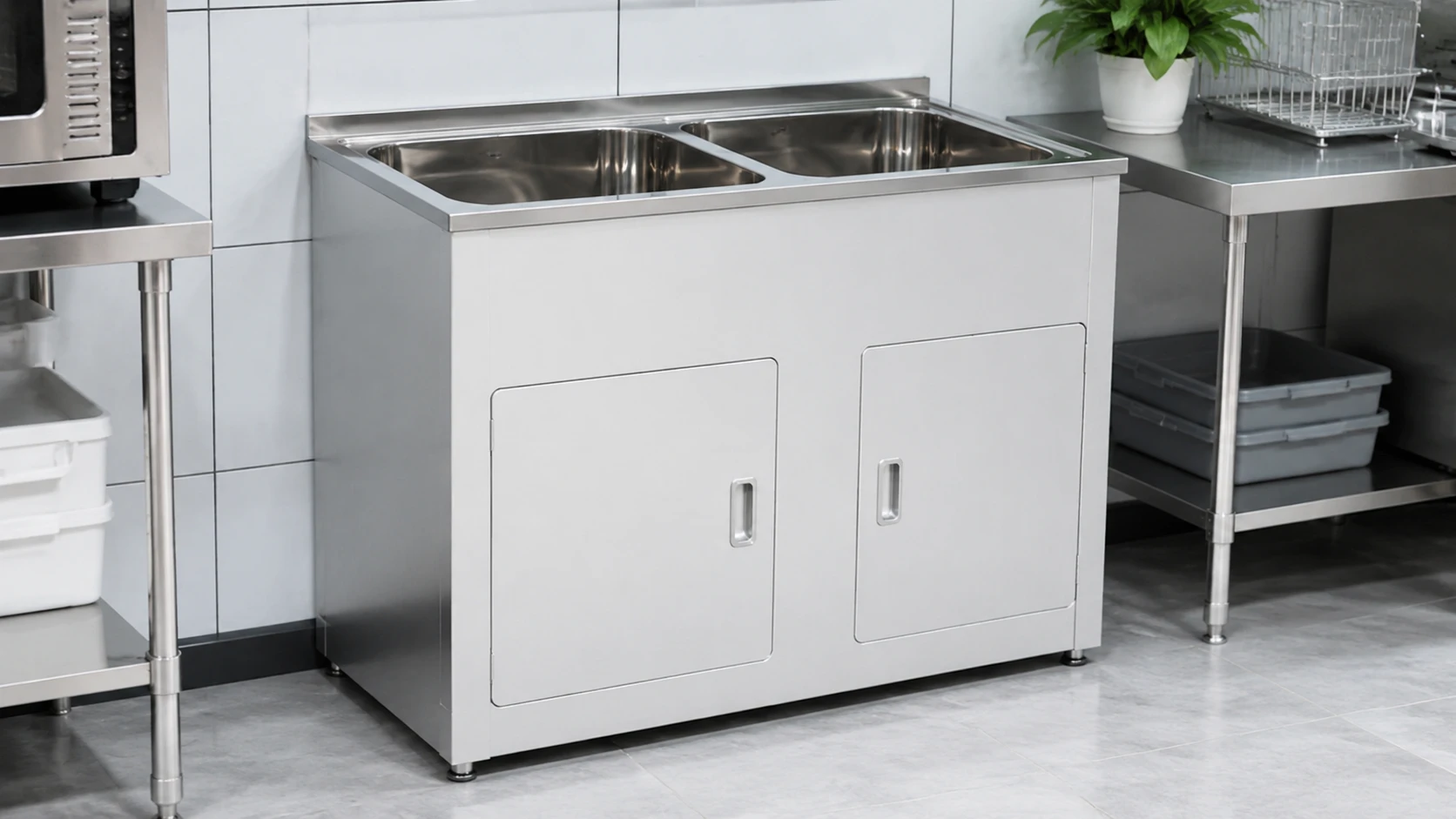
In commercial laundry operations, volume is the primary driver of efficiency. A standard residential sink might suffice for a single shirt, but in an industrial environment, the ability to soak multiple linens or large industrial mops simultaneously is a game-changer. High-capacity models, such as a 90L double sink laundry cabinet, allow staff to manage heavy loads without constant interruptions.
How to Quantify Time Savings from “Large Volume”
The primary benefit of a deep commercial laundry sink is the reduction of “batch cycles.” If a sink is too shallow, staff must divide a single load of stained linens into three or four separate soaking sessions.
Consider this: If a staff member spends 5 minutes preparing and moving each batch, and a large laundry sink stainless steel model allows them to combine three batches into one, you save 10 minutes per cycle. In a facility running 20 cycles a day, that equates to over 33 hours of saved labor per month. High-capacity bowls allow for high-volume processing without the constant risk of overflow, keeping the workflow steady and predictable.
Material Thickness (Gauge) and Structural Integrity
When dealing with the weight of 20-30 gallons of water plus heavy textiles, the structural integrity of the stainless steel laundry tub sink is paramount. For project contractors, understanding why choose a 16-gauge stainless steel sink over 18-gauge is critical
- 16-Gauge vs. 18-Gauge: We always recommend heavy-duty stainless steel gauge (16-gauge). It is approximately 25% thicker than 18-gauge.
- Why it matters: Thicker steel resists bowing and “oil-canning” (the popping sound thin metal makes under pressure). A sturdy sink prevents the micro-vibrations that lead to seal failure over time. For a project contractor, specifying 16-gauge ensures fewer warranty claims and higher client satisfaction.
2. Integrated Scrub Board and Pre-treatment Zones
Stain removal is often the most labor-intensive part of laundry management. Without an integrated solution, workers often resort to makeshift tools or separate plastic boards that shift and slide, creating safety hazards and wasting time.
Built-in Scrub Board vs. External Tools
A stainless steel laundry trough with a built-in scrub board eliminates the “tool hunt.” When the scrubbing surface is an organic part of the sink’s geometry, the transition from soaking to scrubbing is instantaneous.
From a supplier evaluation perspective, integrated designs are superior because:
- Hygiene: There are no seams or cracks where bacteria can hide between a board and the sink.
- Asset Management: External scrub boards are frequently lost, broken, or stolen in high-traffic commercial environments.
- Durability: A 304 stainless steel integrated board will last as long as the sink itself, unlike plastic or wooden alternatives.
Ergonomic Angles and Texture Design
The effectiveness of a scrub board isn’t just about the ridges; it’s about the physics of the angle. An ergonomically designed scrub board reduces the strain on the worker’s wrists and lower back. By optimizing the pitch of the scrubbing surface, the sink allows gravity to assist the worker, requiring less physical force to remove stubborn stains. This reduces the risk of repetitive strain injuries (RSIs), which are a major hidden cost in commercial laundry operations.
3. Multi-Functional Backsplash and Integrated Workstations
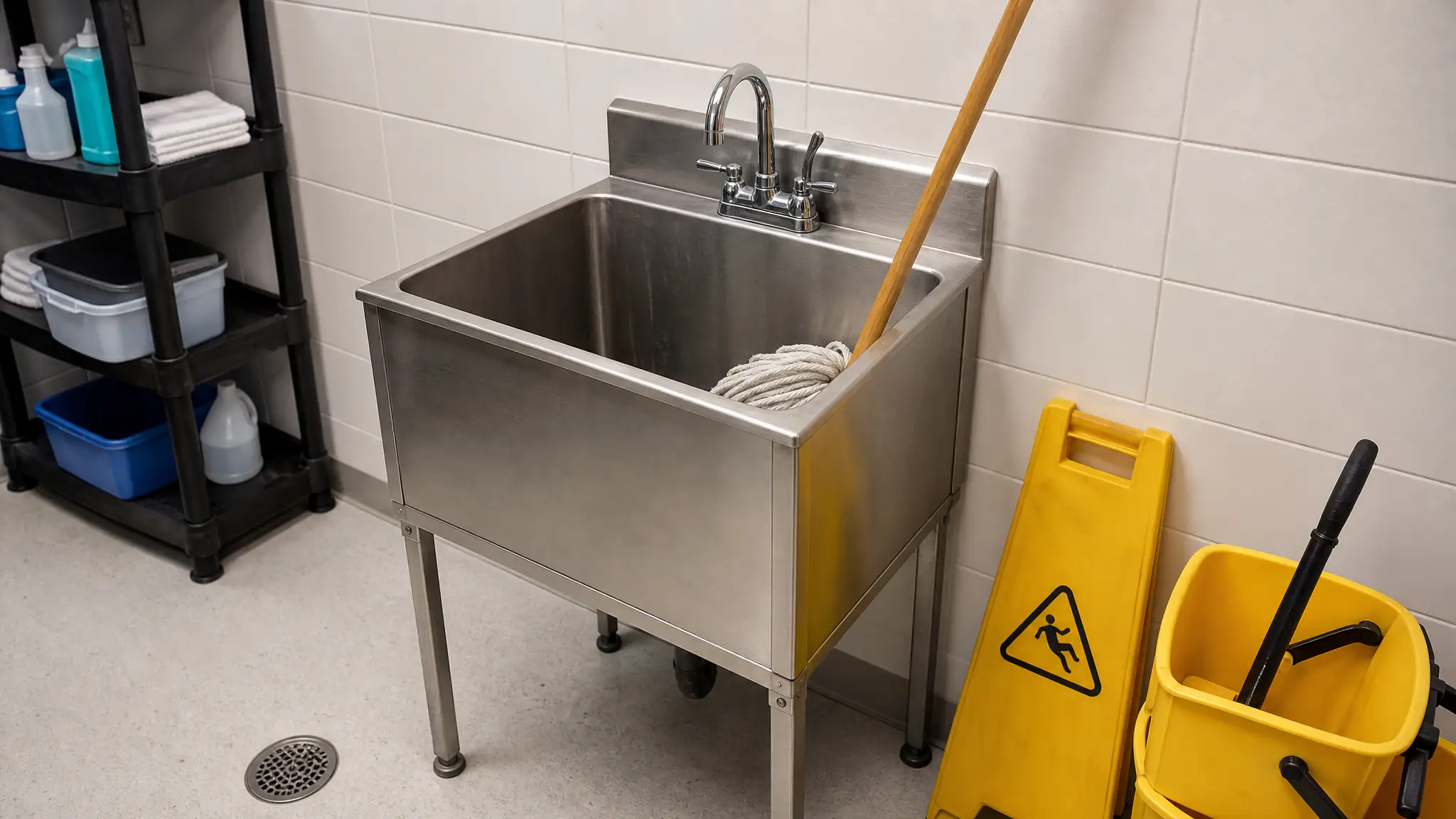
The area surrounding the stainless laundry sink is often a “dead zone” of wasted space and water damage. An integrated backsplash transforms the sink from a basin into a comprehensive utility sink workstation.
The Backsplash as a “Tool Wall”
A high-quality stainless sink with backsplash serves two purposes. First, it protects the facility’s walls from moisture, preventing mold growth and the need for frequent repainting. In hospitals or food-service-related laundries, this is a non-negotiable for hygienic laundry room design.
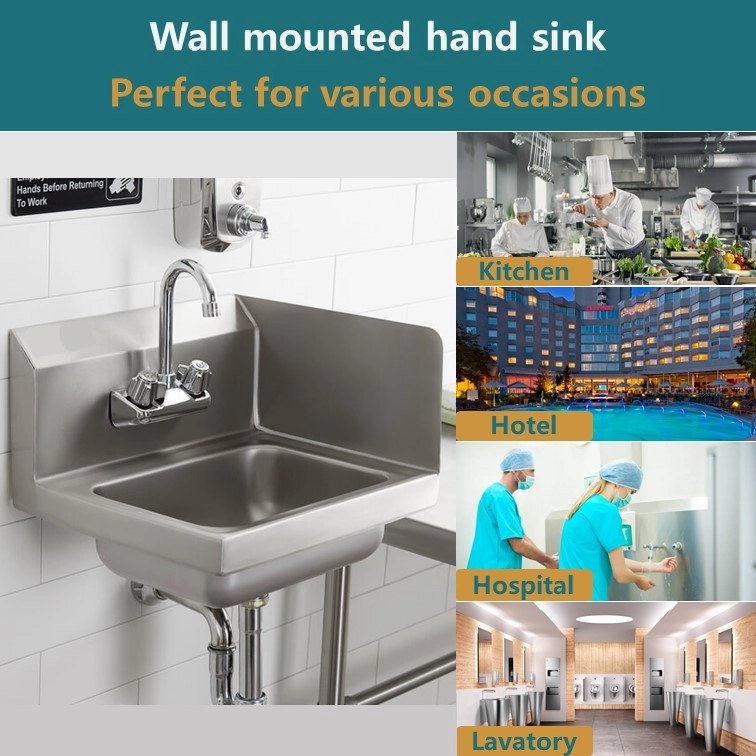
Secondly, many commercial models include pre-drilled holes or integrated shelving in the backsplash. This allows for the organized storage of:
- Pre-treatment chemicals and spray bottles.
- Scrub brushes and safety gloves.
- Industrial-grade faucets.
Keeping these items within arm’s reach minimizes “motion waste”—the seconds spent walking to a cabinet or shelf that add up to hours of lost productivity over a year.
Seamless Welding: The Gold Standard for Durability
When evaluating a commercial stainless sink, look for seamless welding. Xinhe utilizes advanced welding techniques to ensure that the transition between the bowl and the backsplash is a single, continuous piece of metal. This is one of the many reasons why Xinhe offers the commercial stainless steel sink solutions suppliers love most, as it prevents leaks that could damage the building’s sub-structure.
4. Heavy-Duty Drain Systems and Accessories
The “sink full of water” is a bottleneck. In a busy facility, waiting for a sink to drain is literally watching money go down the hole—but too slowly.
Large Diameter Drains: Time is Money
Most residential sinks use a 1.5-inch or 2-inch drain. A professional stainless laundry sink should utilize a large diameter sink drain (typically 3 to 3.5 inches).
- Drainage Speed: A 3-inch drain can move water nearly twice as fast as a 2-inch drain.
- The Labor Impact: If a staff member saves 2 minutes of “waiting time” per drain cycle, and they drain the sink 15 times a day, that is 30 minutes of idle time reclaimed.
Industrial Grade Valves and Filter Baskets
In commercial settings, debris like lint, coins, or rags frequently enter the system. A clog-resistant design is essential.
- Metal vs. Plastic: Always specify a heavy-duty drain assembly made of brass or stainless steel. Plastic lever handles often snap under the heavy use common in hotels and industrial plants.
- The Filter Basket: A high-capacity, stainless steel crumb cup or filter basket prevents clogs from reaching the main plumbing line, avoiding expensive visits from the plumber and facility downtime.
5. ADA Compliance and Ergonomic Details
Modern B2B procurement is increasingly focused on “Universal Design.” An ADA compliant laundry sink is no longer just a legal requirement for certain projects; it is a strategic choice for efficiency.
ADA Height and Fatigue Reduction
Standard industrial sinks are often quite high, which can cause shoulder strain, or too low, causing back pain. An ADA height (typically a 34-inch rim height with specific knee clearance) provides a comfortable working position for a broader range of the workforce.
When workers are comfortable, they work faster. Reducing physical fatigue directly correlates to a decrease in errors and an increase in the number of items processed per shift. This focus on workroom ergonomics is a key pillar of long-term operational success.
Hands-Free Controls: Faucets and Valves
To further enhance the utility sink workstation, consider adding a hands-free commercial faucet. In a laundry environment, workers often have their hands full of soiled or wet linens.
- Knee Valves or Foot Pedals: These allow the worker to control water flow without letting go of the fabric.
- Hygiene Benefits: It significantly reduces cross-contamination, as workers don’t need to touch faucet handles with “dirty” hands. This is especially vital in healthcare settings where infection control is the top priority.
Procurement Decision Checklist
When you are ready to evaluate a supplier for your next project, use this technical specification table to ensure you are getting a labor-saving solution rather than just a metal box.
Key Specifications Comparison Table
| Feature | Standard “Economy” Sink | High-Efficiency Commercial Sink | B2B Impact |
|---|---|---|---|
| Material Gauge | 18-20 Gauge (Thin) | 16-Gauge (Heavy Duty) | Durability & Noise Reduction |
| Bowl Depth | 8-10 Inches | 12-14+ Inches | Batch Processing Speed |
| Welding | Spot welded / Bolted | Fully Seamless / Ground | Hygiene & Leak Prevention |
| Drain Diameter | 1.5 – 2 Inches | 3 – 3.5 Inches | Reduced Idle Time |
| Scrub Board | None or Plastic Add-on | Integrated Stainless | Workflow Fluidity |
| Compliance | Standard only | ADA Compliant Options | Workforce Versatility |
Pre-Installation Considerations
Before finalizing your commercial sink buying decision, ensure your facility’s plumbing infrastructure can handle the upgrades. For instance, if you choose a large diameter sink drain, ensure the floor drain can accommodate the increased flow rate to avoid localized flooding.
Conclusion
In the competitive landscape of commercial facility management, every second of labor saved is a direct contribution to the bottom line. Xinhe understands that B2B buyers aren’t just looking for products; they are looking for solutions that withstand industrial use while making the worker’s job easier.
Ready to upgrade your facility’s efficiency?
Contact our technical sales team at Xinhe today for a bulk quote or a customized project consultation. Let us help you design a laundry solution that works as hard as you do.
FAQ
Q1: Which feature should a high-volume laundromat prioritize first?
For high-volume environments, batch washing efficiency is king. Prioritize bowl volume and drainage speed. If the water doesn’t leave the sink quickly, the next load can’t start.
Q2: 304 vs 316 stainless steel for laundry: Which is the better investment?
For 90% of commercial laundries, 304 stainless steel is the industry standard and offers excellent corrosion resistance. However, if your facility uses high concentrations of bleach or harsh acids (common in some industrial textile processing), 316 stainless steel offers superior chemical resistance and is worth the premium.
Q3: Do these “labor-saving” features cost significantly more upfront?
While a heavy-duty stainless steel gauge sink with integrated features might cost 20-30% more than a basic model, the commercial laundry sink ROI is usually realized within the first six months through labor savings and reduced maintenance.
Q4: How do I maintain the sink to ensure it lasts 20+ years?
Stainless steel is “stainless,” not “stain-proof.” Regular cleaning with a chloride-free cleaner and ensuring that heavy metal objects (like carbon steel tools) aren’t left sitting in the sink will prevent galvanic corrosion and pitting.