How to Source a Commercial Industrial Sink: The Professional Standard
If you are reading this, you probably aren’t looking for a “home improvement” project. You are likely a project contractor, a heavy-duty importer, or a procurement manager for a massive hospital or hotel chain. In your world, a sink isn’t just a place to wash hands; it’s a critical piece of infrastructure. When a commercial industrial sink fails on a job site or in a high-traffic facility, it doesn’t just cause a puddle—it halts operations, triggers health code violations, and eats into your margins.
As a manufacturer, we’ve seen where buyers save money only to regret it six months later when the rust spots start appearing or the welding seams crack under pressure. Our goal here isn’t just to sell you hardware, but to share the technical reality of what makes a commercial industrial sink a 20-year asset versus a 2-year headache.
Why Sourcing Matters
The “cheapest” option often ends up being the most expensive. If you’re a wholesaler, you know that a high return rate on a container of sinks will kill your reputation faster than anything else. If you’re a contractor, a sink that arrives warped or doesn’t meet NSF (National Sanitation Foundation) standards can delay a project’s final inspection by weeks.
A true commercial industrial sink is an engineering marvel in disguise. It has to handle acidic cleaning chemicals, the physical impact of 50-pound industrial parts, and the constant moisture that would turn a standard residential unit into a pile of rust in months. When we talk about commercial facilities, we are talking about environments that never sleep. Your equipment shouldn’t either.
1. Metallurgy 101
The Difference Between “Stainless” and “Strong”
The term “stainless steel” is thrown around loosely in marketing brochures, but in the factory, we look at the chemistry. For high-volume commercial kitchen sink production, we generally deal with two main players: 304 and 430.
- 304 Stainless Steel: This is the gold standard for stainless steel commercial sinks. It contains a high percentage of nickel and chromium. Why does this matter? Because it creates an invisible “passive layer” that heals itself. If you scratch a 304 sink, the chromium reacts with oxygen to reform a protective film. This is non-negotiable for medical facilities or high-acid food prep areas.
- 430 Stainless Steel: You’ll see this in many budget-friendly ss sink commercial options. It’s magnetic and has zero nickel. While it’s okay for dry storage or side tables, using it for a primary wash basin is risky. Over time, especially with exposure to salt or harsh detergents, 430 will develop “pitting”—tiny holes that eventually lead to leaks.
When you are placing a bulk order, ask for the material certs. If a supplier is offering a price that seems too good to be true for a commercial industrial sink, they are likely cutting corners on the nickel content.
The Gauge: Thickness is Silence
We often talk about “gauge” (the thickness of the steel). In commercial facilities, 16-gauge is the sweet spot.
- 18-Gauge: Standard for light use.
- 16-Gauge: The heavy-duty choice. It’s about 25% thicker than 18-gauge.
- 14-Gauge: Extreme industrial use (think heavy machinery parts washing).
Thicker steel doesn’t just resist dents; it’s quieter. A thin sink vibrates and echoes every time a faucet is turned on or a pot is dropped. In a busy kitchen or lab, that noise adds to the stress of the staff. A 16-gauge commercial industrial sink feels solid, sounds dampened, and communicates quality to your clients.
2. Configuration: Designing for Workflow, Not Just Space
The layout of your sink determines the speed of your entire operation. This is where most procurement mistakes happen. People buy for the space they have, rather than the work that needs to get done.
The 3-Compartment Rule
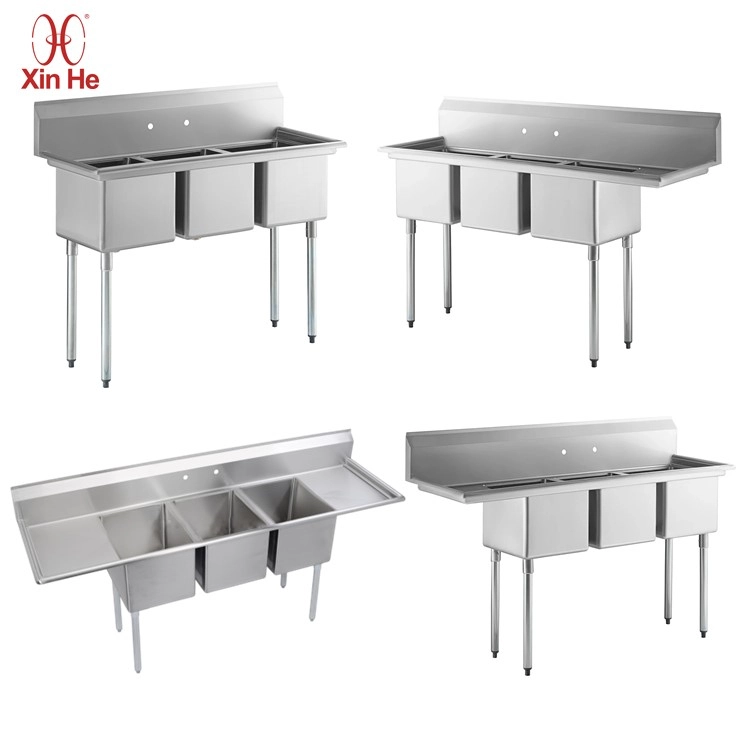
In the food and beverage sector, the 3 compartment sink is the king of compliance. Most local health codes aren’t suggestions—they are law. You need one basin for washing, one for rinsing, and one for sanitizing. If you are a contractor designing a new restaurant, don’t try to squeeze in a double sink to save a foot of space. You’ll just end up having to rip it out when the inspector denies the permit.
Single and Double Compartments
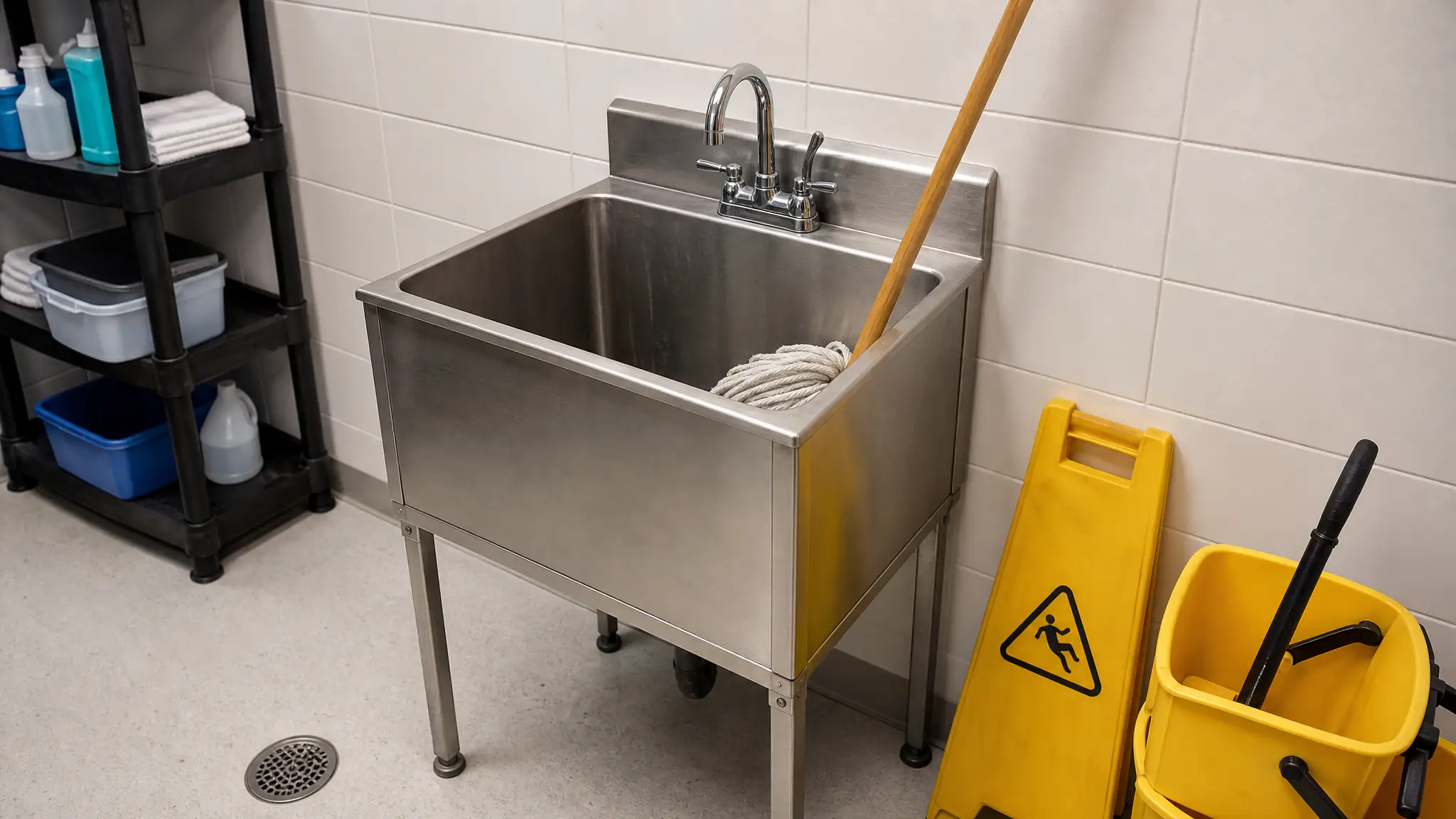
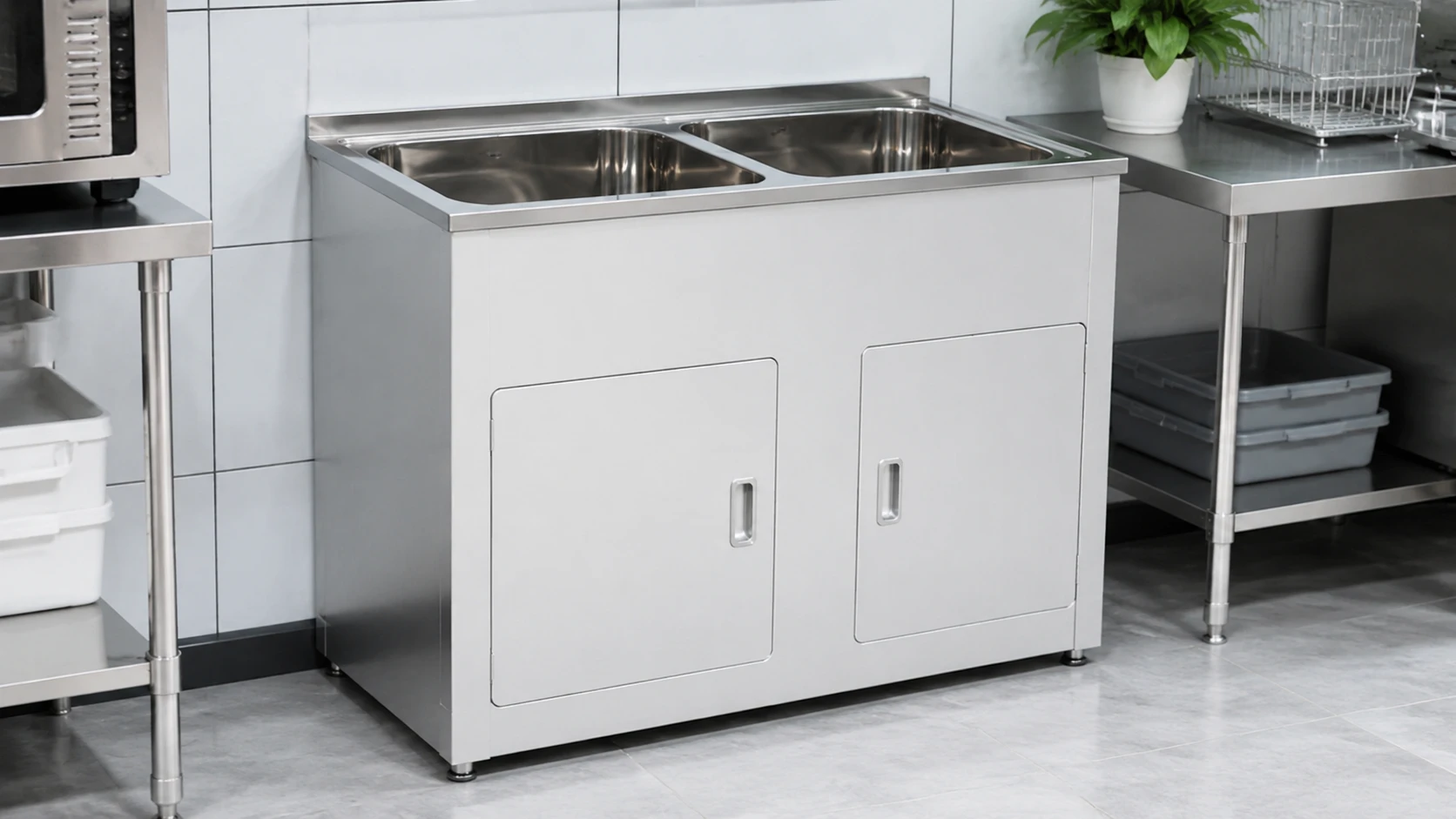
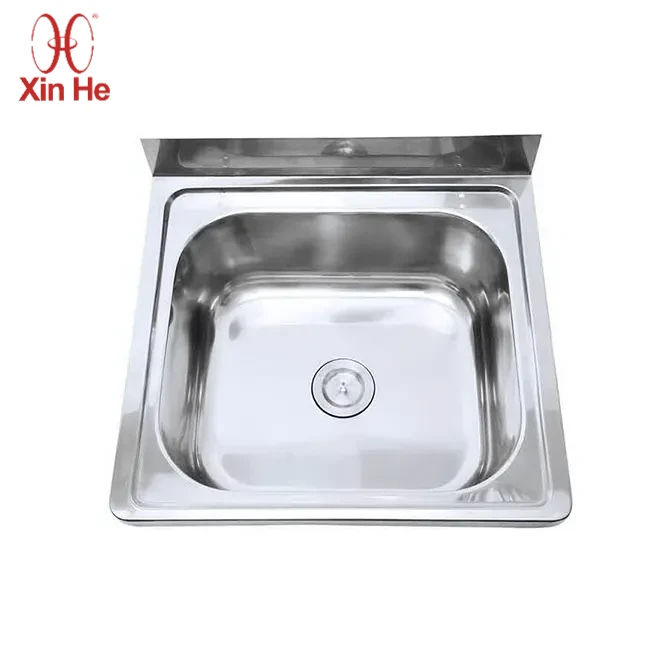
A single compartment sink is perfect for dedicated utility tasks—filling mop buckets, washing down specific industrial components, or as a dedicated vegetable prep station. Double compartment sinks are the versatile workhorses of smaller commercial facilities where space is at a premium, allowing for a “soak and scrub” workflow without taking up a 10-foot wall.
Drainboards and Backsplashes
As a manufacturer, I always recommend sinks with integrated drainboards. Why? Because water on the floor is a slip hazard and a liability. A commercial kitchen sink with a 24-inch drainboard allows items to air-dry within the footprint of the sink itself. And don’t overlook the backsplash. A 10-inch backsplash isn’t just for aesthetics; it protects your walls from moisture that leads to mold. In many commercial industrial sink designs, we also include a “drip guard” edge—a slightly raised lip around the perimeter that keeps water from running off the front of the sink and onto the user’s shoes.
3. Industrial vs. Commercial
While we often use the terms interchangeably, there is a technical nuance that B2B buyers should understand.
- Commercial Sinks: These are usually found in hospitality, education, and retail. The focus is on hygiene, ease of cleaning, and high-frequency use. They need to look good and be easy to sanitize.
- Industrial Sinks: These are the tanks. They might be used in a chemical plant, a shipyard, or a factory floor. These commercial industrial sink units often feature reinforced legs, extra-thick welding seams, and perhaps a specialized finish to resist specific industrial solvents.
For our partners who are importers, understanding this distinction helps you market to the right niche. A factory manager doesn’t care if the sink has a “brushed finish” that looks pretty; they care if the legs can support a 200-pound engine block being lowered into the basin.
4. Specialized Solutions for Specialized Needs
Sometimes a standard basin won’t cut it. In the last few years, the demand for specialty compartment sinks has skyrocketed, driven by new safety regulations and shifting business models.
Portable and Medical Solutions
Portable hand sinks have gone from being a “festival item” to a requirement for construction sites, temporary medical clinics, and outdoor dining areas. These units are self-contained, often with built-in water tanks and heaters. For a wholesaler, stocking portable hand sinks is a smart move as more cities mandate handwashing stations at every entry point of a public facility.
Restroom and Public Facility Sinks
In high-traffic areas like airports or stadiums, the commercial restroom sinks need to be “vandal-proof.” This means concealed plumbing, heavy-duty mounting brackets, and a design that doesn’t have small crevices where grime can build up. We manufacture these with a focus on “high-speed maintenance”—the faster a janitorial crew can wipe down a sink, the lower the operational cost for the facility.
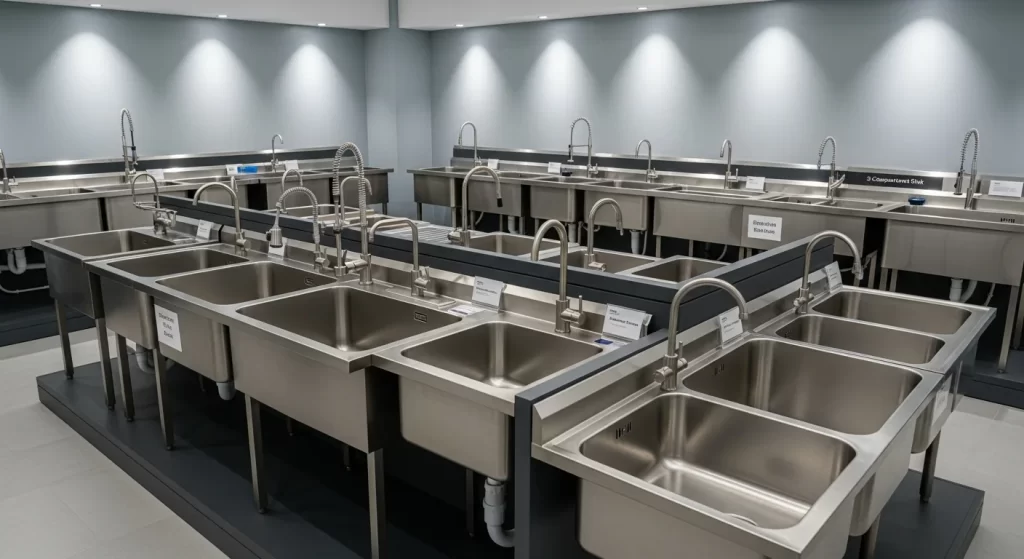
5. The Manufacturer’s Secret: Welding and Finishing
This is where the “cheap” sinks are separated from the professional ones. There are two ways to make a sink: pressing and welding.
- Pressed Sinks: A single sheet of steel is “stamped” into a mold. These are cheaper and have a seamless look inside the bowl, but the steel becomes thinner at the bottom corners where it has been stretched.
- Welded Sinks: Multiple sheets are cut and welded together. This allows for much deeper basins and ensures the steel remains a consistent gauge throughout the entire unit. In a high-quality commercial industrial sink, you’ll see “coved” (rounded) corners that are welded and then ground down to a smooth, mirror-like finish.
If you see a sink with sharp 90-degree corners, run. Those corners are a nightmare to clean and are the first place bacteria will start a colony. A true professional ss sink commercial unit will have “R10” or “R20” rounded corners that make it easy to swipe a sponge through in one motion.
6. Sourcing for the Long Haul: Advice for Importers and Wholesalers
If you are a B2B buyer, your reputation is tied to the quality of the product you provide. When you’re evaluating a manufacturer, look for more than just a price list.
- Customization (OEM/ODM): Can the factory change the drain placement? Can they add a custom hole for a specialized sprayer? A manufacturer that can adapt its commercial industrial sink designs to your specific market needs is a partner, not just a vendor.
- Packaging: This sounds boring until you receive a container of sinks where 20% are dented because the boxes were too thin. We use reinforced corner guards and high-density foam because we know that a “small dent” on a stainless steel sink is almost impossible to fix perfectly.
- Compliance Support: Does the manufacturer understand the plumbing codes in your country? Whether it’s NSF for the US, CE for Europe, or WaterMark for Australia, having the right certifications on your commercial kitchen sink is what allows you to bid on government contracts and large-scale hospital projects.
7. Maintenance: Protecting the Investment
We always tell clients: “Stainless steel is stain-less, not stain-proof.”
If you want your commercial industrial sink to look new five years from now, you have to avoid the “bleach trap.” Many cleaning crews think more bleach equals more clean. In reality, chlorine is the enemy of stainless steel. If left to sit, it will eat through the protective layer and cause rust.
Instead, we recommend:
- Daily Rinsing: Never let food scraps or chemicals sit in the basin overnight.
- Directional Cleaning: If your sink has a “brushed” finish, always scrub in the direction of the grain.
- The “Dry” Rule: If possible, wipe the sink dry at the end of the shift. This prevents mineral buildup from “hard water” that makes the steel look dull and cloudy.
By educating your end-users on these simple steps, you reduce warranty claims and ensure the stainless steel commercial sink remains a glowing advertisement for your business.
Conclusion
At the end of the day, a good commercial industrial sink is one you never have to think about. It just works. It stays clean, it stays sturdy, and it stays out of the way. As a manufacturer, that’s our goal—to build something so reliable that it becomes an invisible, essential part of your success.
FAQs
What is the 3 sink system?
The 3 sink system uses three compartments in commercial kitchen sinks, as required by most sanitation codes. Dishes are washed in the first basin, rinsed in the second, and sanitized in the third to ensure thorough cleaning.
Which types of commercial sinks are most common?
The most common types of sinks are single, double, and triple compartments. In high-volume commercial kitchens, three-compartment sinks are considered among the essential types of sinks that are standard. The best choice among various types of sinks depends on kitchen size, workflow, and local health codes for dishwashing and food prep, including the different types of sinks available.
Are there regulations to follow when installing commercial industrial sinks?
Yes, strict regulations apply. Local sanitation codes specify sink compartments, separate handwashing stations, and plumbing requirements for commercial facilities. Compliance is essential to avoid fines and pass health inspections when installing a commercial industrial sink.