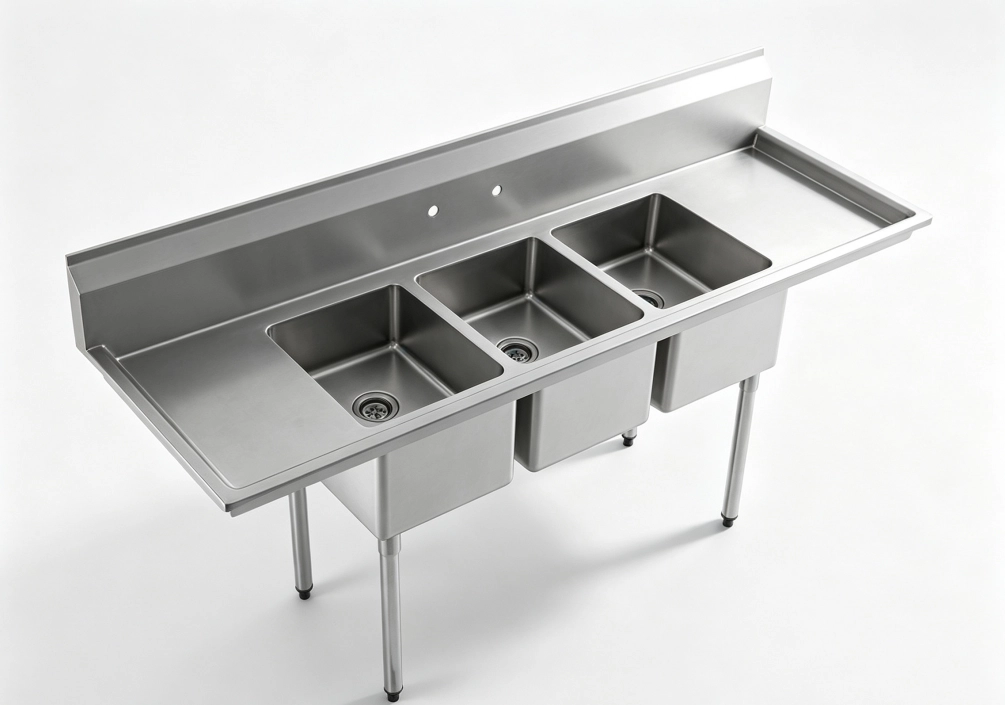
Three Compartment Sink Water Temperature: Wash, Rinse, and Sanitize Requirements
A health inspector pulls a probe thermometer at your three compartment sink to check one thing first: water temperature. Miss the mark in any of the three compartments and the whole warewashing cycle fails. That leaves your operation exposed to point deductions, fines, or a temporary shutdown. This guide details the exact wash, rinse, and sanitize temperatures the FDA Food Code and local health regulations require.
The Temperature Rule at a Glance
| Compartment | Purpose | Minimum Temperature | Verification |
|---|---|---|---|
| Wash | Remove food residue and grease | 110°F (43°C) | Waterproof probe thermometer |
| Rinse | Flush detergent from surfaces | 110°F (43°C) | Continuous clean-water replacement |
| Sanitize, hot water | Kill pathogens without chemicals | 171°F (77°C) | 30-second immersion, calibrated thermometer |
| Sanitize, chemical | Kill pathogens via concentration | 75°F to 120°F (24°C to 49°C) | Test strips matched to chemical type |
Wash Compartment: The 110°F Minimum
The FDA Food Code sets 110°F (43°C) as the legal minimum for the first basin of a three compartment sink. That number is a floor, not a target. Operators should hold a working range of 110°F to 120°F.
Below 110°F, animal fats solidify on dish surfaces. Grease hardens into a film that scrubbing cannot fully remove, and that residue blocks chemical sanitizers from reaching bacteria in the final compartment. The result is a cross-contamination setup: plates that look clean but carry live pathogens into service.
Above 120°F, proteins like egg and dairy coagulate onto the dish, bonding solids to the surface and making them harder to remove. Those temperatures also create staff safety concerns during hand-contact dishwashing.
The practical target is 112°F to 118°F. That range is hot enough for detergents to activate and oils to stay fluid, yet manageable for continuous manual use.
How to Monitor Wash Water Temperature During Service
- Calibrate thermometers weekly. Use an ice-point method (32°F / 0°C) to verify probe accuracy before measuring any hot basins.
- Check every 60 minutes. Use a waterproof digital probe thermometer during active service. Touch alone is not a reliable gauge.
- Replace water on two triggers. Drain and refill when the temperature drops below 110°F, or when the water turns visibly cloudy or greasy. Act on whichever appears first.
For full details on what inspectors check at your dish station, see how health inspectors verify wash and sanitize temperatures on-site.
Rinse Compartment: 110°F Clean Water
The second compartment of a three compartment sink is not a second wash. Its job is chemical removal: flushing alkaline detergent residues off dishes before they enter the sanitizing bath.
Commercial dish soaps are alkaline. Carry even a small soap film into the third compartment and the pH of your sanitizing solution rises. A standard 50 ppm chlorine sanitizer loses effectiveness once the pH climbs above 8.0. Quat-based sanitizers are even more sensitive to pH interference.
Holding 110°F in the rinse basin keeps surfactant molecules soluble and mobile. Cold water causes soap molecules to congeal on smooth surfaces, leaving a cloudy residue that the eye cannot see but ATP swab tests detect. Staff must submerge dishes completely and confirm no soap bubbles remain before moving items to the sanitizing station.
Change the rinse water every two hours, or sooner if the basin shows any cloudiness or foam. For a step-by-step breakdown of the full warewashing sequence from scraping through to air-drying, consult the companion protocol guide.
Sanitize Compartment: Hot Water vs. Chemical
The third basin of your three compartment sink is the final kill step. Two legal methods exist under the FDA Food Code, and their temperature requirements differ entirely.
| Parameter | Hot Water Sanitizing | Chemical Sanitizer |
|---|---|---|
| FDA Food Code reference | § 4-703.11(C) | § 4-501.114 |
| Minimum temperature | 171°F (77°C) | 75°F to 120°F (24°C to 49°C) |
| Contact time | 30 seconds minimum | 7 to 30 seconds depending on chemical |
| Verification tool | Calibrated probe thermometer | Test strips matched to chemical type |
| Equipment requirement | Booster heater or under-sink burner | No special equipment needed |
| Risk if under-spec | Pathogens survive; failed inspection | Weak ppm equals inadequate kill rate |
171-Degree Sanitizing: When Hot Water Makes Sense
Hot water sanitizing at 171°F (77°C) demands that dishes stay fully submerged for a minimum of 30 seconds. Heat penetrates surface crevices without leaving chemical traces or odors, a real advantage in operations serving vulnerable populations such as care home residents, hospital patients, or young children.
The drawback is mechanical. Standard commercial water heaters supply water at 120°F to 140°F. Reaching and sustaining 171°F in an open stainless steel basin requires a booster heater or a direct gas burner beneath the compartment. Staff need wire baskets to lower and retrieve dishes safely, and the high ambient heat increases fatigue during long service periods. For large-volume operations with the right equipment, the method is reliable. For smaller kitchens, the infrastructure cost often pushes the decision toward chemical sanitization.
Chemical Sanitizer: Getting ppm Right
Chemical sanitizing is the more common choice in commercial kitchens because it does not require high-heat water infrastructure. The third basin sits at 75°F to 120°F, and the kill rate depends on chemical concentration rather than temperature.
Staff must test chlorine ppm and other sanitizer concentrations with appropriate test strips at every shift change. The three approved chemical options under the FDA Food Code are:
- Chlorine bleach: Maintain 50 to 100 ppm chlorine. Minimum contact time is 7 seconds at 50 ppm, or 10 seconds at 50 to 100 ppm. Effective and inexpensive, but corrosive to certain metal surfaces over time.
- Quaternary ammonium (Quat): Maintain 200 to 400 ppm. Minimum contact time is 30 seconds. Non-corrosive to stainless steel, odorless, and suitable for surfaces that will contact food.
- Iodine solution: Maintain 12.5 to 25 ppm. Minimum contact time is 30 seconds. Gentler on hands but may discolor light-colored plastics.
Two concentration errors are equally problematic. A solution below the minimum ppm fails to reach the kill rate health code requires. A solution above the maximum ppm leaves chemical residues on plates that can contaminate food and cause illness, the exact outcome the sanitizing step exists to prevent.
State and Local Code Variations
The FDA Food Code functions as a model standard. State and local health departments adopt and amend it independently, which means three compartment sinks in different jurisdictions operate under different enforceable rules.
Several county health departments in California and Texas set a minimum wash temperature of 120°F rather than the federal baseline of 110°F. Some local codes require operators to post a written temperature log beside their sinks. Others mandate that chemical test strips from the current shift stay on the counter during inspection hours.
The gap between federal model code and local enforcement creates real compliance risk for operators who rely on federal guidance alone. Before your next permit renewal or unannounced inspection, confirm the specific wash, rinse, and sanitize temperature requirements your local environmental health officer enforces. Contact your county health department directly and ask for their current warewashing temperature schedule.
Maintaining Temperatures During a Shift
Opening temperature checks are not enough. Water in open basins loses heat continuously, particularly when cooler dishes, pots, and utensils are submerged repeatedly. A third compartment that reads 171°F at 10 a.m. may sit at 155°F by 12:30 p.m. without anyone noticing.
The Standard Water-Change Schedule
Change all three compartments on a fixed schedule every two to four hours, or immediately when:
- The wash water turns visibly cloudy, greasy, or changes color.
- The rinse water shows foam or a soapy film on the surface.
- A probe thermometer reads below the minimum temperature in any basin.
- Test strips show the sanitizer concentration has dropped below code-minimum ppm.
Temperature Log Template (Quick Reference)
Post this log above your three compartment sink. Kitchen supervisors must sign off on each shift entry before service begins.
| Date | Shift | Wash °F | Rinse °F | Sanitize °F | Sanitizer ppm | Staff Initials |
|---|---|---|---|---|---|---|
| — | AM | — | — | — | — | — |
| — | MID | — | — | — | — | — |
| — | PM | — | — | — | — | — |
Health inspectors request this log routinely. Gaps in the record, especially around shift changes or high-volume meal periods, draw scrutiny during inspections. A complete, unbroken log shows active operational management, not reactive compliance.
Equipment That Holds Heat
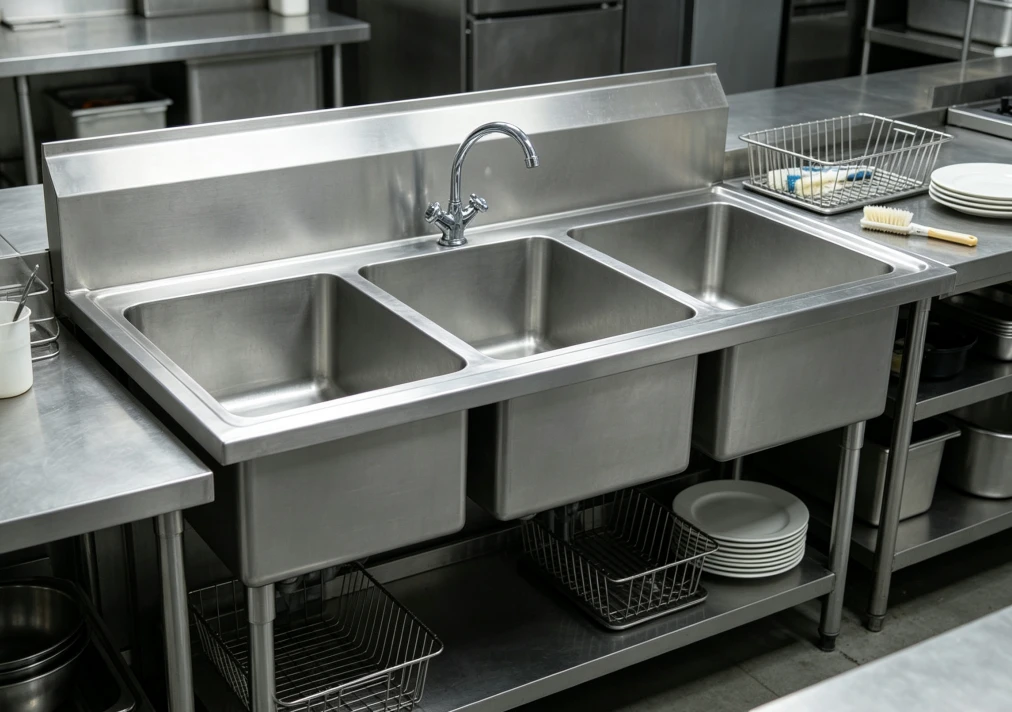
The grade and gauge of your sink directly affect how quickly water temperatures drop between dish loads. A stainless steel compartment sink built from 16-gauge (1.5 mm) or heavier Grade 304 stainless steel retains heat longer than thin-walled 20-gauge units. Deep basins with full-height vertical sidewalls reduce the surface area exposed to ambient kitchen air, slowing heat loss.
When specifying equipment, give each compartment a minimum depth of 14 inches and an internal basin volume that suits your peak cover count. Shallow basins force staff to submerge large pots at an angle, which prevents full immersion contact time and invalidates the sanitize step. Our range of commercial compartment sinks includes custom-depth configurations sized to match commercial kitchen plumbing layouts and local code requirements.
Post the temperature chart above your sink, complete the log every shift, and verify sanitizer ppm with test strips before each service period. For custom-sized, heavy-gauge stainless steel compartment sinks matched to your kitchen’s exact plumbing and volume requirements, submit your layout drawings through the Xinhe contact.
FAQ
What temperature should a 3 compartment sink be?
The wash basin of a three compartment sink requires water at or above 110°F (43°C), and the rinse basin also requires 110°F or above. The sanitizing basin requires either 171°F (77°C) for hot-water sanitizing with a 30-second immersion, or 75°F to 120°F (24°C to 49°C) for chemical sanitizing at the correct ppm concentration.
How hot should the sanitizing water be?
For hot-water sanitizing, the water must reach at least 171°F (77°C) and dishes must stay submerged for a full 30 seconds. For chemical sanitizing, water temperature sits behind chemical concentration. Keep the water between 75°F and 120°F, then use test strips at each shift change to confirm the sanitizer ppm falls within the legal range for your specific chemical.