Home > Blog > Public Products >
Stainless Steel Base Cabinets for Commercial Kitchen Storage Planning
In a high-pressure commercial kitchen, storage isn’t just about tucking tools out of sight. The right stainless steel base cabinets do more than hold items; they protect clean supplies, streamline the daily workflow, and turn under-counter space into a functional asset. Whether you are outfitting a hotel, restaurant, school cafeteria, or a central kitchen, these cabinets need to integrate seamlessly with prep zones, washing stations, and service counters rather than just sitting there as standalone furniture.
Why Base Cabinets Matter
Efficiency in a professional kitchen drops the moment a chef has to walk across the room for a spare pan. Cookware, dry goods, and small appliances all need a “home” right where the action happens. If the space beneath your work surfaces is just an empty void or a messy pile of boxes, staff spend more time searching and less time cooking.
Well-designed stainless steel base cabinets transform that wasted lower space into a secure, sanitary storage area. They offer several advantages over other options:
- Accessibility: Easier to reach during a rush than high wall cabinets.
- Protection: Unlike open shelving, doors keep out dust, grease splashes, and floor grime.
- Dual Function: They provide a sturdy footprint that supports a heavy-duty work surface above.
When reviewing commercial stainless steel cabinets, don’t just ask about the dimensions. Ask yourself: What goes inside, who pulls it out, and how many times a shift will those doors open?
Planning a commercial kitchen storage area? It is worth exploring cabinet options that match your specific layout and workflow before you sign off on the equipment list.
Common Cabinet Types
The “right” cabinet depends entirely on what’s living inside it. You wouldn’t store a 20-quart stockpot in a small utensil drawer. Here is how the different styles break down in a real-world kitchen:
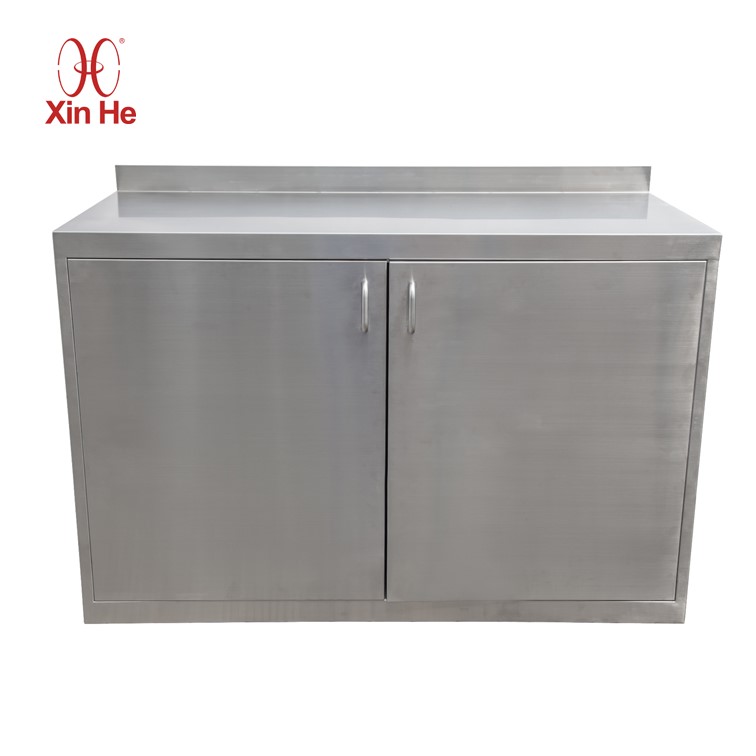
Cabinets with Doors
These are the workhorses for bulky items like pots, pans, and bulk consumables.
- Hinged doors are the standard choice where there is plenty of floor space. They are simple, durable, and familiar.
- Sliding doors are a lifesaver in narrow galleys or busy corridors. Since the doors don’t swing out, they won’t clip a server walking by or block a tight aisle.
Cabinets with Drawers
A stainless steel base cabinet with drawers is the best way to handle the “small stuff”—cutlery, thermometers, specialized blades, and spare parts. Drawers prevent the “bottomless pit” effect, allowing staff to see everything at a glance. Just ensure you have enough clearance for the drawer to extend fully without hitting another piece of equipment.
Door and Drawer Combos
Most project buyers find that combination units are the most practical. You get the best of both worlds: deep storage for containers and shallow drawers for tools. This is a favorite for food preparation counters, creating a self-contained station where a prep cook has everything they need within arm’s reach.
Open Base Cabinets
Sometimes, doors just get in the way. Open bases are great for high-turnover items like prep bins or trays that are constantly being washed and replaced. However, use these sparingly—they offer zero protection against flour dust or floor splashes.
| Cabinet type | Best for | Main advantage | Planning note |
|---|---|---|---|
| Doors | Pots, bulk supplies | Enclosed and clean | Check door swing radius |
| Drawers | Tools, small utensils | Organization/visibility | Check load weight & clearance |
| Door + Drawer | Mixed prep stations | Total flexibility | Best for varied tasks |
| Open Base | Fast-access items | Speed | Avoid in high-grease zones |
Size and Layout: Thinking Beyond the Tape Measure
A massive cabinet is useless if it blocks a floor drain or prevents a fridge door from opening. Before you order, walk the floor and confirm these details:
- Worktop Alignment: Does the cabinet height match your existing stainless steel work tables?
- Aisle Flow: If a drawer is open, can someone still walk past with a hot tray?
- Proximity: Place the cabinet exactly where the task happens. If it’s for baking sheets, it belongs near the oven, not the sink.
Hygiene and Material Durability
Kitchens are brutal environments. Between the humidity, the heat, and the harsh cleaning chemicals, “cheap” furniture won’t last a season. This is why foodservice stainless steel cabinets are the industry standard. They don’t just look professional; they resist corrosion and don’t harbor bacteria in pores like wood or plastic might.
For a truly hygienic kitchen storage cabinet, look at the small details:
- Rounded edges (coved corners) that don’t trap grime.
- Leg height that allows a mop or floor scrubber to get underneath.
- Tight seals on doors and drawers to keep pests and dust out.
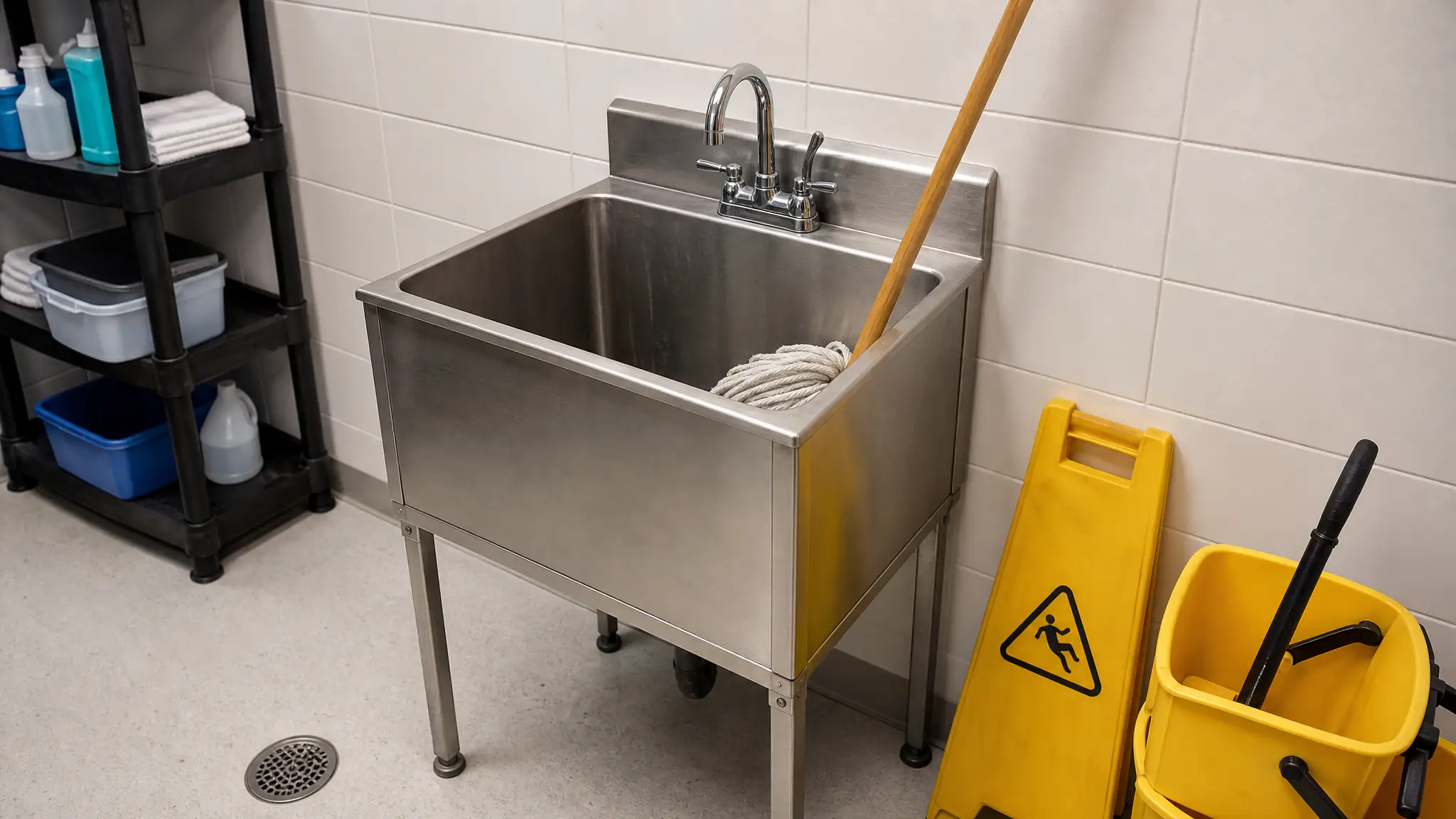
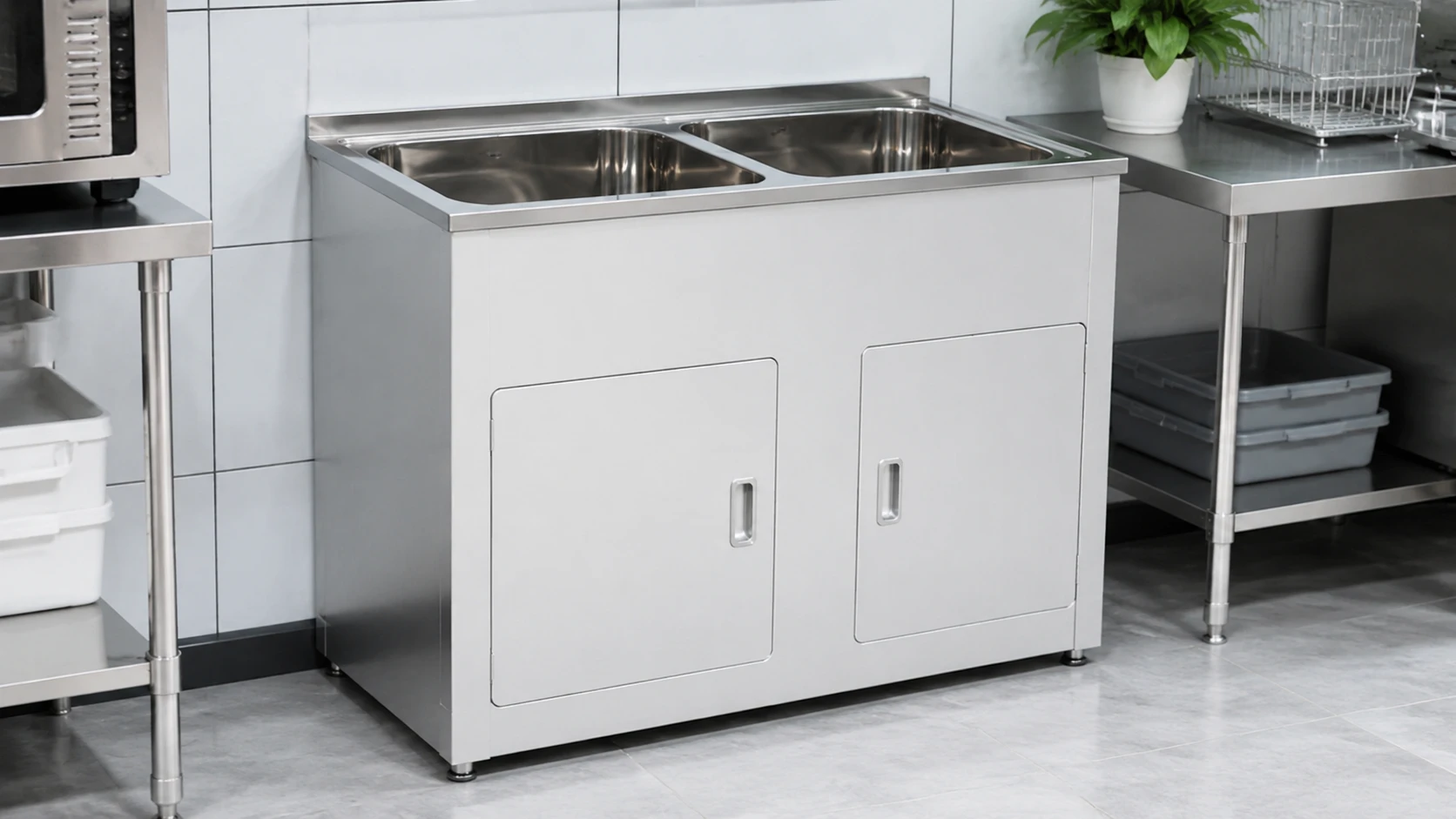
In wet areas, these cabinets often need to sit alongside commercial kitchen sinks. Coordination here is key to ensuring water doesn’t pool in gaps between the units.
Customizing for Your Project
Standard sizes are great, but many professional layouts have “quirks”—a pillar in the corner, a weirdly placed pipe, or a specific height requirement for a piece of specialty equipment.
If you are a contractor or distributor, you should confirm these options with your stainless steel cabinet supplier:
- Adjustable internal shelving vs. fixed racks.
- Adding a backsplash to protect the wall from moisture.
- Customizing depths to align with specific shelves or trolleys.
- Whether the unit can be shipped flat-packed or fully welded for immediate use.
Need a specific configuration? Contact Xinhe to discuss custom dimensions or layout requirements for your next project.
Common Pitfalls to Avoid
- Buying for Price, Not Purpose: A cheap cabinet that doesn’t fit your pans is just expensive scrap metal.
- Ignoring Clearance: Always measure the “footprint” of the cabinet when the doors are wide open.
- Mismatched Heights: Ensure your base cabinet, work table, and prep stations all sit at a uniform height to avoid ergonomic nightmares.
- Forgetting the Floor: In kitchens that get hosed down, ensure your cabinets have adjustable, water-resistant feet.
The Final Word
Choosing stainless steel base cabinets isn’t just about buying boxes; it’s about designing a workflow that stays clean and fast. Whether you are an importer looking for bulk supply or a consultant designing a new hotel kitchen, the focus should be on how that cabinet serves the person standing in front of it at 8:00 PM on a Saturday night.
FAQ
What are stainless steel base cabinets used for in commercial kitchens?
They are used for under-counter storage, tool organization, supply management, and work-area support. In commercial kitchens, they help keep frequently used items close to the workstation while protecting storage areas from daily traffic, splashes, and dust.
Should I choose doors or drawers for a stainless steel base cabinet?
Choose doors for larger items such as pots, containers, cleaning tools, and backup supplies. Choose drawers for smaller tools, utensils, cutlery, labels, and items that need sorting. For many foodservice projects, a combination of doors and drawers offers the most flexible storage.
Can base cabinets be customized for kitchen projects?
In many commercial kitchen projects, dimensions, door style, drawer layout, shelves, legs, worktops, and backsplash details can be discussed based on project requirements. Buyers should confirm customization options before ordering, especially when cabinets must match existing sinks, tables, shelves, or floor plans.
Are base cabinets only used in restaurants?
No. They are also used in hotel kitchens, school cafeterias, central kitchens, food processing areas, public facilities, staff canteens, and other commercial back-of-house spaces where durable and hygienic storage is required.