Home > Blog > Public Products >
Sink Hopper for Healthcare and Facility Waste Disposal Areas
A sink hopper is not the fixture people notice first in a hospital, laboratory, airport, school, or commercial building. It usually sits in a dirty utility room, janitorial closet, or back-of-house service area. Still, when the unit is poorly specified, the problems show up quickly: splashback on the wall, awkward bucket handling, blocked drainage, dented bowls, or staff avoiding the room because it is difficult to clean.
For healthcare buildings and public facilities, a sink hopper is a controlled discharge point for liquid waste, cleaning water, mop water, and utility-area disposal tasks. It is not a standard hand sink. It is built for heavier use, higher water volume, and rougher daily handling.
This guide explains where these units are used, why stainless steel is usually specified, and what buyers should check before placing an order for a hospital, care home, laboratory, or facility waste disposal area.
What a Sink Hopper Does
A sink hopper gives staff a safe, durable place to empty liquid waste and cleaning water without using a handwashing sink, kitchen sink, or toilet. In many projects, it sits at the center of the dirty utility room or maintenance area because that is where the mess is managed before the rest of the facility can stay clean.
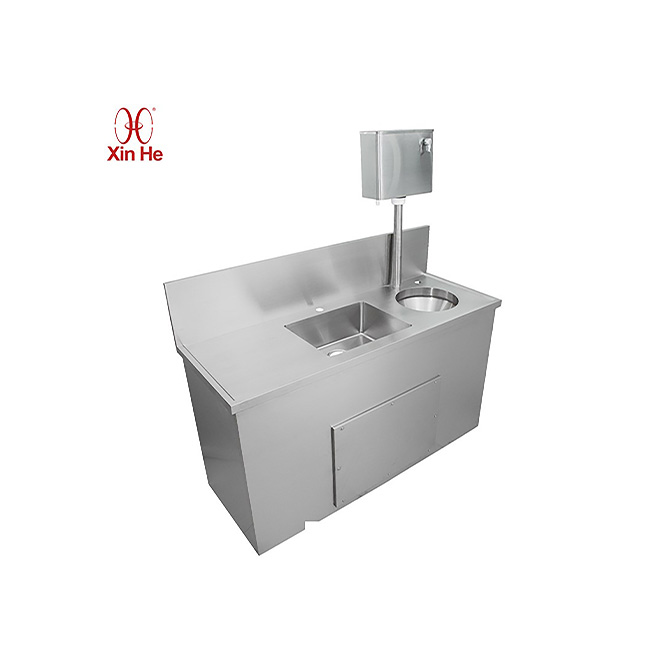
Depending on the project, the unit may include:
- A deep bowl or conical basin
- A waste outlet matched to site drainage
- A splashback to protect the wall
- A flushing rim or manual rinse option
- Wall-mounted or floor-standing support
- An exposed or concealed cistern connection
- 304 or 316 stainless steel construction
Product names vary by region. A buyer may search for a sink hopper, while a contractor calls it a slop hopper, a hospital disposal unit, a sluice hopper sink, or a stainless steel waste disposal sink. These terms overlap, but the designs are not always identical. The safest approach is to confirm the function, dimensions, waste outlet, mounting style, and material before production.
For healthcare projects that also require a related utility-room fixture, a stainless steel sluice sink may be reviewed as part of the same product group.
Where It Is Installed
A stainless steel sink hopper is common in medical buildings, but it is not limited to hospitals. Any facility with regular cleaning work, liquid waste disposal, or heavy janitorial use may need one.
Hospitals and Clinics
A hospital sink hopper is often installed in a dirty utility room or clinical support area. Staff may use it for emptying liquid waste, cleaning containers, or handling disposal tasks that are not suitable for ordinary sinks.
The fixture must handle frequent cleaning, water exposure, disinfectants, and physical impact. A thin bowl may look acceptable on a quotation sheet, but it can dent quickly in daily use. Dents, rough welds, and hard-to-clean corners are exactly the details facility teams complain about later.
In some tenders, this type of fixture may also be described as a medical waste disposal sink, although buyers should confirm that the requirement refers to liquid waste and utility-area disposal rather than regulated hazardous waste processing.
Nursing Homes and Care Facilities
Care homes may have lower waste volume than major hospitals, but the work is still demanding. Staff may need to carry mop water, laundry-related waste water, or cleaning buckets through compact service areas.
A healthcare sink hopper in this setting should reduce unnecessary movement. The bowl should be easy to reach, deep enough to control splash, and placed close to the actual work zone. Good placement is part of the specification, not an afterthought.
Public Buildings and Transport Hubs
Airports, schools, stadiums, stations, and municipal buildings all need cleaning rooms. In these spaces, a facility waste disposal sink may be used by maintenance teams many times a day.
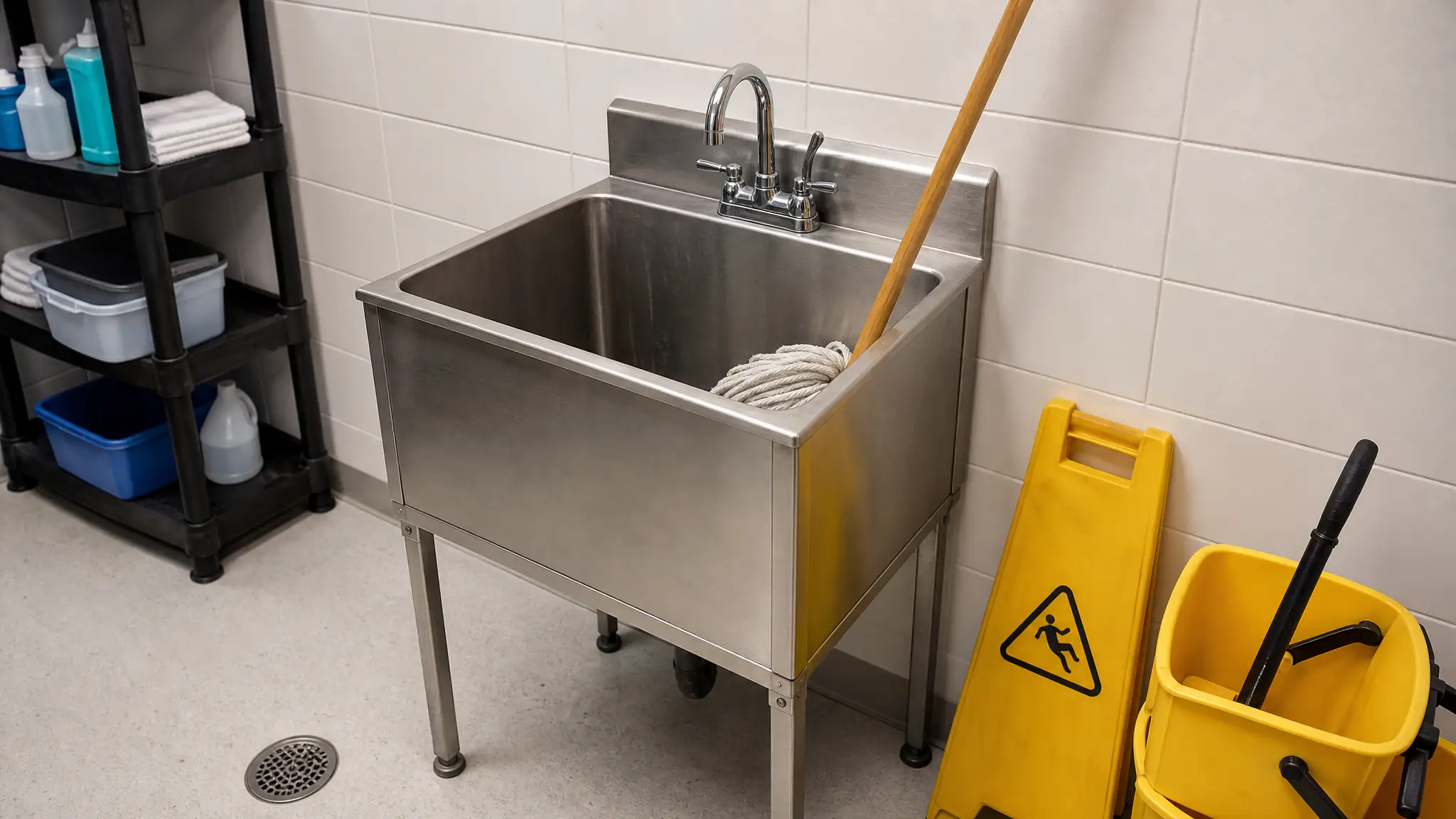
This is where rugged construction matters. A mop bucket hitting the rim once is not a problem. A bucket hitting the rim fifty times a day becomes a problem if the steel is thin, the wall fixing is weak, or the plumbing connection is poorly supported.
Laboratories and Support Areas
In laboratories and research centers, the sink hopper is usually installed in a support room rather than a technical workbench area. The concern is often material suitability and drainage compatibility.
304 stainless steel is common for many indoor applications. 316 stainless steel may be considered where the environment is more corrosive, the site is coastal, or the project involves stronger cleaning agents. Buyers should confirm the intended use instead of assuming one grade fits every room.
For broader healthcare planning, related medical cleaning area fixtures can also help buyers think through the full room layout.
Names Used in Different Markets
The naming issue is real. Different buyers, contractors, and suppliers may use different words for similar products.
| Term | Where buyers may see it | What to check |
|---|---|---|
| Sink hopper | General facility and healthcare sourcing | Bowl depth, outlet, splashback, mounting |
| Slop hopper / slop hopper sink | UK, Commonwealth, Middle East, and some export markets | Whether it includes flushing or only drainage |
| Sluice sink | Healthcare utility rooms and soiled areas | Whether it matches the required hospital layout |
| Hospital disposal unit | Tenders and healthcare project documents | Exact dimensions and installation details |
| Stainless steel waste disposal sink | Supplier catalogs and B2B searches | Material grade, thickness, and fabrication quality |
Names help buyers find products. They do not guarantee fit. A supplier may quote a slop hopper while the drawing shows a hospital disposal unit with different drainage and wall conditions. Before ordering, the project team should compare the drawing, product sheet, and room layout side by side.
Why Stainless Steel Matters
A stainless steel sink hopper is usually specified because the room is wet, busy, and cleaned often. The unit may be exposed to buckets, carts, hoses, cleaning chemicals, disinfectants, and repeated water discharge.
Stainless steel is not chosen because it looks polished in a catalog. It is chosen because it can be fabricated into practical forms: welded bowls, splashbacks, rounded corners, reinforced supports, and customized outlet positions.
Grade and Thickness
For many indoor healthcare and facility rooms, 304 stainless steel is a practical starting point. For coastal environments, harsher cleaning conditions, or more demanding corrosion-resistance requirements, 316 stainless steel may be considered.
Thickness also matters. Very thin material can vibrate, dent, and feel unstable under heavy use. Buyers should ask for clear information on:
- Stainless steel grade
- Sheet thickness
- Surface finish
- Welding method
- Reinforcement points
- Edge treatment
- Packaging for shipment
A stainless steel sink hopper should feel solid enough for the room it serves. If the unit is going into a high-use janitorial area or dirty utility room, the cheapest sheet thickness is rarely the smartest choice.
Cleanability
Facility managers often care less about the product name and more about whether the unit is easy to clean. Rounded internal corners, smooth welds, and accessible pipework make a real difference.
Sharp corners and rough seams collect grime. Hidden plumbing can make repairs slow. A clean-looking product photo does not always show these details, so buyers should request drawings, close-up photos, or fabrication information before confirming the order.
Specifications to Confirm
A sink hopper may seem like a simple fixture, but small specification errors can delay installation or create long-term maintenance problems.
Project Checklist
| Specification | Why it matters |
|---|---|
| Bowl depth | Controls splash and supports bucket emptying |
| Waste outlet position | Must match floor or wall drainage |
| Splashback height | Protects the wall behind the unit |
| Mounting style | Affects floor cleaning, support, and installation |
| Flushing or rinsing | Depends on what will go down the drain |
| Steel grade | Should match site conditions and cleaning routine |
| Maintenance access | Reduces future repair time |
Bowl and Splashback
A shallow bowl can create splashback when staff empty buckets or containers. In utility rooms, that is more than an inconvenience. It affects cleaning time, wall condition, and staff comfort.
A deep bowl or conical basin helps direct water downward. An integrated splashback protects the wall and reduces moisture damage. For healthcare and facility waste disposal areas, this should be treated as a practical requirement, not a decorative option.
Drainage Alignment
Drainage is where many procurement mistakes happen. The unit may need to connect to a floor drain, wall drain, S-trap, or P-trap arrangement. If this is not confirmed early, the contractor may need to modify plumbing on site.
Before production, buyers should confirm:
- Outlet size
- Outlet direction
- Center position
- Trap requirement
- Pipe connection height
- Floor or wall drainage route
For renovation projects, old drawings should not be trusted blindly. Site verification is safer.
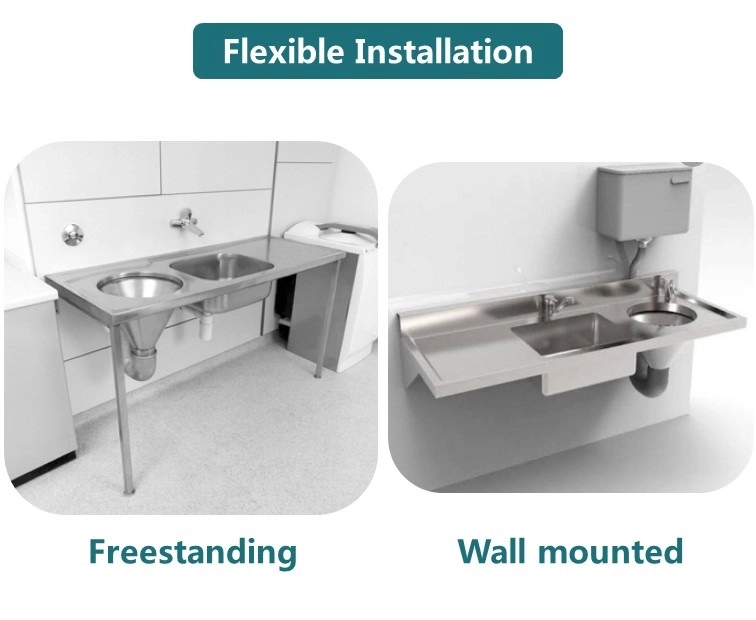
Wall-Mounted or Floor-Standing
A wall-mounted sink hopper saves floor space and makes cleaning underneath easier. It can be a good option for compact rooms, but only if the wall can support the load.
A floor-standing unit is often safer in older buildings, heavy-use service rooms, or sites where wall strength is uncertain. If the unit will be mounted to a partition wall, a carrier frame or reinforced structure may be needed.
Common Mistakes to Avoid
Most problems are preventable if the buyer asks the right questions early.
Choosing by Price Only
A low-cost unit may use thinner steel, rougher welding, limited reinforcement, or weaker packaging. The problem may not appear on delivery. It usually appears after months of daily use.
Forgetting Faucet Height
If the tap is too low, staff cannot place a bucket under it. If it is too high, splashing increases. Faucet height sounds minor until the room is in use every day.
Assuming Standard Size Will Fit
Standard models work for simple rooms. They may not work in a cramped dirty utility room with fixed pipework, door swing limits, wall storage, or narrow clearance.
Mixing up Product Names
A sink hopper, slop hopper, sluice sink, and hospital disposal unit may be related, but buyers should not assume they are the same product. Drawings and specifications should settle the question.
Working with a Supplier
For contractors, importers, wholesalers, and facility project buyers, the right sink hopper supplier should do more than quote a model number. In a healthcare facility project, the supplier should help confirm whether the product fits the room, drainage, material requirements, and expected workload.
Useful supplier capabilities include:
- Custom dimensions
- Adjustable waste outlet positions
- Wall-mounted and floor-standing options
- Splashback and bowl modifications
- 304 and 316 stainless steel options
- Drawing review before production
- Export packaging that protects stainless steel surfaces
- Batch production for multi-site projects
For larger projects involving several stainless steel fixtures, references such as industrial sink specifications for contractors can help buyers organize technical requirements before sending an inquiry.
Looking for a stainless steel sink hopper supplier? Xinhe supports project-based stainless steel fabrication, custom dimensions, and facility-use product recommendations for healthcare, public building, and commercial service areas.
Before You Order
A well-specified sink hopper makes a utility room easier to use, easier to clean, and less likely to create maintenance complaints later. The most important details are usually practical ones: drainage position, bowl depth, splashback, steel grade, mounting method, and access for repair.
Before sending a purchase order, buyers should define the use area, check site plumbing, confirm whether the unit needs flushing, and decide whether a standard or custom design makes more sense. Related terms such as sluice sink, slop hopper, clinical waste disposal sink, and hospital disposal unit are useful for research, but the final decision should be based on function and fit.
Contact Xinhe to discuss your sink hopper requirements for hospitals, care homes, laboratories, public buildings, or commercial facility waste disposal areas. The team can help review your application and recommend a stainless steel configuration that matches your space, drainage, and usage needs.