American Standard Toilet Bowl vs. Stainless Steel
The American Standard toilet bowl has long set the benchmark for commercial restroom fixtures. Facility managers now want tougher alternatives that match those specifications but use industrial-grade stainless steel. This guide compares both options to help buyers choose.
The Lasting Legacy of the American Standard Toilet Bowl in Commercial Spaces
When contractors and wholesalers look for a restroom fixture, they start with what they know. The American Standard toilet bowl has earned its reputation through consistency. In procurement, “standard” means a predictable level of quality that builders can rely on when drafting project bids. That standard is changing as buyers prioritize a heavy-duty stainless steel toilet bowl for public restrooms to handle the rigors of modern infrastructure.
Why the “Standard” Is Being Redefined
High-traffic facilities like airports and correctional centers face challenges that go beyond basic functionality. These environments see constant heavy use, which leads to frequent wear and tear. A traditional ceramic American Standard toilet bowl might excel in a low-traffic office, but it struggles in punishing environments.
Wholesalers and importers want products that don’t come back with warranty claims. The American Standard toilet bowl set the bar for flush performance and water efficiency. In the modern B2B landscape, durability demands are shifting. Vandalism, accidental impact, and harsh chemical cleaning are daily realities. A traditional porcelain American Standard toilet bowl looks good but breaks under stress. The shift toward stainless steel answers a need for unbreakable performance. Buyers want a fixture that stays in service for 20 years without a single crack.
Meeting the North American Technical Specification
In the B2B world, “American Standard” also refers to a set of dimensions and certifications. Whether a unit is ceramic or steel, it must meet the rough-in requirements, typically a 12-inch standard, and comply with ADA (Americans with Disabilities Act) regulations. For a toilet supplier, offering a water saving stainless steel toilet ADA compliant that matches these American Standard dimensions is the key to winning retrofitting projects. It allows a seamless upgrade from fragile ceramic to indestructible steel without reconfiguring the entire plumbing layout.
Stainless Steel vs. Ceramic
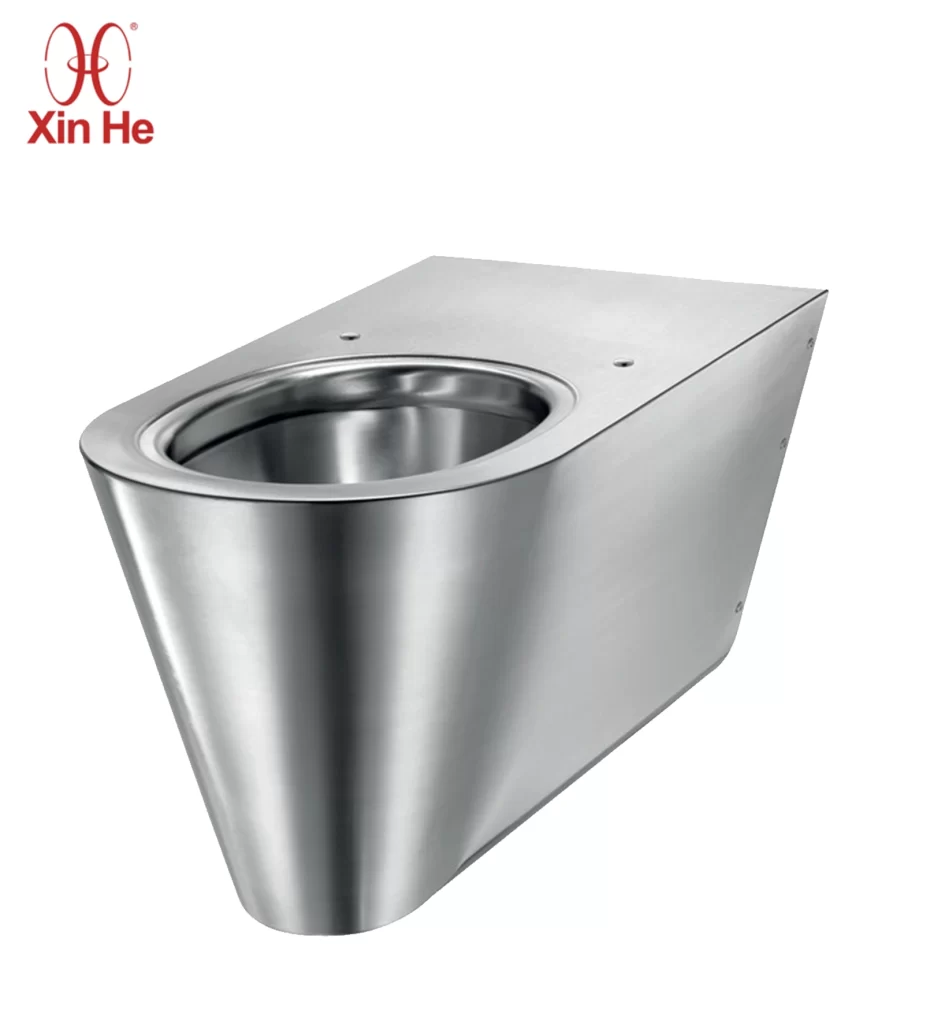
In B2B procurement for commercial restrooms, the move from ceramic to stainless steel toilet fixtures reflects practical business needs. Facility managers now look at the lifecycle of the product, not just the sticker price. The American Standard toilet bowl is a strong product for many applications, but the resilience of stainless steel is winning over the institutional sector. A well-built stainless toilet bowl handles what ceramic cannot.
Ultimate Durability & Vandal Resistance
Stainless steel, particularly grades like 304 or 316, offers exceptional impact resistance due to its tensile strength and corrosion-proof properties. A busy stadium restroom during a championship game takes more abuse in four hours than a residential toilet takes in a decade. A standard ceramic American Standard toilet bowl might chip in such a chaotic environment, but a heavy-duty toilet made of steel is virtually indestructible.
Grade 316 stainless steel includes molybdenum, which enhances resistance to chlorides in cleaning agents and salty coastal environments. This level of vandal-resistant toilet engineering drives the B2B market. When a contractor installs a commercial stainless steel bowl, they provide peace of mind. Buyers report that while a high-quality American Standard toilet bowl works for guest-facing areas, they switch to steel for high-risk zones. Buyers report up to 50% fewer service calls after making the switch, which lets staff focus on core operations.
The Physics of High-Traffic Environments
A brushed finish toilet outperforms a glazed ceramic one in a prison or a bus station because of surface tension and material density. Ceramic is a fired clay product with a glass-like structure. It is hard but susceptible to shock loads. A security stainless steel toilet absorbs impact instead.
Drop a heavy object on a porcelain American Standard toilet bowl and the energy travels through the material, creating a spider-web crack. In a steel unit, that same energy dissipates. For a facility manager, this is the difference between an emergency 2:00 AM plumbing call and a routine check-up.
Unmatched Hygiene & Cleanability
Hygiene is non-negotiable in sectors like healthcare and food service. The premium American Standard toilet bowl features a smooth glaze, but ceramic is naturally more porous than high-grade steel. Over years of use, those microscopic pores can harbor bacteria and odors. This is where the antimicrobial toilet properties of stainless steel shine.
Stainless steel’s non-porous surface prevents bacterial adhesion. Studies show stainless steel reduces microbial growth by up to 99% when properly maintained. These toilets tolerate aggressive disinfectants and high-pressure washing without degrading. In a hospital, this means:
- Faster turnaround times: Cleaning staff can sanitize a steel unit in a fraction of the time.
- Chemical resilience: Steel doesn’t etch when exposed to industrial cleaners.
- Reduced labor: Facility managers often find that switching to steel cuts cleaning labor hours by 20-30% compared to maintaining a traditional American Standard toilet bowl made of ceramic.
Lower Total Cost of Ownership
A common misconception in procurement is that the cheapest upfront option is the most cost-effective. The initial purchase price of an American Standard toilet bowl might be lower than a high-end stainless steel model, but the Total Cost of Ownership (TCO) tells a different story.
Breaking Down the Math for Buyers
Calculating the value of a durable toilet means looking at the hidden costs. For a school district or a municipal building, the budget spans the next two decades, not just this year.
- Lifespan: A ceramic American Standard toilet bowl might last 10-15 years. A one-piece toilet construction in steel often reaches 20-30 years.
- Replacement Costs: Every time a ceramic unit breaks, you pay for the new unit, the shipping, the labor to remove the old one, and the labor to install the new one.
- Efficiency Savings: Modern water-saving toilet technology is available in both materials, but steel fixtures often use more robust sensor flush toilet systems built for millions of cycles.
Consider a simple ROI framework: calculate upfront price, add annual maintenance (cleaning and repairs), and subtract savings from reduced downtime. For a facility installing 50 units, choosing steel over a standard ceramic American Standard toilet bowl could save $10,000 yearly in avoided replacements and reduced maintenance hours.
Quick-Comparison Table: Stainless Steel vs. Ceramic
| Aspect | Stainless Steel Toilet | Ceramic American Standard (Benchmark) |
|---|---|---|
| Durability | High impact; vandal-proof | Fragile; prone to cracks |
| Maintenance | Minimal; takes harsh agents | High; requires delicate care |
| Hygiene | Non-porous; resists bacteria | Porous; harbors germs |
| Lifespan | 20-30 years | 10-15 years |
| Shipping Risk | Nearly zero breakage | High risk of transit damage |
| Customization | Extensive (Size/Finish) | Limited (Standard Shapes) |
B2B buyers appreciate this: importers see higher margins on durable goods, while contractors pitch lower long-term bids to win projects. A decision checklist should include assessing usage intensity, project lifespan, and budget constraints to quantify TCO benefits.
Selecting the Right Model for Your Project
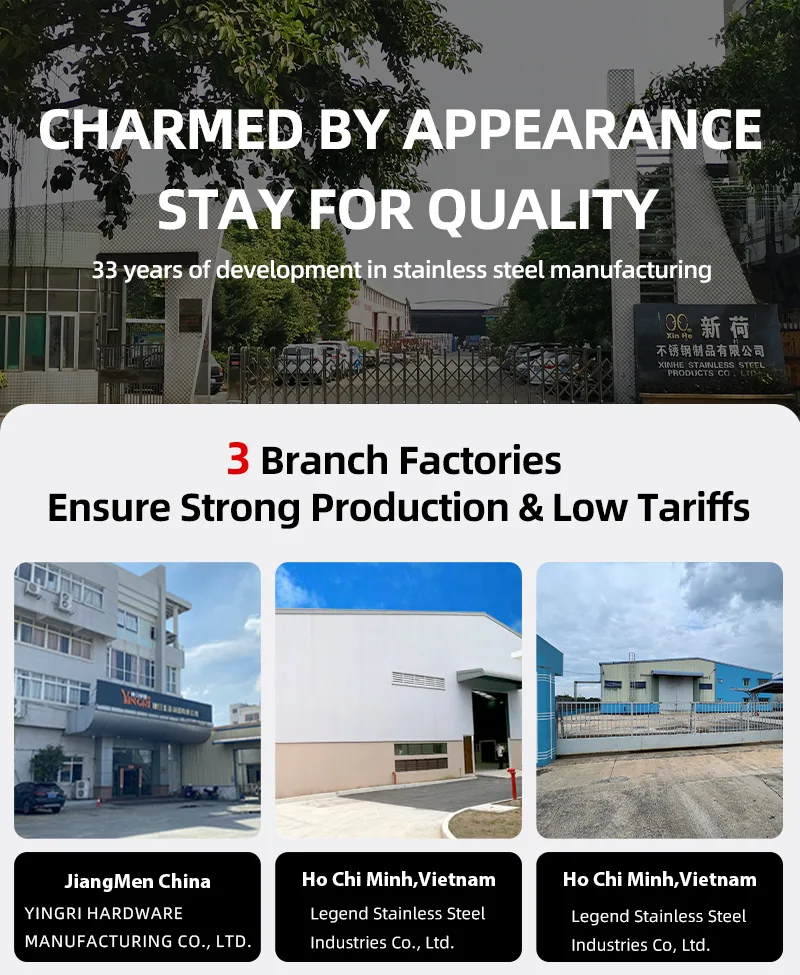
Choosing the ideal toilet model requires aligning features with project demands. Many buyers start their search by looking for an American Standard toilet bowl, then discover that a more specialized product fits their specific niche. As a specialist in stainless steel fabrication, Xinhe provides lines tailored for various commercial needs.
Core Product Series Overview
To compete with the versatility of the American Standard toilet bowl, a manufacturer must offer a range that covers every possible application.
- Standard Commercial Series: For offices and retail spaces. This series balances the familiar comfort of a traditional American Standard toilet bowl with the added resilience of 304 stainless steel. These are often floor-mounted toilet designs that look sleek but act tough.
- Reinforced Institutional Series: Heavy-duty for schools and malls. Built for intense use, this line uses thicker gauges and reinforced rims. In hospitals, optional antimicrobial coatings add extra protection. This series minimizes disruptions, a boon for project timelines.
- Vandal-Proof Security Series: Designed for the most extreme environments, like correctional facilities or high-traffic transit hubs. These models have tamper-resistant features like concealed bolts. Unlike a standard American Standard toilet bowl, these units have no exposed parts that can be removed.
Key Features & Specifications Decoded
- One-piece construction: This enhances durability by eliminating welds that could weaken over time. It is a significant upgrade over traditional welded toilet construction, providing a seamless, easy-to-clean surface.
- Surface Finishes: A polished finish toilet provides a sleek look for upscale venues, while brushed options are the favorite for public spaces because they resist fingerprints and scratches.
- Flush Options: Include gravity flush toilet systems for reliability or sensor flush toilet setups for touchless operation, aligning with ADA compliance and modern hygiene standards.
- Mounting Styles: A wall-hung toilet is a favorite for healthcare because it allows for easy floor cleaning, while a floor-mounted toilet offers maximum stability in high-traffic zones.
Customization Capability: Beyond the Standard
One of the biggest advantages of working with a direct manufacturer is toilet customization. An American Standard toilet bowl comes in fixed catalog sizes, but we can offer tailored solutions.
- Custom Dimensions: Fit tight spaces in historic renovations.
- Special Hole Patterns: Accommodate unique plumbing configurations.
- Branding: Add laser-etched logos for corporate facilities.
This flexibility aids contractors in complex projects, ensuring seamless integration. B2B perks include shorter lead times for custom stainless steel toilets, fostering repeat business and reliable supply chains.
Price Insights & Value Assessment
Pricing for stainless steel toilet suppliers involves understanding value beyond the sticker price. When a trader or importer compares an American Standard toilet bowl to a stainless steel model, they are comparing two different asset classes. A stainless toilet bowl commands a higher upfront cost but pays back over decades.
Understanding Price Drivers
Key factors like steel grade (304 vs. 316) affect cost due to material quality. Thickness adds durability but raises price. Manufacturing complexity, like one-piece molding, increases precision expenses. Accessory brands and customizations bump totals, while bulk orders lower per-unit costs.
For importers, volume discounts make sense. Ordering 100+ units could cut prices significantly. Traders should factor shipping: steel’s weight influences logistics, but its robustness prevents damage claims. When comparing a premium ceramic American Standard toilet bowl to a security stainless steel toilet, the value comparison is clear. A high-end ceramic unit at $300 could require $200 yearly maintenance, versus steel’s $500 initial with $50 annual. Over 10 years, steel saves thousands.
Articulating Value to Stakeholders
In proposals, emphasize lower TCO. Highlighting the water-saving toilet certifications can also help unlock green-building tax credits. Use a 5-factor framework when pitching to facility boards:
- Durability Impact: How much will this reduce breakage?
- Hygiene ROI: How many labor hours will cleaning save?
- Installation Ease: Does it match the existing American Standard toilet bowl rough-in?
- Toilet Customization: Can you tailor it to the specific project needs?
- Long-term Savings: What is the 20-year cost versus ceramic?
This positions your bid as strategic rather than just a hardware cost. Xinhe, as a direct manufacturer, offers the quality control and faster lead times that allow partners to outpace their competitors.
Project Cases & Buyer Feedback
Real-world applications underscore the benefits of upgrading from a traditional American Standard toilet bowl to a specialized stainless steel solution.
Application Scenario Highlights
- Public Transit Hubs: In a major metro line retrofit, security stainless steel toilet models solved chronic vandalism issues. By replacing the existing American Standard toilet bowl units with steel, the facility reduced annual replacement costs by 70%.
- Healthcare Facilities: A regional hospital renovation used reinforced models with wall-hung toilet configurations. This improved hygiene scores and reduced the time required to sanitize restrooms between shifts, directly impacting staff efficiency.
- Educational Institutions: A university campus switched to water-saving toilet units in steel for their dormitory common areas. They reported a significant drop in accidental breakage caused by student activity, proving that even in non-security settings, the durability of steel is a major asset.
Key Feedback from Buyers and Facility Managers
Buyers note drastic callback reductions. Some report zero maintenance issues in five years. Cleaning staff praise the easy upkeep of the brushed finish toilet surface, which saves hours of scrubbing weekly. Longevity stands out as the primary reason for repeat orders.
Common inquiries from B2B traders include flush efficiency and toilet customization options, showing that today’s buyers seek tailored, high-performance solutions. This confirms that while the American Standard toilet bowl is a proven baseline, the market is ready for the material evolution that a stainless toilet bowl provides.
Conclusion
For B2B professionals, the environment defines the “standard.” In high-traffic commercial, institutional, and high-security facilities, resilience, hygiene, and long-term economy now define that standard.
Investing in a durable toilet solution like stainless steel is a strategic decision to protect your facility’s future and reduce operational waste. As a specialist manufacturer, Xinhe delivers the technical expertise and tailored solutions needed to meet these diverse project needs.
Whether you want an upgrade that matches the American Standard toilet bowl specifications or a completely custom-engineered fixture, the transition to steel is a proven path to higher ROI.
- For standard needs: Visit our website to download detailed technical specs and CAD drawings to see how our steel units match your existing footprints.
- For project-specific needs: Contact our engineering sales team today for a free product consultation and a competitive quote tailored to your project plans.
Browse our stainless steel toilet catalog and request your quote today.