Home > Blog > Home Kitchen Products >
Commercial Stainless Steel Laundry Sinks: Top Uses & Buying Tips
Imagine a rusty corner in your commercial laundry area slowing down operations, or hidden cracks harboring dirt that lead to failed inspections. Scattered cleaning supplies can turn a simple task into a chaotic mess. Choosing the right commercial stainless steel laundry sinks or laundry pool is more than just buying a container—it’s a strategic investment in hygiene, efficiency, and space management. This article dives deep into its core applications and offers an ultimate buying guide that includes storage solutions to help you make informed decisions.
The Industry Standard: Why Stainless Steel Dominates Commercial Laundry
Stainless steel has become the go-to material for commercial laundry sinks, outlasting alternatives in demanding environments. Its reliability keeps it popular across industries like hospitality, healthcare, and industrial operations.
Unmatched Durability Meets Lifecycle Cost-Effectiveness
Stainless steel laundry sinks made from 304 or 316 grades resist corrosion from harsh chemicals, physical impacts, and high temperatures. Unlike plastic or fiberglass options, which crack under heavy use, stainless steel holds up. For example, 316 stainless steel handles saline or acidic environments better, reducing rust risks in coastal or chemical-heavy settings.
Compare this to porcelain or composite materials—they chip easily and require frequent replacements. Over time, a heavy-duty stainless steel laundry basin lowers total ownership costs by lasting 20-30 years with minimal maintenance. Businesses save on downtime and repairs, making it a smart choice for wholesalers and contractors managing budgets.
Hygiene by Design: Simplifying Compliance and Cleaning
The seamless, non-porous surface of stainless steel commercial sinks prevents bacteria buildup. Rounded corners and welded seams eliminate crevices where dirt hides, making cleaning straightforward with just mild soap and water.
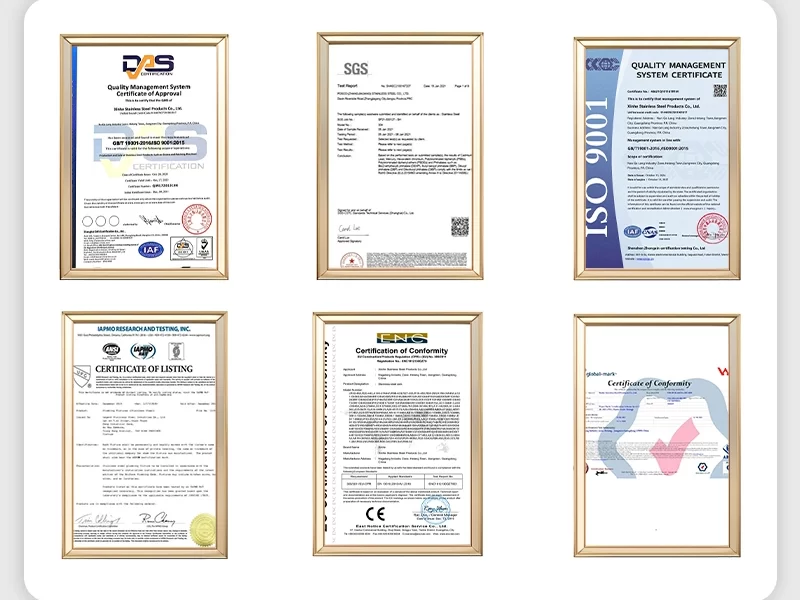
This design helps facilities meet strict regulations like FDA, OSHA, or public health standards. Backed by ISO, CE, and NSF certifications, our industrial laundry sinks ensure reliable compliance for high-risk environments such as food service and healthcare. No more scrubbing hard-to-reach spots—compliance becomes easier, protecting your operation from fines or shutdowns.
Ergonomics and Workflow Integration
Well-designed stainless steel laundry tubs feature optimal depths (often 12-18 inches) to reduce splashing and back strain. Anti-splash rims and large capacities integrate into workflows, from pre-soaking to rinsing, minimizing secondary contamination.
For employees handling heavy loads, these features cut fatigue and boost productivity. In a “pre-treat-wash” setup, a commercial wash sink streamlines processes, allowing seamless transitions that save time and labor costs—key for project managers optimizing space in tight facilities.
Critical Applications Across Key Industries
Stainless steel laundry sinks adapt to various sectors, addressing specific needs while maintaining durability and hygiene.
Hospitality & Food Service: From Soiled Linen to Kitchen Prep
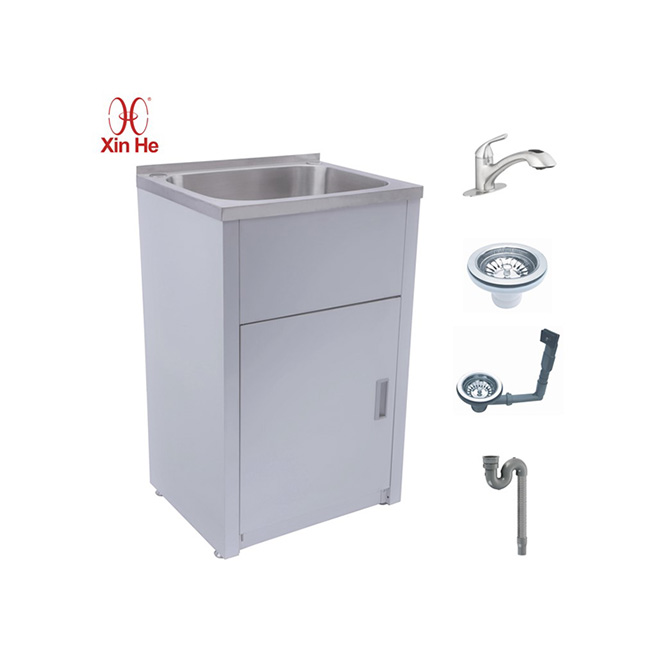
In hotels, commercial laundry sinks with cabinets handle pre-treating linens, soaking uniforms, or rinsing kitchen gear. Large capacities (up to 50 gallons) and overflow prevention are crucial to avoid spills in busy environments.
Compatibility with garbage disposals adds efficiency for food scraps. For restaurants, a multi-bay laundry pool separates tasks, preventing cross-contamination between soiled items and clean prep areas.
Healthcare & Institutional: Safeguarding Against Contamination
Hospitals use stainless steel laundry troughs for initial decontamination of isolation linens or instruments. Multi-compartment designs enable “dirty/clean” zoning, essential for infection control.
The material withstands strong disinfectants without degrading, ensuring long-term reliability. In nursing homes or schools, these heavy-duty laundry basins support daily hygiene protocols, reducing risks in sensitive settings.
Industrial & Municipal: Tackling the Toughest Jobs
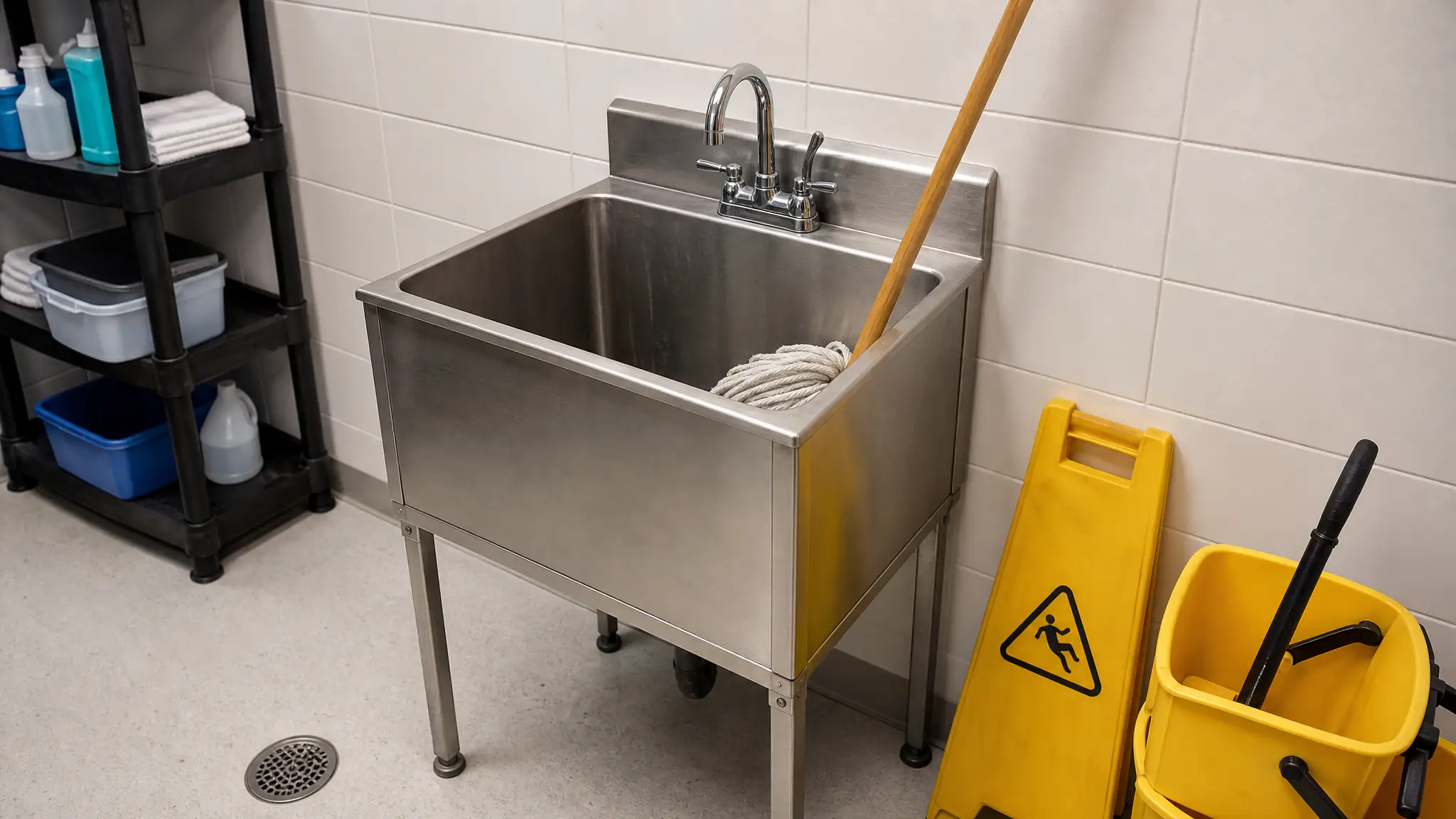
For fire departments or sanitation teams, industrial laundry sinks clean gear like protective suits or tools. Extra-thick gauges (14-16) and deep basins accommodate bulky items without bending.
Reinforced structures handle heavy loads, making them ideal for municipal facilities where durability prevents frequent replacements and keeps operations running smoothly.
The Ultimate Buying Guide: 7 Factors for an Informed Decision
Selecting a stainless steel laundry sink involves evaluating business needs. Here’s a framework to guide your choice.
1. Material Specifications: Gauge, Grade, and Finish
Gauge measures thickness—14-gauge commercial stainless sinks offer robustness for high-traffic use, while 18-gauge suits lighter duties. Understanding common mistakes with stainless steel laundry sinks, such as choosing an inadequate gauge for heavy tools, can save your business from early replacement costs.
Finishes like brushed or embossed resist scratches, maintaining appearance. Thicker gauges reduce noise and dents, extending lifespan and value for importers stocking inventory.
2. Configuration and Size: Matching Capacity to Workflow
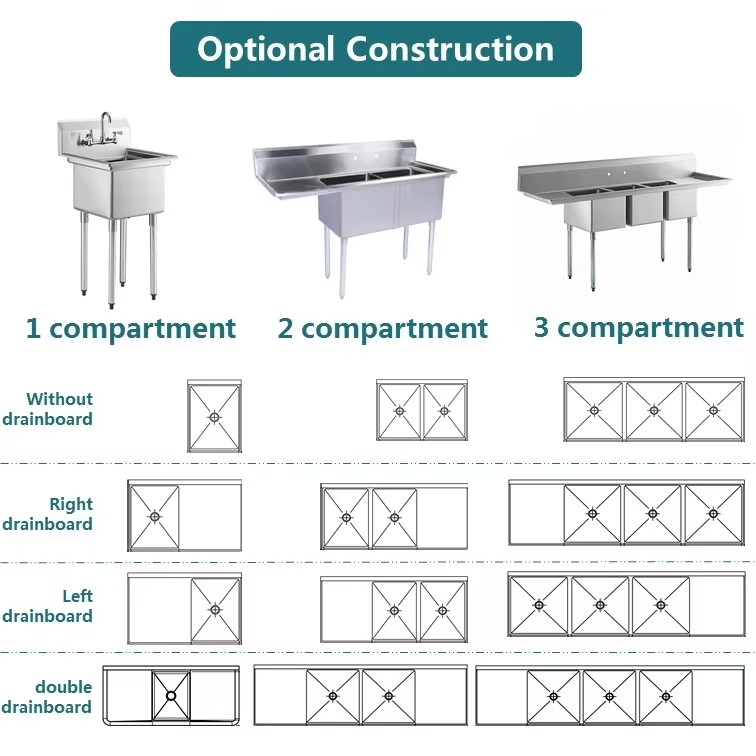
Single-bay laundry tubs fit small spaces, but double or triple bays enable efficient “soak-scrub-rinse” lines. Sizes range from 24×24 inches for compact setups to 72 inches for industrial needs.
Match to your volume: hospitality might need 30-gallon capacities, while healthcare prefers divided compartments. This setup minimizes bottlenecks, improving throughput for contractors designing facilities.
3. Storage and Workspace Needs: The Cabinet Consideration
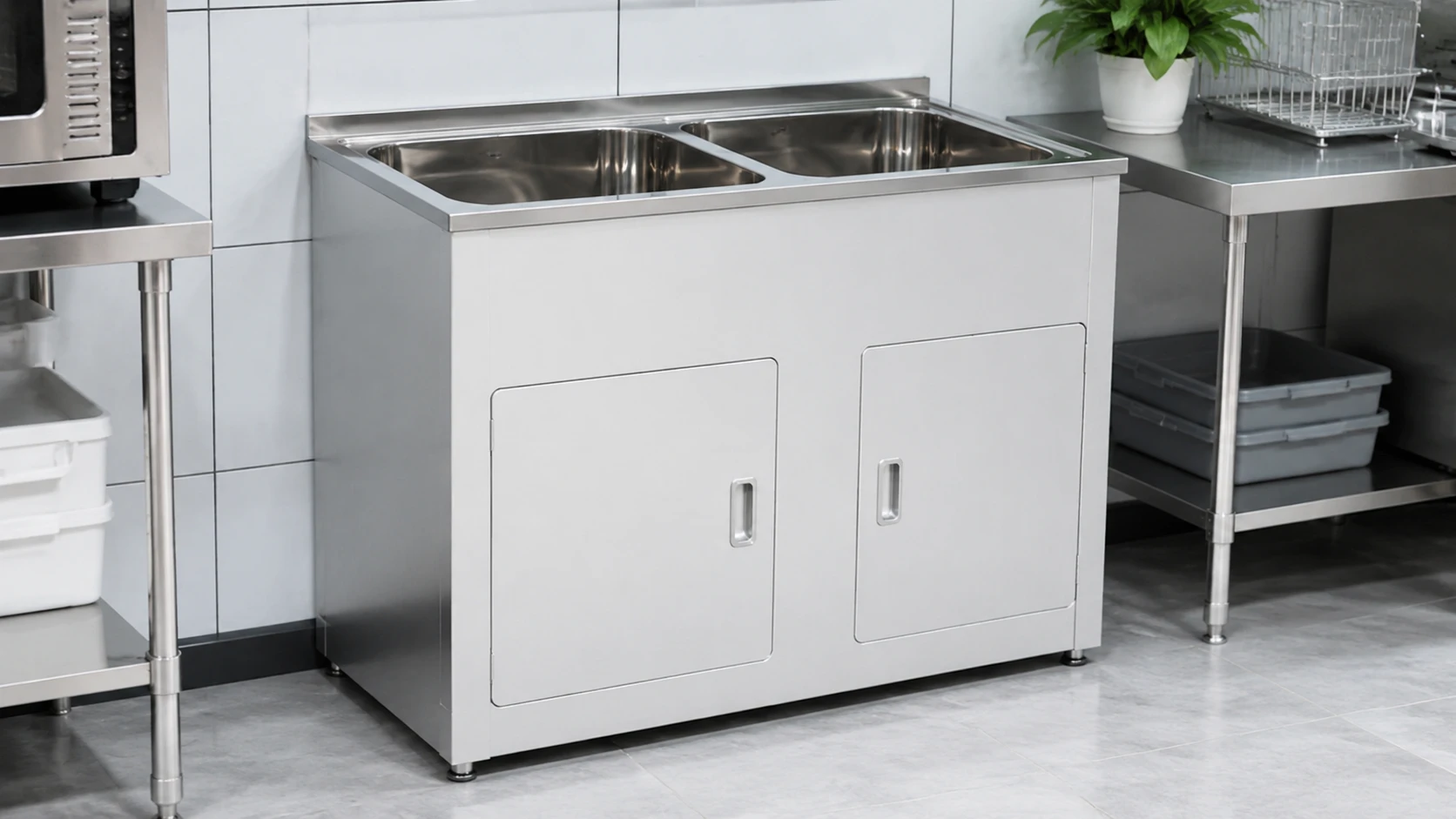
Laundry sinks with storage integrate cabinets for chemicals, gloves, and brushes, keeping areas organized and compliant with safety rules. Locked doors secure hazardous items, ideal for space-limited operations.
From a business view, this reduces clutter-related accidents and speeds workflows. For facilities managers, it’s worth the investment as it enhances site management and ROI through better organization.
4. Essential Design Features for Performance
Look for deep basins to prevent splashes, integrated backsplashes for wall protection, front drains for easy access, and reinforced edges for stability. Pre-drilled holes simplify faucet installation.
These elements boost functionality—deeper slots handle large loads, while sturdy builds withstand daily abuse, ensuring consistent performance in commercial settings.
5. Faucet and Accessory Compatibility
Choose gooseneck faucets for flexibility or foot pedals for hands-free operation in hygienic areas. Pair with drainboards, soap dispensers, or hot-water mixers.
Compatibility ensures seamless integration, reducing leaks and maintenance. For wholesalers, stocking compatible accessories streamlines supply chains.
6. Installation Types: Freestanding, Undermount, or With Cabinet
Freestanding models offer mobility, undermount for sleek custom counters, and cabinet-integrated for storage. Each suits different projects—freestanding for quick upgrades, undermount for new builds.
Weigh pros: freestanding is flexible but less aesthetic; cabinet types unify spaces but require more room. Choose based on site layout and long-term needs.
7. Maintenance and Long-Term Care
Daily wipes with neutral cleaners prevent stains. Learning how to clean a stainless steel laundry sink properly ensures the surface remains non-porous and brilliant for its entire lifespan. For harsh chemicals, rinse immediately even on 316-grade steel.
This routine preserves investment, avoiding costly repairs. Businesses benefit from lower downtime, ensuring stainless steel laundry pools deliver value over decades.
Comparing Your Options: Freestanding, With Cabinet, or Built-In
Evaluate these based on installation, storage, and workflow.
Freestanding Laundry Sinks / Pools
These standalone units with legs allow easy relocation, perfect for retrofits. Assess leg stability to handle loads without tipping.
Pros: Cost-effective and versatile.
Cons: Limited storage. Ideal for temporary or evolving setups in municipal or industrial sites.
Laundry Sinks with Integrated Base Cabinets
These combine sinks with cabinets, offering enclosed storage for supplies. Uniform design keeps areas tidy and secure.
From a business perspective, they optimize space and compliance, providing strong ROI through reduced clutter and faster access.
Built-In or Undermount Sinks for Custom Workstations
Embedded in counters, these create professional stations with surrounding workspace. Customize for specific flows.
Advantages: Seamless integration for large projects. Drawbacks: Higher upfront costs. Suited for new constructions in healthcare or hospitality.
| Option | Pros | Cons | Best For |
|---|---|---|---|
| Freestanding | Flexible installation, easy to move | No built-in storage, less stable for heavy use | Upgrades, temporary facilities |
| With Cabinet | Ample storage, secure and organized | Takes more floor space, higher cost | High-organization needs, safety-focused sites |
| Built-In/Undermount | Custom fit, professional look | Requires custom counters, less flexible | New builds, integrated workstations |
Conclusion
Selecting the right commercial stainless steel laundry sink or laundry pool builds a foundation for efficient, compliant, and durable backend systems. Base your choice on workflow, space, and storage needs—especially integrated cabinets—for a forward-thinking decision.
As a reliable partner in stainless steel solutions, Xinhe offers high-quality options tailored to your needs. Contact Xinhe for bulk quotes or project consultations to elevate your operations.
FAQ
Q1: What is the difference between a “laundry sink,” a “laundry tub,” and a “laundry pool”?
In commercial contexts, these terms often overlap, referring to deep basins for washing. Laundry pools or tubs imply larger, standalone units for industrial volumes, while sinks are more general.
Q2: Is a sink with a stainless steel cabinet worth the investment?
Absolutely, for optimizing space, ensuring chemical safety, maintaining aesthetics, and simplifying maintenance in demanding operations.
Q3: How do I prevent damage from harsh chemicals?
Dilute chemicals as directed, rinse immediately after use, and apply stainless steel cleaners regularly. Even durable 316-grade withstands better with proper care.