Why You Need a Commercial 3 Compartment Sink for Food Safety
Key Highlights
- A commercial 3 compartment sink is essential for meeting food safety standards in any commercial kitchen.
- The three-sink method ensures a proper wash, rinse, and sanitize dishwashing process.
- Using a three compartment sink helps prevent foodborne illnesses and avoids health code violations.
- Durable materials like stainless steel are preferred for their longevity and ease of cleaning.
- These sinks are crucial for streamlining kitchen operations, especially during high-volume periods.
- Proper setup and maintenance are key to maximizing the efficiency and hygiene of your sink.
Introduction
In any bustling commercial kitchen, maintaining the highest standards of cleanliness is non-negotiable. A cornerstone of effective sanitation and food safety is the humble yet indispensable commercial 3 compartment sink. This essential piece of equipment is more than just a place to wash dishes; it’s a systematic tool designed to prevent cross-contamination and ensure every plate, pot, and utensil is hygienically clean.
At Xinhe, we have supported numerous B2B clients, including large-scale catering facilities, in optimizing their cleaning zones. We often recommend a custom stainless steel 3 compartment commercial kitchen sink as the primary defense against bacteria, ensuring the workflow remains uninterrupted even under heavy loads.
Understanding the Role of Commercial 3 Compartment Sinks in Food Safety
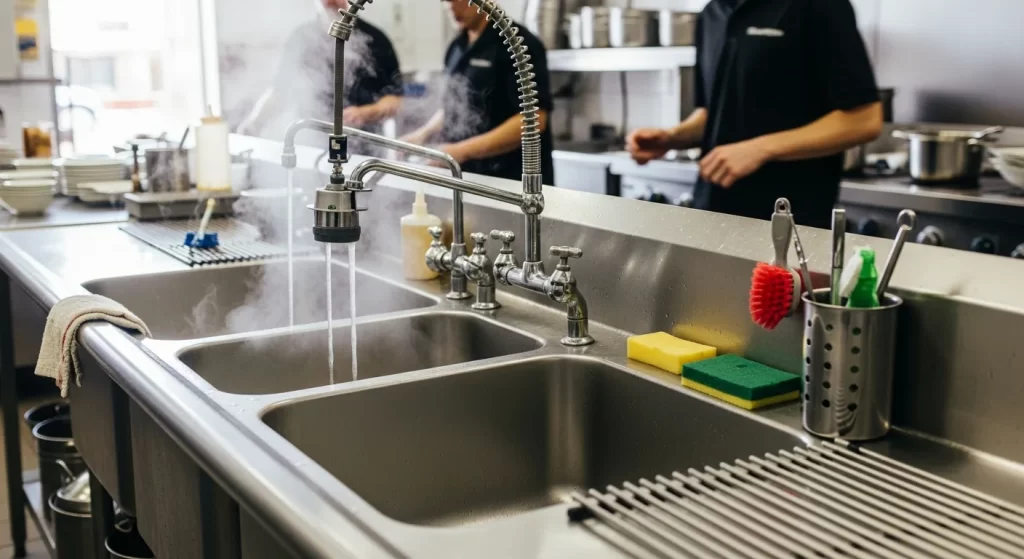
A commercial 3 compartment sink plays a critical role in upholding food safety protocols. Its design facilitates a methodical cleaning process that separates washing, rinsing, and sanitizing, which is a requirement by most health departments.
Expert Insight: In our experience helping clients prepare for health audits, we’ve found that many facilities fail not because they don’t clean, but because their equipment doesn’t allow for the 3 compartment sink rules, order, and steps required by the FDA Food Code.
What Is a 3 Compartment Commercial Sink and How Does It Work
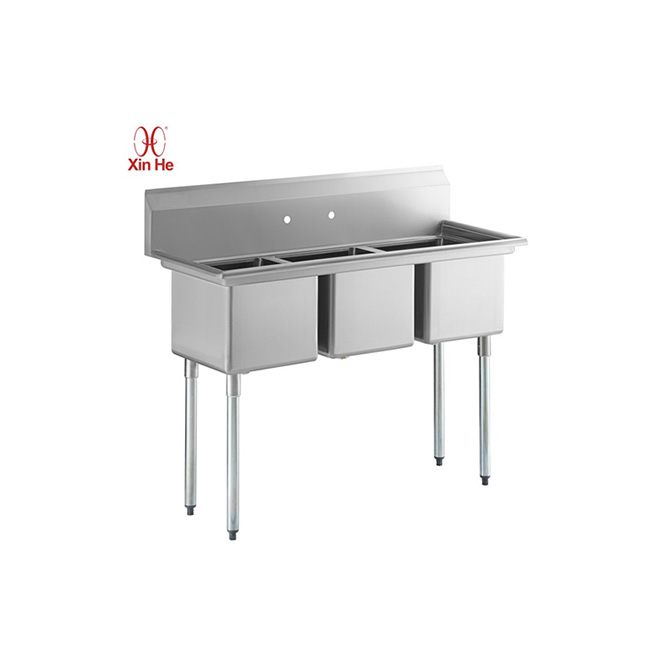
A 3 compartment sink features three separate basins designed for a sequential dishwashing process.
- Wash: The first compartment uses warm, soapy water (at least 110°F).
- Rinse: The second compartment uses clean, warm water to strip away detergents.
- Sanitize: The third compartment uses a chemical solution or 171°F+ water.
For high-traffic environments, we often suggest a 3 compartment sink with drainboards to prevent “cross-flow” where dirty water from the wash stage might splash onto sanitized items.
Key Applications in Restaurants, Cafeterias, and Foodservice Operations
The three compartment sink is a fixture in nearly every type of professional foodservice setting. Its ability to handle high-volume dishwashing makes it indispensable for maintaining operational flow and hygiene. You will find a restaurant 3 compartment sink in places where manual washing is necessary for large pots, pans, and utensils that won’t fit in a commercial dishwasher.
These sinks are not just for traditional restaurant kitchens. Their versatility and importance in sanitation make them a standard requirement in a variety of operations.
- Restaurants and Cafeterias: Essential for daily high-volume dishwashing of cookware and serving items.
- Food Trucks and Concession Stands: Compact models provide full sanitation capabilities in limited spaces.
- Catering Businesses: A cornerstone for on-site and off-site food preparation and cleanup.
Core Benefits of Using a 3 Compartment Sink in a Commercial Setting

Adopting a 3 compartment commercial sink brings significant advantages. Beyond compliance, it’s about durability. Xinhe’s sinks are fabricated using heavy-duty 304 stainless steel and feature full-weld construction, which eliminates the small crevices where mold and bacteria typically hide.
Ensuring Compliance with Food Safety Standards and Health Codes
Health codes typically require a distinct separation between washing, rinsing, and sanitizing. Using this system correctly is one of the most effective ways to pass health inspections. If you are currently using a setup that feels cramped, you might need to evaluate if your 3 compartment sink is actually compliant based on the volume of your specific operation.
Streamlining Operations for High-Volume Dishwashing
In a fast-paced commercial kitchen, efficiency is everything. Commercial 3 compartment sinks are designed to streamline the dishwashing process, especially when dealing with a high volume of items. The organized, assembly-line-style workflow allows staff to work quickly and methodically, reducing bottlenecks in your kitchen operations.
This setup is particularly vital for cleaning items that cannot go into a standard dishwasher. The deep basins of many models are perfect for accommodating bulky equipment without hassle.
- Handling Large Pots: Easily submerge and scrub oversized pots, pans, and mixing bowls that don’t fit in a dishwasher.
- Continuous Workflow: Allows one staff member to wash while another rinses and sanitizes, creating a continuous flow.
- Reduced Turnaround Time: Speeds up the entire dishwashing process, ensuring clean equipment is always available during peak hours.
Technical Features and Common Materials
Stainless Steel vs Other Materials
For commercial and industrial applications, 304-grade stainless steel is the gold standard. At Xinhe, we hold ISO9001 and CE certifications, ensuring that our materials meet global hygiene and safety standards. Our sinks are designed with R10 or R20 rounded corners, making them significantly easier to wipe down than standard square-cornered sinks.
| Material | Pros | Cons |
|---|---|---|
| Stainless Steel | Highly durable, resistant to rust and corrosion, easy to clean, non-porous. | Higher initial cost compared to some other materials. |
| Plastic/Composite | Lower cost, lightweight. | Prone to scratching, less durable, can be damaged by high heat. |
| Ceramic | Aesthetically pleasing. | Brittle, can chip or crack easily, not suitable for heavy-duty use. |
Typical Dimensions, Sink Sizes, and Customization Options
Bowl size is another critical factor. Standard compartment sizes often range from 16×20 inches to 24×24 inches, with depths between 10 and 14 inches. Deeper bowls are better for large pots. Many units also feature a 3 compartment sink with drainboards, which provide valuable space for stacking soiled items or air-drying clean ones.
Some typical dimensions and popular configurations include:
- Compact Models: Ideal for small kitchens, with overall lengths around 60 inches.
- Standard Models: Feature 18×18 inch bowls and are suitable for medium-volume restaurants.
- High-Capacity Models: Can have 24×24 inch bowls and overall lengths of 72 inches or more.
Whether you need a small three compartment sink for a food truck or a massive unit for a cafeteria, size matters. For outdoor or mobile catering, we recommend the custom outdoor double sink with portable kitchen table. If space is at a premium, though a full 3-compartment setup remains the safest choice for permanent installs.
Conclusion
A commercial 3 compartment sink is a fundamental component for ensuring food safety. If you’re ready to take your kitchen’s food safety to the next level, consider booking a free consultation with our experts to explore the best options tailored for your business needs.
FAQ
What makes a sink commercial grade?
A sink is considered commercial grade if it is built from durable materials like heavy-gauge stainless steel to withstand constant use in a commercial kitchen. It must also be designed to meet health and safety regulations, featuring a non-porous surface that is easy to clean and sanitize.
What are the standard steps to wash dishes in a 3 compartment sink?
The standard dishwashing process for a 3-compartment sink involves three steps. First, wash the tableware in the first compartment with hot, soapy water. Second, rinse it in the second bin with clean, warm water. Finally, sanitize it in the third compartment using a chemical sanitizing solution or hot water.
What are the typical dimensions and sizes of commercial 3 compartment sinks?
Typical dimensions for a commercial sink 3 compartment unit vary. Bowl sizes commonly range from 16×20 to 24×24 inches, with depths of 10-14 inches. Overall length can be anywhere from 60 inches for a small three compartment sink to over 72 inches for larger models.