Restaurant Sink Workflow Planning Beyond the Three Compartment Setup
In many restaurant kitchens, the 3 compartment sink gets most of the attention when people think about sink planning. And while it plays a critical role in warewashing, it does not represent the full workflow of a busy kitchen. Food prep, handwashing, equipment rinsing, and utility cleaning often happen alongside dishwashing, and each of these tasks places different demands on sink placement and usage. That is why restaurant sink planning should go beyond the standard 3 compartment setup and focus on how work actually moves through the kitchen.
Why a 3 Compartment Sink Alone Falls Short
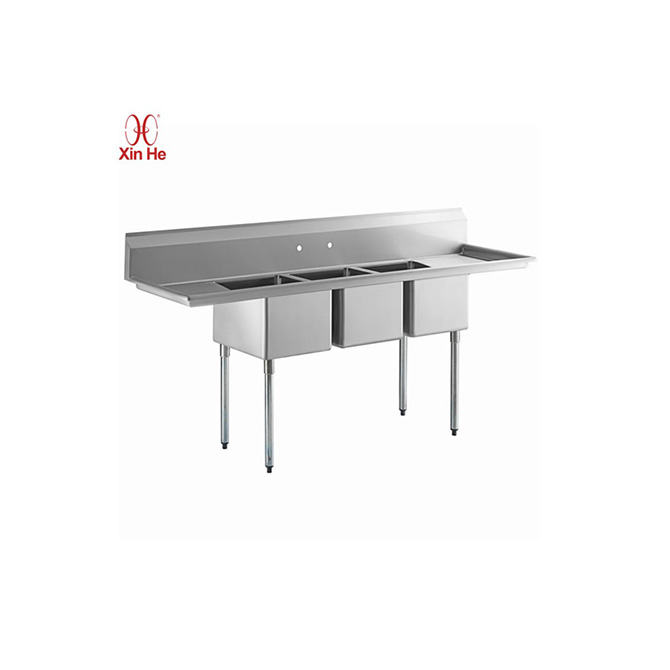
A standard setup is built for a very specific purpose: the wash-rinse-sanitize cycle. Understanding why a 3 compartment sink is still important is fundamental, as it remains the fortress of food safety and warewashing. However, relying on it to handle every water-related task in the back-of-house creates immediate bottlenecks.
In real daily operations, staff members need to rinse produce, wash their hands after handling raw meat, fill mop buckets, and quickly scrub down heavy equipment. If all these tasks default to the warewashing area because no other stations are available, efficiency drops. The lines blur between clean and dirty zones, increasing the risk of cross-contamination. Recognizing the boundaries of your primary wash station is the first step in building a complete kitchen sink workflow.
Breaking Sink Planning into Task-Based Zones
To build a more efficient back-of-house, operators must shift from thinking about equipment checklists to planning task-based zones. A true commercial kitchen sink layout separates functions so that different tasks do not compete for the same basin.
Prep Zone
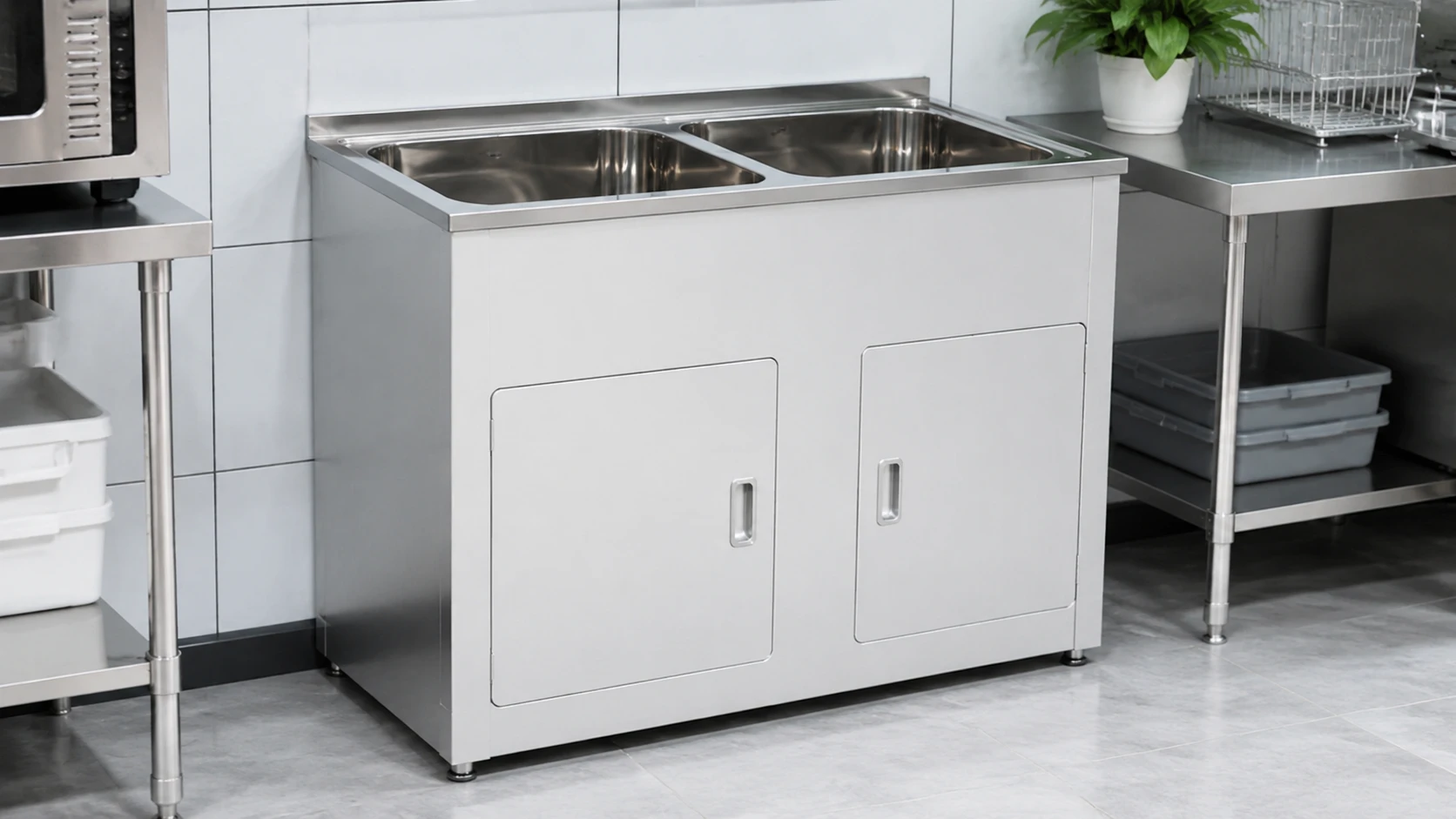
The prep area requires its own dedicated water source. Food preparation involves washing vegetables, thawing frozen proteins under running water, and quick, mid-task rinsing. A dedicated prep sink ensures these activities happen safely, away from dirty dishes and harsh sanitizing chemicals. It keeps the culinary team in their designated station rather than forcing them to walk across the kitchen.
Handwashing Zone
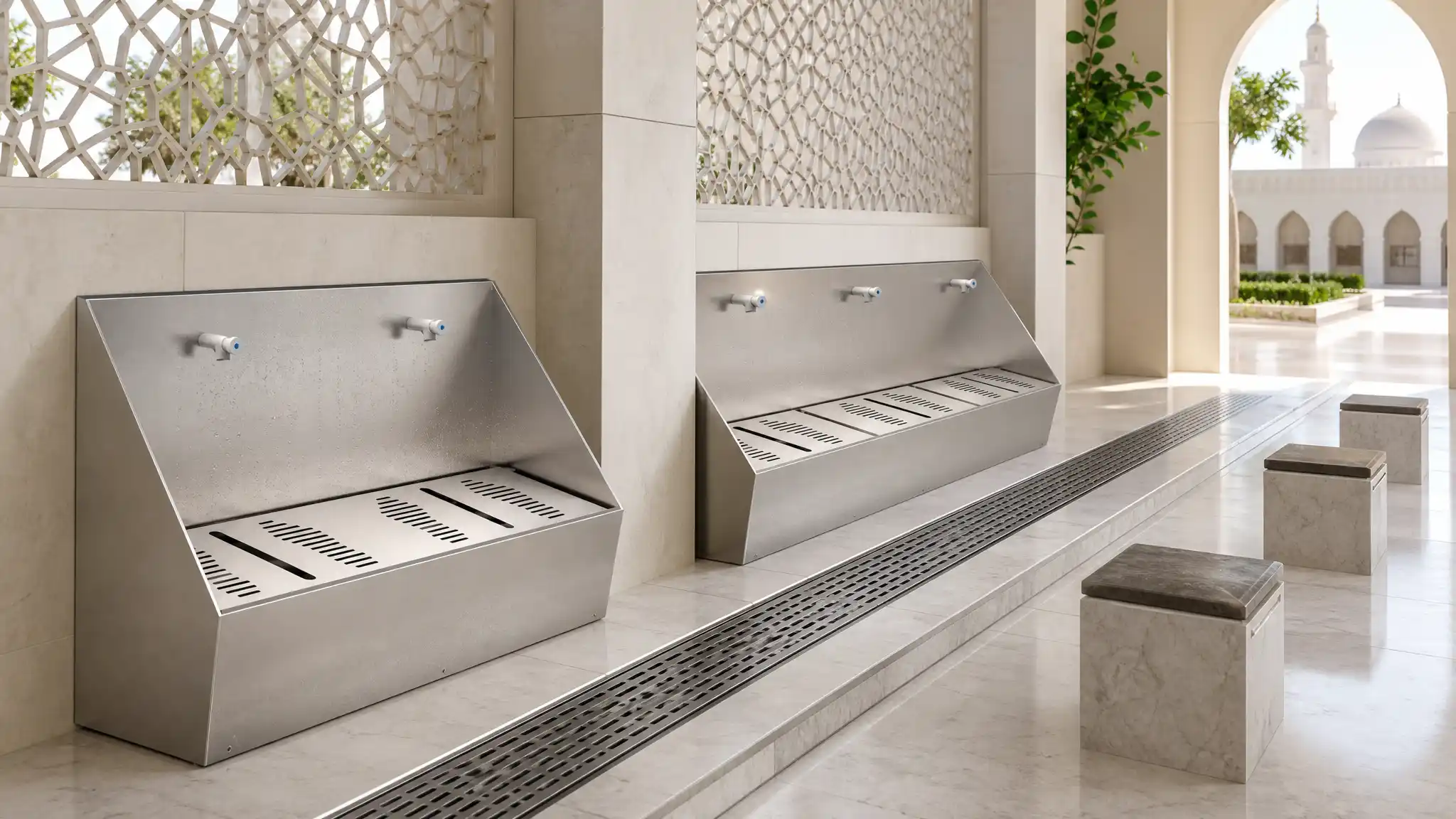
Hygiene stations must be strictly independent. A restaurant hand sink cannot be blocked by thawing chicken or soaking pots. If staff have to wait to wash their hands, or if the sink is difficult to access, hygiene practices naturally decline. Placing hand sinks exactly where staff transition between tasks prevents common hand sink mistakes and keeps the kitchen compliant and safe.
Warewashing Zone
This is the domain of the 3 compartment sink for restaurant use. Its sole focus should be returning dirty plates, utensils, and cookware back to active service. When protected from non-dishwashing tasks, the warewashing zone operates like a well-oiled machine, ensuring high turnover rates for critical kitchen tools during peak periods.
Utility or Support Zone
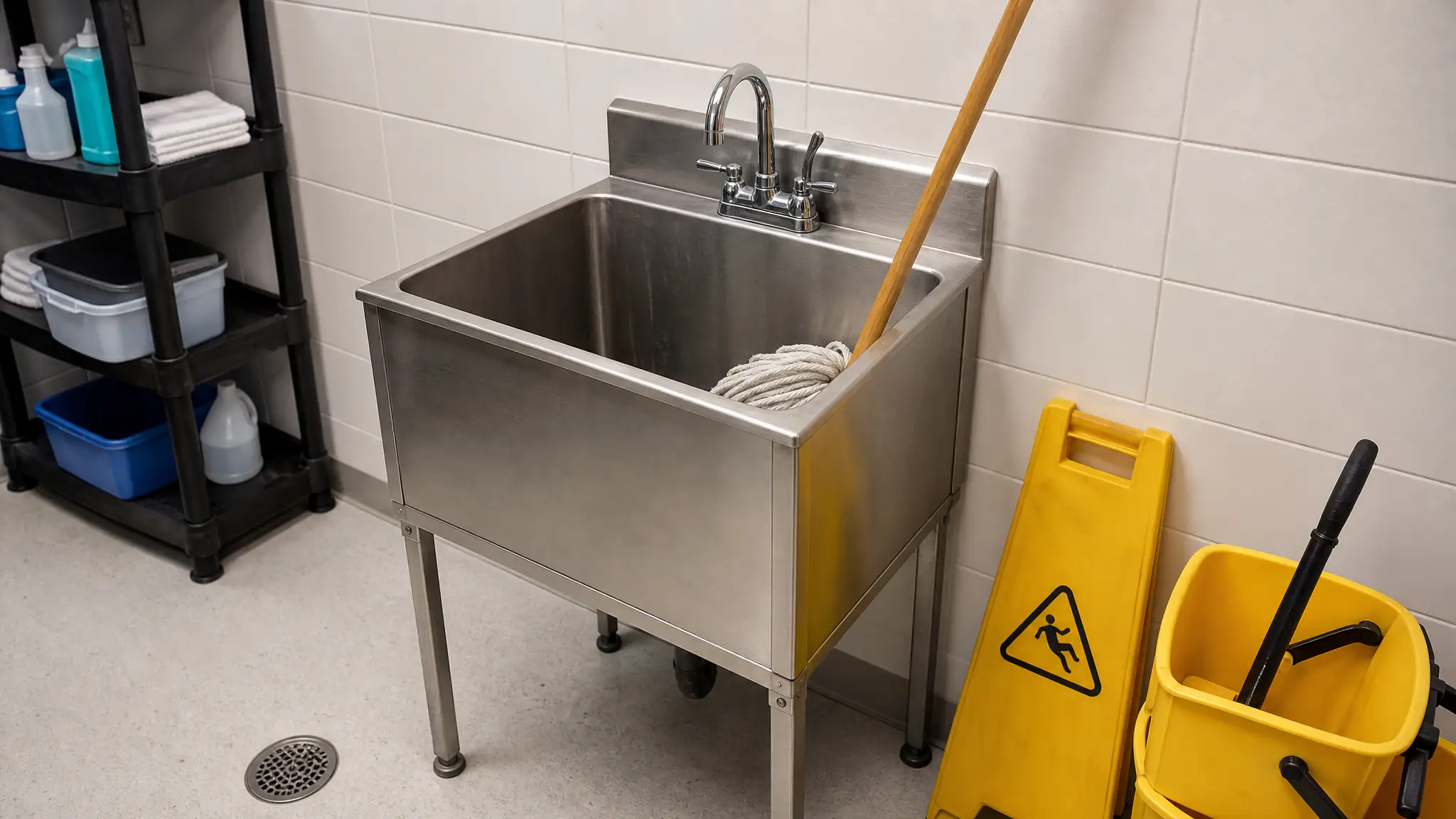
Janitorial tasks, heavy floor cleaning, and equipment washdowns involve dirt and chemicals that should never enter the food handling or dishwashing flow. A dedicated utility sink or mop sink absorbs these messy, necessary jobs. Proper industrial sink planning for support areas keeps the main kitchen clean and protects the integrity of the primary sinks.
When kitchen sink workflow is poorly planned, the consequences are immediately visible on the floor. Consolidating too many tasks into one area creates friction that slows down service.
- Problem: Prep tasks occur near the warewashing sink during peak time.
- Result: Staff movement is severely restricted. Prep cooks and dishwashers get in each other’s way, slowing down both food production and dish turnover. The risk of dirty dishwater splashing onto clean produce also rises significantly.
- Problem: The handwashing sink is temporarily used to dump ice or rinse a towel.
- Result: When a chef needs to wash their hands after handling raw poultry, the sink is occupied. This either delays the chef, interrupting the cooking flow, or forces them to wash in a prep sink, creating a severe cross-contamination hazard.
- Problem: Cleaners use the 3 compartment setup to fill mop buckets.
- Result: Floor dirt and heavy-duty janitorial chemicals are introduced into the very environment meant to sanitize eating utensils. This compromises hygiene standards and requires the dishwashing area to be completely drained, cleaned, and refilled before warewashing can resume.
Assigning the Right Sink Function to the Right Area
Kitchen efficiency isn’t about cramming as many stainless steel restaurant sinks into a room as possible; it is about intelligent placement. Sinks should follow the natural movement of the staff, not the other way around.
When mapping out the floor plan, experienced operators match the fixture to the immediate physical requirements of the surrounding workstations. Partnering with a reliable manufacturer like Xinhe can help ensure that the physical dimensions of the equipment perfectly match these strategic layouts.
| Task Category | Recommended Sink Type | Placement Logic |
|---|---|---|
| Raw Food Handling | Prep Sink (1 or 2 compartments) | Inside the food preparation zone. Must be physically separated from dishwashing to avoid splash zones. |
| Hygiene & Transition | Wall-mounted Hand Sink | At the entrances of the kitchen, near prep stations, and adjacent to the cooking line. Must be highly visible. |
| Heavy Cleaning | Utility / Mop Sink | Tucked away in support corners or near the back door. Kept completely out of the main culinary traffic flow. |
| Utensil Recovery | 3 Compartment Sink | At the end of the dirty dish drop-off line. Designed for linear flow (Dirty -> Wash -> Rinse -> Sanitize -> Clean). |
Integrating targeted commercial kitchen sink solutions based on this task matrix ensures that staff never have to take unnecessary steps to access water.
Sink Workflow for Different Kitchen Sizes
The principles of task separation apply universally, but how they are executed depends entirely on the scale of the operation.
Small Kitchens
In a compact kitchen, floor space is the ultimate premium. While you cannot fit massive multi-bay units everywhere, you still cannot mix tasks. The focus here is on strict functional separation rather than bulk. A small, strategically placed prep sink and a legally required hand sink must be clearly demarcated from the main wash area. When choosing the right commercial kitchen sink for tight spaces, operators often rely on narrower, deeper bowls to maximize utility without eating up the walkway.
Medium Kitchens
As the menu expands and staff numbers grow, the need for distinct zones becomes non-negotiable. In a mid-sized restaurant, prep, handwashing, and warewashing must be physically distanced. This is where you start seeing dedicated vegetable washing stations far removed from the dish pit, allowing multiple teams to operate simultaneously without crossing paths.
High-Volume Operations
In a high-volume operation, task separation is the only way to survive peak periods. The warewashing area is often running non-stop, meaning it cannot absorb any secondary tasks. Here, multiple hand sinks are required across different cooking lines, heavy-duty utility sinks are essential for continuous floor maintenance, and specialized prep sinks are needed for different food categories (e.g., separating raw meat prep from vegetable prep).
Signs Your Kitchen Needs a Workflow Upgrade
Even if your current restaurant commercial sink setup passes health inspections, it might be quietly draining your operational efficiency. It is time to review your workflow if you notice the following signals during daily operations:
- The 3 bay restaurant sink is constantly hijacked: If cooks are using the wash-rinse-sanitize basins to quickly wash off a cutting board or rinse vegetables, your kitchen lacks adequate prep support.
- Hand sinks are surrounded by clutter: A hand sink should always be empty. If it becomes a temporary resting place for utensils or wiping cloths, your layout is forcing staff to improvise storage.
- Constant staff detours: If a line cook has to walk past the dish pit to find a place to quickly rinse a crucial tool, the staff movement is crossing too many zones. This causes collisions and slows down ticket times.
- Overlapping cleaning and food handling: When janitorial duties consistently happen in the same physical space as food preparation, the layout has failed to provide a dedicated support zone.
Planning a Layout That Supports Daily Operations
A well-planned restaurant sink workflow is not just about checking whether a 3 compartment sink is present. It is about making sure food prep, handwashing, warewashing, and support tasks can all happen without unnecessary overlap or delays. When sink functions are matched to the real pace and layout of the kitchen, the result is usually better movement, clearer task separation, and more efficient daily operations. For growing kitchens or high-use spaces, reviewing the full sink workflow can often create more value than simply adding another standard fixture.
Ready to optimize your kitchen’s efficiency?
Request restaurant sink planning advice and discover how task-based layouts can transform your back-of-house operations. Contact Xinhe today for professional workflow recommendations and bulk quotes tailored to your exact project needs.
FAQs
Is a 3 compartment sink enough for every restaurant kitchen?
No. While it is legally required in most areas for warewashing and sanitizing, it cannot handle food prep, handwashing, or janitorial tasks safely. Relying solely on one unit leads to cross-contamination risks and workflow bottlenecks.
What other sink types are commonly used with a 3 compartment sink?
A complete commercial kitchen typically requires dedicated hand wash sinks, prep sinks for food handling, and utility/mop sinks for heavy cleaning and janitorial duties to ensure all tasks remain separated.
How do you plan sink workflow in a small commercial kitchen?
In tight spaces, focus on strict task separation using compact footprints. Ensure the hand sink is easily accessible, keep the prep sink clearly distanced from dirty dishes, and prevent the warewashing area from absorbing non-cleaning tasks to maintain smooth staff movement.