Is a Stainless Steel Utility Tub Better Than a Standard Utility Sink for Commercial Use
For restaurants, hotels, schools, hospitals, public buildings, and industrial sites, the sink in a cleaning room does more than handle rinse water. Staff use it to empty mop buckets, wash cleaning tools, dump dirty water, and keep janitorial work away from food prep or guest-facing areas. When that sink is too shallow or too light, the problem shows up quickly: splashed walls, slow drainage, dented basins, and staff working around a fixture that was never meant for heavy use.
That is why many project buyers compare a stainless steel utility tub with a standard utility sink before confirming an order. The better choice depends on how often the sink will be used, what size buckets need to fit inside it, how the drain is positioned, and whether the job calls for a custom stainless steel sink or a standard commercial utility sink.
What Is the Real Difference
A standard utility sink is usually enough for lighter back-of-house work. It can handle small tools, cloths, occasional rinsing, and general maintenance tasks. In a small laundry room, office pantry, or low-traffic storage area, that may be all the building needs.
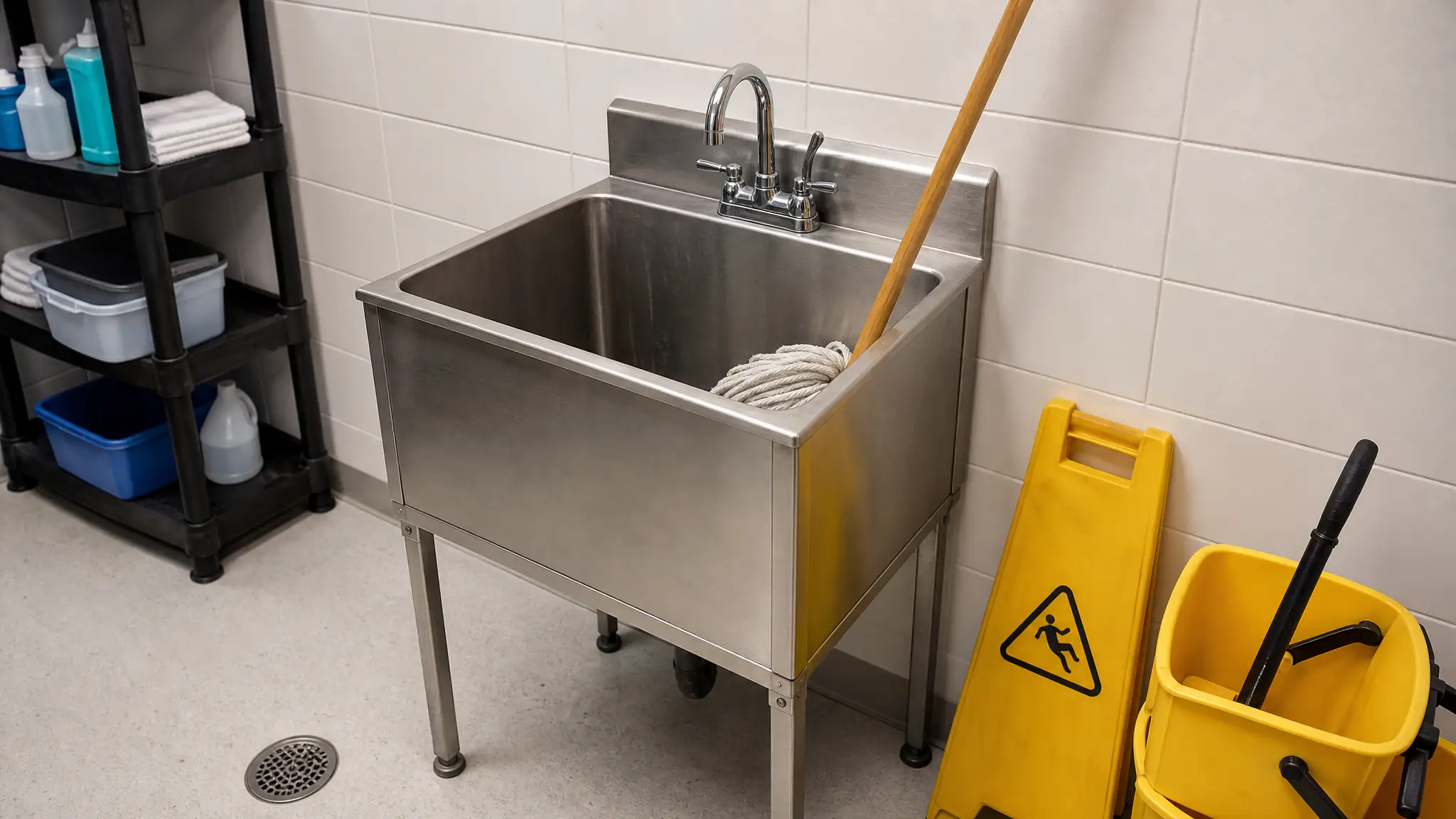
A utility tub sink is different. It usually has a deeper basin, stronger support, and a shape that makes mop bucket handling easier. For janitorial rooms, hotel service areas, commercial kitchens, and maintenance spaces, that depth matters. Staff are not delicately rinsing a few small items. They are dumping dirty water, scrubbing tools, and working fast during cleaning shifts.
A commercial utility sink with a deep stainless steel basin also holds up better when exposed to cleaning chemicals, wet tools, and repeated impact from buckets. Over time, that difference can decide whether the fixture stays reliable or becomes another maintenance issue.
When a Heavy-Duty Utility Tub Makes More Sense
A stainless steel utility tub is usually the better option when the facility has frequent cleaning routines, high water use, large mop buckets, floor cleaning chemicals, or dirty wastewater. In busy commercial buildings, staff may use the same sink many times a day. A shallow or light-duty sink can cause more splashing than expected, especially when someone is lifting and pouring from a full commercial mop bucket.
The other issue is strain. A standard sink may look fine in a product photo, but heavy daily use can expose weak points: thin walls, small drains, unstable legs, or brackets that are not suitable for loaded buckets. For facilities with regular floor cleaning, a commercial mop sink or deep utility tub is often the safer choice.
Project Insight: For facilities that need a deeper cleaning area sink, Xinhe’s stainless steel mop sink range includes freestanding and wall mounted options for commercial kitchens, hotels, schools, hospitals, and industrial cleaning areas.
| Operational Factor | Standard Utility Sink | Heavy-Duty Utility Tub |
|---|---|---|
| Primary Application | Light rinsing, small tools, cloths, general utility work | Mop bucket cleaning, dirty water disposal, tool washing, heavy janitorial use |
| Basin Depth | Shallow to moderate, often around 10-12 inches | Deeper basin profile, often 14-18+ inches, with better splash control |
| Drainage System | Standard drains that may slow down with debris or sediment | Larger drain options for faster wastewater disposal |
| Structural Loading | Suitable for light-to-medium use | Reinforced legs, brackets, or floor support for heavier work |
| Chemical Resistance | Depends on material and finish | 304 stainless steel resists corrosion in wet cleaning areas |
When a Standard Utility Sink May Still Work
A standard utility sink still has its place. For a small back room, light-duty laundry area, maintenance closet, or office service space, it may be the more practical choice. If staff only rinse small items or use the sink occasionally, there is no need to overbuild the area.
The problem starts when a light-duty sink is installed in a space that actually needs a janitor sink, mop sink basin, or commercial cleaning tub. Once staff begin dumping heavy buckets or washing larger tools, the limits become obvious. Splashing increases. Drainage becomes slower. The basin may be too small for real cleaning work.
For project buyers, the question is not only “Which sink is cheaper?” A better question is: “Will this fixture still make sense after one year of daily use?”
What Buyers Should Check Before Ordering
A commercial cleaning sink may look similar from one supplier to another, but small specification differences matter on site. Before placing a project order, buyers should check the parts that affect daily use, not just the product name.
- Material Grade: 304 stainless steel is commonly preferred for wet cleaning rooms because it resists corrosion better than lower-grade materials.
- Basin Depth: A deeper basin helps hold mop buckets, cleaning tools, and wash water without constant splashing.
- Drainage: Wide-aperture drains and strainer baskets help move dirty water faster and reduce blockage from debris.
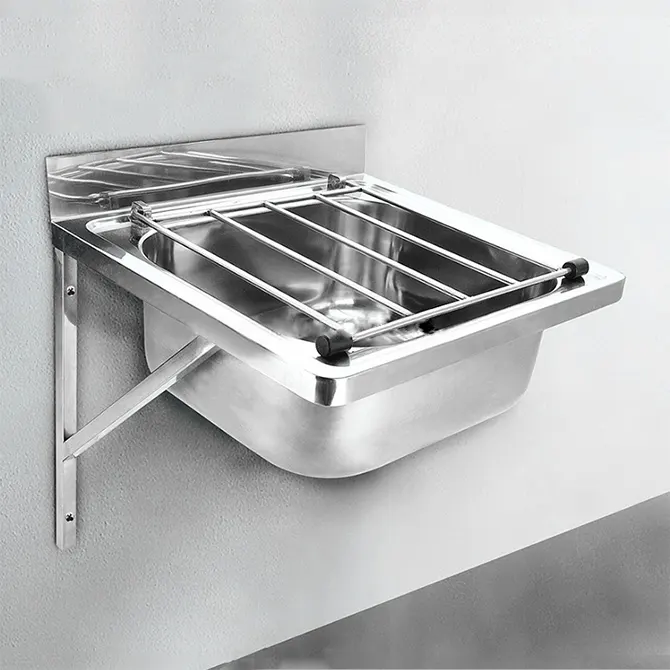
- Installation Method: Some rooms need a freestanding industrial mop sink with support legs, while others work better with a [wall mounted mop utility sink] to keep floor space open.
- Splash Control: Backsplashes, side panels, or grid splashbacks protect nearby walls from dirty water and chemical residue.
- Project Consistency: For bulk orders, confirm that size, thickness, finish, packaging, and accessories can remain consistent across the full batch.
Where Deep Utility Tubs Are Most Useful
Restaurants and Commercial Kitchens
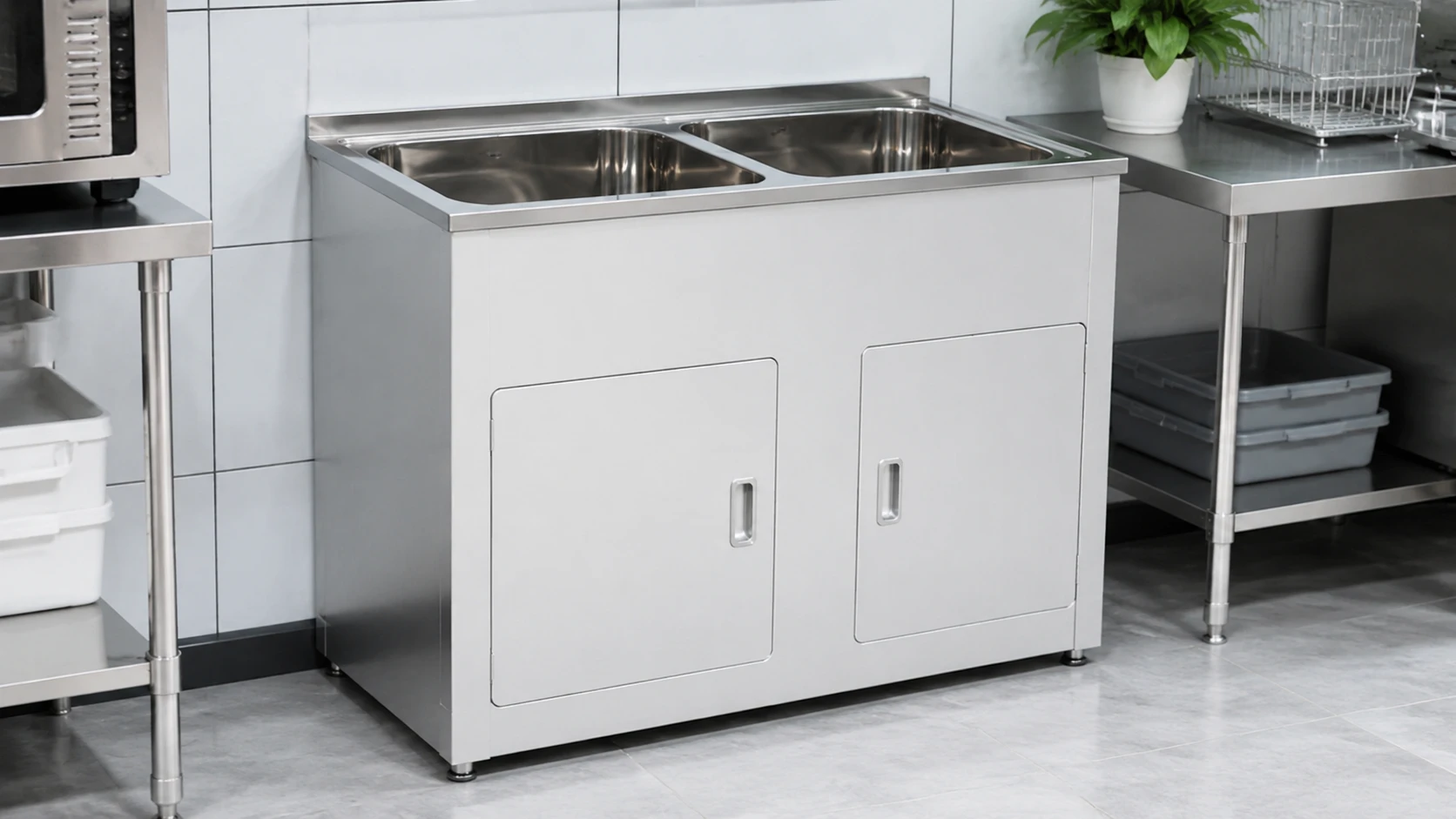
Commercial kitchens need a clear separation between food preparation and cleaning work. A stainless steel utility sink or commercial mop sink gives staff a dedicated area to dump greasy wash water, clean floor tools, and rinse maintenance equipment without interfering with prep sinks or dishwashing stations.
In this type of setting, drainage and cleanability are especially important. A deeper stainless steel tub reduces splashing, while smooth surfaces are easier to rinse down after use.
Hotels and Resorts
Hotel maintenance teams work through room turnover, public-area cleaning, event spaces, and back-of-house service areas. A deep utility tub for hotels gives staff a place to empty mop buckets quickly and wash larger cleaning tools without crowding a small basin.
For hotels with multiple floors or service closets, standardizing the same commercial utility sink design can also simplify purchasing, installation, and future replacement.
Schools and Universities
A mop sink for schools has to deal with hard use. Custodial teams clean classrooms, cafeterias, corridors, gyms, and restrooms, often with large buckets and stronger floor chemicals. A shallow sink may be enough for a small staff room, but not for daily janitorial work across a campus.
A deep mop sink basin helps contain splashing and makes it easier to rinse trash bins, floor tools, and cleaning accessories.
Hospitals and Clinics
Medical facilities need fixtures that are easy to clean and suitable for controlled sanitation areas. A stainless steel utility tub with rounded corners and a clean basin layout can reduce dirt traps and make wash-down easier.
For hospitals and clinics, splash control is not just about keeping the wall clean. It also helps keep wastewater inside the basin and away from surrounding surfaces.
Factories and Workshops
Industrial cleaning areas deal with grease, grit, metal dust, oils, and heavier tools. A plastic or light-duty basin may wear quickly in this environment. An industrial utility sink stainless steel configuration is a better fit where the sink will see repeated impact, abrasive residue, or harsh cleaning tasks.
For factories, the drain design also matters. A larger drain opening and a suitable strainer can help reduce clogging from solid particles.
Property Management and Public Buildings
For property managers and public building projects, the sink choice affects both maintenance routines and procurement control. A janitor sink for public buildings gives cleaning teams a proper place to handle dirty water, rather than using restroom sinks, pantry sinks, or other fixtures that are not designed for that work.
For large developments, a commercial sink supplier that can provide repeatable dimensions, stable packaging, and custom options can make project purchasing easier.
Utility Tub, Mop Sink, Service Sink: Does the Name Matter
The same product may be described in several ways depending on the market. Some buyers search for a stainless steel utility tub. Others use terms such as commercial mop sink, service sink, janitor sink, slop sink, wash tub, utility sink, or stainless steel utility sink.
The name helps with searching, but the specification decides whether the product works. For quotation and installation, buyers should focus on:
- Basin size and depth
- Stainless steel grade and thickness
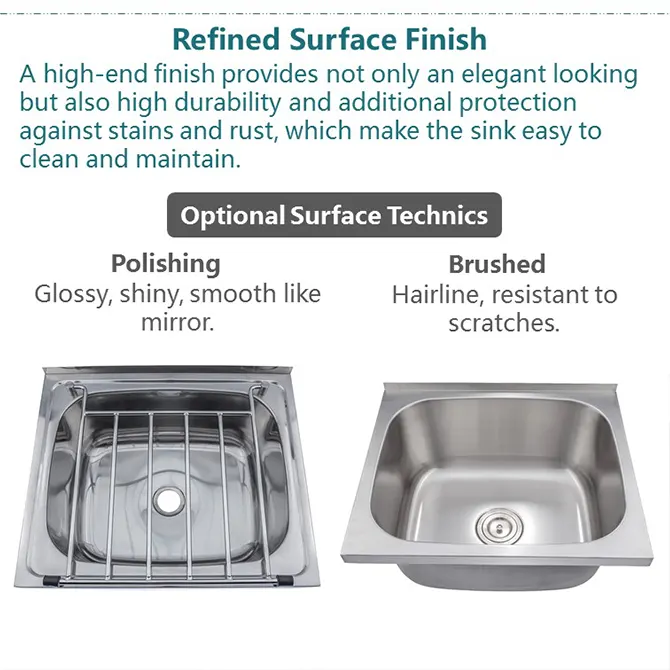
- Surface Treatment Methods
- Drain location and drain size
- Wall mounted, freestanding, or floor mounted installation
- Splashback height and side protection
- Quantity, packaging, and delivery requirements
A reliable commercial mop sink supplier should ask about the room layout and cleaning workflow, not just quote the first product that matches the search term.
Questions to Ask Before Placing a Project Order
Before ordering a stainless steel utility tub or custom stainless steel sink, buyers should confirm how the fixture will be used in real life. A hotel service room, a school janitorial closet, and an industrial cleaning area may all need a deep basin, but the details will not be identical.
These questions help narrow the specification:
- Will staff use the sink mainly for mop buckets, tools, laundry support, or mixed cleaning work?
- How large are the buckets or tools that need to fit inside the basin?
- Is the sink used daily, occasionally, or during heavy cleaning shifts?
- Does the room need a freestanding, wall mounted, or floor mounted design?
- Where should the drain be positioned to match existing plumbing?
- Does the project require splashbacks, side guards, strainer baskets, or custom accessories?
- How many units are needed, and should all units share the same dimensions?
Sending the room layout, expected use, installation preference, and order quantity to the manufacturer can prevent expensive changes after delivery.
So, Is a Stainless Steel Utility Tub Better
For heavy-duty commercial cleaning areas, usually yes. A stainless steel utility tub handles mop buckets, dirty water, cleaning tools, and daily janitorial use better than a standard utility sink. The deeper basin also helps reduce splashing around the cleaning room.
A standard utility sink still makes sense for light rinsing or occasional use. But if staff use the sink every day, pour large amounts of wastewater, or work with floor-cleaning chemicals, an undersized sink can become a problem quickly.
For contractors, distributors, and facility buyers, the safer choice is to match the sink to the cleaning workload. Saving a little on a lighter sink may not be worth it if it leads to wall damage, slow cleaning, repairs, or early replacement.
FAQ
Is an industrial utility tub the same as a mop sink?
Not always, although the two products often overlap in commercial cleaning areas. A mop sink is usually designed for mop buckets and dirty water disposal. A heavy-duty utility tub may also be used for tool washing, maintenance cleaning, laundry support, or general facility work.
For project sourcing, buyers should compare basin depth, drainage, mounting style, stainless steel grade, and load support rather than relying only on the product name.
When should a buyer choose a stainless steel utility tub instead of a standard utility sink?
Choose a stainless steel utility tub when the sink will handle frequent cleaning, large mop buckets, dirty water, bigger tools, or cleaning chemicals. A standard utility sink can work for lighter tasks, but high-use commercial areas usually need a deeper and more durable basin.
Can Xinhe customize deep wash basins for project orders?
Yes. Xinhe can support custom dimensions, basin layouts, mounting styles, splashbacks, drainage positions, and accessories for commercial mop sink and heavy-duty tub projects. Buyers can provide room layouts, quantities, and installation requirements for a more accurate quotation.
Which installation type is better: wall mounted or freestanding?
Wall mounted utility sinks are useful in smaller cleaning rooms where floor space matters. A freestanding or floor mounted design is usually better for heavier work, larger buckets, and industrial cleaning areas.
The best option depends on wall strength, plumbing position, workflow, load requirements, and how staff move through the cleaning area.
What should buyers check before ordering in bulk?
Before a bulk utility sink order, buyers should confirm stainless steel grade, bowl depth, overall dimensions, drain size, splashback height, installation method, packaging, lead time, and whether the supplier can keep product specifications consistent across the whole order.
It is also worth confirming whether the commercial sink supplier can support custom stainless steel sink production if the project needs special dimensions or drainage positions.
Streamline Your Project Procurement
If you are sourcing stainless steel utility tubs, mop sinks, or commercial utility sinks for a restaurant, hotel, school, hospital, industrial facility, or public building project, Xinhe can match the sink design to the cleaning workflow. The available [commercial mop sink solutions] include freestanding, wall mounted, and floor mount stainless steel options, with custom dimensions, drainage layouts, splashbacks, and accessories available for project orders.
Need a heavy-duty wash station or custom sink for a facility project? Share the room layout, preferred installation type, drainage position, and order quantity to receive a practical specification and quotation.