Home > Blog > Public Products >
Integrated Waste Management: Pairing a Kitchen Garbage Can Cabinet with Your Prep Tables
In many commercial kitchens, the prep line receives careful planning while the waste area becomes an afterthought. Staff may rely on an open bin near the wall, only to see it fill quickly during service, release odors, attract flies, and create a poor impression during inspections. Waste handling often sits close to food preparation, so it deserves the same level of layout planning as sinks, work tables, shelves, and cooking equipment.
A well-planned kitchen garbage can cabinet helps turn that weak point into a controlled waste station. By enclosing the bin and placing it within the prep-table workflow, operators can improve waste containment, reduce visual clutter, and make daily cleaning easier. The cabinet does not replace sanitation procedures, pest-control routines, or local code compliance, but it gives the team a cleaner and more practical starting point.
A functional waste zone is never just one container. It usually works best as a small system: an enclosed cabinet for solid waste, a nearby prep surface for scraping and sorting, a clear route for removing filled liners, and a service point for dirty water and cleaning tools. That last element often gets missed in early kitchen planning.
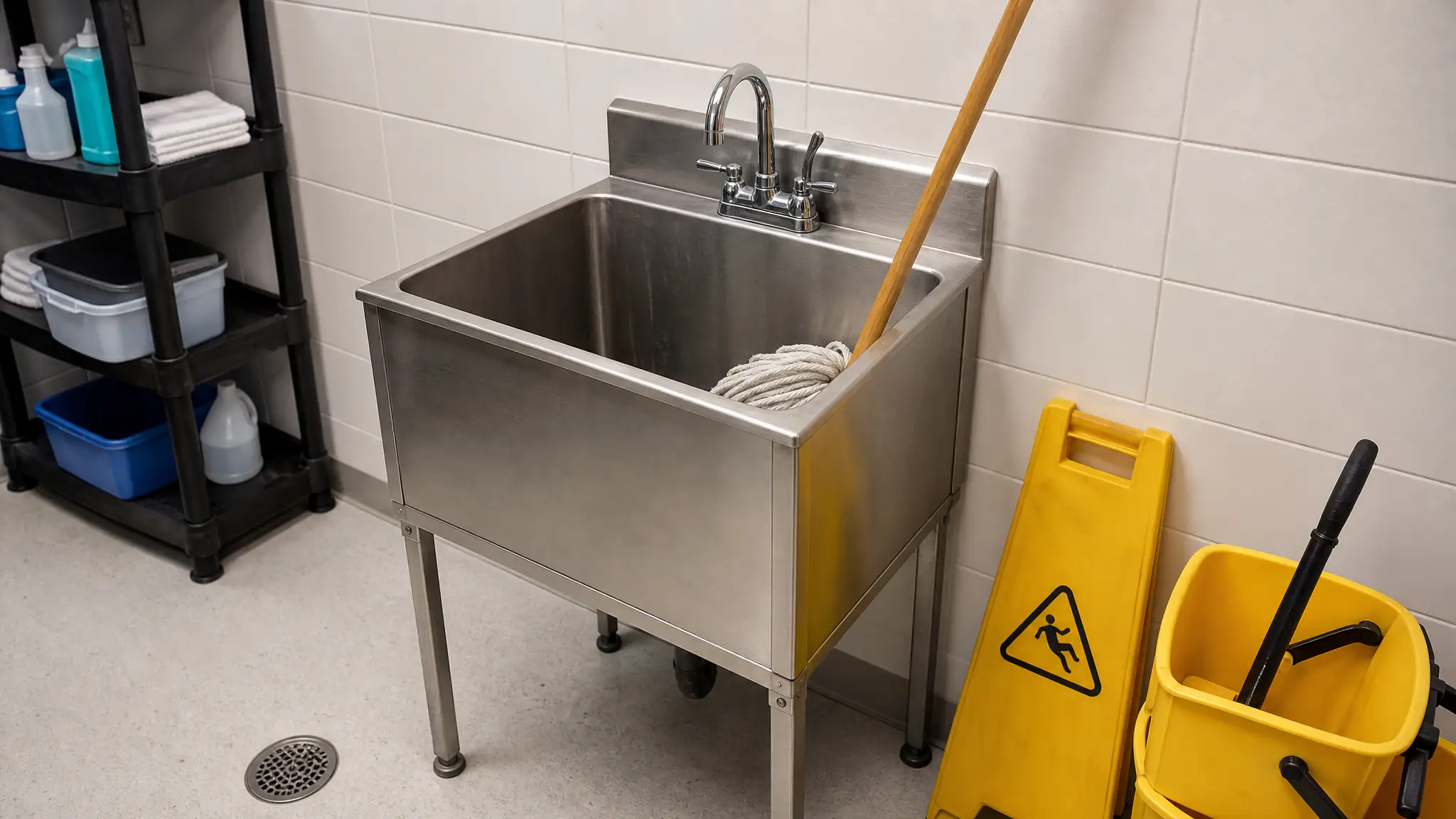
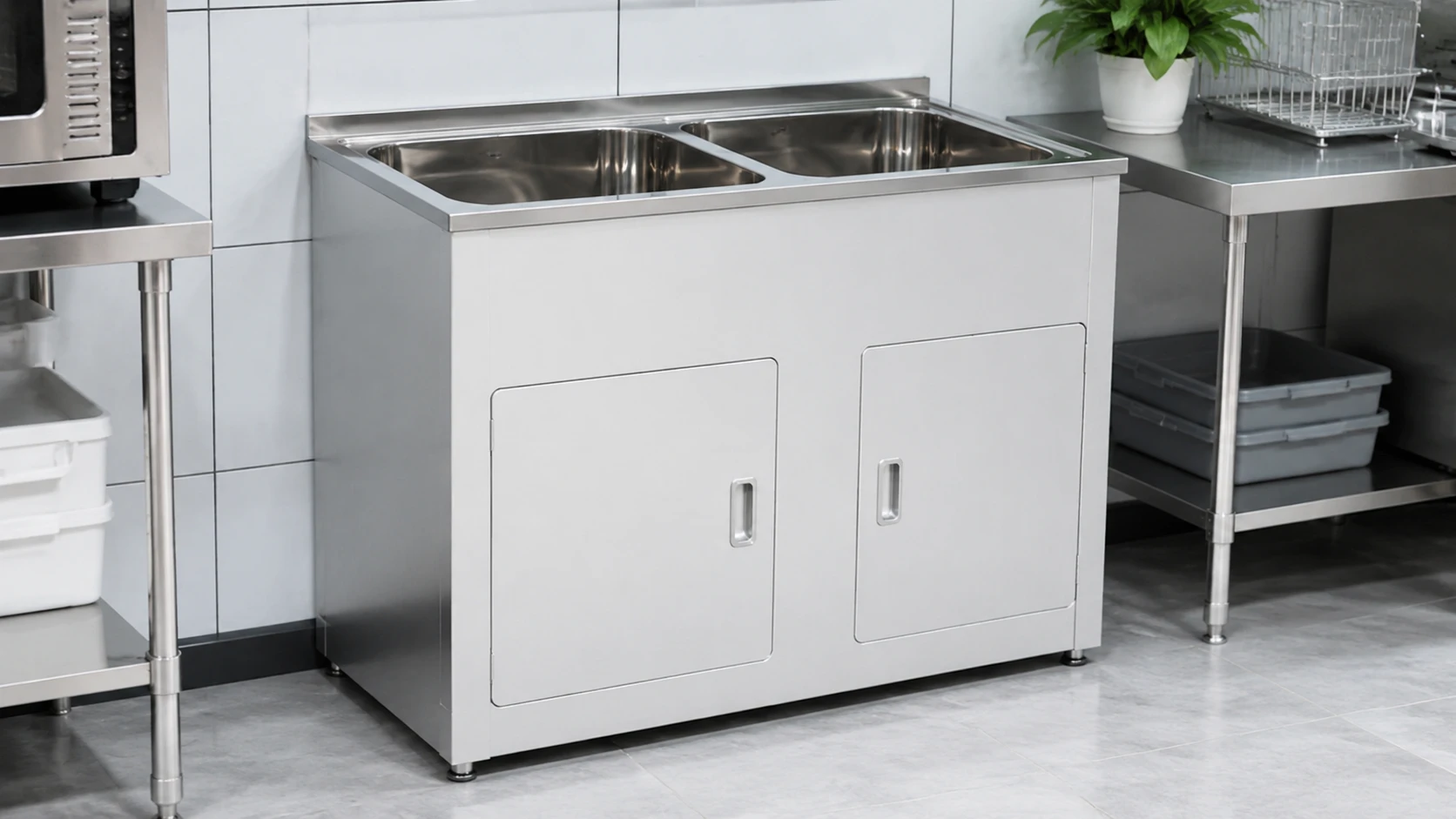
Many food-establishment codes and plan-review guides require or recommend at least one mop sink or curbed cleaning facility for disposing of mop water and similar liquid waste. Placing a heavy-duty stainless steel mop sink for washdown and liquid-waste disposal near the janitorial or waste-handling area can help keep dirty tasks away from food-prep sinks. Project teams should still confirm the exact requirement with the local authority having jurisdiction.
Once the washdown point is planned, the kitchen garbage can cabinet, prep tables, drainage, and trolley route can work as one controlled back-of-house loop.
Why Waste Zones Fail in Commercial Kitchens
Waste areas usually fail for practical reasons, not because the team ignores hygiene. The problem starts when the layout forces staff to cross active work zones, leave bins uncovered during service, or clean floors without a proper drain nearby.
Common failure points include:
- Cross-contamination risk: Exposed food waste near prep tables can increase the chance of splash, contact contamination, and poor separation between clean and dirty tasks.
- Pest and odor pressure: Open bins can release odors and leave food residues accessible to flies, rodents, and cockroaches if staff do not empty and clean them frequently.
- Workflow delays: Staff lose time when they must walk across the kitchen to discard trim, packaging, or plate waste.
- Poor inspection appearance: Overflowing bins, stained floors, and unclear waste routes can make the kitchen look poorly controlled, even when the main prep line is clean.
The fix is not simply buying a larger open bin. A better approach treats waste handling as a planned work zone with containment, access, cleaning, and drainage considered together.
The Kitchen Garbage Can Cabinet Advantage
A kitchen garbage can cabinet is a stainless steel enclosure designed to house one or more internal waste containers. Depending on the project, the cabinet may use a front door, push opening, top drop-in opening, or custom access design. The goal is simple: keep the waste container contained, easier to wipe down, and visually separated from the prep line.
Compared with an open container, a semi-enclosed waste disposal cabinet can help reduce visible clutter, improve facility appearance, and limit direct pest access when staff also use liners, close doors properly, and empty the bin on schedule. Xinhe’s listed garbage can cabinet product uses 304 stainless steel, includes a built-in trash-can design, and supports standard or custom sizing for project needs.
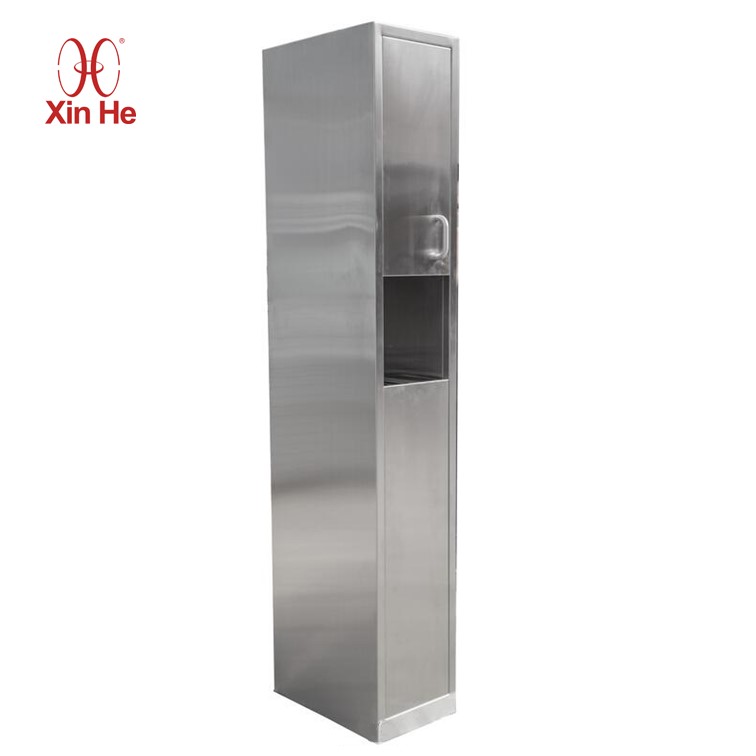
This matters in open kitchens, hotel back-of-house corridors, healthcare canteens, school kitchens, and customer-facing foodservice areas where visible waste handling affects both hygiene perception and workflow.
Key Configuration Choices
- Single-stream or multi-stream layout: A kitchen garbage can cabinet can be specified for general waste only, or designed for separate waste streams such as recyclables and food scraps where local sorting programs require it.
- Access style: Buyers may consider front access, top drop-in openings, push doors, or hands-free mechanisms based on the hygiene policy and the way staff use the prep line.
- Internal bin size: The internal container should match peak service volume, liner availability, and emptying frequency.
- Custom dimensions: For built-in layouts, confirm cabinet height, width, depth, and opening position before finalizing prep-table dimensions.
Optimizing the Prep Table Workflow
The main reason to pair a kitchen garbage can cabinet with prep tables is to reduce unnecessary movement. Staff should be able to trim, scrape, sort, and discard waste without turning the line into a traffic bottleneck.
A good layout places the disposal opening close enough to the prep surface for quick use, but not so close that waste handling interferes with food assembly or clean utensil storage. In many kitchens, the cabinet works well at the end of a prep run, beside a scraping area, or near the transition between prep and dish return.
During peak hours, filled bins must leave the kitchen before they overflow. That makes the removal route as important as the cabinet itself. Mobile trolley shelving that moves waste and supplies can support back-of-house movement, but waste and clean supplies should not share the same trip unless the facility has a clearly controlled procedure that prevents contamination. In most foodservice layouts, separate carts, separate routes, or separate timing offer a safer solution.
Before purchasing equipment, map the full loop:
- Where staff generate waste.
- Where they sort or scrape it.
- How they access the Kitchen Garbage Can Cabinet.
- How they remove full liners or internal bins.
- Where they rinse tools and dispose of mop water.
- How they clean the floor and drain washdown water.
This planning step often prevents clutter, collisions, and hygiene problems after installation.
HACCP, Pest Control, and Inspection Readiness
HACCP-based food safety programs focus on identifying and controlling hazards. Waste handling can become a sanitation and pest-control risk when food scraps, liquid waste, and packaging residues sit too long in open or hard-to-clean areas. A kitchen garbage can cabinet supports that control by giving waste a defined location and a cleanable enclosure.
Still, the cabinet cannot do the job alone. Operators also need written cleaning schedules, timely waste removal, liner replacement, pest monitoring, and staff training. Local inspectors may also review floor finishes, drainage, sink placement, backflow protection, and the separation of dirty and clean workflows.
The floor below and around the waste zone deserves special attention. Washdown water, spills, and mop-bucket drainage can create standing water if the floor slope or outlet size is wrong. Pairing the waste station with a correctly sized floor drain can help reduce pooling when the drain, floor slope, grate, strainer, and cleaning routine are all planned together.
A well-designed waste zone should make daily cleaning easier. It should not promise automatic compliance, but it should help the facility demonstrate better control.
What Procurement Teams Should Specify
Procurement teams should avoid vague requests such as “one stainless trash cabinet.” A better specification defines material, thickness, access style, internal capacity, cleaning access, and installation conditions.
| Specification Element | Procurement Recommendation |
|---|---|
| Material grade | 304 stainless steel suits many commercial kitchen applications; consider 316 stainless steel for chloride exposure, coastal locations, or aggressive cleaning environments. |
| Thickness | Confirm actual sheet thickness with the supplier. For heavy-use areas, thicker material such as 1.2 mm or project-specific heavy-duty options may improve durability. |
| Access mechanism | Choose a front door, push opening, top drop-in opening, or hands-free design according to the workflow and hygiene policy. |
| Capacity and sorting | Match the internal bin volume and sorting layout to daily waste output, liner size, and emptying frequency. |
| Cleaning access | Check whether staff can remove bins, wipe internal surfaces, clean under the cabinet, and access surrounding floor drains. |
| Mobility or installation | Use lockable casters where the cabinet must move for cleaning; use fixed installation only when floor sealing and cleaning access are properly planned. |
| Documentation | Request material confirmation, drawings, and any required NSF/ANSI or local compliance documentation when the project calls for it. |
| Custom fabrication | Confirm drop-hole size, counter alignment, door swing, internal bin dimensions, and edge finishing before production. |
For complex projects, procurement teams should share drawings, workflow notes, expected waste volume, and cleaning procedures with the manufacturer before approving the final kitchen garbage can cabinet design.
Waste Stations for Diverse Facilities
No single waste-station layout suits every commercial environment. The right Kitchen Garbage Can Cabinet depends on service volume, staff movement, cleaning chemicals, waste type, and the level of visibility to customers or inspectors.
Hotel and Central Kitchens
Hotels, banquet kitchens, and central kitchens often handle large waste surges during prep and dish return. These facilities may need larger internal bins, multiple waste streams, reinforced stainless steel construction, and a clear removal route to external waste storage. The cabinet should sit where it supports the prep line without blocking carts, staff movement, or dishwashing traffic.
Hospitals and Healthcare Canteens
Healthcare foodservice areas often apply stricter infection-control and cleaning expectations. A waste cabinet for these projects may need smoother surfaces, fewer crevices, hands-free access, and compatibility with frequent disinfection. Project teams should confirm the exact healthcare, canteen, or facility-management requirements before selecting the final model.
Cafes and Hospitality Venues
Small cafes and hospitality counters need compact waste control. A kitchen garbage can cabinet can fit under or beside sandwich prep, beverage prep, or service counters to keep waste out of sight. In tight layouts, the most important details are door swing, liner changes, odor control, and easy cleaning around the base.
FAQ
Is a Kitchen Garbage Can Cabinet worth it for a small restaurant?
Yes, it can be useful in a small restaurant because space, odor, and visual control matter even more in compact kitchens. A cabinet helps define the waste zone and keeps the bin from becoming an exposed obstacle. Staff still need to empty it often and clean it daily.
What size Kitchen Garbage Can Cabinet do I need?
Size depends on peak service volume, liner size, available floor space, and how often staff can remove waste. Buyers should confirm internal bin dimensions, overall cabinet height, and the relationship between the cabinet opening and the prep table surface.
Can a Kitchen Garbage Can Cabinet help with pest control?
It can help reduce pest access to food waste, especially when the door fits well and staff keep liners closed or replaced. It works best as part of a broader pest-control program that includes daily cleaning, proper drainage, exterior waste management, and regular monitoring.
Should the waste cabinet be near a sink?
It should not sit next to a food-prep sink in a way that allows dirty tasks to interfere with clean food handling. A better plan places the cabinet near a dedicated utility or mop sink used for dirty water, tool rinsing, and cleaning tasks, while keeping clear separation from handwashing and food-prep sinks.
Is stainless steel better than plastic for a commercial waste cabinet?
Stainless steel is usually preferred for commercial environments because it is durable, non-porous, corrosion-resistant when properly specified, and easier to clean repeatedly. However, buyers should confirm grade, thickness, finish, weld quality, and any required compliance documentation instead of relying on material name alone.
Build a Cleaner, Safer Back-of-House
A clean commercial kitchen does not happen by accident at the waste corner. It comes from equipment layout, staff routines, cleaning access, and code-aware planning.
When a kitchen garbage can cabinet works together with stainless steel prep tables, a dedicated utility sink, proper floor drainage, and a controlled removal route, the waste area becomes easier to manage. For new builds, renovations, hotel kitchens, central kitchens, healthcare canteens, and multi-site foodservice rollouts, the best approach is to specify the waste zone as one connected system rather than buying mismatched parts one by one.
Talk to Xinhe’s project team for custom stainless steel waste cabinet drawings, bin-configuration options, and project quotations based on your facility’s workflow.