Knee Operated Sink for Commercial Kitchens: Hygiene and Installation Guide
In a busy commercial kitchen, washing your hands isn’t something you do once an hour—it’s a constant, repetitive necessity. A knee operated sink solves a simple but messy problem: it lets staff kill the water flow without ever touching a handle. This removes a major contact point in prep and service areas where grease and bacteria tend to migrate.
For procurement teams, however, it’s not just about picking a basin. You have to look at the stainless steel grade, valve responsiveness, and how the unit actually anchors to the wall. This guide cuts through the marketing fluff to look at the specs and installation factors that actually matter for a long-term project.
Why Knee Operation Matters in Commercial Hygiene
In high-volume foodservice, the jump between handling raw protein and plating a finished meal happens hundreds of times a shift. Every time a chef touches a manual faucet, there’s a risk of cross-contamination. Shifting water control to the lower body keeps the hygiene workflow moving without interruption.
The logic is straightforward: when you trigger the water with a knee panel, your hands stay clean from start to finish. This is especially helpful in central kitchens where several people might use the same station. It stops the buildup of grime on physical taps, which are notoriously hard to keep sanitized during a rush.
Common Applications for Knee Operated Sinks
Don’t overspend by putting high-spec hands-free units in every corner. While a basic utility sink works for a mop room, these specific zones usually need the precision of a knee operated wash sink:
- Commercial Kitchens: Stations right on the prep line or near plating.
- Central Kitchens and Commissaries: High-traffic hubs where hygiene has to be consistent across massive shifts.
- Food Processing Facilities: Any area dealing with raw meat or packaging.
- Hospital Support Areas: Nutrition rooms and cleaning closets that need infection control but don’t require full surgical-grade setups.
- Catering and Events: Mobile professional rigs that need to pass strict health inspections in temporary spaces.
Buying Specifications to Check Before Ordering
Durability lives in the technical data, not in words like “heavy-duty.” Here is what you actually need to verify.
Stainless Steel Grade and Gauge
For most projects, 304-grade stainless steel is the standard for a reason. It handles constant moisture and harsh cleaners without rusting out. Check the thickness (gauge) too—a thicker basin won’t dent or rattle when you put pressure on the knee-valve assembly.
Basin Geometry and Splash Control
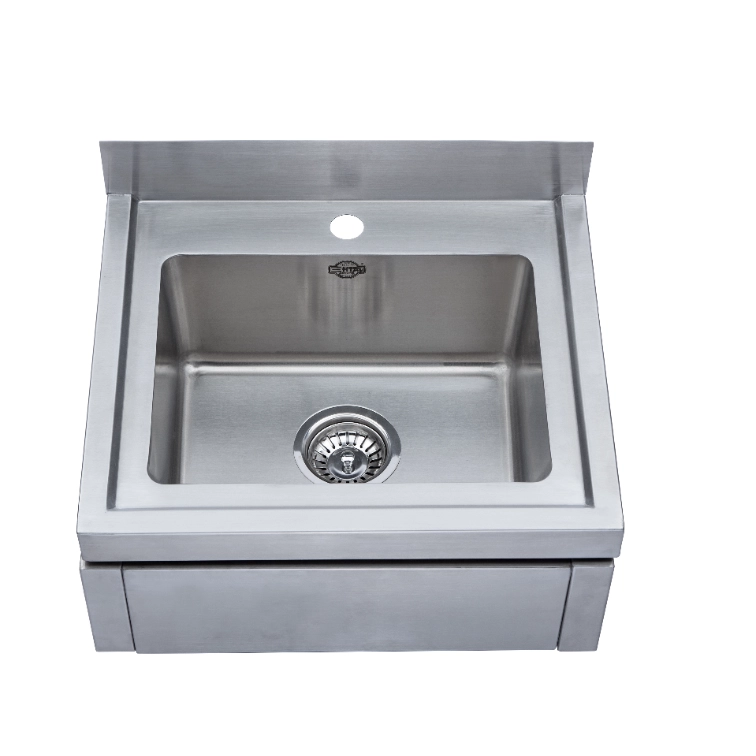
The basin needs to be deep enough to stop water from bouncing onto the floor, but compact enough not to block the walkway. A built-in backsplash is a must to protect the wall. If the sink sits right next to a prep table, consider adding side splashes to keep water where it belongs.
Valve Mechanism and Maintenance Access
Knee controls range from small pedals to wide-push panels. In a fast-paced kitchen, a wider panel is better because it’s easier to hit from different angles. Before you buy a stainless steel knee operated wash sink, make sure you can get to the internal valves. You don’t want to rip the whole unit off the wall just to fix a minor leak in two years.
| Feature | Specification Priority | Business Impact |
|---|---|---|
| Material | 304 Stainless Steel | Rust prevention and long life |
| Control | Wide Knee Panel | Easy use for staff of all heights |
| Mounting | Heavy-duty Brackets | Stability under daily physical force |
| Finish | Polished/Satin | Faster cleaning and better sanitation |
Installation Factors for Project Success
A good install is about more than just the pipes; it’s about ergonomics and structural strength. Since these are usually wall mounted, the wall itself needs to handle the weight of a full basin plus the force of someone leaning their knee into it.
- Mounting Height: Set it at a height that feels natural. If the knee panel is too high or too low, staff will hate using it, or worse, they’ll end up using their hands anyway.
- Plumbing Alignment: Ask for CAD drawings early. You need to make sure your supply lines and drains line up with the sink’s layout, particularly for a wall mount sink installation in a renovated building.
- Service Access: Don’t crowd the space under the sink. Technicians need room to get to the mixing valves. If you block them with other equipment, a simple repair becomes an expensive, multi-hour headache.
Standard Models vs. Custom Solutions
Most facilities do fine with standard models—they ship faster and the designs are proven. But large projects or weird room layouts sometimes need a custom touch.
- Standard Models: Perfect for typical restaurant layouts and commercial stainless steel hand sink needs.
- Custom Specs: Use these when wall space is tight, or when local health codes demand specific backsplash heights.
At Xinhe, we know that professional buyers need options that work in the real world. Whether you need one standard unit or a whole fleet for a massive facility, we focus on making things that last.
What to Ask a Supplier Before Placing a Bulk Order
Before you sign off on a big order, ask these five questions:
- Can you send full CAD drawings for our architects to approve?
- Is the knee-valve rated for high-cycle daily use?
- Can we get integrated soap dispensers or specific aerators?
- What’s the lead time for a large quantity?
- Is the export packaging tough enough to survive the shipping container?
Choosing the Right Solution for Your Facility
Choosing a knee operated sink is about more than just checking a box for the health inspector. It is an investment in the operational flow of your kitchen and the safety of your customers. When the hardware works seamlessly—when the knee panel responds with a light touch and the 304-grade steel stays bright after years of scrubbing—your staff can focus on what they do best: creating great food.
For those managing large-scale fit-outs or specialized upgrades, the goal is a lower total cost of ownership. By prioritizing high-grade materials and smart mechanical design, you reduce the “hidden costs” of leaks, repairs, and sanitation failures.
Request a Project Quote
Managing a new commercial kitchen build or a facility-wide upgrade? Xinhe provides a comprehensive range of standard and bespoke stainless steel solutions. Whether you need a single wall mount sink or a custom-fabricated fleet for a global commissary, our technical team is ready to assist.
Contact us today for detailed product drawings, bulk pricing tiers, or to discuss how we can tailor our designs to your specific architectural requirements. Let’s build a cleaner, more efficient workspace together.
FAQs
Q1: What is the difference between a knee operated sink and a regular hand sink?
The primary difference is the water activation method. A regular hand sink requires the user to manually turn the faucet handles, whereas a knee operated sink uses a mechanical push panel at knee level, completely eliminating hand contact and reducing cross-contamination.
Q2: Where should a knee operated sink be installed in a commercial kitchen?
It should be installed near food preparation zones, kitchen entrances, or dishwashing areas. The goal is to make it highly visible and accessible so staff can wash their hands frequently without crossing paths with clean food routing.
Q3: Is stainless steel a good material for a knee operated wash basin?
Yes. Commercial-grade stainless steel (such as 304 grade) is non-porous, rust-resistant, and incredibly easy to sanitize, making it the most hygienic and durable choice for commercial environments.
Q4: Can a knee operated sink be customized for project use?
Absolutely. Factory-direct suppliers can often modify dimensions, adjust splashback heights, or change faucet configurations. You can request a custom knee operated hand wash sink to fit specific architectural constraints or plumbing setups.
Q5: Is a knee operated sink suitable for hospitals or healthcare support areas?
Yes, they are highly suitable for hospital janitorial rooms, laundry processing areas, and general staff hygiene zones. However, for surgical operating rooms, specialized medical scrub sinks with different regulatory specifications are required.