Home > Blog > Home Kitchen Products >
Laundry Sink Depth and Bowl Size for Project Fit
We’ve seen procurement teams obsess over material finish for weeks, only to order a unit that completely throws off the plumbing rough-ins for an entire multi-unit development. When you’re evaluating a unit for project supply or bulk purchase, laundry sink depth and bowl size matter significantly more than initial aesthetics.
While these sinks live in residential utility areas, B2B procurement is a different game. You have to look past showroom appeal and focus on practical layout fit, usable space, and long-term durability. Getting the dimensions right dictates whether the installation goes smoothly and how well the fixture adapts to different architectural floor plans. Treating these dimensions as a strict selection metric prevents costly on-site adjustments later.
Why Depth and Bowl Size Make or Break a Project
A laundry sink that looks perfectly proportioned in a catalog can easily cause a bottleneck across different utility room layouts. In volume procurement, dimensions aren’t just about whether the sink drops into the counter. A slight variation on a spec sheet changes the entire operational reality.
For a project buyer, these dimensions directly impact:
- Installation suitability: Plumbing rough-ins, drainage alignment, and cabinet clearances all hinge on precise sink measurements. Mismatched bowls bring installation crews to a halt.
- Actual usable space: The internal volume is what actually dictates the tasks a user can perform, regardless of how big the fixture looks from the outside.
- Everyday convenience: Small sinks cause splashing; massive sinks eat up all the bench space. Both scenarios frustrate users and lead to maintenance calls.
- Unit consistency: Finding a standardized size that works for 90% of your floor plans streamlines your supply chain and cuts down the administrative headache of tracking multiple stock lines.
Ultimately, buyers need to know if a product is viable for bulk matching. If the dimensions clash with the architectural intent, even the highest-grade stainless steel laundry sink becomes a liability.
The Reality of Sink Depth
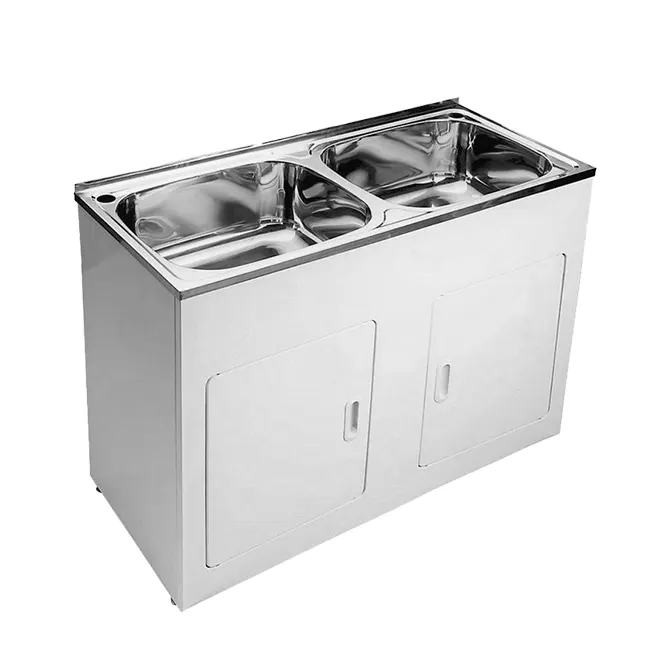
When you’re looking at utility sinks, vertical depth is the parameter that governs how the whole area operates. This is especially true in high-density residential layouts.
I generally lean toward deeper bowls because they improve water containment. In an apartment utility room where floor space is tight, keeping water off the surrounding laminate or MDF cabinetry is critical. When water constantly breaches the sink edge, materials degrade fast, and property developers end up footing the bill for premature repairs. Deeper sinks just make routine tasks—like rinsing heavy fabrics or filling mop buckets—much less messy.
But there is a tipping point. If a bowl is too deep, users end up hunching over awkwardly. More importantly for the build phase, deep bowls steal vertical clearance underneath. Plumbers need room for traps, and users often want under-sink storage. The goal is finding the exact depth that stops splashing but leaves enough plumbing clearance below.
Bowl Size vs. Layout Reality
While depth handles the vertical space, bowl size—the internal width and length—determines the lateral footprint. I often see people confuse the overall external fixture dimensions with the actual working basin inside.
Wider, longer bowls give users the flexibility to handle oversized pails or bulky cleaning equipment. But putting a massive bowl in a compact layout is a common design failure. It completely cannibalizes the bench space needed for sorting laundry or storing detergent.
Conversely, tiny bowls might fit nicely on a tight floor plan, but they restrict basic utility functions. If the basin is too small to use, the space is wasted. You have to match the bowl size to the specific dimensional realities of the room.
| Bowl Size Category | The Main Advantage | Layout Reality Check |
|---|---|---|
| Compact Basin | Frees up counter space. | Good for tight alcoves; limits heavy cleaning tasks. |
| Mid-Sized | Balances space and function. | Fits most standard cabinets; the best bet for repeatable supply. |
| Oversized Basin | Huge internal working volume. | Needs a dedicated utility room; will crowd out appliances in tight spaces. |
Project Buyers aren’t End Users
Understanding why these numbers matter means admitting that project buyers and homeowners operate on entirely different logic.
Homeowners buy based on personal preference or design trends. If someone wants a giant farmhouse utility sink because they like the aesthetic, they only have to make it fit in one specific room.
Project buyers need universal applicability. A sink you picked because it looked great in one sample unit will cause a logistical nightmare if it doesn’t align with the plumbing across three hundred other units. Volume purchasing is about risk mitigation. You need a dimension profile that works for nearly everyone, keeping the supply chain simple and ensuring the installation teams face zero friction.
Matching Dimensions to the Build
Different environments demand different sizing strategies. Here is how I usually approach it:
- Apartment utility areas: These are often squeezed into secondary hallways or bathrooms. You need a moderate depth and a standard mid-size bowl. It handles daily use without eating the minimal bench space needed for the washing machine.
- Rental property units: Focus heavily on standardized maintenance. Property developers need stable, replicable dimensions. If a unit needs replacing in five years, an obscure custom bowl size is a headache. Industry-standard sizing makes future upgrades seamless.
- Compact residential projects: In townhouses or micro-apartments where the utility zone is hidden behind bi-fold doors, layout fit is everything. An oversized sink destroys the room’s efficiency. Look for a maximized internal bowl within a minimal external footprint.
- High daily-use projects: For shared residential laundry rooms or light commercial spaces, usable space wins. Go for wider bowls and deeper basins that handle heavy-duty soaking. Protecting the casework from water damage is far more important here than saving an inch of counter space.
The Buyer’s Dimension Checklist
Before committing to a volume order, run through this checklist to see if the dimensions will actually support the project:
- Are we using this sink across multiple layouts? (If yes, stick to standard sizes with universal compatibility).
- What are the hard limits of the casework? (Ensure you leave enough landing space for surrounding tasks).
- Do users actually need extra depth? (If the property caters to families or has outdoor access, prioritize splash control).
- Are the architectural plans rigid? (If plumbing rough-ins vary slightly, a forgiving bowl size prevents installation delays).
- How does it fit with adjacent fixtures? (The sink has to coordinate with under-counter appliances and overhead cabinets). Proper utility room sink planning prevents these headaches.
Standard Sizing vs. Custom Dimensions
When narrowing down specs, you usually have to choose between off-the-shelf standard sizes and custom fabrication.
Let’s be honest: standard sizes are almost always the better route for repeatable layouts. They simplify ordering, cut down lead times, and installers know exactly how to work with them. When you have hundreds of identical utility zones, standardizing the dimensions is the easiest way to keep budgets under control.
However, custom dimensions are a targeted fix when standards fail. I only recommend custom when:
- Room sizes vary wildly across the development, requiring specific footprints to fill dead space.
- The width is severely restricted, meaning a deeper bowl is mandatory to keep the total volume usable.
- You need millimeter-perfect alignment with complex built-in architectural elements.
Custom isn’t an upgrade; it introduces supply chain friction and complicates maintenance. Use it only when the physical space demands it.
Dimensions for Supply Efficiency
Optimizing depth and bowl size is fundamentally an exercise in risk management. The right numbers reduce structural mismatches on site and ensure the product actually fits the build. When you prioritize practical layout fit over aesthetics, you get consistent installations and a room that actually works for the user.
Integrating this analysis early in the procurement cycle allows you to secure labor-saving laundry sink features that add real value.
For wholesale buyers and developers, partnering with a manufacturer like Xinhe means access to precise stainless steel solutions built for volume demands. Treating these dimensions as a core strategy guarantees your utility areas perform well and your project executes smoothly.
FAQ
What depth makes sense for a project laundry sink?
There isn’t one universal number, but 9 to 12 inches is the industry standard for project supply. It stops splashing without crowding the plumbing space under standard cabinets.
How should I evaluate bowl size?
Cross-reference the internal dimensions against your specific floor plan. You want to maximize the inside working space without eating into the benchtop landing areas you need for other tasks.
When is custom sizing actually worth it?
Only when standard sizes physically fail to meet spatial limits. Use custom sizes for highly irregular layouts or when you need a specific depth-to-width ratio to integrate with specialized built-in casework.
Ready to map out your next development?
Get size recommendations tailored to your specific layouts and ensure seamless installation across your entire development. Request project sink specifications or ask our engineering team for bowl depth suggestions designed for volume supply. Contact Xinhe today to discuss high-quality stainless steel solutions that perfectly match your floor plans.