Sustainable Commercial Kitchens: Modular Stainless Steel Trends for 2026
Commercial kitchen equipment is undergoing a structural shift in 2026. Regulatory pressure, rising operational costs, and green building mandates like LEED v4.1 and BREEAM push developers toward modular stainless steel systems. Traditional fixed kitchens generate waste when menus change. Modular configurations solve this by letting teams swap individual units instead of demolishing entire counters.
This guide covers material specifications, workflow layouts, and procurement strategies for architects, MEP engineers, and purchasing directors who specify commercial kitchen equipment for institutional and hospitality projects.
1. Why Sustainability Drives Commercial Kitchen Procurement in 2026
Modern food service facilities operate under intense environmental scrutiny. Energy and water consumption limits, plus strict waste reduction laws, make traditional kitchen design untenable. Developers now treat the kitchen as a dynamic system that must minimize resource use over a decades-long life cycle. For a broader overview of how design choices shape outcomes, see our guide to the essentials of a commercial kitchen.
ESG Pressure on Food Service Operators
ESG mandates are no longer voluntary corporate statements. Institutional developers, hospitality conglomerates, and public universities require verifiable carbon footprint reductions. The global food service sector generates significant Scope 1 emissions from direct fuel combustion and Scope 2 emissions from grid electricity.
Operators must optimize every square meter of floor space to hit net-zero targets. Fixed concrete plinths and permanently welded counters restrict layout modifications. When a menu changes, traditional custom kitchens require demolition. This cycle produces massive landfill waste and demands new raw material extraction. Modular configurations let operators swap individual modules, extending the physical structure’s useful life and preserving capital.
How Green Building Codes Change Kitchen Specs
Green building rating systems penalize projects that use non-recyclable materials or high-VOC adhesives. Under the LEED v4.1 Materials and Resources (MR) category, teams earn points for selecting products with verified Environmental Product Declarations (EPDs) and material ingredient optimization.
Plumbing codes have also tightened. The EPA’s WaterSense standards and European equivalents mandate strict flow rates for pre-rinse spray valves and commercial faucets. Installing sustainable commercial kitchen equipment is a direct pathway to satisfying these baseline requirements.
| Code / Standard | What It Regulates | Kitchen Impact |
|---|---|---|
| LEED v4.1 (MR) | Recycled content, EPDs, low-emitting materials | Rewards 304 steel with EPDs |
| EPA WaterSense | Flow rates for faucets, pre-rinse valves | Requires low-flow fixtures |
| BREEAM | Material lifecycle, waste management | Favors modular, recyclable systems |
| Local discharge limits | Grease, chemical runoff to municipal drains | Drives greywater and grease trap integration |
Sinks must integrate with low-flow faucets and greywater recycling systems. This ensures the kitchen meets municipal discharge limits and water conservation targets.
2. Why Stainless Steel Is the Sustainable Material of 2026
Alternative materials like solid surface polymers, engineered stones, and high-pressure laminates exist. None match the physical properties of high-grade stainless steel in a commercial food-safe environment. For a deeper comparison of sink materials, see our analysis of which commercial kitchen sink material lasts longest.
Recyclability and Circular Economy of 304 Steel
Grade 304 stainless steel (18/8 alloy: 18% chromium, 8% nickel) anchors sustainable kitchen manufacturing. It operates within a closed-loop recycling system. Unlike polymers that degrade during reprocessing, stainless steel recycles 100% without losing mechanical properties or corrosion resistance.
Roughly 60% of new stainless steel production originates from recycled scrap metal. By specifying grade 304 steel, procurement teams support demand for recycled commodities and reduce energy-intensive mining of raw iron ore, nickel, and chromium. The long service life of 304 steel (often exceeding 25 years in high-use environments) means the material acts as an active carbon sink, delaying replacement manufacturing.
Life Cycle Assessment: Stainless Steel vs. Alternatives
A Life Cycle Assessment (LCA) evaluates material extraction, processing, transportation, installation, use, and end-of-life disposal. Compared to polymers or galvanized steel, grade 304 and marine-grade 316 stainless steel show the lowest total carbon footprint over a 20-year span.
| Performance Metric | Grade 304 Stainless Steel | Solid Surface Polymers | Galvanized Carbon Steel |
|---|---|---|---|
| Expected Lifespan | 25+ Years | 7 to 10 Years | 5 to 8 Years (zinc wear) |
| Recyclability | 100% Recyclable | Non-recyclable (landfilled) | Downgraded during recycling |
| Chemical Resistance | High (acids, sanitizers) | Moderate (prone to staining) | Low (rusts if coating fails) |
| Total Cost of Ownership | Low (minimal maintenance) | High (cracking, repairs) | High (rust treatment) |
Engineering Insight: Under repetitive mechanical stress and thermal fluctuations (hot pan contact up to 250 degrees C), polymers experience thermal cracking and surface degradation. Grade 304 stainless steel maintains structural integrity up to 800 degrees C without releasing VOCs or altering its crystalline structure.
Food-Safe Surfaces Reduce Chemical Waste
Food safety relies on cleanability. Stainless steel features a non-porous passive chromium oxide layer that prevents bacteria, fungi, and food allergens from penetrating the surface. This passive layer self-heals in the presence of oxygen if scratched.
Porous surfaces require aggressive, chlorinated chemical sanitizers to achieve pathogen eradication. These chemicals degrade local wastewater quality when washed down floor drains. Stainless steel’s smooth, non-porous surface lets sanitation crews achieve sanitization using mild, biodegradable detergents and low-temperature hot water washes, reducing chemical runoff and lowering municipal filtration costs.
3. What Is Modular Stainless Steel Kitchen Design
In 2026, modular kitchen design refers to a system of standardized, prefabricated structural units built for rapid assembly, reconfiguration, and maintenance. This contrasts with traditional fixed kitchens, which rely on site-specific masonry or continuous, non-adjustable countertops welded in place during building construction.
Standardized Module Frame
- Sink Module (Utility Conn.)
- Prep Module (Interchange)
- Storage Module (Configurable)
Integrated Quick-Disconnect Utility Bus
Core Components: Workstations, Sinks, Shelving, and Drainage
A modular kitchen consists of independent, self-contained modules. These typically include:
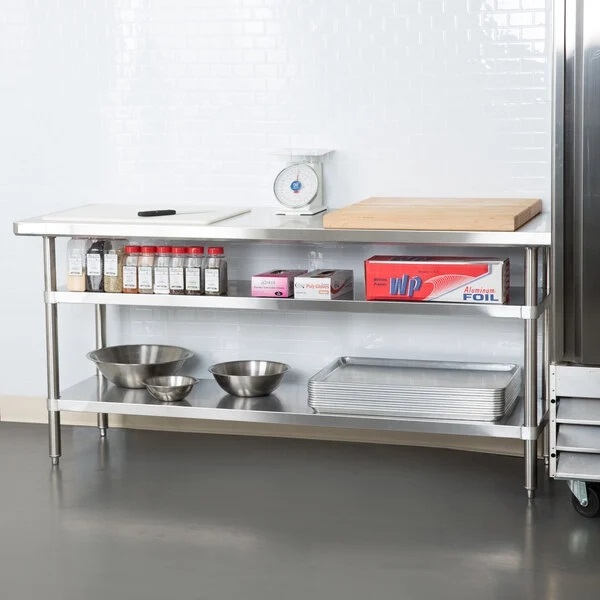
- Workstations: Adjustable-height prep tables with standard width footprints (600mm, 700mm, or 900mm) and integrated power channels. For high-traffic layouts, consider a stainless steel work table with undershelf that pairs prep surface and storage in one unit.
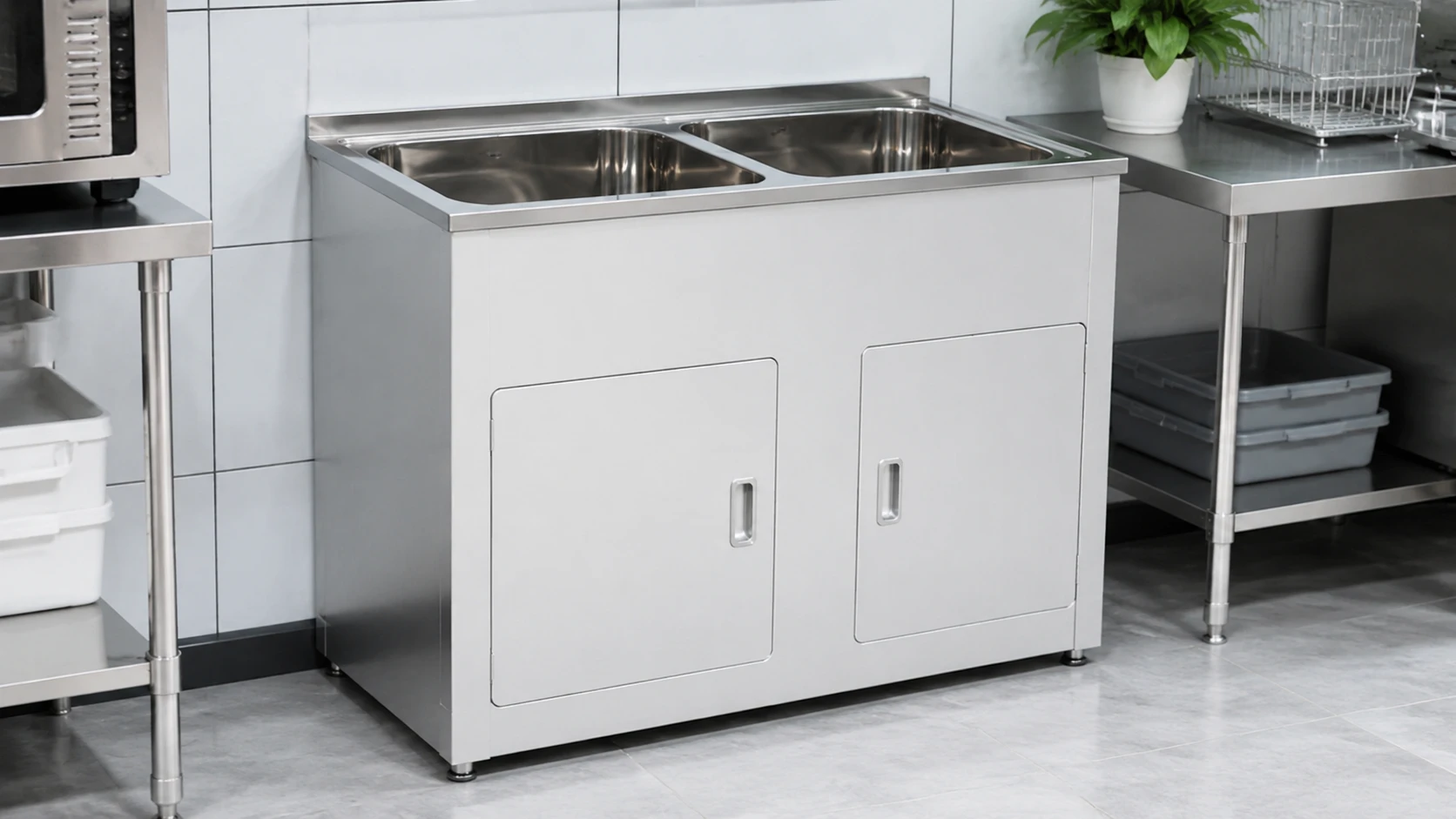
- Sink Modules: Single, double, or triple compartment basins with pre-plumbed water inlets, lever-waste valves, and built-in splashbacks.
- Shelving Units: Cantilevered wall shelves or under-counter racks that technicians adjust without tools.
- Drainage Modules: Integrated floor troughs and grates from grade 304 steel that connect to grease traps via standardized clamp fittings.
How Modular Differs from Traditional Fixed Installations
Traditional kitchens use a “build-to-fit” approach. Fabricators cut and weld long countertops on-site to match wall irregularities. If an under-counter dishwasher fails and the replacement model has different dimensions, contractors must cut the stainless steel countertop, disrupting operations.
Modular design uses a “plug-and-play” framework. Each unit sits on heavy-duty, adjustable bullet feet or lockable castors. Rear panels feature recessed service chases to house gas, water, electricity, and drain lines. When an operator needs to replace a module, they disconnect the utilities, roll the old module out, and slide a new one in.
Buyer Tip: Look for modular systems with standardized width intervals of 100mm. When you upgrade your commercial kitchen equipment, the new unit fits the existing slot without custom filler panels or costly on-site welding.
Flat-Pack Delivery Cuts Shipping Emissions
Modern logistics prioritize volume reduction to lower transportation-related carbon emissions. High-quality modular equipment manufacturers design components for flat-pack delivery.
Instead of shipping a fully welded 2-meter prep table (mostly empty air space), the manufacturer ships flat-packed components. Legs, undershelves, and table tops feature high-tolerance, bolt-together mechanical joints. This design cuts shipping volume substantially, lowering freight costs and fuel consumption. On-site, installation teams assemble these units using standard hex keys and torque wrenches, requiring no hot-work permits or welding rigs.
4. Five Modular Innovations Reshaping Commercial Kitchens
The commercial food service equipment industry has introduced several key innovations that improve hygiene, energy efficiency, and operational flexibility.
Innovation 1: Integrated Drainage and Sink Modules
Water damage and drainage leaks cause significant commercial kitchen downtime. The current industry direction points toward pre-engineered sink modules with factory-integrated drainage systems.
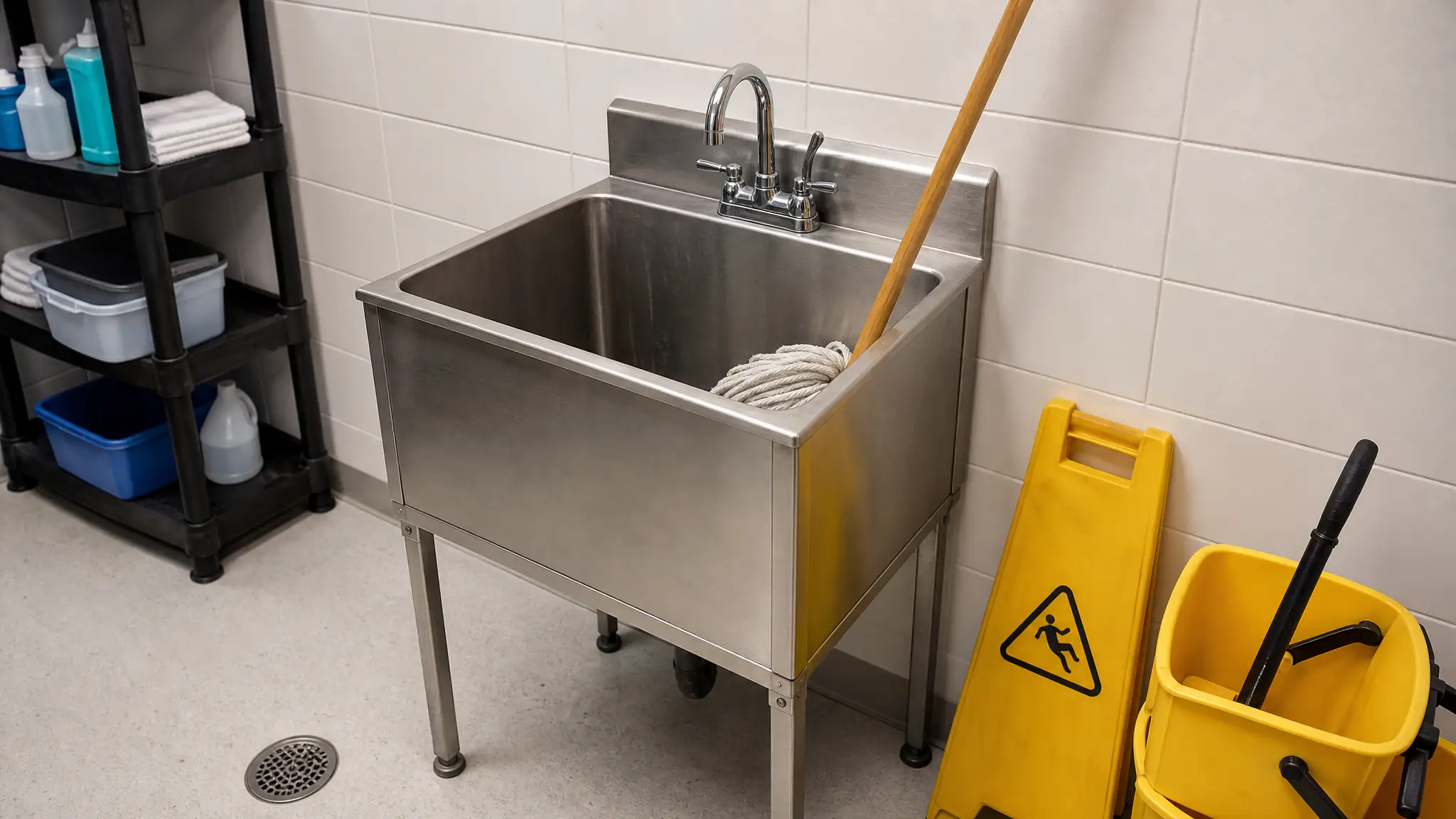
Modern modules feature deep-drawn stainless steel sink basins with integrated sloping drainboards, stamped from a single piece of grade 304 steel. Teams no longer install a separate sink basin and rely on a plumber to construct a complex PVC drain pipe system underneath. A freestanding commercial kitchen sink with factory-fitted drainage eliminates the most common leak points.
Drain outlets use sanitary clamp connections rather than threaded joints. Clamp connections eliminate exposed threads, which harbor organic waste and bacteria.
| Connection Type | Hygiene Risk | Maintenance |
|---|---|---|
| Threaded Joint | High (exposed threads trap waste) | Requires frequent disassembly for cleaning |
| Sanitary Clamp | Low (smooth gasket seal) | Quick disconnect for inspection |
Innovation 2: NSF/ANSI-Compliant Prefab Prep Stations
Hygiene enforcement has intensified globally. Prefabricated prep stations must comply strictly with NSF/ANSI Standard 2 (Food Equipment). The latest designs eliminate all open structural seams.
Manufacturers achieve this using continuous laser welding and grinding joint radius corners to a minimum of 6mm. Any corner tighter than 6mm is difficult to sanitize manually. These prep stations also incorporate built-in utility pathways, keeping electrical cords off the floor and away from wet prep surfaces.
Innovation 3: Zone-Based Modular Workflow Design
Designers use zone-based modular layouts to maximize labor efficiency and reduce cross-contamination risk.
[Receiving/Storage] ➔ [Prep Zone (Modular)] ➔ [Cooking Zone] ➔ [Plating/Service]
⬇
[Dishwashing & Sanitation]
Kitchens divide into distinct physical zones: receiving, storage, preparation, cooking, plating, and sanitation. Each zone uses a specific modular configuration. The Prep Zone, for example, features height-adjustable tables with integrated waste chutes, allowing prep cooks to slide vegetable waste directly into compost bins below the table surface. This design minimizes steps, reduces operator fatigue, and keeps food allergens isolated.
Innovation 4: Custom OEM Kitchen Suites for Hospitality Chains
Large hotel groups and global restaurant franchises now contract directly with high-volume OEM/ODM factories instead of using local, uncertified fabricators. The manufacturer brands and engineers these suites to the chain’s precise operational requirements, developing custom molds for specific sink configurations, custom-stamped ingredient wells, and specialized equipment mounts.
Production under controlled factory conditions means every location receives identical layouts with consistent tolerances. This ensures uniform food preparation times and predictable maintenance protocols across the globe.
Innovation 5: Sustainable Sourcing from Dual-Production Bases
International trade regulations, shipping costs, and tariffs influence procurement strategies. Forward-thinking procurement teams seek manufacturers with dual-production bases, particularly in regions like Vietnam and China.
Sourcing from a Vietnam-based factory lets North American developers leverage favorable tariff structures and avoid heavy anti-dumping duties while maintaining high-quality manufacturing standards. A manufacturer with integrated supply chains across Asia ensures a reliable flow of raw steel and components, stabilizing lead times and keeping project timelines on track.
5. Designing for Maximum Efficiency
A high-performance, sustainable kitchen requires understanding of spatial dynamics, mechanical engineering, and material science.
Layout Principles: Hot Zone, Cold Zone, Prep Zone
An efficient layout prevents cross-contamination and minimizes energy waste. Thermal separation is crucial.
- Hot Zone (ovens, ranges, fryers): Requires high-volume extraction hoods and must sit away from refrigeration units to prevent heat transfer.
- Cold Zone (reach-in freezers, prep fridges): Must operate in ambient temperatures below 25 degrees C to maintain refrigeration efficiency and reduce compressor wear.
- Prep Zone (sinks, prep tables): Sits between hot and cold zones to facilitate a linear flow of ingredients.
Modular units let designers install physical barriers, such as insulated stainless steel splashbacks, between hot and cold modules. This prevents thermal bridging and can reduce compressor energy consumption.
Selecting the Right Steel Grade for Each Area
Using the wrong grade of steel leads to premature equipment failure.
- Grade 304: The standard for general commercial kitchen use. Offers excellent resistance to organic acids, sanitizers, and high temperatures.
- Grade 316 (Marine Grade): Contains 2% molybdenum for superior resistance to chlorides (salts and bleach). Specify Grade 316 for sluice sinks, fish prep stations, marine installations, or high-humidity coastal facilities.
- Grade 430: A lower-cost ferritic steel with no nickel content and limited corrosion resistance. Acceptable for dry storage shelving or back panels only. Do not use Grade 430 for wet prep surfaces, sinks, or high-humidity zones.
Expert Recommendation: Always request a mill test report (MTR) from your equipment manufacturer. This document verifies the exact chemical composition of the steel, confirming you receive true Grade 304 or 316 rather than low-quality imported alloys that rust within months.
Custom Dimensions vs. Standard Module Sizing
Modular design relies on standardization, but real-world buildings present structural columns, tight corners, and uneven walls. The most cost-effective approach is the 80/20 rule:
- 80% standard catalog modules (1200mm, 1500mm, 1800mm lengths) to benefit from high-volume factory pricing.
- 20% custom-designed modules to fill structural gaps.
High-capability OEM factories adapt standard modular designs to custom dimensions using automated laser-cutting programming, ensuring a seamless fit without the high cost of completely custom engineering.
6. Sourcing Commercial Kitchen Equipment: What Procurement Teams Must Know
Procurement managers must look beyond unit price. They must evaluate manufacturing capabilities, certification compliance, and logistics networks to ensure project success.
Key Certifications to Verify
Do not source uncertified equipment for commercial or institutional projects. Health inspectors and building officials can halt operations if fixtures lack regulatory approval.
| Certification | Scope | Why It Matters |
|---|---|---|
| NSF/ANSI Standard 2 | Food equipment sanitation | Verifies smooth welds, food-safe materials, accessible corners |
| CE Mark | European health, safety, environment | Required for European market access |
| CUPC | Plumbing fixtures (sinks, drains) | Confirms ASME/CSA compliance in North America |
| ISO 9001 | Quality management system | Proves consistent manufacturing processes |
OEM vs. Standard: When to Specify Custom Modules
If you outfit a single restaurant, standard off-the-shelf catalog modules are the fastest and most economical option.
If you develop a new concept for a chain of 50 locations, custom OEM modules pay off. Designing a custom module that integrates a prep surface, an under-counter sink, and a waste chute into a single footprint reduces installation times across all sites. This customization pays for itself by lowering on-site contractor costs and accelerating restaurant opening timelines.
Qualifying Questions for Manufacturers
When choosing a manufacturing partner, ask these questions:
- Do you have in-house tooling and die-mold capabilities? Factories with internal mold departments develop custom prototypes faster and cheaper than those that outsource tooling.
- What is your production capacity? Ensure the manufacturer has the press capacity (1000-ton to 1200-ton hydraulic presses) to produce deep-drawn sinks at scale.
- How do you handle quality control? A reputable factory has a dedicated QC team that checks weld quality, material thickness tolerances, and finish polish levels before packaging.
- Do you offer dual-port shipping? Manufacturers with logistics networks in both China and Vietnam can redirect shipments based on shifting tariff laws.
7. FAQ
Is stainless steel the most sustainable material for commercial kitchens?
Yes. Stainless steel’s long lifespan (often exceeding 25 years), 100% recyclability, and low maintenance requirements make it the most sustainable option. Unlike wood, plastics, or laminates, it needs no glues, resins, or chemical coatings that release VOCs. Its non-porous nature also reduces the need for harsh sanitizing chemicals.
What does modular mean in commercial kitchen design?
Modular design uses pre-fabricated, standardized structural units (sinks, tables, shelves) that teams arrange, connect, and reconfigure easily. Instead of welding everything into a single fixed piece on-site, modular units bolt or clamp together, allowing rapid layout changes, easy upgrades, and simple maintenance.
Which stainless steel grade is best for commercial kitchen equipment: 304 or 316?
For general kitchen use (prep tables, standard sinks, dry storage), Grade 304 is the industry standard and offers excellent durability and corrosion resistance. For highly corrosive environments (fish prep stations, marine installations, medical sluice sinks where strong chemical disinfectants are used), specify Grade 316 due to its molybdenum content, which prevents chloride-pitting.
Do modular stainless steel kitchens qualify for LEED certification?
Yes. Modular stainless steel equipment contributes directly to several LEED v4.1 credits. These include points under the Materials and Resources (MR) category for recycled content, waste reduction (due to modular reconfigurability), and low-emitting materials. Pre-plumbed sink modules with low-flow fixtures also help achieve Water Efficiency (WE) credits.
Can manufacturers custom-size stainless steel kitchen modules for non-standard spaces?
Yes. Although modular design relies on standard dimensions, experienced OEM/ODM manufacturers use automated laser cutting and CNC bending to modify standard module templates for specific structural requirements. This allows a custom fit without the high cost of completely custom engineering.
8. B2B Sourcing Checklist
Before you finalize your next commercial kitchen equipment purchase, verify these items:
- Material grade: Specify Grade 304 for general areas, Grade 316 for wet or chemical-exposed zones. Request mill test reports (MTRs).
- Certifications: Confirm all plumbing fixtures carry CUPC approval and prep surfaces meet NSF/ANSI Standard 2.
- Joint quality: Ensure fabricators grind all welded joints smooth with a minimum 6mm radius corner.
- Modularity: Prioritize systems with adjustable-height feet, standardized width footprints, and built-in service chases.
- Logistics: Partner with a manufacturer capable of flat-pack delivery and dual production bases (China and Vietnam) for tariff optimization.
Ready to source modular stainless steel commercial kitchen equipment for your next project? Contact Xinhe’s engineering team to request custom OEM quotes, mill test reports, and certification documentation. We manufacture NSF/ANSI-compliant sinks, prep tables, and modular suites in both China and Vietnam, with flat-pack delivery worldwide.