Home > Blog > Drinking Fountains >
How to Compare Indoor vs Outdoor Drinking Fountain Projects
At first glance, indoor and outdoor drinking fountain projects may seem similar, but the planning priorities are often very different. Indoor installations usually focus on traffic flow, plumbing access, and maintenance convenience, while outdoor projects must also consider weather exposure, site drainage, durability, and long-term public use. For buyers, contractors, and facility planners, comparing these two project types early can help avoid the wrong product choice and reduce future maintenance problems.
Why Indoor and Outdoor Fountain Projects Should Not Be Planned the Same Way
When sourcing a commercial drinking fountain, it is tempting to look at the aesthetics first. However, the environmental stresses on a fountain vary wildly between a climate-controlled hallway and a public park. If you apply the same procurement logic to both, you risk early product failure and skyrocketing repair costs.
Environmental Stress Factors
Indoor environments are stable. You deal with controlled temperatures and predictable usage. In contrast, outdoor drinking fountains face the “Big Three” of degradation: UV radiation, fluctuating temperatures, and moisture. A unit that performs perfectly in a school corridor might rust or suffer pipe bursts within a year if placed in a coastal park or a high-frost area.
Maintenance and Logistics
The logistical requirements differ as well. An indoor drinking fountain is often integrated into the building’s existing HVAC and plumbing “spine.” Outdoor units often require dedicated trenching for water lines and specialized drainage systems to prevent local flooding or stagnant water pools.
Indoor Drinking Fountain Priorities
Indoor projects are all about optimization within a fixed architectural footprint. When planning indoor drinking fountains, the goal is to provide hydration without obstructing the movement of people.
Strategic Location and Traffic
Most indoor units are located in corridors, hallways, or near restroom entrances. You must account for “user dwell time.” If a fountain is placed in a narrow high-traffic lane, it creates a bottleneck. This is why recessed or semi-recessed models are popular; they save floor space while remaining easily accessible.
Hygiene and Ease of Cleaning
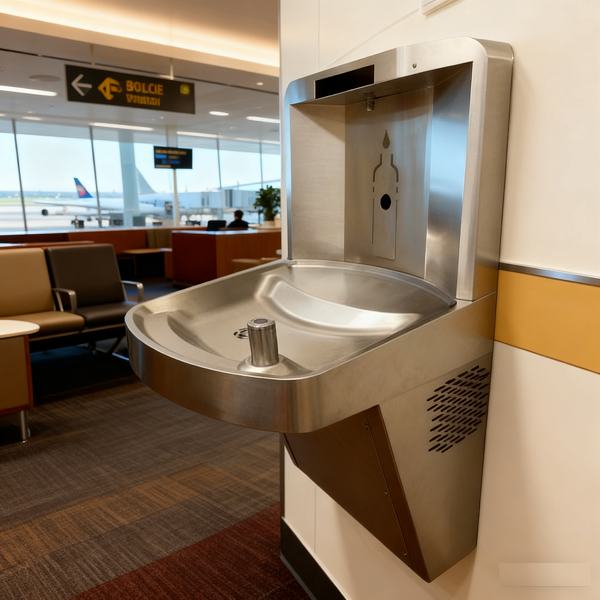
In indoor settings like hospitals or office buildings, hygiene is a top priority. Buyers often look for a drinking fountain with bottle filler to reduce touchpoints and encourage the use of reusable containers. Because these units are cleaned by janitorial staff daily, the design should have minimal “dirt traps” or complex crevices.
Plumbing and ADA Compliance
Indoor installations must strictly adhere to the ada compliant drinking fountain standards. This involves specific mounting heights and knee clearance. Since the plumbing is hidden behind walls, ensuring that the internal components are accessible through a front-facing panel is vital for long-term maintenance.
Outdoor Drinking Fountain Priorities
When moving outside, the “user” changes from a known building occupant to the general public. This shift requires a focus on extreme durability and “hardened” designs for public drinking fountains.
Combatting the Elements
Whether it is searing sun or freezing rain, the material must be resilient. In cold climates, outdoor units require freeze-resistant valves that drain water deep underground to prevent pipe expansion and cracking. Drainage is also a much bigger challenge; while an indoor sink drains into a standard P-trap, an outdoor unit needs a gravel pit or a connection to a storm drain to handle overflow.
Vandal Resistance and Public Safety
Unfortunately, outdoor drinking fountains are often subject to rough use or intentional damage. To counter this, project managers should prioritize:
- Heavy-gauge stainless steel construction.
- Security-headed bolts to prevent tampering.
- Impact-resistant bubblers.
- Integrated pet bowls at the base to prevent people from trying to lift dogs up to the human basin.
For high-use public areas, a dual-head drinking fountain with pet bowl is often the most cost-effective long-term solution.
Material and Finish Differences for Indoor vs Outdoor Applications
Choosing the right grade of stainless steel is where many buyers make a costly mistake. At Xinhe, we emphasize that the “finish” isn’t just about looks; it is about chemical resistance.
Stainless Steel Grades: 304 vs 316
For most indoor drinking fountains, Type 304 stainless steel is the industry standard. It offers excellent corrosion resistance and a sleek professional look. However, for outdoor drinking fountains, especially those near the ocean or in industrial areas, Type 316 is often recommended. It contains molybdenum, which provides superior resistance to chlorides (salt) and prevents “tea staining” or surface rust.
Surface Finishes
- Brushed/Satin Finish: Ideal for indoors. It hides fingerprints and minor scratches well.
- Electropolished or Powder Coated: Better for outdoors. These treatments provide an extra layer of protection against harsh weather and chemical cleaners used to remove graffiti.
| Feature | Indoor Application | Outdoor Application |
|---|---|---|
| Material Grade | Typically Grade 304 | Grade 304 or 316 (Marine) |
| Valve System | Standard Manual/Sensor | Freeze-resistant optional |
| Body Thickness | Standard Gauge | Heavy-duty / Reinforced |
| Primary Risk | High traffic / Hygiene | Weather / Vandalism |
Project Planning Questions Before Selecting Fountain Type
Before you finalize your order for a drinking water fountain, go through this checklist to ensure you haven’t missed a critical site requirement.
1. Is the fountain exposed to weather?
If yes, you must look specifically at outdoor drinking fountains. Don’t be tempted by the lower price point of an indoor unit; it will not survive the first winter or a week of direct summer sun.
2. What user traffic is expected?
For high-traffic areas like transit hubs or drinking fountains for schools, durability is the primary metric. You need a unit that can withstand hundreds of uses per day without the valve failing.
3. Is ADA access part of the project?
In many regions, providing an ada compliant drinking fountain is not just a suggestion—it’s a legal requirement. Ensure your project plan includes both a high-level fountain and a low-level, wheelchair-accessible one.
4. Is bottle filler integration needed?
The demand for a fountain cold drink that doesn’t require a cup is growing. Adding a bottle filler increases the initial cost but significantly improves user satisfaction and reduces plastic waste on-site.
5. How easy is maintenance access?
Does the unit have a “man-hole” or an access plate? If a pipe leaks, can your team fix it in 20 minutes, or do they have to rip the unit out of the ground?
When to Combine a General Drinking Fountain Page with More Specific Application Pages
As you navigate a manufacturer’s catalog, you will likely see different ways to categorize these products. Understanding how these are structured can help you find the right technical specifications faster.
The General Category Page
The main drinking fountain page is your starting point. It provides an overview of the brand’s manufacturing capabilities, material standards, and certification compliance (like CE or WaterMark). It’s best used when you are in the early research phase and need to see the full range of possibilities.
The Application-Specific Pages
Once you have defined your site, you should move to the specialized sections. For example, the indoor drinking fountain section will focus on wall-mounted designs, recessed units, and aesthetics that match modern interior architecture.
Conversely, the outdoor section focuses on pedestal-style units and bollard-mounted fountains designed for parks and playgrounds. Using these specific pages ensures that the technical drawings and flow rates you are looking at are actually compatible with your installation environment.
Choosing the Right Fountain Setup for Long-Term Public Use
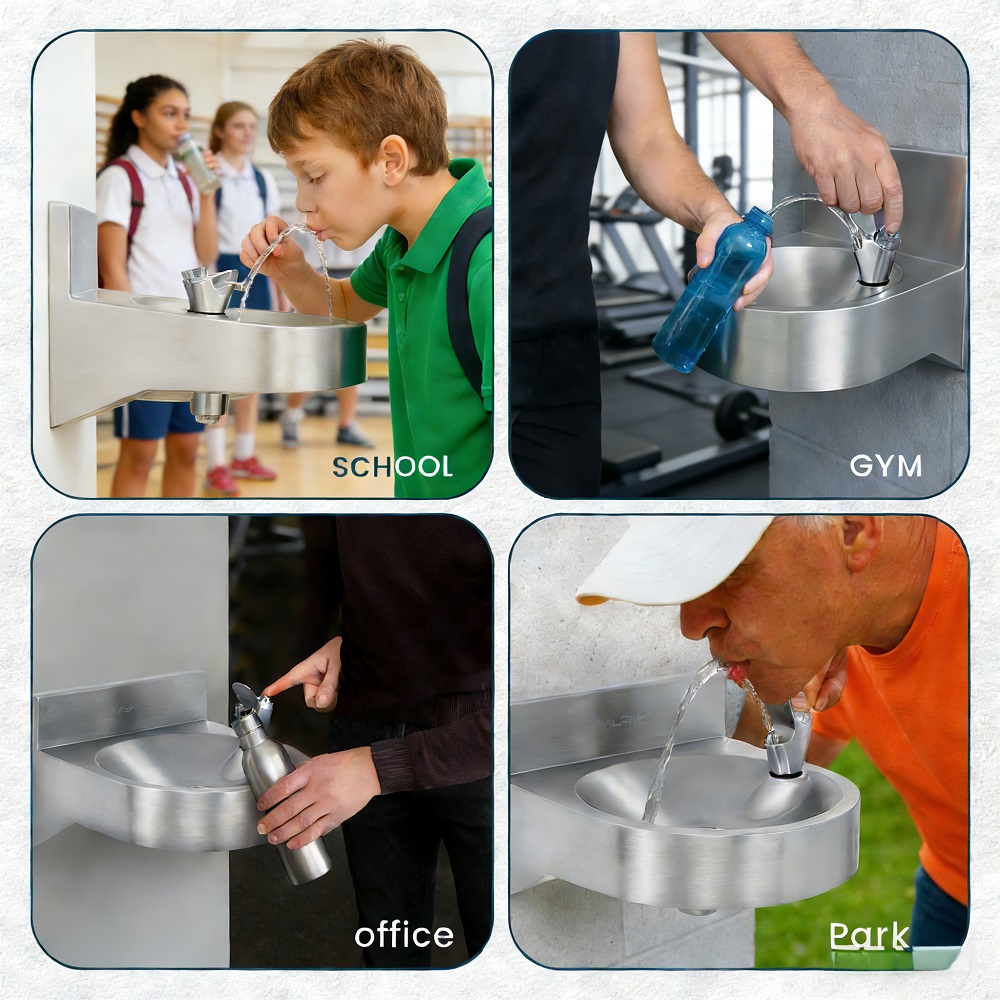
Ultimately, the goal of any procurement officer is to achieve a low Total Cost of Ownership (TCO). While a cheaper unit might save money in this quarter’s budget, a commercial drinking fountain that requires constant repair is a liability.
Why Quality Stainless Steel Matters
As a dedicated manufacturer, Xinhe focuses on the structural integrity of every weld and the precision of every valve. Whether it is a fountain drink station for a cafeteria or a rugged unit for a coastal boardwalk, the quality of the stainless steel determines how many years of service you will get before the first signs of wear appear.
Final Procurement Tips
- Request Samples or Material Certs: Always ask for the material composition report to verify it is genuine 304 or 316 steel.
- Verify Lead Times: For large-scale projects like schools or stadiums, ensure the manufacturer can meet your construction timeline.
- Look for Integrated Solutions: Choosing a manufacturer that offers both indoor and outdoor options allows for a more streamlined procurement process and consistent aesthetic across a large campus.
Choosing between indoor and outdoor solutions is about balancing the immediate needs of the user with the long-term realities of the environment. By asking the right questions during the planning phase, you ensure that your investment provides clean, safe water for years to come.
Get Expert Project Recommendations
Are you planning a large-scale facility upgrade or a new public space? Xinhe can help you navigate the technical differences between indoor and outdoor requirements to ensure you get the most durable solution for your budget.
[Contact Xinhe for a Quote on Indoor or Outdoor Drinking Fountains]