Home > Blog > Home Kitchen Products >
Stainless Steel Laundry Room Sink: Top Options for Buyers
Choosing the right stainless steel laundry room sink is essential for both functionality and style. These sinks are popular among homeowners and commercial buyers due to their durability and modern appearance. If you’re looking to upgrade a new utility sink, knowing the various stainless steel options is key to making an informed purchase that will last for years.
Key Advantages of Stainless Steel Laundry Room Sinks
Investing in a stainless steel laundry room sink offers several key advantages. Its unmatched durability ensures it won’t chip or crack like porcelain, making it ideal for busy laundry environments. Additionally, stainless steel is hygienic and resistant to corrosion.
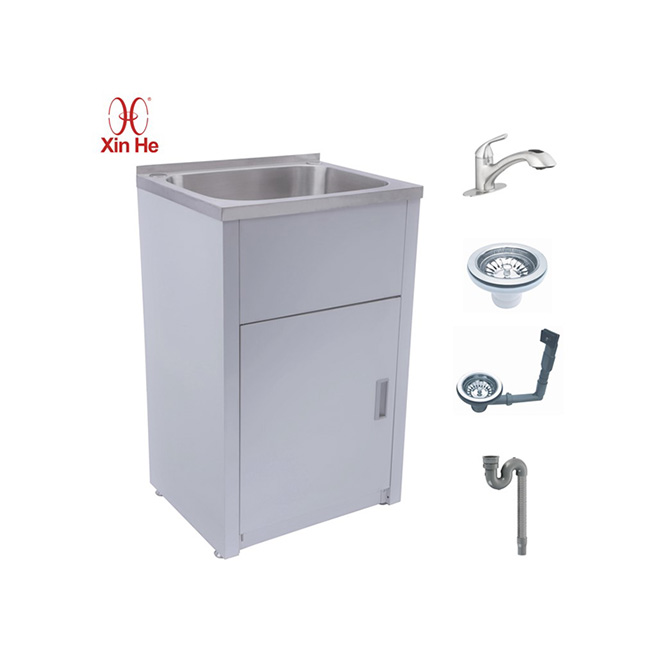
For those tight on space, we have found that our 30L/35L stainless steel laundry sink cabinet is a top-tier choice; it’s WaterMark certified, ensuring it meets rigorous plumbing safety standards.
Superior Durability and Heavy-Duty Performance
Stainless steel’s durability makes it ideal for laundry utility sinks handling heavy-duty cleaning. Unlike porcelain, it resists chipping and cracking, which is why it’s standard in commercial kitchens. Based on our experience manufacturing for high-traffic facilities, we’ve found that why commercial stainless steel sink solutions are so highly valued is because they handle the impact of heavy buckets and tools without structural failure.
Its tough, slightly flexible surface cushions drops and ensures longevity—your sink will likely outlast other appliances. For tasks like scrubbing clothes or soaking large items, this durability keeps your sink functional for decades.
A quality stainless steel sink is also easy to maintain; a quick wipe prevents water spots and keeps it looking new. Its strength and low maintenance make it perfect for busy laundry rooms.
Resistance to Corrosion, Staining, and Chemicals
A stainless steel sink offers outstanding resistance to rust, corrosion, and stains thanks to its chromium content, which forms a protective layer that self-heals if scratched. This makes it ideal for laundry rooms, where bleach and detergents are often used. Unlike other materials, stainless steel won’t deteriorate or stain with exposure to harsh chemicals.
Key benefits:
- Corrosion-Proof: The chromium oxide layer prevents rust, even in damp conditions.
- Stain-Resistant: The non-porous surface repels liquids and prevents stains.
- Chemical-Resilient: Withstands most household chemicals without damaging the finish.
Hygienic and Easy-to-Sanitize Surfaces
A stainless steel sink keeps your laundry area clean and hygienic thanks to its non-porous, smooth surface that resists germs and bacteria. This is particularly vital in environments like hospitals or pet grooming stations. For example, our stainless steel laundry tub sink vs plastic comparison shows that stainless steel is far superior in preventing biofilm buildup.
Daily cleaning is easy—just wipe with mild dish soap and warm water. The stain-resistant surface ensures quick, efficient cleanup. For tougher stains, use a baking soda and water paste.
Benefits:
- Non-Porous: Blocks bacteria and germs from embedding.
- Easy Cleaning: Wipes clean with soap and water.
- Resists Buildup: Smooth finish prevents grime and mineral deposits.
Material Grades and Construction Details Explained
The grade and gauge of a sink directly relate to its quality and price. At Xinhe, we emphasize transparency in our construction; for instance, our CUPC certified 304 stainless steel double bowl undermount sink undergoes strict testing to meet North American standards.
Understanding Stainless Steel Grades (304 vs 316)
The grade of stainless steel indicates its composition, mainly chromium and nickel content, which provide rust resistance and durability. The two main grades for laundry room sinks are 304 and 316.
| Grade | Composition | Best For |
|---|---|---|
| 304 (18/8) | 18% Chromium, 8% Nickel | Indoor sinks; general corrosion resistance |
| 316 | 16-18% Chromium, 10-14% Nickel, 2% Molybdenum | Outdoor/coastal sinks; high resistance to harsh elements |
Importance of Sink Gauge Thickness for Longevity
The gauge of a stainless steel sink indicates the thickness of the steel; lower numbers mean thicker material. We often advise clients on why to choose a 16 gauge stainless steel sink over 18 gauge, especially for laundry rooms where heavy soaking is common. Thicker sinks are quieter and more resistant to dents. While 20 or 22-gauge sinks are cheaper, they’re more prone to denting and noise.
Welded vs. Pressed Sinks: Manufacturing Differences
The manufacturing method affects sink quality and design. Stainless steel sinks are made either by pressing or welding. Knowing the differences helps you choose the right option.
| Feature | Pressed Sinks | Welded Sinks |
|---|---|---|
| Construction | Single sheet pressed into mold | Separate pieces welded together |
| Corners | Rounded | Sharper, zero-radius |
| Thickness | May be thinner at corners | Consistent, thicker gauge |
| Appearance | Traditional | Modern |
| Price | Budget-friendly | Higher-end |
| Durability | Improved with modern methods | Greater flexibility & durability |
Pressed sinks are budget-friendly and mass-produced, with rounded corners from the pressing process. Welded sinks, considered higher-end, feature sharper corners, thicker steel, and enhanced durability.
Popular Styles and Configurations for Laundry Rooms
Beyond the material itself, the style and configuration of your stainless steel sink play a huge role in its day-to-day functionality. The right design can streamline your laundry tasks, while the wrong one can create frustration. From bowl configuration to installation type, there are several options to consider to ensure the sink fits your space and workflow perfectly.
Choosing the best style depends on how you plan to use it and the layout of your laundry room. Let’s look at the most popular choices to help you decide.
Single Bowl vs Double Bowl Utility Sinks
A single bowl offers a large area for bulky items. Many homeowners find that a deep single bowl sink vs double bowl depends on their multitasking needs.
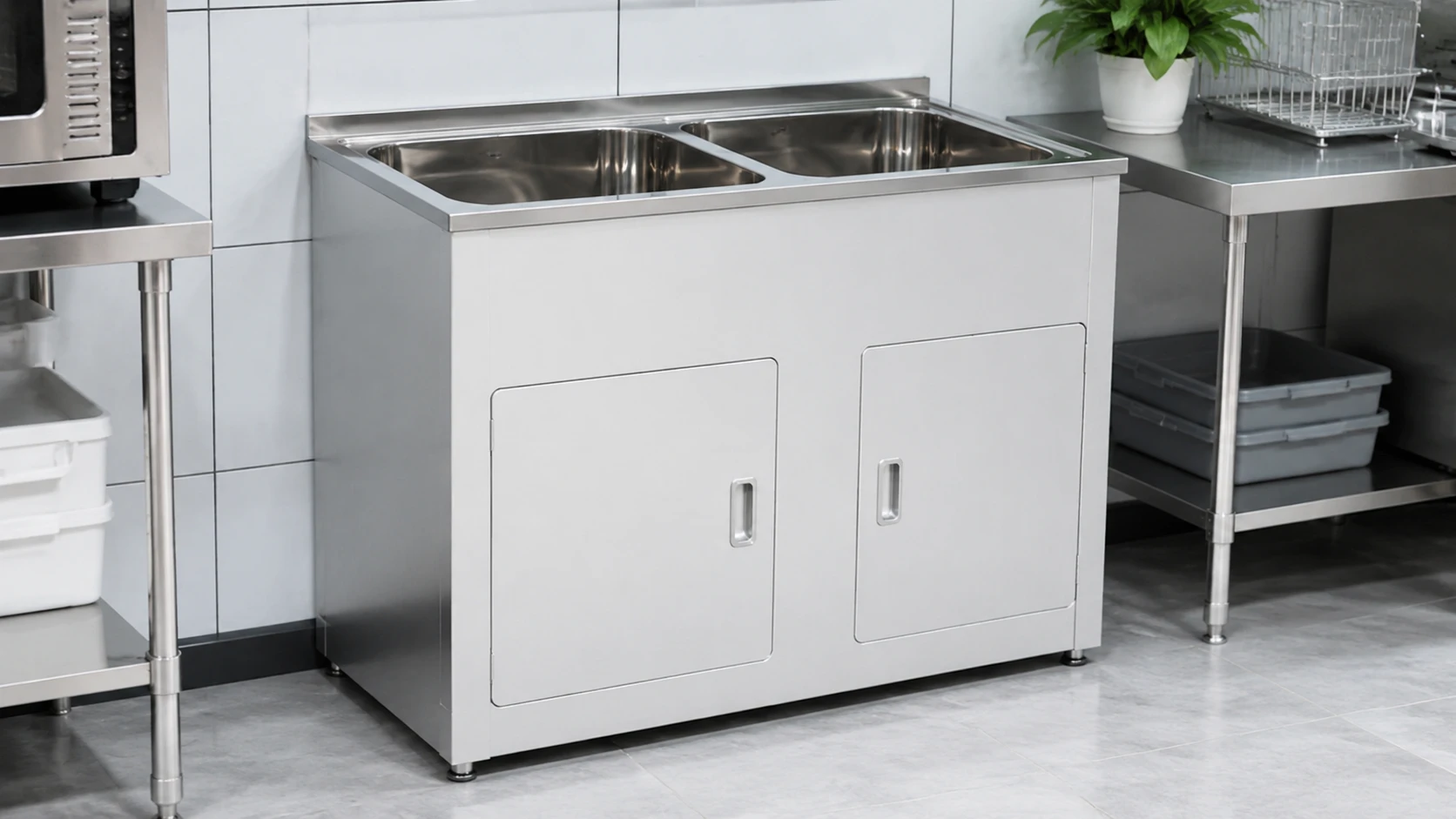
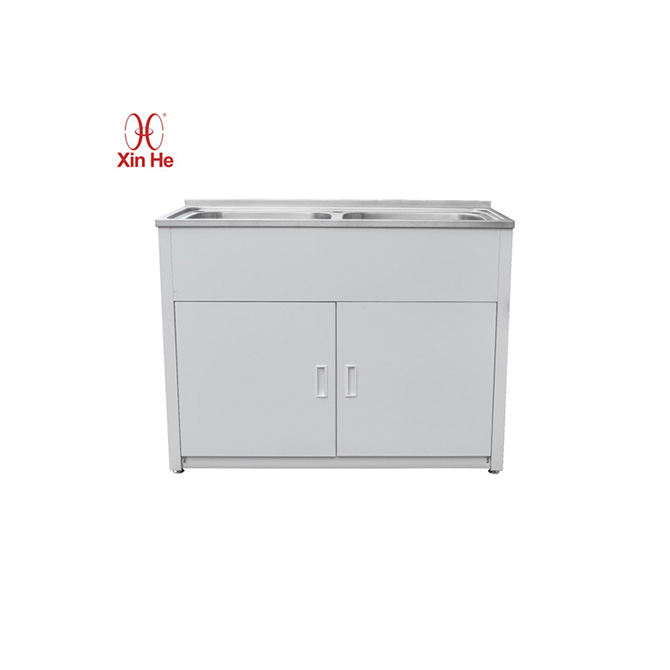
For high-volume needs, our 90L double sink laundry cabinet is an excellent heavy-duty choice, providing massive capacity for both residential and light commercial use.
Undermount, Drop-In, and Free-Standing Designs
The sink installation style impacts your laundry room’s appearance and countertop cleaning ease. The main types are undermount, drop-in, and free-standing.
Undermount sinks are installed beneath the counter for a seamless, modern look. Cleaning is easier since you can wipe debris directly into the sink. They’re best for solid surfaces like granite or quartz.
Drop-in sinks (top-mount) sit in a cutout with the rim resting on the countertop. This common, affordable option works with any countertop material.
- Undermount: Seamless look; easy cleanup.
- Drop-In: Simple installation; fits all countertops.
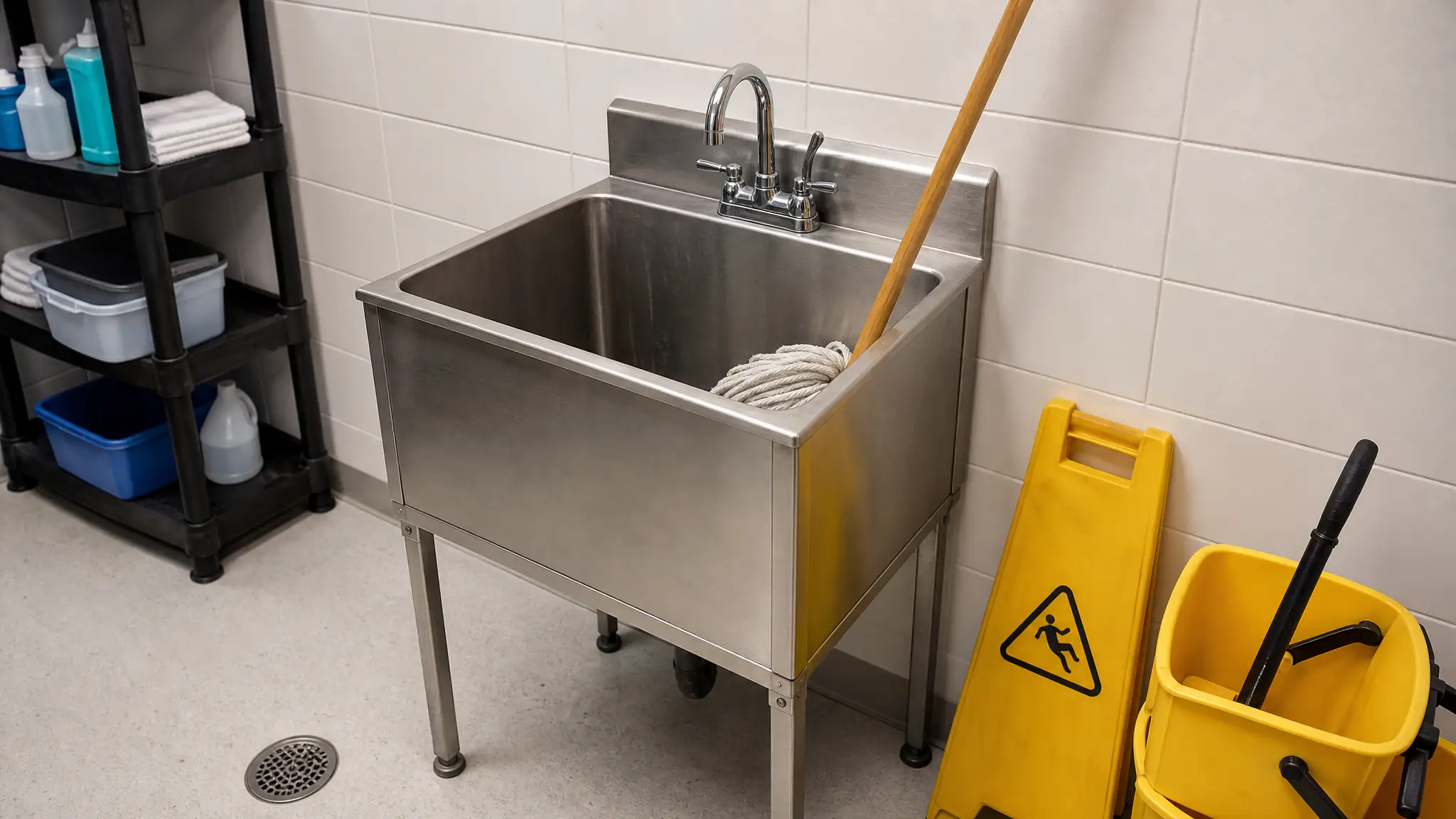
- Free-Standing: Self-contained with legs; flexible placement and classic utility style.
Size Considerations and Depth Selection for Different Applications
The ideal laundry sink size and depth depend on your needs. Shallow sinks can cause splashing, while oversized ones may crowd small spaces.
For most uses, a deeper basin (10–12 inches or more) is best. It allows you to soak large items, fill buckets, and clean boots with less mess. Shallow sinks suit light hand-washing but are less functional for bigger tasks.
Measure your space to ensure a good fit and room for accessories.
- Standard Depth: 7–8 inches—suitable for light tasks.
- Deep Basins: 10+ inches—best for soaking, filling buckets, and minimizing splashes.
- Tip: Match the depth to your main needs; deeper sinks are more versatile.
Factors Affecting Cost and Value for Buyers
The price of stainless steel sinks can vary significantly, so it’s important to understand what factors influence the cost. While it’s tempting to choose the most affordable option, true value comes from a balance of price, durability, and features. A cheaper sink might not offer the longevity or performance you need, leading to higher costs in the long run.
Price Ranges for Various Stainless Steel Sink Types
The cost of a typical stainless steel laundry room sink is influenced by its gauge, grade, size, and brand. You can find options to fit almost any budget, but knowing the general price ranges will help you set realistic expectations.
Basic, thinner-gauge (20-22 gauge) drop-in sinks are the most affordable, often starting under $150. These are suitable for light-duty use but may be more susceptible to dents and noise. As you move into higher-quality materials, the price increases.
Mid-range sinks, typically 18-gauge, offer a great combination of durability and value, with prices often falling between $200 and $400. Premium, 16-gauge sinks with features like sound-dampening pads and high-end finishes will generally cost $400 or more.
| Sink Type | Gauge | Typical Price Range |
|---|---|---|
| Budget/Light-Duty | 20-22 Gauge | $100 – $250 |
| Mid-Range/Standard | 18 Gauge | $250 – $500 |
| Premium/Heavy-Duty | 16 Gauge | $500+ |
Features That Influence Pricing (Gauge, Accessories, Certifications)
- Gauge: Lower gauge means thicker, more durable steel. It costs more but lasts longer.
- Accessories: Bundled items like grids and strainers raise the price, but can offer better value than buying separately.
- Sound Dampening: Rubber pads or undercoating to reduce noise add to the cost, but greatly improve user experience.
Evaluating Total Cost of Ownership in Commercial Settings
For commercial buyers, the total cost of ownership matters more than the initial price. A cheap sink that needs frequent replacement is a poor investment. Stainless steel’s durability and low maintenance make it ideal for reducing long-term costs.
A high-quality, 16-gauge stainless steel sink withstands heavy use for decades with minimal upkeep. Its resistance to corrosion, stains, and impact saves money on repairs and replacements.
With easy cleaning and hygienic properties, stainless steel sinks often have a lower total cost of ownership than other materials requiring more maintenance or earlier replacement. This makes them a smart financial choice for businesses and high-traffic areas.
Faucet Compatibility and Accessory Options
Once you’ve chosen your sink, the next step is to select a compatible faucet and any accessories that will enhance its functionality. The right faucet not only complements the look of your stainless steel sink but also makes your laundry tasks easier. Similarly, add-on features can transform a simple basin into a highly efficient workspace.
Let’s explore how to match faucets to your sink and review the most useful accessories available for a laundry environment.
Matching Faucets: Mounting Types and Materials
Choosing the right faucet means considering mounting type, material, and sink hole configuration. Sinks may have one or more pre-drilled holes for various faucet and sprayer setups.
For laundry sinks, a high-arc, pull-down, or pull-out faucet offers flexibility for filling large buckets and rinsing the basin. Choose solid brass or stainless steel for durability and corrosion resistance.
Match the faucet finish to your sink for a unified look—brushed nickel or chrome works well with most stainless steel sinks.
- Deck-Mounted: Installs on the sink or countertop through pre-drilled holes.
- Wall-Mounted: Installs above the sink on the wall, saving counter space.
- High-Arc Spout: Offers extra clearance for washing large items.
Add-On Features—Drainboards, Aprons, Strainers, and More
Accessories can significantly boost the functionality of your laundry sink. Many are designed to integrate seamlessly, turning your sink into a true workstation.
An integrated drainboard is a highly practical feature, providing a sloped surface next to the sink basin for air-drying items or tools. This helps keep your countertops dry and organized. Another useful accessory is a bottom grid, which sits at the base of the sink. It protects the sink’s surface from scratches and allows water to drain freely even when the basin is full.
High-quality basket strainers are also essential. They catch debris to prevent clogged pipes and make cleanup easier.
- Drainboards: Offer a dedicated space for drying items next to the sink.
- Bottom Grids: Protect the sink surface from scratches and improve drainage.
- Basket Strainers: Trap debris and prevent plumbing clogs.
Conclusion
Selecting the right stainless steel laundry room sink is crucial for improving your workspace’s functionality and durability. These sinks provide durability, corrosion resistance, and hygienic surfaces. Understanding material grades and construction will help you make an informed choice. Additionally, consider style, faucet compatibility, and cost for a wise investment. For expert advice on your stainless steel laundry room sink, schedule a free consultation with our professionals.
FAQ
Is a stainless steel sink good for a laundry room?
Yes, a stainless steel sink is a great choice for a laundry room. It’s durable, stain-resistant, and hygienic, making it ideal for heavy use and tough cleaning tasks.
What is the average lifespan of a stainless steel laundry sink?
A quality stainless steel laundry sink can last 15 to 30 years or more with proper care. Its durability and resistance to rust make it long-lasting. Choosing a thicker gauge sink further extends its lifespan in demanding environments.
How deep should a laundry sink be?
For laundry or utility use, sinks should be 10–12 inches deep to prevent splashing and allow space for soaking bulky items. A deeper stainless steel sink provides greater versatility for various tasks.