Why Do Restaurants Use Stainless Steel Tables
Restaurants use stainless steel tables because kitchen work is rough. A prep surface has to deal with knives, hot trays, raw meat, wet vegetables, oil, bleach, heavy mixers, rushed staff, and constant cleaning. Wood can look warm in a dining room, and plastic has its place for lighter jobs, but neither handles daily commercial kitchen pressure as well as stainless steel.
A stainless steel restaurant table gives chefs a surface that is strong, easy to clean, heat resistant, and stable enough for prep work, plating, holding equipment, and temporary storage. It also fits the way modern kitchens are inspected. Health departments care about cleanable surfaces. Owners care about equipment that does not need replacing every few years. Staff care about having a table that does not wobble, stain, or fall apart during service.
That is why stainless steel work tables show up everywhere, from burger shops and seafood restaurants to hotel kitchens, food trucks, bakeries, and central kitchens. They are not loud or decorative. They simply do the job, day after day.
What Restaurants Need from a Work Table
A restaurant table is not just a flat surface. In most kitchens, it becomes a cutting area, landing spot, plating station, storage space, and emergency overflow counter all in the same shift.
A good table needs to handle:
- Wet ingredients and constant wiping
- Heavy pots, mixers, pans, and food boxes
- Hot trays from ovens or fry stations
- Raw food prep and sanitizer exposure
- Fast movement during lunch and dinner rushes
That is where stainless steel has a clear advantage. It suits the way restaurants actually work, not just the way equipment looks in a catalog.
Built for Daily Kitchen Abuse
Strong Enough for Heavy Kitchen Work
A restaurant table does not live an easy life. In one shift, it may hold boxes of produce, raw poultry trays, hotel pans, a 60-quart mixer, sheet pans from the oven, and stacks of dishes waiting to be plated. Staff drag equipment across it. Someone drops a pot. Someone spills sauce. Then the table gets wiped down and used again.
That is where stainless steel earns its place. A good commercial stainless steel table can last 10 to 15 years, sometimes longer, if it is used properly and cleaned regularly. A wooden table may start out strong, but water, knife marks, and cleaning chemicals wear it down. Plastic tables are cheaper, but they scratch, bend, and lose their surface quality faster.
For restaurant owners comparing a heavy duty kitchen work table or a commercial kitchen prep table, the real question is not just the purchase price. It is how long the table can stay useful under real kitchen conditions.
| Feature | Stainless steel table | Wooden table | Plastic table |
|---|---|---|---|
| Typical lifespan | 10-15 years | 3-5 years | 1-3 years |
| Max weight load | Over 100 lbs | Around 50 lbs | Around 30 lbs |
| Corrosion resistance | Excellent | Poor | Moderate |
| Replacement frequency | Low | Medium | High |
Why Durability Matters During Service
A stainless steel table can take a 50-pound mixer being shifted across the surface without turning into a scratched-up mess. A dropped steel pot usually leaves noise, not damage. That matters in a fast kitchen where people do not have time to handle every tool like glass.
The material also holds up against water and chemical exposure. Restaurant kitchens deal with splashing sinks, degreasers, sanitizers, salt, vinegar, citrus juice, and sauces. Wood can absorb moisture and grow dark or moldy. Plastic may stain or discolor. Stainless steel resists rust and surface damage far better, especially when the right grade is chosen for the job.
For many buyers in North America and Southeast Asia searching for an NSF stainless steel table, durability is one of the first concerns. The kitchen may be a small cafe, a cloud kitchen, or a seafood restaurant near the coast. In all of those settings, a stainless steel restaurant table usually makes more sense than a table that needs babying.
A Cleaner Surface for Food Prep
Non-porous Surfaces Are Easier to Sanitize
Food safety is one of the biggest reasons restaurants choose stainless steel. The surface is non-porous, so water, grease, crumbs, meat juice, and sauce do not sink into it the way they can with wood. That makes the table easier to sanitize between tasks.
In a busy kitchen, a prep table might handle chopped vegetables in the morning, raw chicken before lunch, and plated desserts later in the day. The staff cannot spend 10 minutes deep-cleaning a table every time the menu changes. They need a surface that wipes down quickly and can be sanitized properly.
Stainless steel does that well. A soapy cloth removes most visible mess in less than a minute, and sanitizer can be applied after that. Grease, flour, and sauce do not cling as stubbornly as they do on scratched plastic or worn wood. A smooth stainless steel kitchen worktable also gives inspectors fewer places to find residue.
| Hygiene factor | Stainless steel table | Wooden table | Plastic table |
|---|---|---|---|
| Non-porous surface | Yes | No | Partial |
| Bacterial residue | Under 5% | Over 50% | Around 20% |
| Cleaning time | Under 1 minute | Over 5 minutes | Around 2 minutes |
| Health code fit | High | Low | Medium |
Cleanable Does Not Mean Maintenance-Free
A stainless steel restaurant table is not automatically clean just because it is stainless steel. Staff still have to clean it properly. But the material makes good cleaning easier, and that is the whole point. In restaurants, easier cleaning usually means more consistent cleaning.
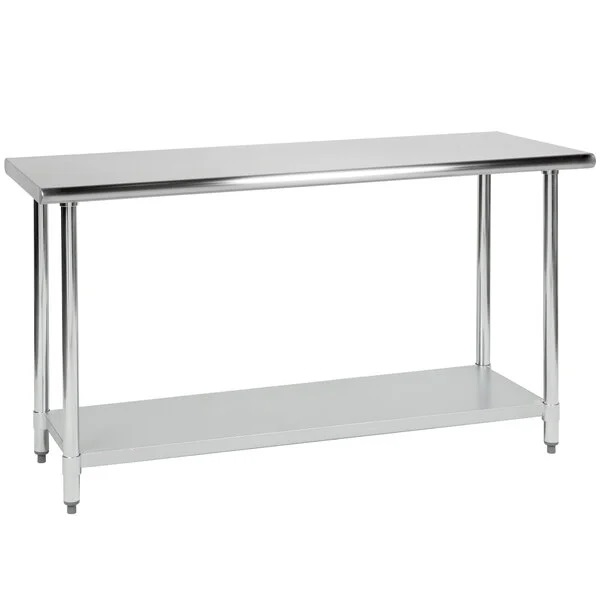
This is also why many commercial kitchens prefer a restaurant work table with undershelf. The top surface handles prep, while the lower shelf holds pans, containers, dry ingredients, or small equipment. Everything stays close, but the prep surface remains clear enough to clean.
For open kitchens, the hygiene benefit is visible too. Customers may not know the grade of the metal, but they notice a clean, bright prep area. A stained wooden table or yellowing plastic table sends the wrong message before the food even reaches the plate.
Heat Resistance and Fire Safety
A Surface That Can Take Hot Pans
Restaurant kitchens get hot. Pizza shops move pans straight from ovens. Fried chicken restaurants handle oil-heavy trays. Bakeries work with sheet pans all day. Seafood kitchens may have steam, boiling water, and hot stockpots moving from one station to another.
A stainless steel table can handle that heat far better than wood or plastic. Stainless steel can tolerate very high temperatures, with heat resistance often cited up to around 1,500°F depending on the grade and conditions. A 400°F tray from an oven is not going to melt or char the surface.
Wood can scorch at much lower temperatures. Plastic can warp or melt even faster. Once a table surface deforms, it becomes harder to clean, harder to use, and less safe.
| Safety factor | Stainless steel table | Wooden table | Plastic table |
|---|---|---|---|
| Heat tolerance | Up to 1,500°F | Around 300°F | Around 200°F |
| Fire resistance | High | Low | Medium |
| Deformation risk | Low | High | Medium |
| Fire spread risk | Low | High | Medium |
Less Fuel for Kitchen Fire Risks
Fire safety is another reason restaurants like stainless steel. Kitchens have burners, hot oil, open flames, and electrical equipment packed into tight spaces. Stainless steel does not fuel a fire. If a spark or flame hits the table, the surface will not burn the way wood can.
That does not make the kitchen fireproof, of course. Grease fires and unsafe equipment can still be dangerous. But a stainless steel restaurant table gives the kitchen one less flammable surface to worry about. For restaurants dealing with fire inspections, insurance requirements, or landlord rules, that matters.
Chefs also work faster when they can set down a hot tray without hunting for a trivet. In a dinner rush, those small seconds add up.
A Professional Look Without Extra Decoration
Clean Enough for Open Kitchens
Stainless steel has a clean, simple look that fits commercial kitchens. It matches ovens, refrigeration units, sinks, shelving, and other restaurant equipment. It does not need paint, varnish, or decorative trim to look right in a work area.
This matters more now because many restaurants have open kitchens, counter-service layouts, chef tables, or glass partitions. Customers can often see the prep area. A clean stainless steel setup gives the impression that the kitchen is organized and serious about food handling.
A scratched wooden table can look tired after a few years. Plastic can fade, stain, or look cheap. Stainless steel may pick up small marks over time, but it still looks clean when maintained. That is one reason cafes, sushi bars, bakeries, hotel kitchens, and food halls often use it in customer-facing areas.
Useful in Back-of-House and Front-of-House Areas
A stainless steel restaurant table can also move between back-of-house and front-of-house use. It may serve as a prep table during the week, a plating station during events, or a display table for a seafood spread, bakery tray, or buffet setup. That flexibility saves space, especially in smaller restaurants.
For buyers searching online for “stainless steel table for restaurant kitchen” or “commercial prep table near me”, appearance may not be the first priority. But once the table is installed, the clean look becomes part of the kitchen’s overall impression.
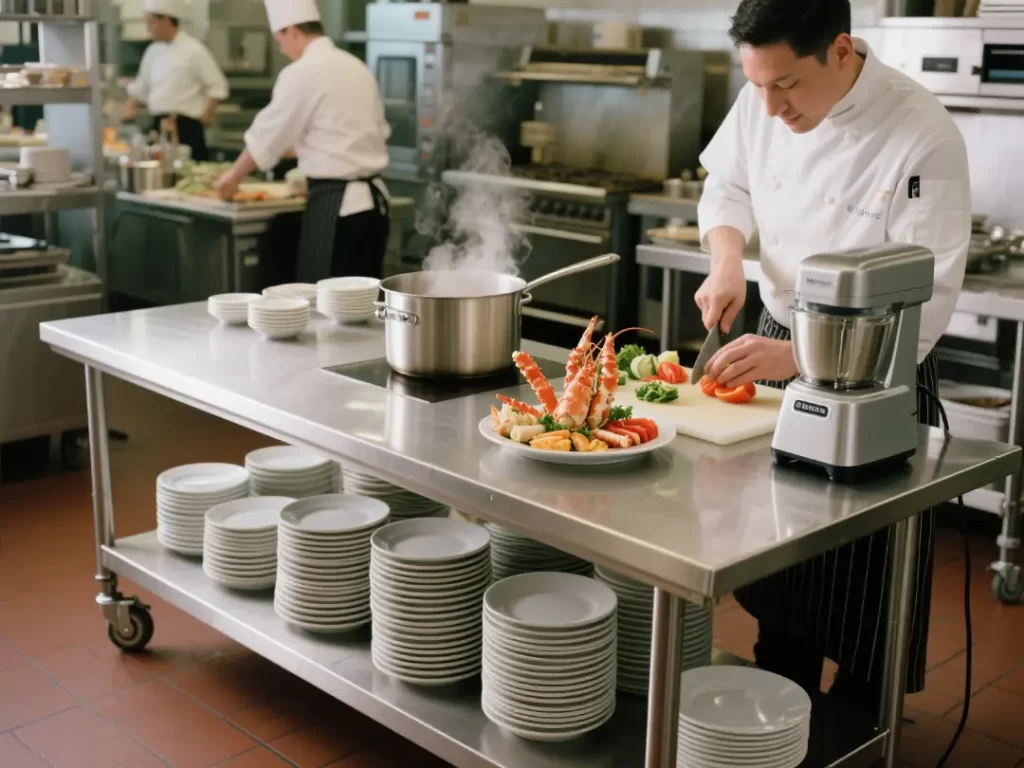
One table, Many jobs
More Than a Prep Surface
A restaurant rarely has enough space. Every piece of equipment has to earn its footprint. Stainless steel tables are useful because they can handle several jobs without feeling like a compromise.
A single table can be used for chopping, mixing, sorting ingredients, holding appliances, plating dishes, cooling trays, packing takeout, or organizing utensils. Add an undershelf, and it becomes storage too. Add casters, and it becomes a mobile prep station. Add a backsplash, and it works better against a wall near sinks or cooking lines.
Where Different Restaurants Use Them
The same stainless steel table can work in very different businesses:
- A coffee shop may use it for drink prep, pastry trays, and storage underneath.
- A food truck may need a stainless steel table with wheels to shift between prep and service.
- A seafood restaurant may use it for shellfish prep because the surface handles water and salt better than wood.
- A bakery may use a wider worktable for dough, cooling racks, and sheet pans.
- A steakhouse may use a heavy table to hold grinders, mixers, and bulk ingredients.
Common Options Buyers Look For
Customization helps because kitchens are rarely built the same way. Common options include:
- Undershelves for pans, containers, and small appliances
- Adjustable feet for uneven floors
- Casters for mobile prep stations
- Backsplashes for wall-side prep
- Wall-mounted styles for tight kitchens
- Different steel grades for different levels of corrosion resistance
A 304 stainless steel work table is often preferred where corrosion resistance and food contact matter, while other grades may fit lighter-duty or budget-sensitive use.
A stainless steel restaurant table is not exciting equipment in the way a new oven or espresso machine is exciting. But when the table is missing, the kitchen feels it immediately. Prep gets messy. Storage gets awkward. Service slows down.
The Cost Makes More Sense over Time
Lower Upfront Price Is Not Always Cheaper
The upfront price of stainless steel can look higher than wood or plastic. A typical stainless steel table may cost around $100 to $300, depending on size, grade, thickness, and accessories. Wood may cost $50 to $80. Plastic may cost $30 to $40.
At first glance, the cheaper table seems tempting. But commercial kitchens do not buy tables for light weekend use. They buy them for constant work.
A stainless steel table that lasts 10 to 15 years can cost only $10 to $30 per year in basic purchase value. A wooden table may need replacing after 3 to 5 years. A plastic table may need replacing even sooner, especially if it is scratched, warped, or stained.
| Cost factor | Stainless steel table | Wooden table | Plastic table |
|---|---|---|---|
| Initial cost | $100-$300 | $50-$80 | $30-$40 |
| Lifespan | 10-15 years | 3-5 years | 1-3 years |
| Annual maintenance | Under $5 | Around $20 | Around $15 |
| 5-year total cost | Around $150 | Around $120 | Around $100 |
Maintenance Stays Simple
The five-year cost of plastic or wood may look lower in a simple table comparison, but that does not include lost time, sanitation issues, inspection problems, surface damage, or the hassle of replacing worn equipment. For a restaurant owner, downtime and repeated buying are not small details.
Maintenance is also simple. Stainless steel does not need oiling, sealing, repainting, waxing, or special refinishing. Soap, water, and approved sanitizer usually do the work. That keeps labor down and makes cleaning routines easier for staff to follow.
For procurement teams and Google Ads buyers comparing “commercial stainless steel work table price” or “best stainless steel prep table for restaurant”, the better question is how the table performs over five or ten years. A stainless steel restaurant table often wins because it stays useful long after cheaper options have been replaced.
Better for Long-Term Sustainability
Long Service Life Means Less Waste
Sustainability is another reason stainless steel fits restaurant kitchens. Stainless steel is 100% recyclable, and it has a long working life. That combination matters. A table that lasts 15 years creates less waste than a cheaper table that gets thrown out every few seasons.
Wood can be sustainable when sourced responsibly, but in a wet commercial kitchen it may not last long. Plastic tables are lightweight and cheap, but their recycling rate is lower, and damaged plastic surfaces are not ideal for food prep.
| Environmental factor | Stainless steel table | Wooden table | Plastic table |
|---|---|---|---|
| Recyclability | 100% | Around 50% | Around 30% |
| Lifespan | 10-15 years | 3-5 years | 1-3 years |
| Waste volume | Minimal | High | Medium |
| Cleaning water use | Under 0.5 gallon | Over 1 gallon | Around 0.75 gallon |
Practical Sustainability, Not Just a Label
A stainless steel table also needs fewer harsh cleaning steps when the surface is maintained well. A quick wash and proper sanitizer are usually enough. Wood often needs deeper scrubbing because residue can settle into the grain. Scratched plastic can trap grime and become harder to restore.
For restaurants trying to reduce waste, cut replacement purchases, or choose longer-lasting kitchen equipment, stainless steel is a practical choice rather than a symbolic one. It saves money, reduces equipment turnover, and keeps the kitchen cleaner with less effort.
That is why stainless steel tables are so common in restaurants. They are strong enough for the daily workload, clean enough for food prep, safe around heat, simple to maintain, and useful in almost every part of the kitchen. A stainless steel restaurant table may not be the flashiest purchase, but it is one of the pieces that quietly keeps the whole operation moving.