Home > Blog > Drinking Fountains >
Centralized Filtration or Point-of-Use? Planning a Hospital Hydration Station
Planning a hospital hydration station involves more than placing a water cooler near a waiting room. Modern healthcare projects must balance Legionella prevention, infection control protocols, ADA accessibility, and continuous demand from patients and staff, often across multiple wards on the same floor.
Facility engineers frequently ask whether to invest in a centralized filtration system feeding several outlets, or to deploy point-of-use units with independent filters at each location. Both approaches can meet strict hygiene standards, but they differ in maintenance load, capital cost, and how well they handle water stagnation in low-traffic corridors. This guide compares how each system performs in real hospital environments and how to match the right configuration to ward type, daily traffic, and medical compliance requirements.
Defining the Healthcare Hydration Standard
A drinking water fountain in a commercial mall is designed primarily for volume. In a healthcare facility, a hospital hydration station must serve distinct user groups: patients, visiting families, clinical staff, and cleaning crews, each with specific requirements regarding water temperature, accessibility, and hygiene.
Infection Control and Compliance
The regulatory environment for medical water systems is stringent. Facility guidelines such as HTM 04-01 (widely referenced in Commonwealth and Middle Eastern projects) and JCI accreditation standards place heavy emphasis on controlling waterborne pathogens like Legionella and Pseudomonas.
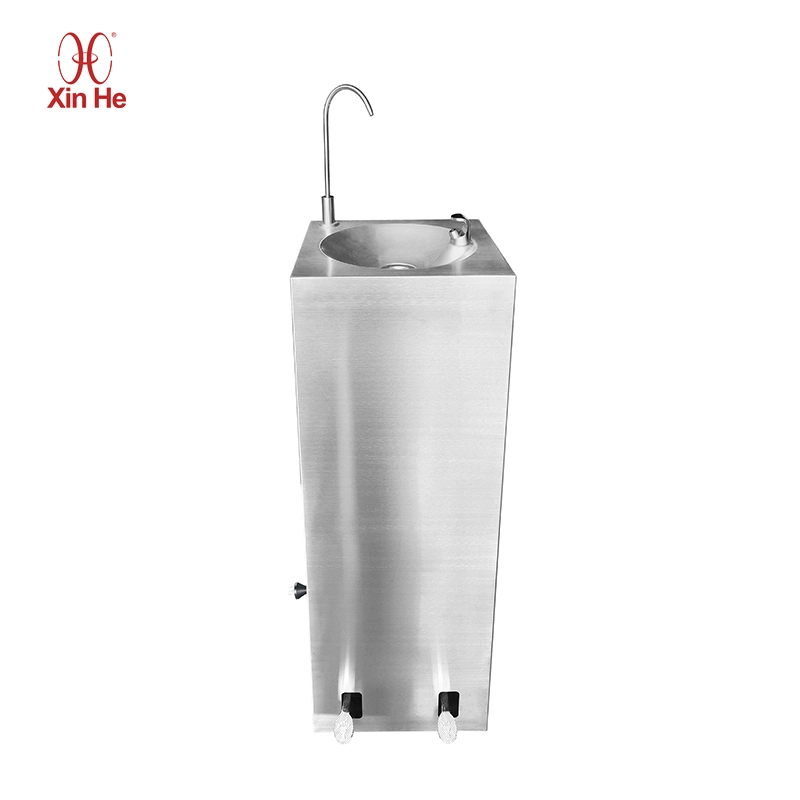
In high-acuity wards where surface contamination is a known risk, project teams specify a hands-free foot pedal water fountain designed for medical environments rather than standard push-button units, because every unnecessary touchpoint adds to the cleaning burden.
Centralized Filtration in Multi-Ward Settings
A centralized system utilizes a primary filtration plant, often combining particulate filters, activated carbon, and an ultraviolet (UV) or ultrafiltration (UF) stage, to supply treated water through dedicated branch piping to multiple terminal units, such as a bottle filler station or standard bubbler.
The Engineering Perspective
Centralized systems thrive on economies of scale. When designing a newly built 500-bed facility or a dedicated transplant center, maintaining a single main filter reduces the frequency of localized maintenance. However, this architecture requires careful hydraulic balancing to avoid dead legs (blind ends in piping) where stagnant water can breed bacteria.
| Dimension | Centralized Filtration Performance |
|---|---|
| Initial Capital Cost | Medium to High (Significant pipe routing required) |
| Cost Per Outlet | Low (Advantageous when exceeding 30+ terminal points) |
| Maintenance Cycle | Quarterly central maintenance; routine pipe flushing |
| Primary Risk Factors | Dead legs in branch piping; circulation pump failure |
| Compliance Load | Requires comprehensive Legionella risk assessment mapping |
Point-of-Use: Distributed Advantages
Point-of-use systems feature independent, built-in filtration cartridges (typically utilizing 5μm physical filtration, carbon block, and localized UV or hollow fiber membranes) at the exact dispensing location.
Flexibility and Isolation
For day surgery centers, community clinics, or structural renovation projects where routing new plumbing loops is cost-prohibitive, distributed units provide a safer, faster alternative. Because they do not rely on a central loop, a single unit’s failure does not shut down the ward’s water supply.
A point-of-use hospital hydration station follows the same infection control discipline already embedded in scrub stations: each fixture is treated as an isolated hygienic node rather than a shared loop. The primary trade-off is the administrative burden of tracking and replacing individual filters across dozens of machines.
Decision Matrix: Matching Systems to Wards
Selecting the appropriate hospital hydration station configuration requires mapping the hardware to the specific clinical environment. Project teams can use the following matrix to guide placement:
| Hospital Area | Recommended System | Primary Engineering Rationale |
|---|---|---|
| Emergency Waiting Room | Centralized + High-Flow Bottle Filler | Handles high peak-hour volume without depleting local filters. |
| Patient Corridors | Point-of-use (Wall-mounted) | Eliminates piping dead legs; reduces water stagnation risks. |
| ICU Anterooms | Point-of-use (Sensor-activated) | Zero-touch operation; completely isolated filtration node. |
| Staff Break Rooms | Point-of-use (Hot/Cold Dual) | 24-hour demand; easily accessible for routine filter swaps. |
| Outpatient Lobbies | Centralized (Multi-outlet) | Efficiently serves high, continuous foot traffic. |
| Rehabilitation Gardens | Independent 304/316 Outdoor Units | Withstands environmental corrosion and potential vandalism. |
Critical Material and Drainage Specs
Beyond the filtration method, the physical construction of a hospital hydration station dictates its long-term viability.
Material Selection
When specifying an NSF 61 certified drinking fountain, stainless steel is the non-negotiable standard. However, the grade matters:
- Type 304 Stainless Steel: Sufficient for the vast majority of indoor lobbies, corridors, and staff areas.
- Type 316 Stainless Steel: Mandatory for highly sanitized surgical zones, pediatric units, psychiatric wards, and coastal hospitals where airborne chlorides or harsh chemical cleaners accelerate corrosion.
Drainage and Contractor Considerations
Improper drainage creates aerosolized bacteria. Medical dispensers must feature a trapped drain to prevent sewer gases and pathogens from backing up into the basin. Many EPC contractors in the Middle East and ASEAN markets bundle a custom stainless steel water dispenser into the MEP (Mechanical, Electrical, and Plumbing) package to ensure strict alignment with regional drainage codes.
For European hospital tenders, antimicrobial bottle filler coatings are listed as a baseline requirement to suppress surface biofilm formation.
Maintenance: The Hidden ROI Factor
The total cost of ownership (TCO) is largely determined by maintenance protocols. Facility managers must account for the labor required to log flushing schedules, pull monthly water samples for Legionella testing, and manage UV lamp replacements.
Hydration maintenance logs should sit alongside how facility teams document waste and drainage hygiene on the wet side, because both feed into the same infection control audit.
| Cost Center | Centralized System | Point-of-Use System |
|---|---|---|
| Filter Replacement | High material cost, low labor frequency | Low material cost, high labor frequency |
| Sanitization | Full system flushing | Quarterly internal basin/nozzle cleaning |
| Tracking Burden | Automated at the plant level | Manual or RFID-based per unit |
(Note: Facility teams should request a detailed 5-year maintenance projection from their hospital hydration station supplier during the procurement phase.)
Frequently Asked Questions
What is the ideal flow rate for a hospital hydration station?
Engineering best practices suggest a flow rate of 1.0 to 1.5 GPM for standard bubblers and a 1.5 GPM fill rate for bottle fillers to minimize splashing. Flow rates can be slightly reduced in private nurse stations.
Do hospital hydration stations need NSF 61 certification?
Yes. Dual certification under NSF/ANSI 61 (drinking water system components) and NSF/ANSI 372 (lead-free compliance) is a rigid requirement for healthcare projects in the United States, as well as for the majority of top-tier Middle Eastern and international medical developments.
How often should filters be replaced in a point-of-use hospital fountain?
Filters generally require replacement every 6 to 9 months, or based on the total gallon capacity rating. Replacements must be strictly logged in the facility’s infection control dossier.
Can one hospital combine centralized and point-of-use systems?
Yes. The most efficient design for tertiary hospitals is often a hybrid approach: centralized systems handling the heavy load of public concourses, and point-of-use units securing clinical corridors.
What stainless steel grade is best for hospital hydration stations?
Type 304 stainless steel covers standard indoor applications. Type 316 should be specified for high-disinfection zones, pediatric wards, psychiatric facilities, and hospitals located in coastal environments to prevent pitting and rust.
Conclusion and Next Steps
The right hospital hydration station is rarely an off-the-shelf product. It is a precise configuration decision tied to ward layout, traffic patterns, and the infection control framework already in place. Centralized filtration rewards scale and planning discipline, whereas point-of-use rewards flexibility and structural isolation. Most modern medical facilities achieve the best results with a hybrid layout: a centralized backbone for high-traffic public zones and distributed units across patient corridors and clinical support areas. Before finalizing tender documents, project teams should map every intended outlet against ward type, expected daily users, and total 5-year maintenance costs, rather than evaluating solely on unit price.
As a dedicated healthcare drinking fountain manufacturer, Xinhe’s engineering team supports hospital and medical EPC projects with custom stainless steel hydration fixtures, including touchless, foot-pedal, and multi-station configurations in premium 304 and 316 grades. Share your floor plan and ward list with us, and we will return a comprehensive configuration proposal complete with material specifications, precise drainage details, and an accurate 5-year maintenance cost estimate.