Home > Blog > Drinking Fountains >
Stainless Steel Drinking Fountain for Schools: How to Choose the Right Configuration
Choosing a stainless steel drinking fountain for schools requires more than simply placing a water point on campus. Facility managers, contractors, and project buyers must evaluate where the unit will be installed, daily student traffic, and whether specific features like bottle filling, wall mounting, or ADA accessibility are necessary. A clear configuration strategy ensures that the chosen setups are durable, easy to maintain, and fit for long-term public use.
Why Configuration Matters
Relying on a single model for an entire educational facility is rarely effective. A comprehensive school drinking fountain plan accounts for the diverse environments across a campus. The structural needs for a busy sports field differ vastly from the space-saving requirements of a narrow teaching corridor. By assessing foot traffic, plumbing access, and user demographics, project teams can select commercial drinking fountain for schools that minimize maintenance while maximizing utility.
Indoor Options for Corridors
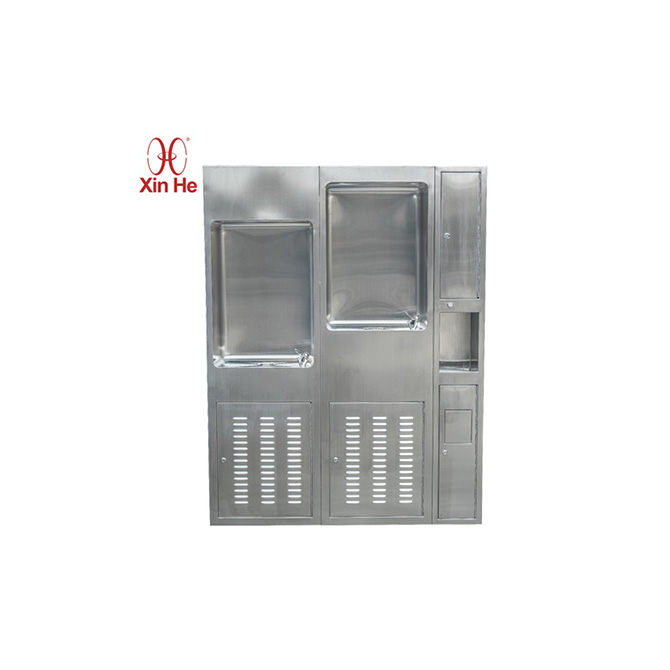
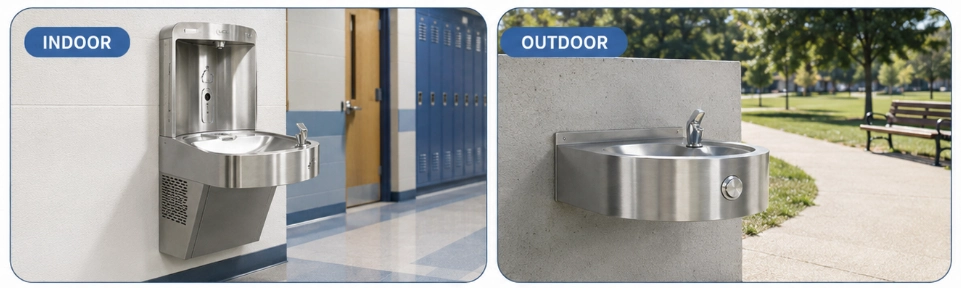
Indoor educational environments—such as classroom hallways, libraries, and administrative offices—prioritize spatial efficiency and low noise. For these areas, an indoor drinking fountain for schools is typically the most practical choice. Wall-mounted designs keep floor areas clear, which is crucial for maintaining safe passage during crowded class changes. When specifying units for cafeterias or gym entrances, an indoor drinking fountain with bottle filler accommodates students who bring their own containers. Opting for 304 stainless steel ensures these fixtures remain easy to clean and resistant to daily wear.
Outdoor Models for Playgrounds
Campus exteriors face harsher conditions, requiring equipment built to withstand weather variations and heavy physical impact. An outdoor drinking fountain for school playgrounds must be highly durable. For projects in the Middle East, Australia, or Southeast Asia, intense sunlight, high humidity, and frequent use demand robust construction. Whether placed near main entrances or track fields, these stainless steel outdoor drinking fountain configurations ensure reliable hydration without succumbing to rust or UV degradation.
Integrating Bottle Fillers
Modern hydration habits have shifted significantly toward reusable containers. Incorporating a stainless steel bottle filler fountain into school corridors or cafeterias reduces queue times and improves water access efficiency. This configuration is particularly requested in US, European, and Australian markets, where a drinking fountain with bottle filler for schools is often a standard specification for new educational buildings. It serves high-traffic areas perfectly, ensuring students can quickly refill between periods.
Wall-Mounted vs. Freestanding
Choosing the correct mounting style depends entirely on available space and existing infrastructure. A commercial wall mounted drinking fountain is ideal for interior walls with reinforced backing and accessible plumbing, keeping the footprint minimal. Conversely, freestanding models are better suited for open playgrounds or athletic fields where wall access is nonexistent. Project contractors must evaluate water supply lines, drainage capabilities, and pedestrian flow when deciding between these two primary configurations.
ADA, Touchless, and Foot Pedal Features
Public education facilities often need to consider accessibility requirements to ensure all students can use the amenities comfortably. Implementing an ADA compliant outdoor drinking fountain ensures proper height and reach clearances for compliance and usability. Furthermore, hygiene is a top priority in public spaces; a touchless drinking fountain or a foot pedal drinking fountain for school projects effectively limits surface contact. These hands-free configurations are increasingly specified in public facility contracts to maintain sanitary conditions in high-density areas.
Project Tip: Not sure which configuration fits your specific site blueprint? Xinhe can help compare indoor, outdoor, wall mounted, bottle filler, and custom drinking fountain options based on your installation area and expected daily use.
Material and Maintenance Factors
Project buyers understand that initial procurement is only part of the equation; long-term maintenance dictates true value. A stainless steel water fountain for schools constructed from high-grade material provides exceptional corrosion resistance and impact strength. This minimizes the frequency of repairs and simplifies the cleaning process for janitorial staff. For distributors and contractors, working with a reliable commercial drinking fountain supplier that provides standardized models and custom specifications ensures the campus infrastructure remains functional year-round.
Configuration Guide by School Area
Different zones require tailored hydration solutions. Use this reference to match configurations to specific campus environments:
| School Area | Recommended Configuration | Key Consideration |
|---|---|---|
| Classroom Corridors | Wall mounted indoor drinking fountain | Space saving and easy access |
| Cafeterias | Indoor drinking fountain with bottle filler | High student flow and bottle refill needs |
| Playgrounds | Outdoor stainless steel drinking fountain | Weather resistance and durability |
| Sports Fields | Freestanding outdoor drinking fountain | Heavy use and easy access |
| Main Entrances | ADA or public-use drinking fountain | Accessibility and visibility |
| Campus Parks | Outdoor drinking fountain with pet bowl | Public space and community use |
Note: Large campus projects rarely rely on a single solution; a mix of indoor, outdoor, wall-mounted, and ADA-friendly units provides the most comprehensive coverage.
Pre-Order Checklist for Buyers
Before contacting a school water fountain supplier, project managers should confirm several details to streamline the quoting and sourcing process:
- Installation Environment: Is the specific location indoor or outdoor?
- Capacity: What is the estimated daily user count for that area?
- Functionality: Is a bottle filler or multi-station setup required?
- Mounting: Will the unit be wall-mounted or freestanding?
- Compliance: Are there local accessibility standards or specific ADA height requirements to meet?
- Material: Is standard 304 stainless sufficient, or does a coastal/humid climate necessitate 316 grade?
- Customization: Are custom dimensions, specialized nozzles, or foot pedal actuations needed?
Securing the Right Setup for Your Project
The right stainless steel drinking fountain for schools should match the way students, staff, and visitors actually use each area of the campus. Indoor corridors may need compact wall-mounted models, cafeterias benefit from bottle filler integrations, and playgrounds require highly durable outdoor units. For school projects, contractors, and distributors, Xinhe provides a comprehensive range of indoor, outdoor, wall-mounted, bottle filler, ADA, and custom options for different facility requirements.